Reassessing America’s Global Mandate in an Era of Domestic Fragility
I. Introduction: The Pendulum of American Engagement
In 2026, the United States finds itself at a strategic inflection point shaped less by external threats than by internal strain. The nation’s fiscal position, marked by nearly $39 trillion in national debt and rapidly rising borrowing costs, has shifted the policy conversation from long-term sustainability to immediate risk management. Interest payments alone are projected to consume roughly 14 percent of federal outlays, signaling a structural constraint on future governance capacity (Joint Economic Committee). At the same time, households face a persistent affordability crisis, and public systems such as healthcare remain under pressure. These converging realities suggest that the traditional model of expansive global engagement may be increasingly misaligned with domestic needs. The central thesis of this analysis is that the United States must transition from a “Global Policeman” to a “Domestic Architect” to preserve long-term stability.
This shift raises a fundamental question about the purpose of American power in the modern era. Historically, U.S. foreign policy has been justified as both a moral project and a strategic necessity, aimed at exporting democratic governance and market capitalism. However, the domestic consequences of sustained global intervention are becoming more visible and politically salient. As economic pressures intensify at home, the legitimacy of outward-facing commitments is increasingly contested. Citizens are beginning to question whether national resources are being allocated in alignment with their lived realities. This tension defines the current moment and frames the broader policy debate.
The pendulum of American engagement has always oscillated between internationalism and restraint. In previous eras, external crises often pulled the United States outward, reinforcing its role as a global leader. Today, however, the internal condition of the country is exerting a countervailing force, pulling attention inward. This recalibration does not necessarily imply isolationism but rather a reordering of priorities. The challenge lies in balancing global responsibilities with domestic renewal. Without such balance, the credibility and sustainability of American leadership may erode from within.
II. Historical Context: The Ghost of Isolationism
The period following World War I provides a useful parallel for understanding contemporary debates. After the devastation of the conflict, the American public embraced a “Return to Normalcy,” prioritizing domestic growth and stability over international commitments. This sentiment manifested in the rejection of the League of Nations and a broader skepticism toward entangling alliances. Policymakers at the time believed that geographic distance and economic strength would insulate the United States from global instability. The focus shifted toward industrial expansion, protective tariffs, and internal development. This inward turn reflected both war fatigue and a belief in self-sufficiency.
However, the 1930s exposed the limitations of this approach. The Neutrality Acts, designed to keep the United States out of foreign conflicts, proved inadequate in the face of rising authoritarian aggression. As global tensions escalated, the assumption that America could remain detached became increasingly untenable. Economic interdependence and ideological conflict eventually drew the nation back into global affairs. The failure of neutrality underscored the risks of disengagement in an interconnected world. It also laid the groundwork for a more interventionist posture in the decades that followed.
The conclusion of World War II marked a decisive shift towards sustained global leadership. The United States emerged as a hegemonic power, shaping international institutions and security architectures. This role was justified by both strategic necessity and ideological ambition during the Cold War. Over time, however, the costs of maintaining this position have grown more complex and diffuse. In the post-Cold War era, interventions have often produced mixed outcomes, raising questions about their long-term value. The historical lesson is not that engagement is inherently flawed, but that its benefits must be continuously reassessed. In 2026, the question is whether the returns on global leadership are diminishing relative to its domestic costs.

III. The Crisis at Home: Debt, Health, and Survival
The most immediate constraint on American policy is fiscal. As of early 2026, the national debt has reached approximately $38.9 trillion, with projections indicating continued rapid growth (Joint Economic Committee). Interest payments are rising alongside the debt, consuming an increasing share of federal resources and limiting discretionary spending. This dynamic creates a feedback loop in which borrowing begets more borrowing, reducing fiscal flexibility. The Congressional Budget Office projects deficits of nearly $1.9 trillion for the year, reinforcing concerns about long-term sustainability (House Budget Committee). What was once framed as a future challenge is now an immediate policy constraint. The debt burden is no longer abstract; it directly shapes the government’s ability to respond to domestic needs.
Parallel to this fiscal strain is a widening affordability gap affecting millions of Americans. Housing costs have outpaced wage growth in many regions, while energy prices remain volatile due to global supply disruptions. This divergence erodes purchasing power and contributes to economic insecurity. Middle- and working-class households are increasingly forced to allocate a larger share of income to basic necessities. The result is a gradual decline in living standards despite nominal economic growth. This disconnect between macroeconomic indicators and lived experience fuels political dissatisfaction.
The healthcare system represents another critical pressure point. Despite high levels of spending, health outcomes in the United States lag behind those of other developed nations. Federal efforts to contain costs have often resulted in reduced access for vulnerable populations. Cuts to social safety net programs exacerbate these challenges, particularly for low-income communities. The combination of rising costs and uneven access creates a system that is both expensive and inefficient. In this context, domestic policy appears reactive rather than strategic. Addressing these systemic issues requires sustained investment and policy coherence, both of which are constrained by current fiscal realities.

IV. Domestic Policy Critique: “The Big Beautiful Bill”
Recent legislative efforts, particularly the so-called “One Big Beautiful Bill Act,” illustrate the disconnect between policy design and domestic need. The bill’s tax provisions disproportionately benefit high-income households, with estimates suggesting that over 70 percent of tax cuts accrue to the top 1 percent. This distribution raises concerns about equity and fiscal responsibility. By reducing federal revenue, the policy contributes to an already significant budget deficit. The resulting gap, estimated at approximately $1 trillion, must be financed through additional borrowing. This approach amplifies existing fiscal pressures rather than alleviating them.
At the same time, the bill includes substantial reductions in social spending, particularly in programs such as Medicaid. These cuts, projected to total hundreds of billions of dollars, disproportionately affect lower-income Americans. The juxtaposition of tax relief for the wealthy and reduced support for the vulnerable creates a stark policy imbalance. This dynamic undermines social cohesion and exacerbates inequality. It also raises questions about the priorities guiding federal decision-making. In a period of domestic strain, such trade-offs are particularly consequential.
The broader implication is that internal stability is being compromised by policy choices that favor capital accumulation over public welfare. Economic inequality is not merely a social issue but a strategic one, affecting national resilience and cohesion. When large segments of the population experience declining living standards, the legitimacy of institutions is called into question. This erosion of trust can have far-reaching political consequences. A sustainable policy framework must balance growth with distribution, ensuring that economic gains are broadly shared. Without such balance, domestic fragility will continue to deepen.

V. Foreign Entanglements: The Oil Factor in Venezuela and Iran
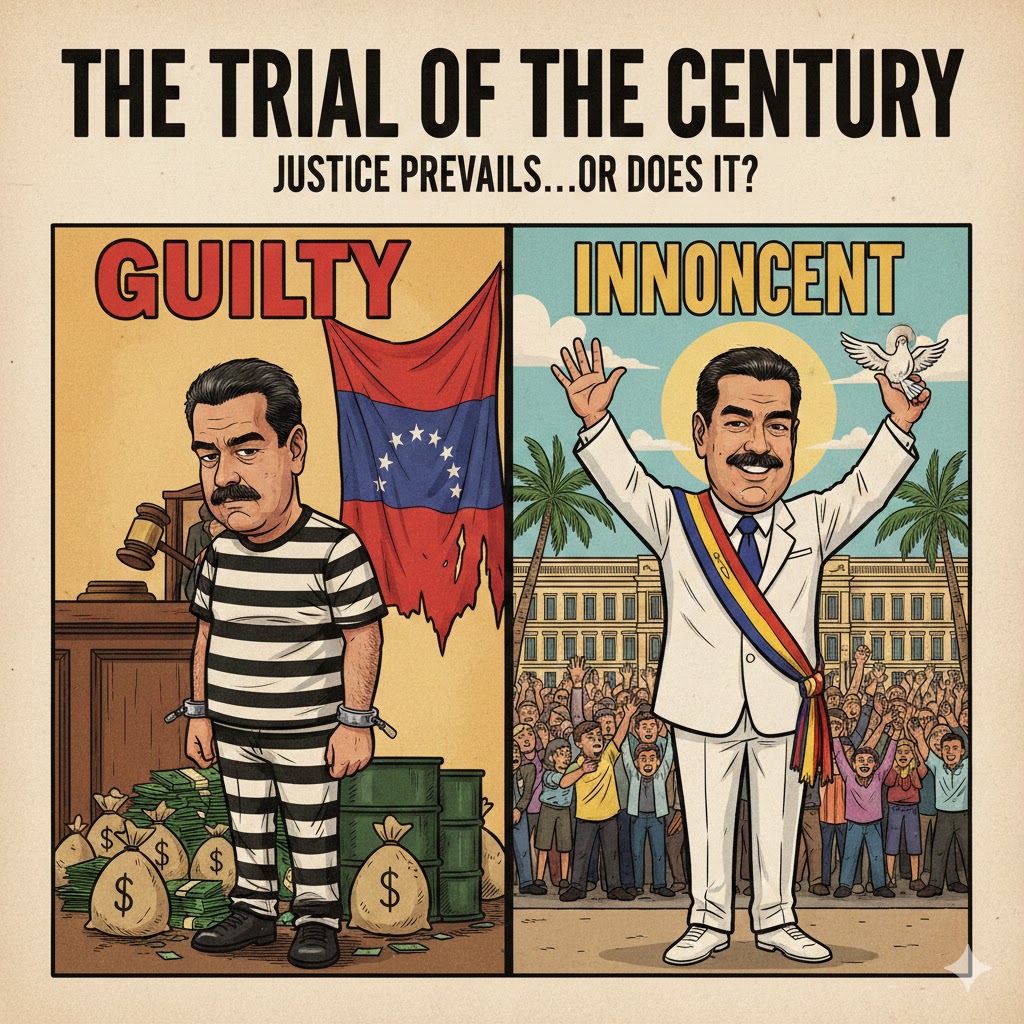
Recent geopolitical developments highlight the risks associated with continued foreign entanglements. Escalations involving oil-producing regions, including Venezuela and Iran, have introduced new volatility into global energy markets. Actions such as the seizure of oil assets and heightened military tensions have disrupted supply chains. These disruptions have immediate economic consequences, particularly for energy-dependent economies. The interconnected nature of global markets means that foreign policy decisions can quickly translate into domestic price shocks. In this context, the costs of intervention are not confined to distant regions.
One of the most significant risks is the potential disruption of critical chokepoints such as the Strait of Hormuz. This narrow passage is a key conduit for global oil shipments, and any closure would have far-reaching implications. Even the threat of disruption can drive up prices, contributing to volatility in energy markets. In 2026, such tensions have already contributed to rising fuel costs, with gasoline prices exceeding $4.00 per gallon in many areas. This “gasoline shock” acts as a regressive tax on consumers, disproportionately affecting lower-income households. The domestic impact of foreign instability is thus both immediate and unevenly distributed.
The broader lesson is that interventionist policies often produce unintended economic consequences. Efforts to influence political outcomes in Caracas or Tehran may be motivated by strategic considerations, but they also carry tangible costs for American consumers. These costs are often diffuse and difficult to attribute, making them less visible in policy debates. However, their cumulative effect is significant, contributing to economic fragility at home. As domestic pressures mount, the tolerance for such trade-offs is likely to decline. A more restrained approach to foreign policy may therefore be both economically and politically prudent.
Thanks for reading The Brooks Brief Substack! This post is public so feel free to share it.
VI. Conclusion: The Case for a New Realism
The United States cannot sustain its role as a global leader if its domestic foundation continues to weaken. Rising debt, increasing inequality, and strained public systems collectively undermine national resilience. These challenges are not isolated but interconnected, reinforcing one another in ways that complicate policy responses. Addressing them requires a reallocation of resources and a redefinition of priorities. The current trajectory, characterized by high spending abroad and constrained investment at home, is increasingly difficult to justify. A recalibration is necessary to restore balance.
A new realism in American policy would prioritize domestic renewal as the basis for international credibility. Investments in infrastructure, healthcare, and education would strengthen the underlying capacity of the nation. At the same time, a more selective approach to foreign engagement would reduce exposure to external shocks. This does not imply disengagement but rather strategic restraint. By aligning policy with domestic needs, the United States can enhance both its stability and its global standing. The goal is not to retreat from the world but to engage it from a position of strength.
Ultimately, true American power is derived from the well-being of its people. A prosperous, healthy, and stable population is the foundation of sustainable leadership. Military strength and diplomatic influence are important, but they cannot substitute for domestic vitality. In an era of increasing complexity and constraint, the case for prioritizing the homefront is both practical and necessary. The path forward requires difficult choices, but the alternative is a gradual erosion of capacity and credibility. The time for reassessment is not in the future; it is now.