Tag: healthcare

  • Raising the Minimum Wage

    Raising the Minimum Wage

    A Vote for Affordability or a Recipe for Inflation?


    I. Introduction

    In the United States in 2026, millions of Americans continue to face a persistent affordability crisis that affects nearly every aspect of daily life. Housing costs remain elevated, grocery prices strain household budgets, and healthcare and education expenses consume an increasing share of income. For many workers, wages have failed to keep pace with these rising costs, creating a widening gap between earnings and basic needs. This disconnect has become especially visible among low-wage workers who rely on hourly pay to meet essential expenses. As a result, economic insecurity has become a defining feature of the current labor market. The debate over how to address this imbalance has returned to the forefront of national policy discussions.

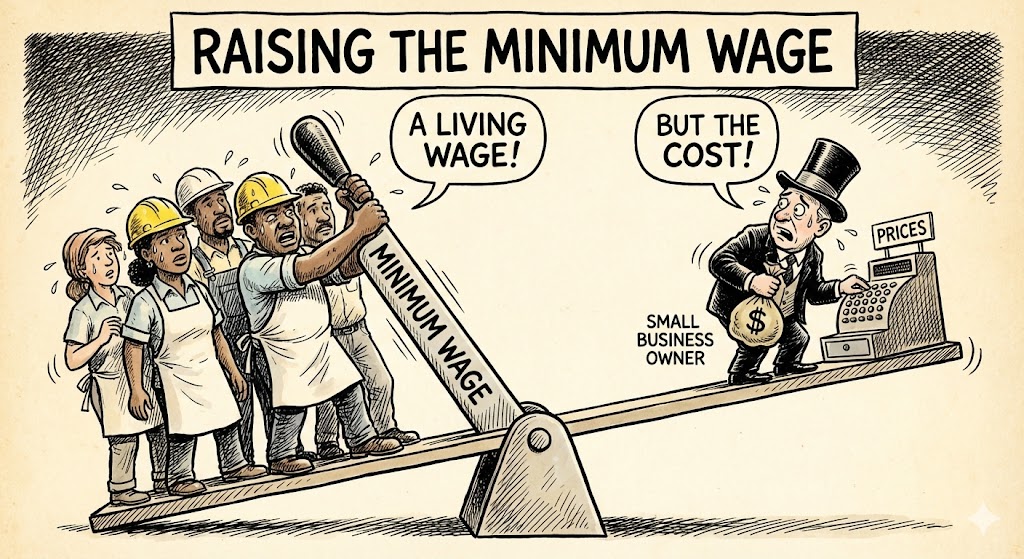
    At the center of this debate is the federal minimum wage, which has remained at $7.25 per hour since 2009. Over nearly two decades, inflation alone has significantly eroded the purchasing power of this wage floor. While some states and municipalities have acted independently to raise wages, federal inaction has produced a fragmented system in which a worker’s income depends heavily on geography. As of January 2026, nineteen states have enacted minimum wage increases, with several exceeding sixteen dollars per hour. These disparities have renewed questions about whether national standards are outdated and insufficient for modern economic conditions.

    From a historical perspective, the stagnation of the federal minimum wage appears even more pronounced. If the minimum wage had grown alongside inflation and labor productivity since the late 1960s, it would exceed twenty-five dollars per hour today. This gap underscores decades of wage stagnation even as worker output and corporate profitability have increased. Supporters argue that correcting this imbalance is necessary to restore fairness and economic stability. Critics counter that such increases may introduce new economic risks. This article evaluates both perspectives through empirical evidence, economic theory, and political context.

    The Brooks Brief Substack is a reader-supported publication. To receive new posts and support my work, consider becoming a free or paid subscriber.

    II. The Current Economic Landscape

    The U.S. economy in 2026 reflects a mixed recovery from the disruptions of the early 2020s. While inflation has moderated from its peak levels, prices for essential goods and services remain elevated relative to wages. Housing affordability continues to pose a major challenge, particularly for first-time buyers and renters in urban and suburban markets. In many regions, home prices would need to fall substantially to return to pre-pandemic affordability levels. Rent increases have similarly outpaced income growth, forcing households to devote a larger share of earnings to shelter. These pressures disproportionately affect lower-income workers with limited financial buffers.

    Food prices also remain a key driver of household stress. Even modest increases in grocery costs can significantly impact families living paycheck to paycheck. Minimum wage workers, who are heavily represented in retail, food service, and hospitality sectors, are especially vulnerable. A substantial portion of these workers report food insecurity or reliance on credit to cover routine expenses. Healthcare costs further compound the issue, as many low-wage jobs offer limited or no employer-sponsored insurance. Together, these factors create a cycle of economic precarity that is difficult to escape through employment alone.

    Recent state and local minimum wage increases reflect an attempt to respond to these conditions. In 2026, dozens of states, cities, and counties implemented wage hikes aimed at preserving purchasing power. These measures are often framed as necessary adjustments rather than aggressive policy shifts. However, businesses implementing these changes face their own constraints, including higher input costs and lingering supply chain disruptions. Critics argue that wage mandates risk amplifying these pressures, particularly for small businesses. The current landscape thus presents a complex tradeoff between worker relief and economic stability.

    III. Arguments in Favor of Raising the Minimum Wage

    Advocates of raising the minimum wage argue that higher wages are essential for improving affordability and economic security. Low-wage workers tend to spend a larger share of their income on necessities such as food, housing, and transportation. When wages increase, this spending can stimulate local economies through increased consumer demand. Economists often describe this as a multiplier effect, where additional income circulates through communities. Unlike tax cuts for higher earners, wage increases are more likely to produce immediate economic activity. Proponents view this as a practical tool for strengthening local and regional economies.

    Another central argument in favor of higher minimum wages is poverty reduction. Research indicates that wage increases can lift millions of workers above the poverty line. Higher earnings also reduce reliance on public assistance programs, including food aid and healthcare subsidies. This shift can ease pressure on government budgets while improving individual dignity and autonomy. From this perspective, higher wages function as both an economic and social policy. Supporters argue that the long-term fiscal benefits often outweigh short-term adjustment costs.

    Proponents also emphasize historical and structural considerations. Over decades, worker productivity has risen significantly, yet wages for low-income workers have remained largely stagnant. This divergence has contributed to income inequality and reduced social mobility. Aligning wages with productivity growth is viewed as a corrective measure rather than a radical intervention. Additional benefits cited include reduced employee turnover, higher morale, and improved health outcomes. Together, these effects suggest that higher wages may yield broader social gains beyond immediate income increases.

    IV. Arguments Against Raising the Minimum Wage

    Opponents of minimum wage increases warn that higher labor costs can contribute to inflationary pressures. Businesses facing increased payroll expenses may raise prices to maintain profitability. These price increases can offset wage gains, particularly for the same workers the policy intends to help. In sectors such as food service and retail, where profit margins are often thin, cost pass-throughs may be more pronounced. Critics argue that this dynamic risks creating a cycle in which wages and prices chase one another upward. In an economy already sensitive to inflation, such risks are viewed as significant.

    Employment effects are another major concern raised by critics. Mandated wage increases may prompt employers to reduce hours, cut positions, or accelerate automation. Entry-level and low-skilled workers are often seen as most vulnerable to these adjustments. Some studies suggest that younger workers and those with limited experience may face reduced job opportunities. Small businesses, in particular, may struggle to absorb higher labor costs without reducing staff or closing altogether. These potential outcomes raise concerns about unintended consequences for the labor market.

    From a conservative economic perspective, minimum wage laws are often framed as government overreach. Critics argue that wages should be determined by market forces such as supply, demand, and worker productivity. They contend that wage mandates distort labor markets and discourage hiring. Instead, opponents emphasize education, job training, and skills development as more effective paths to higher earnings. From this viewpoint, addressing affordability requires structural reforms rather than wage floors. The debate thus reflects deeper ideological differences about the role of government in the economy.

    V. Empirical Evidence and Case Studies

    Empirical research on minimum wage effects presents a mixed picture. Some studies find minimal negative employment impacts, particularly when increases are moderate and phased in over time. These analyses often report gains in earnings and reductions in poverty among low-wage workers. In some cases, higher wages are associated with increased productivity and employee retention. However, methodological differences make it difficult to draw universal conclusions. Outcomes often vary by region, industry, and economic conditions.

    Recent state-level wage increases in 2026 provide new data points. In states where minimum wages exceed fifteen dollars per hour, early surveys suggest workers experience modest improvements in financial stability. At the same time, many businesses report raising prices or reducing discretionary benefits. These adjustments highlight the tradeoffs involved in wage policy. While no widespread employment collapse has occurred, the long-term effects remain uncertain. Ongoing analysis will be necessary to assess durability and scalability.

    International comparisons also offer insight, though contexts differ significantly. Some countries with higher wage floors maintain strong employment levels through complementary policies such as social safety nets and labor market supports. These examples suggest that wage policy outcomes depend heavily on broader institutional frameworks. A balanced interpretation of the evidence indicates that moderate increases tend to produce net benefits. Conversely, abrupt or large hikes may introduce greater risks. Policymakers must therefore consider pace, scale, and local conditions.

    VI. The Political Divide and Path Forward

    The minimum wage debate reflects broader political polarization in the United States. Public opinion consistently shows majority support for higher wages, particularly when framed around cost-of-living adjustments. Voters in several states have approved wage increases through ballot initiatives. Despite this support, federal legislative action remains stalled. Partisan divisions and competing economic philosophies continue to impede consensus. As a result, state and local governments have taken the lead.

    Both supporters and critics increasingly acknowledge that wages alone cannot resolve affordability challenges. Inflation, housing shortages, and healthcare costs all contribute to economic strain. Some analysts argue that wage increases without complementary policies risk limited effectiveness. This recognition has opened space for alternative or supplemental approaches. These include expanding the Earned Income Tax Credit, reforming zoning laws, and subsidizing essential goods. Such measures aim to target affordability more directly.

    A pragmatic path forward may involve combining moderate wage increases with broader policy reforms. Phased adjustments tied to inflation could provide predictability for both workers and employers. Pairing wage policy with investments in housing supply and workforce development may reduce unintended consequences. Evidence-based policymaking, rather than ideological positioning, is critical. The challenge lies in balancing worker protection with economic flexibility. Achieving this balance will shape the future of affordability policy.

    VII. Conclusion

    Raising the minimum wage presents clear advantages, including improved purchasing power, reduced poverty, and greater economic equity. At the same time, concerns about inflation, employment effects, and business sustainability cannot be dismissed. Historical comparisons highlight how far wages have fallen behind productivity and living costs. A minimum wage aligned with long-term economic growth could have mitigated much of today’s affordability crisis. However, such alignment must be approached carefully. The evidence suggests that design and implementation matter greatly.

    Minimum wage increases alone are not a comprehensive solution to affordability challenges. Structural factors such as housing shortages, healthcare costs, and market concentration also play significant roles. Policymakers must therefore adopt a multifaceted strategy. Gradual, data-driven wage adjustments combined with targeted social and economic reforms offer the most promising path. Ideological stubbornness risks undermining effective solutions. A balanced approach grounded in evidence can better serve American workers in 2026 and beyond.
  • The Erosion of Women’s Rights in U.S. Healthcare

    The Erosion of Women’s Rights in U.S. Healthcare

    Abortion Decline, Insurance Power, AI Expansion, and the Cost Crisis


    I. Introduction

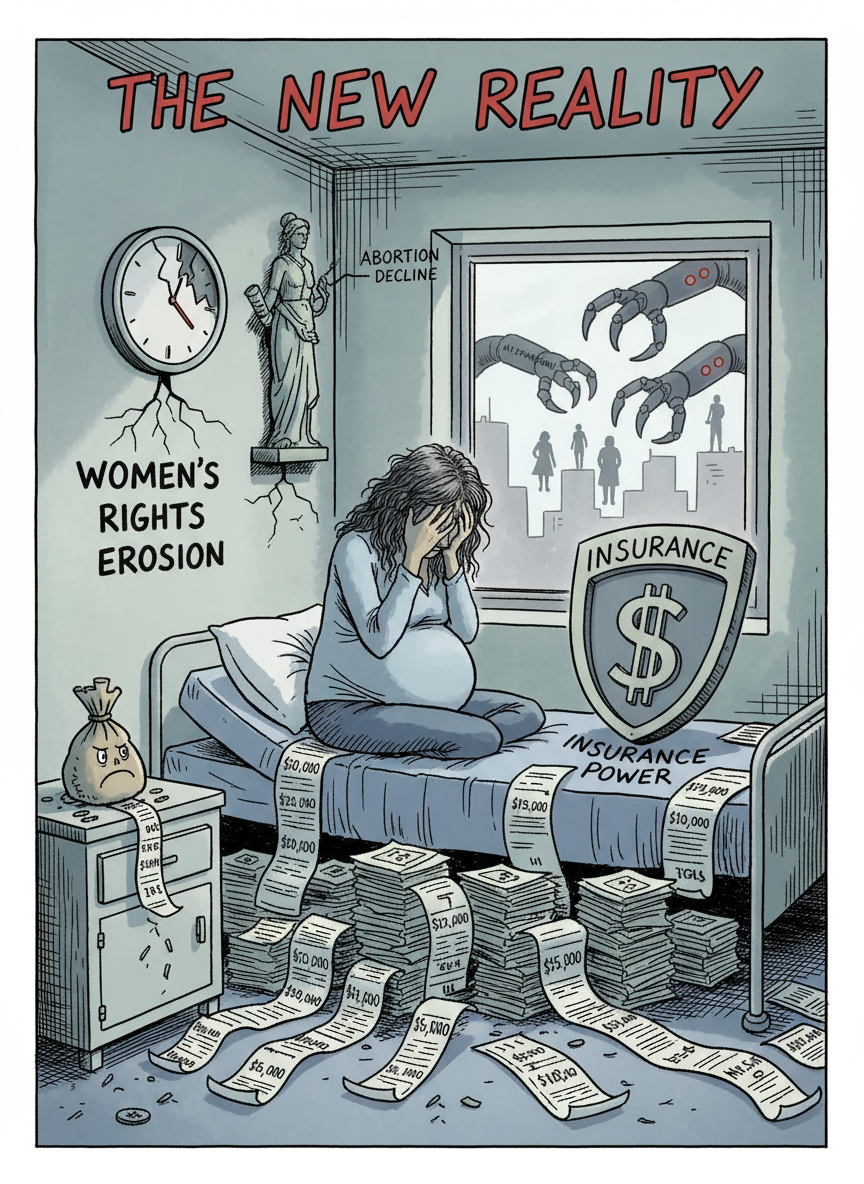
    In early 2026, the post-Dobbs healthcare landscape reveals a profound rollback of women’s rights across much of the United States. Abortion is now banned outright in 13 states and restricted at early gestational stages in six more, reshaping reproductive outcomes nationwide. Research indicates these policies have already resulted in tens of thousands of additional births and hundreds of preventable infant deaths in restrictive states. These outcomes are not evenly distributed, falling most heavily on low-income women, women of color, and those with limited access to healthcare infrastructure. The shift represents not only a legal change but a measurable deterioration in public health outcomes tied directly to reproductive policy.

    Beyond abortion restrictions, women’s healthcare rights are increasingly constrained by broader structural forces within the healthcare system. Insurance industry dominance continues to shape access, affordability, and scope of reproductive care. At the same time, artificial intelligence tools are being rapidly deployed in healthcare without adequate safeguards against gender bias. Rising healthcare costs further compound these pressures, placing disproportionate financial burdens on women who already face wage and wealth gaps. Together, these forces form a multilayered erosion of autonomy, equity, and health security.

    This analysis argues that women’s healthcare rights in 2026 are under coordinated strain from four intersecting dynamics. The decline in abortion access undermines bodily autonomy and maternal health. Insurance industry power limits reproductive coverage and shifts costs onto women. Emerging AI systems risk encoding longstanding gender disparities into medical decision making. Escalating healthcare costs transform legal rights into hollow promises for millions. Taken together, these trends threaten not only reproductive freedom but broader gender equality and economic stability in the United States.

    Thanks for reading The Brooks Brief Substack! Subscribe for free to receive new posts and support my work.

    II. The Decline of Women’s Rights Regarding Abortion Access

    The erosion of abortion rights since the Supreme Court’s 2022 Dobbs decision has accelerated into a systemic rollback of reproductive autonomy. State-level bans and early gestational limits have fundamentally reshaped access to care, particularly in the South and Midwest. In several states, abortion services have effectively ceased to exist, forcing women to travel hundreds of miles or forgo care entirely. These restrictions have transformed abortion from a standard medical service into a privilege dependent on geography, income, and social capital. The result is a fragmented national system in which women’s rights vary sharply by state.

    The legal landscape has continued to harden through 2025 and 2026 with the introduction of fetal personhood laws and expanded enforcement mechanisms. Federal policy shifts have further narrowed access for populations reliant on government programs, including veterans and low-income women. These measures extend beyond abortion itself, creating uncertainty around miscarriage care, fertility treatment, and emergency obstetric services. Providers in restrictive states report chilling effects that delay or deny care even in medically urgent situations. Such policies have institutionalized fear and risk within women’s healthcare.

    The health and socioeconomic consequences of these restrictions are increasingly visible. States with abortion bans have experienced higher-than-expected fertility rates alongside measurable increases in infant mortality. These outcomes disproportionately affect Black, Latina, low-income, and unmarried women, who already face structural barriers to healthcare access. Denial of abortion care has been linked to higher poverty rates, reduced labor force participation, and long-term economic instability. Forced continuation of unwanted pregnancies compounds inequality rather than supporting family well-being.

    Beyond individual outcomes, abortion restrictions represent a broader assault on women’s fundamental rights. Travel costs, lost wages, childcare expenses, and medical risks create additional burdens that function as de facto barriers to care. Federal threats to revive outdated statutes and restrict medication access further entrench inequity. Policy choices under the Trump administration have reinforced this trajectory by defunding providers and promoting misinformation around abortion pills. These actions collectively frame reproductive control as a tool of political governance rather than a matter of healthcare.

    III. Insurance Industry Influence and the Erosion of Women’s Rights

    The insurance industry plays a central role in shaping women’s access to healthcare, particularly reproductive services. Policy changes entering effect in 2026 have strengthened insurer leverage while weakening consumer protections. The expiration of Affordable Care Act (ACA) subsidies has led to dramatic premium increases for millions of enrollees. Women, who make up a majority of ACA marketplace participants, face significantly higher out-of-pocket costs than men. These financial pressures disproportionately affect women of childbearing age and older women managing chronic conditions.

    Cuts to Medicaid and Title X family planning programs have further reduced access to affordable reproductive care. Clinic closures and service reductions have left many communities without nearby providers. Low-income women are especially vulnerable to these gaps, as Medicaid remains the primary source of coverage for maternity and reproductive services. Insurance design often excludes abortion coverage entirely, even in states where the procedure remains legal. As a result, legal rights are frequently rendered inaccessible by financial barriers.

    Insurance policies also enable indirect restrictions on reproductive autonomy. Conscience protections and gag rules allow providers and institutions to deny or withhold information about reproductive services. Limitations on contraceptive coverage and maternity care represent a rollback of earlier ACA gains. Women are increasingly forced to choose between affordability and comprehensive care. These constraints transform reproductive healthcare into a conditional benefit rather than a guaranteed right.

    The broader consequences of insurance dominance extend beyond healthcare access. Women consistently pay more out of pocket despite earning less on average, reinforcing gender-based economic inequality. Maternal health outcomes worsen as cost pressures delay or prevent care. Black and Latina women experience compounded harms due to intersecting racial and economic disparities. Federal policy decisions, including privacy rollbacks and targeted defunding of reproductive health providers, further centralize control over women’s healthcare choices within market-driven systems.

    IV. The Rise of AI in Healthcare and Threats to Women’s Rights

    Artificial intelligence is rapidly reshaping healthcare delivery, with widespread adoption in diagnostics, scheduling, and treatment planning by 2026. While these tools promise efficiency, they also reflect the biases embedded in their underlying data. Many AI systems are trained on datasets that underrepresent women or misinterpret gender-specific symptoms. This is particularly concerning in areas such as reproductive health, oncology, and cardiovascular care, where women’s symptoms have historically been understudied. Without correction, AI risks replicating and amplifying existing disparities.

    The use of AI in reproductive and preventive care raises distinct concerns for women’s rights. Algorithms may underestimate risks related to fertility, menopause, or pregnancy complications due to limited training data. In abortion-restricted environments, AI tools can be used to monitor, flag, or indirectly surveil reproductive behavior. Weak governance allows unregulated or “shadow” AI systems to influence care without transparency or accountability. These developments blur the line between clinical decision making and rights enforcement.

    Privacy risks further complicate the expansion of AI in women’s healthcare. Digital health data related to menstruation, pregnancy, or fertility can be vulnerable to misuse. In states hostile to reproductive rights, such data may expose women to legal or social consequences. The erosion of privacy protections transforms healthcare technologies into potential tools of control. This dynamic undermines trust between patients and providers.

    Despite these risks, AI also presents opportunities if governed responsibly. Ethical oversight, representative datasets, and gender-aware design could improve diagnostic accuracy and personalized care for women. Without deliberate intervention, however, AI will widen the gender health gap rather than close it. Women’s rights in healthcare depend on ensuring that emerging technologies serve equity rather than entrench discrimination. Policy frameworks must prioritize women’s data, consent, and autonomy in the digital health era.

    V. Rising Healthcare Costs and Barriers to Reproductive Rights

    Healthcare costs in the United States are projected to rise sharply through 2026, with annual increases driven by aging populations, chronic disease, and policy retrenchment. The expiration of ACA subsidies has more than doubled premiums for many families. Medicaid and marketplace cuts threaten to increase the uninsured population by tens of millions. Women, who are more likely to require ongoing reproductive and preventive care, face higher financial exposure. Cost inflation transforms access to care into a function of income rather than need.

    Reproductive healthcare is particularly sensitive to cost pressures. Abortion restrictions increase ancillary expenses such as travel, lodging, childcare, and lost wages. For many women, these added costs are prohibitive even when abortion remains legal. Defunding of clinics further reduces access to affordable contraception and preventive services. Cost barriers push women toward delayed care or no care at all, increasing long-term health risks.

    The broader consequences of rising costs extend beyond individual decisions. The growing number of uninsured women creates feedback loops that exacerbate health outcomes and put a strain on safety net providers. Maternal mortality and morbidity rise as preventive and prenatal care become less accessible. Economic insecurity deepens as women absorb higher medical debt and reduced workforce participation. Healthcare costs thus function as a structural barrier to women’s rights and autonomy.

    Addressing these challenges requires deliberate policy intervention. Without cost containment and coverage expansion, legal protections alone will fail to secure meaningful access. Rising healthcare costs threaten to hollow out women’s reproductive rights even in supportive jurisdictions. Economic barriers are increasingly central to the erosion of healthcare equity.

    VI. Forced Birth, Brain Death, and the Financialization of Reproductive Control

    One of the most stark illustrations of reproductive rights erosion in the post-Dobbs era is the case of a woman declared brain dead who was legally compelled to remain on life support in order to continue a pregnancy. Under strict abortion bans and fetal personhood frameworks, physicians were prohibited from withdrawing medical intervention despite the absence of maternal consciousness or recovery prospects. The state effectively assumed control over the woman’s body, transforming her into a biological vessel rather than a patient with rights. This case underscores how abortion restrictions extend beyond elective procedures into end-of-life care and medical ethics. The legal prioritization of fetal status over maternal autonomy represents a radical departure from established healthcare norms. It signals a system in which women’s bodily integrity can be overridden entirely by statute.

    The consequences of this intervention did not end at birth. The infant, delivered under extraordinary circumstances, now requires extended hospitalization and specialized medical care. These costs are substantial, often reaching hundreds of thousands of dollars within weeks, and responsibility for payment remains legally ambiguous. In the absence of comprehensive public coverage, medical debt may ultimately be transferred to the woman’s surviving family members. This shifts the financial burden of a state-mandated medical decision onto private citizens who had no authority over the outcome. Reproductive control thus becomes intertwined with financial liability.

    This case exposes how abortion bans and fetal personhood laws externalize moral and political decisions onto families least equipped to bear them. The state mandates birth but disclaims long-term responsibility for care, leaving families to absorb emotional, financial, and medical fallout. Such outcomes redefine reproductive coercion as both a civil rights issue and an economic one. Forced birth under these conditions transforms healthcare into an instrument of state power rather than patient-centered care. It also sets a precedent in which women’s bodies, even in death, are subject to compulsory use without consent. The implications for medical ethics, family autonomy, and women’s rights are profound and enduring.

    Thanks for reading The Brooks Brief Substack! This post is public so feel free to share it.

    Share

    VII. Conclusion

    By 2026, women’s rights in U.S. healthcare are being undermined through intersecting legal, economic, technological, and institutional forces. Abortion access has declined sharply, producing measurable harms to maternal and infant health. Insurance industry dominance limits reproductive coverage and shifts costs onto women. Artificial intelligence threatens to encode gender bias into clinical systems while exposing women to new privacy risks. Escalating healthcare costs further restrict access and deepen inequality.

    These trends pose long-term threats to gender equality, health equity, and economic stability. When reproductive autonomy is constrained, women’s educational attainment, labor participation, and family well-being suffer. Disparities widen along racial and socioeconomic lines, reinforcing structural inequality. Healthcare systems that marginalize women ultimately weaken public health outcomes for society as a whole.

    Reversing this trajectory requires coordinated policy action. Federal protections for reproductive rights, renewed investment in affordable coverage, and strict governance of healthcare AI are essential. Cost containment and insurance reform must prioritize equity rather than profit. Without decisive intervention, the erosion of women’s healthcare rights will continue to reshape American democracy and economic security in profoundly unequal ways.

  • The Crumbling Promise of Affordable Healthcare

    The Crumbling Promise of Affordable Healthcare

    Stalled ACA Reforms, Soaring Premiums, and the Human Cost in America’s Election Year


    I. Introduction: The Persistent Healthcare Divide

    The Affordable Care Act (ACA) reshaped the American healthcare landscape by expanding coverage, standardizing benefits, and strengthening consumer protections. At the same time, it entrenched deep partisan divisions that have persisted for more than a decade. Supporters view the ACA as a necessary foundation for equitable access to care, while critics frame it as an example of federal overreach that distorts markets. These competing narratives have defined healthcare politics since the law’s passage. Yet beyond ideology, the ACA’s mixed legacy reveals unresolved structural weaknesses. The divide today is less about whether the law exists and more about whether it delivers affordability.

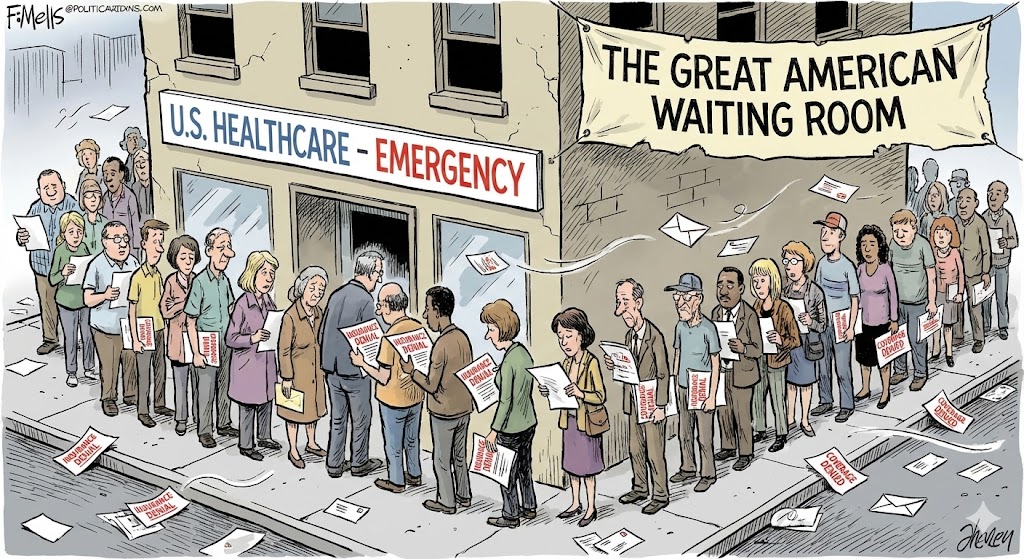
    Despite significant coverage gains, rising healthcare costs continue to undermine the ACA’s promise. Premiums, deductibles, and out-of-pocket expenses have increased faster than wages for many households. Insurance coverage no longer guarantees access to timely or affordable care. Many Americans remain functionally underinsured, exposed to financial shock in the event of illness or injury. These pressures are particularly acute in rural areas and among middle-income families who earn too much for assistance but too little to absorb high costs. The gap between coverage and care has widened.

    As enhanced ACA subsidies expire and partisan gridlock blocks legislative fixes, millions face renewed financial vulnerability. Families confronting medical emergencies increasingly turn to debt, delayed treatment, or public fundraising to survive. Against this backdrop, President Trump’s proposal to provide direct healthcare payments to individuals has gained political traction. The idea reflects frustration with insurers and intermediaries, but its practical impact remains uncertain. In an election year, healthcare policy has become both a political weapon and a human crisis. The consequences of inaction are no longer abstract.

    II. Stalled Promises: The Unfulfilled Vow to Repeal and Replace Obamacare

    Republican opposition to the Affordable Care Act has been a defining feature of national politics since 2010. During President Trump’s first term, repeal and replace efforts dominated legislative priorities. Multiple bills were introduced, debated, and ultimately failed, most notably in 2017. While regulatory changes weakened certain provisions, the law itself survived intact. The failure to replace the ACA left a policy vacuum rather than a resolved alternative. Opposition succeeded rhetorically but not structurally.

    The 2024 campaign revived promises to finally dismantle “Obamacare”. Candidates pledged a better system that would lower costs, expand choice, and preserve protections for preexisting conditions. Yet once again, no comprehensive replacement plan emerged. Public messaging emphasized flexibility and innovation without legislative specificity. Voters were offered broad assurances rather than policy detail. The pattern mirrored earlier repeal efforts that prioritized messaging over design.

    By 2026, references to “concepts of a plan” have become emblematic of healthcare paralysis. Internal party divisions and narrow congressional margins have complicated consensus building. Policymakers have struggled to reconcile ideological goals with operational realities. Healthcare reform remains trapped between ambition and execution. As a result, the existing system persists without meaningful improvement. Americans continue to navigate a flawed status quo.


    III. Expiring Subsidies: The Shockwave of Skyrocketing Premiums

    Enhanced premium tax credits introduced under the American Rescue Plan and extended through the Inflation Reduction Act played a critical stabilizing role in the ACA marketplace. These subsidies reduced premium costs and expanded eligibility to millions of middle-income households. For many families, coverage became affordable for the first time. The policy helped sustain enrollment and limit churn. Its expiration at the end of 2025 marked a significant inflection point. The safety net weakened abruptly.

    In 2026, enrollees began facing steep premium increases as enhanced subsidies disappeared. Estimates indicate that premiums for some households more than doubled. Middle-income families were particularly affected, as many lost eligibility for assistance altogether. Faced with higher monthly costs, millions risked dropping coverage. The coverage gains achieved over the past decade are now under threat. Affordability has once again become a barrier to enrollment.

    The broader economic consequences extend well beyond individual households. Rising uninsured rates increase uncompensated care costs for hospitals and clinics. Safety-net providers, already operating on thin margins, face renewed financial strain. Delayed care contributes to worse health outcomes and higher long-term costs. Public health systems absorb the downstream effects of coverage loss. The expiration of subsidies reverberates across the healthcare ecosystem.


    IV. Partisan Battles: Gridlock Over Fixes in an Election Year

    Democrats have pushed to extend or permanently codify enhanced ACA subsidies. They argue that stabilizing premiums is essential to protecting coverage and economic security. Republicans, by contrast, emphasize deregulation and market-based solutions. These positions reflect fundamentally different views of government’s role in healthcare. Neither side has secured sufficient leverage to impose its vision. Legislative stalemate has become the default outcome.

    The dynamics of an election year have further intensified gridlock. Razor-thin congressional majorities magnify procedural obstacles and partisan incentives. Healthcare has reemerged as a top voter concern amid rising costs. Both parties fear political backlash from compromise. Policy debates are shaped as much by electoral strategy as by substance. As a result, negotiations remain frozen.

    Election-year posturing has delayed concrete action. Short-term extensions are debated while long-term reforms remain elusive. Families confronting immediate premium hikes receive little certainty. Uncertainty itself has become a defining feature of healthcare policy. Households are forced to plan without reliable information. The cost of delay is borne by patients, not politicians.


    V. The Social Media Cry for Help: Crowdfunding and Insurance Battles

    As formal safety nets weaken, Americans increasingly turn to social media for financial support. Platforms such as GoFundMe and Tik Tok have become informal mechanisms for paying medical bills. Campaigns seek assistance for surgeries, cancer treatments, and transplants. Many raise only a fraction of the required funds. Their prevalence reflects desperation rather than preference. Healthcare has become a public appeal.

    Insurance denials often drive these campaigns. Families report months of appeals, documentation requests, and phone advocacy. In some cases, public attention prompts insurers to reverse decisions. The process is emotionally exhausting and unpredictable. Approval can depend on persistence rather than medical necessity. Access to care becomes contingent on visibility.

    The human toll is significant. Patients delay or abandon treatment while navigating administrative barriers. Loved ones are forced into roles as advocates and fundraisers. Social media exposes systemic failures while offering temporary relief. Community support fills gaps left by policy. The trend underscores the erosion of institutional trust.


    VI. Trump’s Direct Payment Proposal: Innovative Relief or Financial Shortfall?

    President Trump’s “Great Healthcare Plan” proposes shifting government assistance directly to individuals. Payments would be deposited into health savings style accounts rather than routed through insurers. Supporters argue this approach empowers consumers and bypasses bureaucracy. The proposal aligns with broader critiques of intermediaries. Politically, it resonates with voters frustrated by complexity. Substantively, it raises unresolved questions.

    The plan also aims to lower drug prices and increase transparency. Direct payments are framed as a mechanism to encourage competition and consumer choice. However, details regarding funding levels, eligibility, and adjustment for income or health status remain unclear. It is uncertain whether payments would keep pace with rising costs. The absence of specificity complicates evaluation. Policy design remains incomplete.

    Critics warn that fixed payments could expose patients to greater financial risk. High-need individuals may face significant out-of-pocket expenses. Low-income households could be underprotected if payments fail to scale adequately. Without regulation, disparities may widen rather than narrow. Innovation alone does not guarantee equity. The proposal’s impact depends on implementation.


    VII. Corporate Interests and the Role of Middlemen

    Pharmacy benefit managers and insurers occupy powerful positions within the healthcare system. Their pricing practices often obscure true costs from consumers. Critics argue that these intermediaries profit from complexity and opacity. Reform efforts threaten established revenue models. Industry resistance has been substantial. Structural change remains difficult.

    President Trump has targeted middlemen as drivers of inflated prices. Proposals to eliminate kickbacks and increase transparency seek to disrupt existing incentives. Such measures could realign pricing structures and reduce costs. However, entrenched interests wield significant political influence. Regulatory change faces legal and institutional barriers. Momentum has been limited.

    Consolidation across the healthcare sector exacerbates inequality. Mergers reduce competition and concentrate market power. Patients face fewer choices and higher prices. Corporate interests shape policy outcomes behind closed doors. The status quo persists at public expense. Accountability remains elusive.


    VIII. Economic and Social Implications: A Nation’s Health at Stake

    Medical debt continues to drive financial distress across the United States. Insured households remain vulnerable to catastrophic expenses. Many delay or forgo care due to cost concerns. Medical bills contribute to bankruptcy and long-term instability. Health insecurity undermines economic mobility. The consequences extend beyond healthcare.

    The burden is not evenly distributed. Low-income families face disproportionate exposure to cost shocks. Rural communities encounter limited provider options and higher premiums. Minority populations experience compounded barriers to access and quality care. Structural inequities are reinforced by policy gaps. Health outcomes reflect these disparities.

    Public trust in government solutions has eroded. Repeated promises have yielded limited relief. Cynicism grows as crises persist without resolution. Confidence in institutions declines alongside health indicators. The social contract appears increasingly fragile. Restoring trust requires action.

    Thanks for reading The Brooks Brief Substack! This post is public so feel free to share it.

    Share

    IX. Conclusion: Reimagining Healthcare Beyond Partisan Lines

    Capitalism may excel as a system for business, but it has inherent limitations in healthcare. When profit motives guide medical decisions, patients can be denied care or charged exorbitant amounts for necessary treatment. Health insurance companies, rather than doctors, often determine who receives lifesaving procedures, creating perverse incentives that prioritize revenue over patient outcomes. Consolidation and market concentration amplify these effects, leaving vulnerable populations at the mercy of corporate interests. Pricing structures obscure true costs and reduce transparency, undermining trust and access. In a sector where timely care can mean the difference between life and death, the logic of profit conflicts with the moral imperative of medicine. A sustainable system must balance financial viability with human need to prevent preventable suffering and death en masse.

    The American healthcare system stands at a critical juncture. Stabilizing coverage and controlling costs require bipartisan commitment. Incremental fixes are no longer sufficient. Policy must align with lived experience. Delay carries measurable human consequences. The stakes are high because citizens have already succumbed to this inefficient healthcare system.

    Voters, advocates, and innovators have a role in shaping outcomes. Public pressure can elevate healthcare beyond partisan theater. Evidence-based solutions must replace rhetorical cycles. Transparency and accountability are essential. Sustainable reform demands political courage.

    Without bold and equitable change, the system risks further fragmentation. Election promises may continue to echo without substance. The cost of inaction will be measured in lives and livelihoods that have changed for the worse. Healthcare cannot remain a bargaining chip. The nation’s health depends on it.

  • 2026 Political Outlook

    2026 Political Outlook

    The Economy, Healthcare, and a Shifting Balance of Power

    As the United States enters 2026, the political and economic landscape is defined less by recovery and more by competition, both at home and abroad. The American economy remains resilient, but it is no longer unchallenged. Emerging markets, particularly the BRICS bloc of Brazil, Russia, India, China, and South Africa, along with their expanding partners, are no longer just alternatives to Western systems. They are positioning themselves as direct competitors. At the same time, domestic issues such as healthcare affordability and wage stagnation continue to reveal how deeply interconnected economic strength and social stability truly are.

    The global economy is moving toward a more multipolar structure. For decades, the U.S. dollar and American financial institutions sat at the center of global trade. In 2026, that dominance still exists, but it is increasingly contested. BRICS nations are promoting alternative payment systems, bilateral trade agreements that bypass the dollar, and industrial policies aimed at long-term self-sufficiency. While these efforts lack full coordination, they represent a structural challenge rather than a passing trend. Even a modest shift in global trade away from U.S.-centered systems could translate into higher borrowing costs, pressure on the dollar, and slower economic growth at home.

    These global pressures inevitably affect everyday Americans. Economic strain at the international level often filters down through persistent inflation, fragile supply chains, and uneven wage growth. Although inflation has slowed compared to earlier peaks, it has not eased enough to restore real purchasing power for many households. Wage gains have also been inconsistent, leaving millions of workers still living paycheck to paycheck.

    This is where the economy and healthcare intersect.

    Healthcare in the United States remains closely tied to employment, income stability, and personal financial risk. When wages fail to keep pace with costs, healthcare is often the first area where families cut back. Preventive care is delayed, prescriptions are stretched, and chronic conditions worsen quietly until they become medical emergencies. These outcomes ultimately cost the healthcare system far more than early treatment and prevention. A strong economy is not measured solely by growth rates or market indices, but by whether people can afford to stay healthy enough to participate fully in the workforce.

    If inflation were further reduced and wages rose substantially rather than incrementally, millions more Americans could contribute meaningfully to economic growth. Higher wages would support stronger consumer spending, increase tax revenues, and reduce reliance on emergency medical care. Healthcare access would improve not through rhetoric, but through financial stability. In this sense, healthcare reform without economic reform is incomplete, and economic growth that ignores healthcare access remains fragile.

    Markets in 2026 continue to respond as much to culture as to fundamentals. One clear example is the entertainment and technology sector. Take-Two Interactive stands out as a company positioned to benefit from global consumer demand and brand loyalty. The release of Grand Theft Auto 6 is more than a standard product launch. It has the potential to become a cultural event rivaling the biggest film or music releases in history. The franchise has demonstrated its ability to generate massive revenue across platforms and over long periods of time. In a year marked by economic uncertainty, investors often favor companies with proven brands, global reach, and dedicated audiences, qualities that position Take-Two as a notable stock to watch.

    Politically, 2026 begins with Republicans holding the White House under a president viewed by supporters as a strong leader. The Trump presidency has reinforced a confrontational, personality-driven style of governance that emphasizes authority over consensus. For Republicans, this provides clarity and cohesion. For Democrats, it creates urgency. Extended periods of centralized executive power often produce an organized counterbalance, and Democrats are likely to spend the year elevating a clear forerunner capable of unifying the party and competing aggressively for control of Congress in the midterm elections.

    Those midterms will likely turn on economic perception more than ideology. If voters experience rising wages, lower inflation, and stabilizing healthcare costs, the party in power stands to benefit. If not, frustration will drive momentum for change. Democrats do not necessarily need a perfect candidate, but they do need a credible one who can clearly link economic reform and healthcare access as inseparable priorities.

    As 2026 unfolds, the central question is not whether the United States remains powerful, but whether it can adapt quickly enough to mounting global and domestic pressures. Competition is intensifying, systems are under strain, and the connection between economic vitality and human well-being has never been more visible. The new year opens with both risk and opportunity, and the choices made now will shape the political and economic direction of the country in the years ahead.