Tag: united states policy

  • Recalibrating Engagement

    Recalibrating Engagement

    A Strategic Case for Ending the U.S. Embargo on Cuba


    I. Introduction

    The longstanding embargo imposed by the United States on Cuba has shaped bilateral relations for more than six decades. Initiated in 1960, the policy sought to isolate a newly established communist government aligned with geopolitical rivals. Over time, the embargo was expanded through legislation and executive measures designed to restrict trade, finance, and diplomatic engagement. Its underlying goal was to exert pressure that would produce political reform or regime change. Yet the global strategic environment that produced the policy has changed significantly. The Cold War has ended, ideological blocs have shifted, and regional dynamics have evolved. These transformations raise fundamental questions about whether the embargo continues to serve U.S. interests.

    The Brooks Brief Substack is a reader-supported publication. To receive new posts and support my work, consider becoming a free or paid subscriber.

    Policy continuity often reflects institutional inertia rather than strategic reassessment. Many of the assumptions that justified the embargo have eroded, yet the framework itself remains largely intact. As global economic interdependence deepens, prolonged isolation of a nearby state creates new and sometimes unintended consequences. These consequences extend beyond diplomacy to humanitarian conditions and regional stability. The persistence of the embargo has therefore become not merely a symbolic stance but an active variable shaping social and economic outcomes in the Caribbean. Analysts increasingly question whether maintaining pressure without engagement can produce meaningful reform. Instead, the policy may now generate risks that outweigh its intended benefits.

    This analysis advances the thesis that the embargo has outlived its original strategic purpose. Continued enforcement risks exacerbating humanitarian distress while limiting U.S. influence over political developments in Cuba. Economic deprivation and restricted engagement may contribute to instability that ultimately affects regional security. Moreover, sustained isolation reduces opportunities for cooperation on issues that directly affect U.S. interests. A policy designed for containment may now function as a barrier to constructive engagement. In this context, reassessing the embargo is not simply a moral question but a strategic necessity. The challenge is to evaluate whether engagement could better advance stability, security, and long term regional cooperation.

    Thanks for reading The Brooks Brief Substack! This post is public so feel free to share it.

    Share

    II. Historical Context and Outdated Rationale

    The leadership transformation in Cuba underscores how much the political landscape has changed. The death of Fidel Castro in 2016 symbolized the end of the revolutionary generation that shaped bilateral hostility. His brother, Raúl Castro, stepped down from the presidency in 2018, further signaling institutional transition. Governance subsequently passed to Miguel Díaz-Canel, who represents a post revolutionary leadership cohort. This generational shift reflects a political environment increasingly defined by bureaucratic continuity rather than revolutionary identity. The symbolism that once defined U.S. policy is therefore less directly relevant. A strategy designed to counter a specific revolutionary leadership may no longer align with contemporary realities. Political evolution within Cuba challenges the assumption that isolation alone can drive systemic transformation.

    The original justification for the embargo was deeply rooted in Cold War rivalry and ideological confrontation. At the time, policymakers viewed economic pressure as a means to weaken a regime aligned with strategic adversaries. Human rights concerns further reinforced the argument for isolation. However, decades of sustained pressure have not produced the political outcomes originally envisioned. Instead, the Cuban state adapted to long term restrictions while consolidating domestic control. The passing of revolutionary leadership further complicates the rationale for continuing policies aimed at a historical context that no longer exists. Maintaining a strategy designed for a previous geopolitical era risks diminishing its credibility. Policy effectiveness depends on alignment with current conditions rather than past assumptions.

    Failure to recalibrate policy in response to these changes carries potential risks. Continued isolation may intensify economic strain and social frustration within Cuba. Heightened hardship can contribute to internal unrest or destabilizing political pressures. Without diplomatic engagement, opportunities for peaceful adjustment diminish. Economic desperation combined with limited communication channels can heighten the probability of conflict or humanitarian crisis. Such outcomes would undermine regional stability and could require reactive intervention. A policy intended to avoid confrontation may inadvertently increase the likelihood of instability. Strategic inertia therefore carries tangible human and political consequences.

    III. Economic Impacts on Cuba and Humanitarian Concerns

    Cuba’s economic structure is heavily dependent on access to international trade. The country relies on imports for food, medicine, energy, and industrial inputs essential for domestic stability. Restrictions associated with the embargo complicate financial transactions and limit access to global supply networks. These constraints magnify the impact of internal inefficiencies and external economic shocks. Even when humanitarian exemptions exist, logistical and financial barriers often limit practical access. The cumulative effect is persistent scarcity across critical sectors. Economic vulnerability therefore becomes structurally embedded rather than episodic. The embargo functions as a multiplier of existing systemic challenges.

    The burden of these constraints falls most heavily on ordinary citizens rather than governing institutions. Limited availability of basic goods affects daily living conditions and public health outcomes. Economic isolation restricts employment opportunities and reduces household purchasing power. Vulnerable populations face disproportionate hardship, including limited access to medical supplies and nutritional resources. Engagement with international markets could alleviate some of these pressures by expanding supply channels and investment flows. Increased economic activity could also strengthen civil society through expanded professional and entrepreneurial opportunities. By contrast, continued isolation concentrates economic stress at the social level. Humanitarian considerations therefore intersect directly with policy design.

    Persistent scarcity also carries broader social consequences. Economic strain can deepen inequality as access to limited resources becomes unevenly distributed. Informal markets and survival strategies may expand in response to shortages. These dynamics can weaken institutional trust and social cohesion. Prolonged hardship increases the likelihood of unrest or large scale migration pressures. Such instability would affect not only domestic governance but also regional partners. Without economic relief, humanitarian challenges risk becoming structural features rather than temporary conditions. The long term trajectory points toward escalating social vulnerability.

    IV. Geopolitical and Security Risks

    Geography plays a central role in shaping the strategic relationship between the United States and Cuba. The island’s proximity to Florida places it within immediate regional security considerations. Isolation does not eliminate interaction but reshapes its form. When formal channels remain restricted, informal or adversarial dynamics may emerge. Economic pressure can push states to seek alternative partnerships or unconventional revenue sources. Strategic competition for influence may intensify as external actors fill engagement gaps. Geographic closeness therefore amplifies the consequences of policy choices. Stability in Cuba directly affects security conditions along U.S. borders.

    Economic desperation can also generate incentives for illicit activity. Limited legal economic opportunities may encourage participation in transnational trafficking networks. Drug trafficking routes often exploit geographic proximity to major markets. Increased narco traffic would strain maritime enforcement and border security resources. Law enforcement challenges could expand across multiple jurisdictions. Such developments would create domestic security costs that exceed the intended strategic benefits of isolation. Preventing illicit activity requires cooperative frameworks rather than unilateral pressure alone. Engagement can therefore function as a preventive security measure.

    Constructive diplomatic engagement could open pathways for coordinated action on shared challenges. Migration management requires communication and cooperative enforcement mechanisms. Counter narcotics operations benefit from intelligence sharing and joint monitoring. Environmental protection in the Caribbean depends on coordinated disaster response and resource management. Isolation limits the institutional capacity to pursue these objectives effectively. Engagement would not eliminate political differences but could reduce adversarial dynamics. Cooperative frameworks enhance predictability and reduce crisis escalation risks. Strategic stability often emerges from sustained communication rather than sustained distance.

    V. Strategic Realignment and the BRICS Alternative

    Prolonged economic isolation increases the incentive for Cuba to seek alternative international alignments. One emerging pathway involves closer integration with non Western economic blocs capable of facilitating trade outside traditional financial systems. The BRICS grouping, which includes Brazil, Russia, India, China, and South Africa, has increasingly positioned itself as an alternative economic framework. Its members have explored mechanisms for conducting trade in local currencies and developing parallel financial institutions. For a sanctioned economy seeking market access and investment, such structures offer strategic appeal. Integration into alternative economic systems can reduce dependence on Western dominated financial channels. Over time, this could erode the practical impact of U.S. economic pressure. Policy isolation may therefore accelerate geopolitical diversification rather than compliance.

    Participation in alternative economic networks could enable Cuba to circumvent restrictions associated with the embargo. Access to development financing, infrastructure investment, and expanded trade partnerships would reduce vulnerability to external pressure. Financial mechanisms outside traditional dollar denominated systems could facilitate transactions currently constrained by sanctions. This process would not eliminate domestic economic challenges but could mitigate external constraints. As alternative institutions expand, the relative leverage of unilateral sanctions may decline. The long term effect could be diminished U.S. influence over economic and political developments in Cuba. Strategic exclusion can therefore generate unintended alignment shifts.

    Such realignment also carries broader geopolitical implications for the Western Hemisphere. Increased engagement between Cuba and major non Western powers could reshape regional influence patterns. Expanded infrastructure or security cooperation with external actors may introduce new strategic dynamics near U.S. territory. Economic integration with alternative blocs could create enduring institutional ties that are difficult to reverse. Over time, these relationships may normalize external presence in a region historically shaped by U.S. leadership. A policy intended to isolate Cuba could inadvertently facilitate the expansion of competing geopolitical influence. Engagement may therefore serve as a preventative measure against strategic displacement.

    VI. Broader Benefits of Normalization

    Economic normalization offers potential gains for both countries. U.S. businesses could access new markets for agricultural goods, technology, and services. Cuban infrastructure could benefit from investment and modernization. Expanded trade would create employment opportunities on both sides of the Florida Straits. Technology transfer could improve productivity and public services within Cuba. Economic engagement often fosters interdependence that stabilizes political relations. Market integration can also generate constituencies that support continued cooperation. Economic incentives therefore reinforce diplomatic progress.

    Engagement may also provide more effective pathways for advancing human rights. Interaction exposes societies to new ideas, norms, and institutional practices. Increased contact between populations can encourage gradual social change. Diplomatic presence creates channels for dialogue on governance and civil liberties. Limited openings during the administration of Barack Obama demonstrated the potential for incremental reform through engagement. While change may be gradual, isolation has shown limited capacity to produce meaningful transformation. Constructive interaction allows influence to operate through exposure rather than coercion. Policy tools that expand contact can complement traditional advocacy.

    Normalization would also align U.S. policy with prevailing international opinion. The United Nations General Assembly has repeatedly adopted resolutions criticizing the embargo. Persistent opposition from the majority of member states places the United States in a position of diplomatic isolation on this issue. Policy divergence can complicate multilateral cooperation in other areas. Adjusting the embargo would reduce friction with allies and regional partners. Alignment with global consensus can strengthen diplomatic credibility. International legitimacy enhances the effectiveness of broader foreign policy objectives. Engagement therefore carries reputational as well as practical benefits.

    VII. Conclusion

    Reassessment of the embargo reflects a broader need to align policy with contemporary strategic realities. Isolation that once served containment now risks perpetuating humanitarian distress and regional instability. Economic hardship within Cuba can generate consequences that extend beyond national borders. Security challenges linked to migration, trafficking, and instability affect U.S. interests directly. Constructive engagement offers a framework for addressing these interconnected risks. Policy effectiveness depends on reducing threats while expanding influence. Ending the embargo represents a strategic recalibration rather than a concession.

    A gradual and structured transition could provide a practical path forward. Congressional action could modify statutory restrictions that limit trade and financial interaction. Executive measures could expand diplomatic and commercial engagement within existing legal frameworks. Confidence building steps could include expanded travel, cultural exchange, and targeted economic cooperation. Incremental reforms would allow policymakers to monitor outcomes and adjust accordingly. Building on previous periods of diplomatic thaw can provide institutional continuity. Policy change need not be abrupt to be meaningful.

    Ultimately, engagement offers the possibility of reducing the risk of humanitarian crisis, preventing potential conflict, and strengthening regional security. Economic integration could alleviate hardship while fostering cooperative relationships. Diplomatic normalization would expand tools available to address shared challenges. Strategic flexibility requires willingness to revise policies that no longer serve their intended purpose. The embargo’s longevity should not shield it from critical reassessment. A forward looking approach prioritizes stability, security, and human well being. Constructive engagement represents a pragmatic path toward those objectives.

  • The Arctic Gambit

    The Arctic Gambit

    How a U.S. Invasion of Greenland Could Shatter NATO


    Introduction

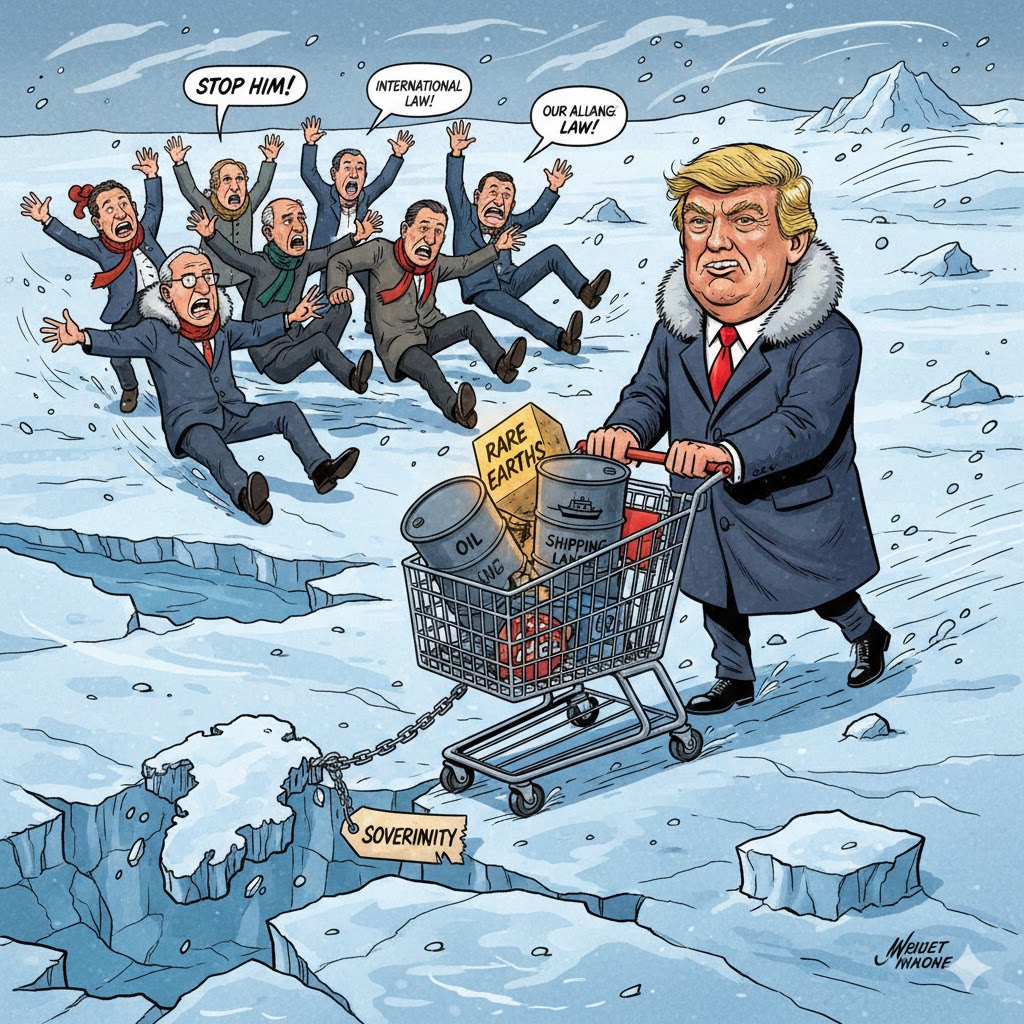
    In the frozen expanse of the Arctic, where melting ice caps expose untapped resources and newly accessible strategic corridors, a once unthinkable scenario is gaining plausibility: the United States, under a resurgent Donald Trump administration, launching a military invasion of Greenland. Framed as a move to secure rare earth minerals, potential oil reserves, and critical military positions amid intensifying great power competition, such an action would redraw global power dynamics and pose a direct threat to the survival of NATO.

    For decades, European NATO members have lagged behind the United States in military development, creating a structural imbalance that leaves the alliance fragile. When combined with America’s recent assertive behavior in resource rich regions such as Nigeria and Venezuela, a unilateral invasion of Greenland could fracture NATO beyond repair. Allies would be forced to confront the limits of collective defense in an era increasingly defined by transactional power politics.

    Historical Context of NATO Imbalances

    NATO was founded in the aftermath of World War II on the principle of collective defense, enshrined in Article 5, which treats an attack on one member as an attack on all. Over time, however, this principle has been undermined by persistent disparities in defense investment and military capability.

    The United States has consistently carried the alliance’s burden, exceeding NATO’s 2 percent of GDP defense spending benchmark and often spending between 3 and 4 percent. This investment funds advanced weapons systems, global force projection, nuclear deterrence, and intelligence capabilities that underpin NATO’s operational effectiveness.

    Many European allies, by contrast, have underinvested for decades. Germany, despite its economic strength, only recently approached the 2 percent threshold after years below 1.5 percent, leaving its military plagued by shortages and aging equipment. Italy and Spain have prioritized social spending over defense readiness, while France, though more capable, remains heavily reliant on U.S. intelligence, logistics, and airlift. This imbalance has fostered dependency and resentment, with Washington increasingly frustrated by what it perceives as free riding within the alliance.

    The U.S. Shift Toward Military Aggression Under Trump

    Donald Trump’s return to the White House in 2025 has transformed this frustration into policy. His administration has embraced a more assertive and openly transactional foreign policy rooted in “America First” militarism. During his first term, Trump famously proposed purchasing Greenland from Denmark, dismissing sovereignty concerns in favor of strategic utility. With climate change accelerating Arctic accessibility, that rhetoric now carries greater urgency.

    Recent U.S. actions abroad illustrate this shift. In Nigeria, American forces conducted targeted operations against Boko Haram factions threatening oil infrastructure in the Niger Delta, securing refineries and pipelines linked to global energy markets. In Venezuela, U.S. backed regime change efforts included direct military involvement aimed at stabilizing oil fields amid state collapse, ensuring continued access to vast petroleum reserves. Both cases reflect a willingness to use force to protect economic and strategic interests without multilateral consensus.

    Greenland fits seamlessly into this pattern. Its rare earth minerals are essential to green energy technologies and advanced weapons systems, while its geographic position offers control over emerging Arctic shipping lanes. In a transactional worldview, Danish sovereignty becomes a negotiable obstacle. An invasion could be framed as a security necessity, but it would represent a dramatic escalation from coercive diplomacy to outright force.

    Potential Ramifications for NATO if the U.S. Invades Greenland

    A U.S. invasion of Greenland would strike at NATO’s core. Greenland, though autonomous, remains under Danish sovereignty, and Denmark is a founding NATO member. In theory, such an attack would trigger Article 5. In practice, Europe’s limited rapid response capacity, insufficient Arctic forces, and reliance on U.S. intelligence and logistics would make meaningful resistance unlikely.

    This paralysis would fracture the alliance. Some states might hesitate, citing domestic opposition or operational constraints, effectively nullifying collective defense. Trust, the foundation of NATO, would erode rapidly as accusations of American imperialism reverberated across European capitals.

    Rival powers would exploit the turmoil. Russia could expand Arctic military patrols and submarine activity, while China might accelerate resource claims and infrastructure investments. The result would be a destabilized Arctic and a weakened Western security architecture.

    In this context, a radical but conceivable outcome emerges: NATO expelling the United States from the alliance. While unprecedented, treaty mechanisms and political consensus could make such a move possible. European states, likely rallying behind Denmark and supported by Greenlandic independence movements, could frame expulsion as a defense of NATO’s founding principles. This would invert the conflict, transforming America from alliance leader to strategic adversary and reshaping global power alignments overnight.

    Thanks for reading The Brooks Brief Substack! This post is public so feel free to share it.

    Share

    Policy Recommendations and Conclusion

    Preventing such a rupture requires decisive action. European NATO members must rapidly increase defense spending beyond the 2 percent benchmark, focusing on modernization, readiness, and Arctic capabilities. Joint procurement programs and coordinated Arctic exercises could reduce dependence on U.S. military infrastructure.

    Diplomatically, multilateral frameworks should be strengthened to address Arctic resource competition. Negotiated access to Greenland’s resources under international oversight would offer a viable alternative to force. At the same time, NATO must clarify enforcement mechanisms and consequences for treaty violations, including expulsion protocols, to preserve institutional credibility.

    A U.S. invasion of Greenland would be a watershed moment. Without correcting internal imbalances and restraining unilateral aggression, NATO risks becoming obsolete in a world increasingly driven by resource competition and power politics. The alliance’s survival depends on restoring equilibrium, mutual accountability, and respect for sovereignty, before strategic rivalry turns former allies into open adversaries.

  • The Evolution of American Imperialism

    The Evolution of American Imperialism

    From Colonial Roots to Venezuela in 2026


    From European Empire to American Power

    American imperialism did not arise in a vacuum. It emerged from the same colonial logic developed by European empires beginning in the late fifteenth century. Spain, Portugal, France, and Britain expanded their influence through conquest, religious justification, and the systematic extraction of wealth. Latin America became a central theater of this expansion, where Indigenous populations were displaced, enslaved, or destroyed to facilitate imperial control. Colonies were not designed for self governance, but rather to serve distant capitals through the extraction of gold, silver, agricultural goods, and eventually oil. Venezuela, like much of the region, existed primarily as a resource supplier rather than a sovereign political entity.

    As European empires weakened in the nineteenth century, the United States moved to fill the vacuum they left behind. The Monroe Doctrine of 1823 was presented as a defensive policy, warning European powers against further intervention in the Western Hemisphere. In practice, it established the United States as the dominant external authority in the region. This doctrine allowed American leaders to justify political interference and military action under the guise of regional protection. Over time, it became a foundational pillar of U.S. expansionism. Rather than rejecting empire, the United States refined it.

    This transformation was reinforced through territorial expansion and military conflict. Manifest Destiny framed westward expansion as both inevitable and divinely sanctioned. The Mexican American War demonstrated the nation’s willingness to use force to secure land, resources, and strategic advantage. By absorbing vast territories, the United States solidified itself as a continental power. These early actions revealed a consistent pattern in American foreign policy. Power, once gained, would be defended and expanded.

    Imperialism in the Twentieth Century

    By the early twentieth century, American imperialism had extended beyond the continent. The Spanish American War marked a decisive shift toward overseas expansion. While promoted as a mission to liberate Cuba, the war resulted in U.S. control over Puerto Rico, Guam, and the Philippines. Cuba itself remained under heavy American influence for decades through economic pressure and military presence. These outcomes demonstrated that American intervention often produced dependency rather than independence. The language of liberation masked the reality of control.

    President Theodore Roosevelt formalized this approach through an assertive foreign policy that embraced intervention as a tool of stability. U.S. involvement in Panama ensured control of the canal and reinforced Washington’s authority in the region. The Roosevelt Corollary expanded the Monroe Doctrine by asserting the United States’ right to intervene in Latin American nations deemed unstable. These actions were justified as necessary to maintain order and prevent European interference. In practice, they protected American commercial and strategic interests. Stability was defined on American terms.

    The Cold War further entrenched imperial behavior under ideological justification. Latin America became a battleground in the global struggle against communism. The United States supported coups and authoritarian regimes in Guatemala, Chile, and elsewhere to prevent leftist governments from gaining power. Democratic outcomes were often disregarded if they conflicted with U.S. strategic goals. These interventions left lasting damage to political institutions and civil societies. The region continues to grapple with that legacy today.

    Venezuela and the Resource Question

    Venezuela’s importance to U.S. strategy has long been tied to its oil reserves. American companies dominated the sector for much of the twentieth century, shaping both economic and political outcomes. Even after nationalization in the 1970s, Venezuela remained closely integrated into U.S. energy markets. Oil revenues fueled the Venezuelan state while binding it to global economic forces. This relationship ensured continued American interest in the country’s internal affairs. Energy security has always been a central concern of U.S. foreign policy.

    The rise of Hugo Chávez marked a turning point in that relationship. His government challenged U.S. influence by asserting state control over resources and pursuing socialist policies. Chávez also aligned Venezuela with global powers that opposed American dominance. These moves were framed domestically as efforts to restore sovereignty and redistribute wealth. Internationally, they were seen as a direct challenge to U.S. influence in the hemisphere. Tensions between Washington and Caracas intensified as a result.

    After Chávez’s death, Nicolás Maduro inherited a country facing mounting economic pressure. Mismanagement, falling oil prices, and sanctions contributed to severe shortages and hyperinflation. Political opposition grew as living conditions deteriorated. The United States responded with escalating sanctions and diplomatic isolation. Over time, Venezuela became a symbol of ideological confrontation and resource competition. The stage was set for direct intervention.

    Venezuela 2026: Imperialism in Real Time

    The U.S. removal of Nicolás Maduro in January 2026 represents a modern expression of American imperial power. The operation was swift, overwhelming, and unilateral. U.S. forces neutralized Venezuela’s air defenses and conducted coordinated strikes across key regions. Maduro was captured within hours and removed from the country. He was transported to the United States to face criminal charges. The speed of the operation signaled overwhelming military superiority.

    American officials justified the intervention as a defense of democracy. They cited disputed elections, allegations of corruption, and humanitarian concerns. Yet the scope and execution of the operation suggested objectives that extended beyond democratic restoration. Statements from U.S. leadership openly discussed managing Venezuela’s transition. Access to oil reserves was explicitly referenced as a strategic priority. This rhetoric closely mirrored earlier interventions driven by economic interest.

    The intervention followed months of escalation and preparation. Sanctions, military buildups, and targeted strikes preceded the final operation. Reports indicated that U.S. forces rehearsed the mission extensively. The planning resembled earlier high profile raids conducted by the United States. This was not a spontaneous response but a calculated decision. The removal of Maduro was the culmination of a long strategy.

    Power Vacuums and Strategic Consequences

    Despite Maduro’s removal, Venezuela remains deeply unstable. Key military and security figures continue to wield significant power. These actors control institutions that are essential to governance and enforcement. Their continued presence complicates any transition to civilian rule. History shows that removing a leader does not dismantle entrenched systems. Power vacuums often invite prolonged conflict rather than resolution.

    Economic uncertainty further complicates the situation. Venezuela’s oil industry is now positioned for restructuring under external influence. Privatization and foreign investment are being discussed as solutions. Whether these changes benefit the Venezuelan population remains unclear. Past examples suggest that external control often prioritizes profit over development. The risk of renewed exploitation is significant.

    International reaction to the intervention has been mixed. Several governments condemned the action as a violation of sovereignty. Regional partners expressed concern over precedent and escalation. Multilateral institutions were largely sidelined. This undermines the credibility of international norms. The intervention reflects a broader erosion of global legal frameworks.

    The Enduring Reality of Empire

    The removal of Nicolás Maduro underscores a central reality of modern geopolitics. American imperialism has not disappeared but adapted to new conditions. Military power is now paired with economic leverage and political narrative. Interventions are framed as humanitarian or democratic while serving strategic interests. This pattern is consistent with earlier imperial practices. The language has changed, but the structure remains.

    For Venezuela, the future is uncertain and fragile. Stability will require more than leadership change. It will demand institutional reform, economic recovery, and genuine sovereignty. For the United States, the intervention raises serious questions about long term consequences. Power exercised without accountability often produces resistance rather than order. True progress may require confronting imperial habits rather than repeating them.

  • The U.S. War on Drugs in 2026

    The U.S. War on Drugs in 2026

    A Century of Policy Failures and Entrenched Inequities


    I. Introduction

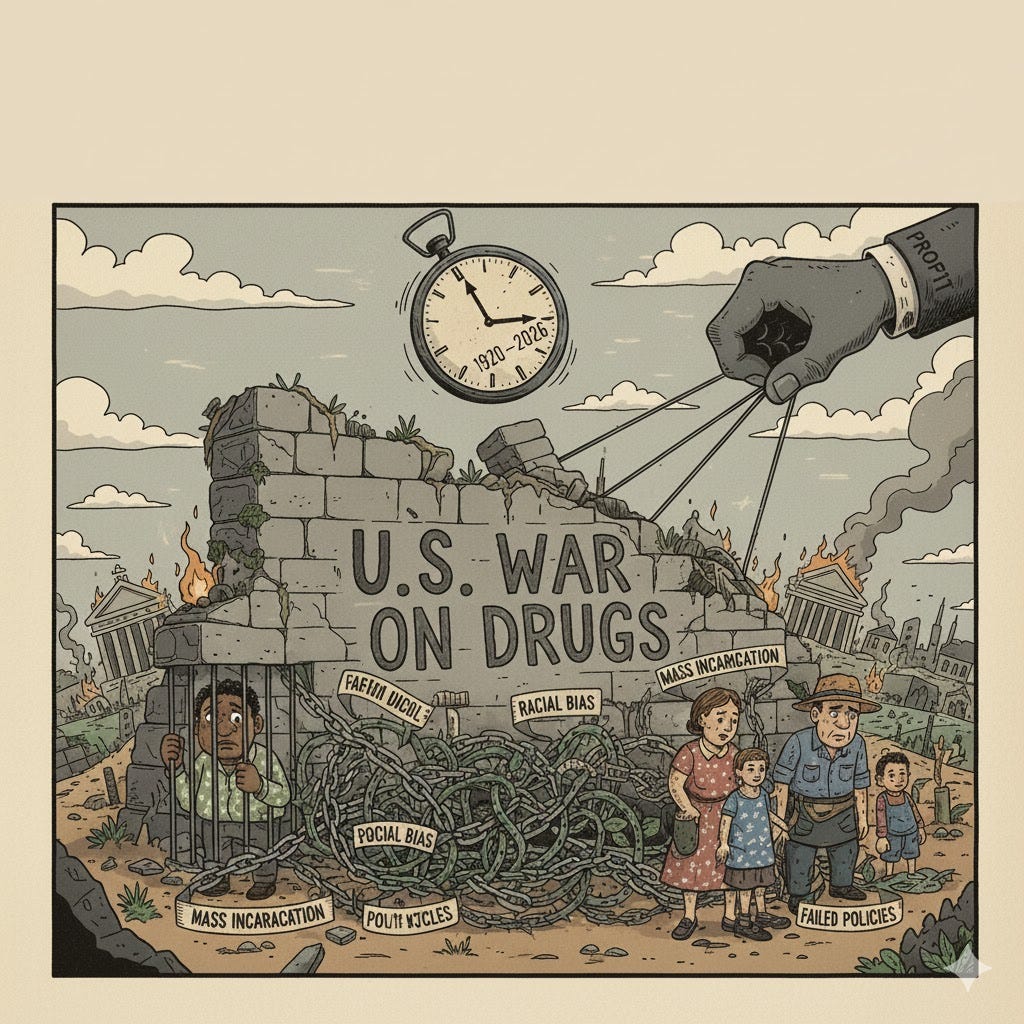
    The U.S. war on drugs, now over five decades old, stands as a monumental policy failure that has deepened social divisions, economic disparities, and international tensions by 2026. What began as a purported effort to curb substance abuse has evolved into a mechanism for mass surveillance, incarceration, and geopolitical maneuvering, costing trillions while drug availability remains rampant. In an era where fentanyl overdoses claim over 50,000 lives annually, the policy’s punitive focus ignores root causes such as poverty and mental health, instead prioritizing enforcement that disproportionately affects marginalized communities. Politicians continue to tout aggressive tactics, including recent boat strikes and tariffs, as victories. Yet overdose rates have only marginally declined from peaks in prior years, suggesting superficial progress amid ongoing crises. This article traces the war’s origins from global imperial conflicts to its modern manifestations, arguing that it serves more as a tool for control and profit than genuine public health intervention. By examining historical precedents and current realities, we reveal how drug policies perpetuate inequality and justify foreign interventions under the guise of security.

    As we enter 2026, the war on drugs faces renewed scrutiny amid shifting political landscapes, with some states advancing decriminalization while federal actions intensify border crackdowns and international sanctions. The Trump administration’s revival of aggressive enforcement, including threats against Mexico and China over fentanyl precursors, echoes past eras but amplifies risks of escalation into broader conflicts. Despite claims of progress, such as a 14.5 percent drop in overdose deaths by late 2025, critics argue these gains stem from prior public health initiatives now being dismantled in favor of militarized approaches. Economic incentives, from private prisons to pharmaceutical lobbying, further entrench the system, turning addiction into a lucrative industry rather than a solvable crisis. Ultimately, this ongoing war highlights a fundamental mismatch between rhetoric and reality, where victory is measured not in lives saved but in budgets allocated and enemies designated.

    II. Historical Foundations: From Global Conflicts to Domestic Epidemics

    The Opium Wars of the mid-19th century set a precedent for how drugs could be weaponized in international power struggles, with Britain forcing opium trade upon China to balance trade deficits and extract concessions. This imperial exploitation led to widespread addiction in China, crippling its society and economy while enriching Western powers, including early American traders who profited from the illicit market. The conflicts demonstrated drugs’ potential as tools of economic warfare, foreshadowing later U.S. policies that blended moral crusades with strategic interests. By the wars’ end, China ceded territories such as Hong Kong, illustrating how drug-related coercion could reshape global maps and alliances. These events planted the seeds for viewing narcotics not just as health issues but as levers for geopolitical dominance, a perspective that would influence American approaches in the centuries ahead.

    During the American Civil War, morphine emerged as a battlefield staple, administered to wounded soldiers to alleviate pain amid brutal combat conditions. Dubbed “Soldier’s Disease,” post-war addiction afflicted tens of thousands of veterans, marking the U.S.’s first major opioid crisis and prompting initial calls for regulation. The widespread availability of morphine through patent medicines exacerbated civilian dependency, blending medical use with unchecked commercial exploitation. This era highlighted the dual-edged nature of opioids: essential for relief yet prone to abuse when poorly managed. As addiction rates soared, it spurred early federal interventions, setting the stage for viewing drugs through a lens of moral panic rather than public health.

    The heroin boom of the early 1900s transformed a supposed medical miracle into a societal scourge, as Bayer marketed it as a safer alternative to morphine only for addiction to explode in urban centers. Racialized fears linked heroin to immigrant groups, fueling discriminatory laws such as the Harrison Narcotics Tax Act of 1914, which criminalized possession and shifted control from doctors to the state. This period saw heroin infiltrate everyday life, from cough syrups to recreational use, amplifying public hysteria and justifying expanded government oversight. The boom underscored how pharmaceutical innovation could backfire without regulation, creating epidemics that policymakers exploited for political gain. By associating drugs with marginalized communities, early 20th-century responses laid the groundwork for the inequities that define the war on drugs today.

    Marijuana prohibition in the United States was deeply intertwined with racial prejudice and social control. In the early 20th century, anti-cannabis campaigns explicitly targeted Mexican immigrants and Black communities, portraying marijuana use as a threat to public safety and morality. Newspapers and policymakers stoked fears that marijuana caused violent behavior, crime, and moral decay among minority populations, framing the substance as inherently dangerous because of the communities associated with it. These narratives facilitated the Marihuana Tax Act of 1937, effectively criminalizing marijuana and establishing a framework that linked drug policy with racial discrimination. The stigma persisted for decades, painting marijuana users as deviant or criminal, while alcohol and tobacco, often consumed by white Americans, faced far lighter regulation. This racialized foundation shaped enforcement patterns, contributed to mass incarceration, and delayed any serious consideration of marijuana as a medical or recreational option for the broader population.

    III. The Formal Declaration: Nixon’s War on Drugs from 1971 Onward

    In 1971, President Nixon declared drugs “public enemy number one,” launching a comprehensive offensive that intertwined domestic law enforcement with efforts to suppress countercultural movements. This declaration led to the creation of the Drug Enforcement Administration (DEA) in 1973, centralizing federal anti-drug operations and emphasizing eradication over treatment. Policies such as mandatory minimum sentences disproportionately targeted non-violent offenders, ballooning prison populations while failing to reduce drug supply. International initiatives, including funding anti-narcotics operations in Colombia, often masked broader U.S. interventions in Latin America. Nixon’s approach, rooted in political strategy, set a tone of militarization that subsequent administrations would amplify.

    Under Reagan in the 1980s, the war escalated with campaigns like “Just Say No” and the 1986 Anti-Drug Abuse Act, which imposed harsh penalties for crack cocaine, exacerbating racial disparities in sentencing. The crack-powder cocaine disparity—treating crack more severely despite similar effects—reflected biases that imprisoned Black communities at far higher rates than white communities using powder cocaine. Funding surged for interdiction and incarceration, fostering a prison-industrial complex that profited from the policy’s failures. International efforts intensified, with U.S. support for fumigation in Andean countries often damaging local economies and environments. This era solidified the war as a bipartisan endeavor, with later presidents such as Clinton expanding prisons through the 1994 Crime Bill, perpetuating a cycle of punishment over prevention.

    The early 2000s saw the explosive rise of OxyContin, a prescription opioid marketed aggressively by Purdue Pharma as a safe, non-addictive painkiller. Widespread promotion to doctors and misleading claims about its addictiveness fueled mass prescription, creating a nationwide epidemic of dependency. Communities across rural and urban America experienced soaring overdose rates, while pharmaceutical companies profited immensely and faced minimal accountability for their role in the crisis. The epidemic exposed how corporate interests could manipulate medical systems, turning treatment into a vector for addiction. OxyContin’s impact extended beyond individual health, straining emergency services, increasing foster care placements, and deepening economic despair in hard-hit regions. This era cemented the link between corporate profit, regulatory failure, and the perpetuation of drug epidemics, setting the stage for the modern opioid crisis that continues to challenge policymakers in 2026.

    IV. The Current Scenario in 2026: Persistent Failures and Evolving Challenges

    Mass incarceration remains a hallmark of the war on drugs in 2026, with over 360,000 people imprisoned for drug offenses, comprising one in five of the total incarcerated population. Despite a 46 percent reduction in drug-related imprisonments from 2007 peaks, the U.S. still spends over $80 billion annually on incarceration, fueling debates on reform amid low crime rates. Partial decriminalization in states such as Oregon has sparked national conversations, yet federal resistance persists, with the prison-industrial complex lobbying against changes. Critics argue that incarceration does little to address addiction, instead creating barriers to reintegration and perpetuating poverty cycles. As overdose deaths hover around 52,000 yearly from fentanyl, calls for abolition or sentencing reform grow louder, highlighting the policy’s inefficacy.

    In 2025, President Trump announced an initiative to reclassify marijuana from a Schedule 1 to a Schedule 3 controlled substance, signaling a potential shift in federal policy that could address one of the longstanding barriers for the legal cannabis industry. While Schedule 3 is still considered a substance controlled, it recognizes medical use and enables financial institutions to work with dispensaries more freely. This reclassification could allow cannabis businesses in legal states to open bank accounts and access credit, reducing reliance on cash operations that have posed significant security risks. Critics caution that the move may not go far enough to rectify decades of harm caused by prohibition, particularly for communities historically targeted by marijuana enforcement. Nevertheless, the policy represents a pragmatic acknowledgment that federal law must align with state-level legalization and evolving public attitudes, highlighting the tension between legacy stigma and contemporary economic and regulatory realities.

    Racial and class inequalities in justice and wealth continue to define drug enforcement, with Black individuals arrested for drug offenses at rates far exceeding their actual usage, despite similar rates across demographics. Felony convictions strip voting rights and employment opportunities for many Americans, widening wealth gaps in communities of color. Pharmaceutical companies implicated in the opioid crisis face minimal accountability while private prisons profit from disproportionate sentences. The shift toward cannabis legalization generates tax revenue but benefits corporations over those historically harmed by prohibition. In 2026, these disparities underscore how the war exacerbates systemic racism, with Black people incarcerated at over four times the rate of whites for similar offenses.

    Drugs also serve as a pretext for international conflicts, with U.S. interventions in Mexico and sanctions on China over fentanyl precursors masking economic and military agendas. The Trump administration’s 2025 tariffs and boat strikes against Venezuelan vessels exemplify this, claiming to disrupt trafficking but risking broader escalations. Operations such as the HALT Fentanyl Act impose mandatory minimums and target precursors, yet cartels adapt, shifting routes while U.S. deaths remain high. Proxy conflicts in Latin America, funded under anti-drug banners, advance U.S. interests but devastate local populations. As tensions with China rise over synthetic opioids, the policy blends national security with drug control, justifying sanctions and military aid that often fuel instability.

    Thanks for reading The Brooks Brief Substack! This post is public so feel free to share it.

    Share

    V. Conclusion

    From the Opium Wars’ imperial exploitation to 2026’s militarized fentanyl crackdowns, the U.S. war on drugs has consistently prioritized control over compassion, entrenching inequalities and geopolitical strife. Historical epidemics such as morphine addiction after the Civil War and the heroin boom revealed drugs’ medical perils, yet responses veered toward criminalization rather than care. Nixon’s declaration and subsequent escalations built a punitive framework that ballooned incarceration and racial divides with little impact on supply. Today, mass imprisonment, justice inequities, and international excuses persist, costing lives and billions while overdose crises endure. This trajectory exposes policy as a mechanism for profit and power rather than public welfare.

    Breaking this cycle in 2026 demands harm reduction strategies, full decriminalization, and investments in mental health and poverty alleviation rather than enforcement. With elections looming, polarized debates could spur reforms such as rescheduling cannabis federally or expanding treatment access. International cooperation, rather than unilateral strikes, might address global supply chains more effectively. Ultimately, reimagining drugs as a health issue could save resources and lives, fostering equity in a landscape scarred by decades of failure. The path forward lies in evidence-based approaches, not endless war.