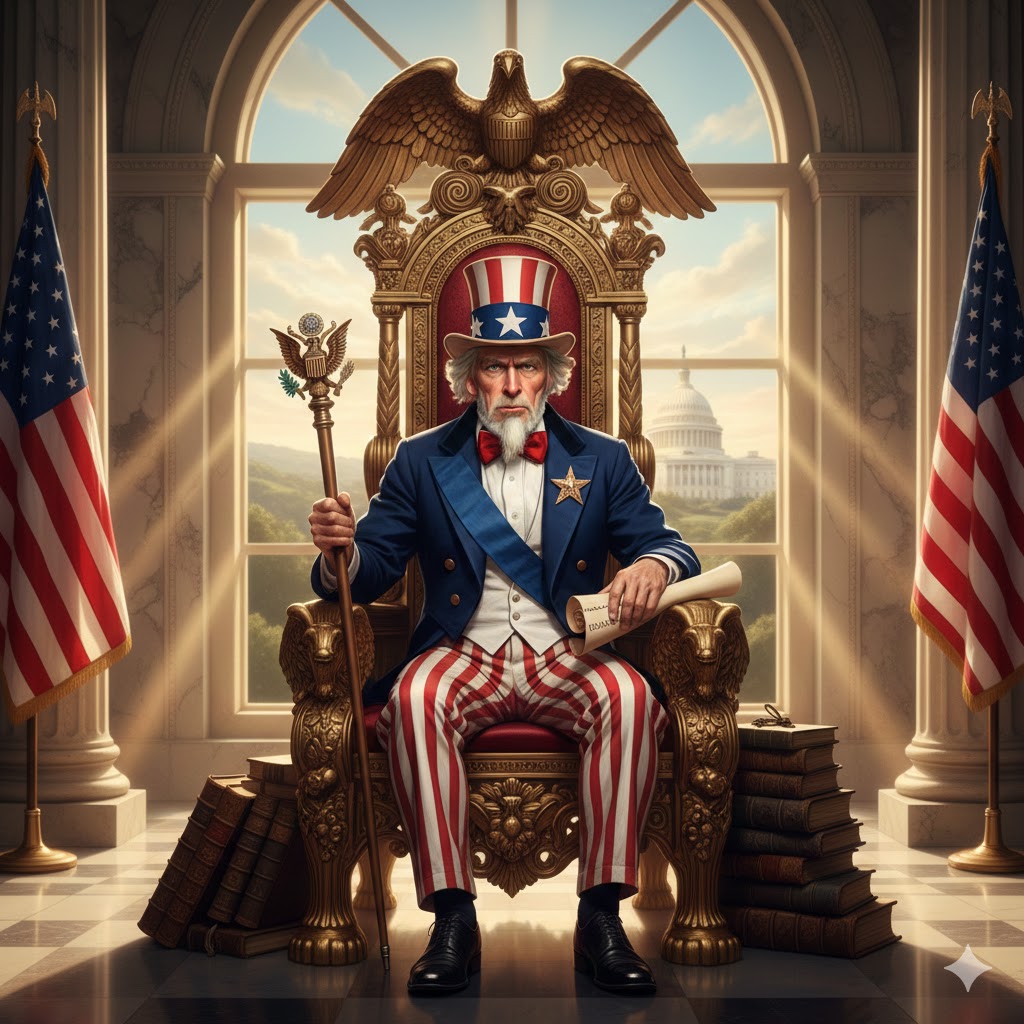
From Colonial Roots to Venezuela in 2026
From European Empire to American Power
American imperialism did not arise in a vacuum. It emerged from the same colonial logic developed by European empires beginning in the late fifteenth century. Spain, Portugal, France, and Britain expanded their influence through conquest, religious justification, and the systematic extraction of wealth. Latin America became a central theater of this expansion, where Indigenous populations were displaced, enslaved, or destroyed to facilitate imperial control. Colonies were not designed for self governance, but rather to serve distant capitals through the extraction of gold, silver, agricultural goods, and eventually oil. Venezuela, like much of the region, existed primarily as a resource supplier rather than a sovereign political entity.
As European empires weakened in the nineteenth century, the United States moved to fill the vacuum they left behind. The Monroe Doctrine of 1823 was presented as a defensive policy, warning European powers against further intervention in the Western Hemisphere. In practice, it established the United States as the dominant external authority in the region. This doctrine allowed American leaders to justify political interference and military action under the guise of regional protection. Over time, it became a foundational pillar of U.S. expansionism. Rather than rejecting empire, the United States refined it.
This transformation was reinforced through territorial expansion and military conflict. Manifest Destiny framed westward expansion as both inevitable and divinely sanctioned. The Mexican American War demonstrated the nation’s willingness to use force to secure land, resources, and strategic advantage. By absorbing vast territories, the United States solidified itself as a continental power. These early actions revealed a consistent pattern in American foreign policy. Power, once gained, would be defended and expanded.
Imperialism in the Twentieth Century
By the early twentieth century, American imperialism had extended beyond the continent. The Spanish American War marked a decisive shift toward overseas expansion. While promoted as a mission to liberate Cuba, the war resulted in U.S. control over Puerto Rico, Guam, and the Philippines. Cuba itself remained under heavy American influence for decades through economic pressure and military presence. These outcomes demonstrated that American intervention often produced dependency rather than independence. The language of liberation masked the reality of control.
President Theodore Roosevelt formalized this approach through an assertive foreign policy that embraced intervention as a tool of stability. U.S. involvement in Panama ensured control of the canal and reinforced Washington’s authority in the region. The Roosevelt Corollary expanded the Monroe Doctrine by asserting the United States’ right to intervene in Latin American nations deemed unstable. These actions were justified as necessary to maintain order and prevent European interference. In practice, they protected American commercial and strategic interests. Stability was defined on American terms.
The Cold War further entrenched imperial behavior under ideological justification. Latin America became a battleground in the global struggle against communism. The United States supported coups and authoritarian regimes in Guatemala, Chile, and elsewhere to prevent leftist governments from gaining power. Democratic outcomes were often disregarded if they conflicted with U.S. strategic goals. These interventions left lasting damage to political institutions and civil societies. The region continues to grapple with that legacy today.
Venezuela and the Resource Question
Venezuela’s importance to U.S. strategy has long been tied to its oil reserves. American companies dominated the sector for much of the twentieth century, shaping both economic and political outcomes. Even after nationalization in the 1970s, Venezuela remained closely integrated into U.S. energy markets. Oil revenues fueled the Venezuelan state while binding it to global economic forces. This relationship ensured continued American interest in the country’s internal affairs. Energy security has always been a central concern of U.S. foreign policy.
The rise of Hugo Chávez marked a turning point in that relationship. His government challenged U.S. influence by asserting state control over resources and pursuing socialist policies. Chávez also aligned Venezuela with global powers that opposed American dominance. These moves were framed domestically as efforts to restore sovereignty and redistribute wealth. Internationally, they were seen as a direct challenge to U.S. influence in the hemisphere. Tensions between Washington and Caracas intensified as a result.
After Chávez’s death, Nicolás Maduro inherited a country facing mounting economic pressure. Mismanagement, falling oil prices, and sanctions contributed to severe shortages and hyperinflation. Political opposition grew as living conditions deteriorated. The United States responded with escalating sanctions and diplomatic isolation. Over time, Venezuela became a symbol of ideological confrontation and resource competition. The stage was set for direct intervention.
Venezuela 2026: Imperialism in Real Time
The U.S. removal of Nicolás Maduro in January 2026 represents a modern expression of American imperial power. The operation was swift, overwhelming, and unilateral. U.S. forces neutralized Venezuela’s air defenses and conducted coordinated strikes across key regions. Maduro was captured within hours and removed from the country. He was transported to the United States to face criminal charges. The speed of the operation signaled overwhelming military superiority.
American officials justified the intervention as a defense of democracy. They cited disputed elections, allegations of corruption, and humanitarian concerns. Yet the scope and execution of the operation suggested objectives that extended beyond democratic restoration. Statements from U.S. leadership openly discussed managing Venezuela’s transition. Access to oil reserves was explicitly referenced as a strategic priority. This rhetoric closely mirrored earlier interventions driven by economic interest.
The intervention followed months of escalation and preparation. Sanctions, military buildups, and targeted strikes preceded the final operation. Reports indicated that U.S. forces rehearsed the mission extensively. The planning resembled earlier high profile raids conducted by the United States. This was not a spontaneous response but a calculated decision. The removal of Maduro was the culmination of a long strategy.
Power Vacuums and Strategic Consequences
Despite Maduro’s removal, Venezuela remains deeply unstable. Key military and security figures continue to wield significant power. These actors control institutions that are essential to governance and enforcement. Their continued presence complicates any transition to civilian rule. History shows that removing a leader does not dismantle entrenched systems. Power vacuums often invite prolonged conflict rather than resolution.
Economic uncertainty further complicates the situation. Venezuela’s oil industry is now positioned for restructuring under external influence. Privatization and foreign investment are being discussed as solutions. Whether these changes benefit the Venezuelan population remains unclear. Past examples suggest that external control often prioritizes profit over development. The risk of renewed exploitation is significant.
International reaction to the intervention has been mixed. Several governments condemned the action as a violation of sovereignty. Regional partners expressed concern over precedent and escalation. Multilateral institutions were largely sidelined. This undermines the credibility of international norms. The intervention reflects a broader erosion of global legal frameworks.
The Enduring Reality of Empire
The removal of Nicolás Maduro underscores a central reality of modern geopolitics. American imperialism has not disappeared but adapted to new conditions. Military power is now paired with economic leverage and political narrative. Interventions are framed as humanitarian or democratic while serving strategic interests. This pattern is consistent with earlier imperial practices. The language has changed, but the structure remains.
For Venezuela, the future is uncertain and fragile. Stability will require more than leadership change. It will demand institutional reform, economic recovery, and genuine sovereignty. For the United States, the intervention raises serious questions about long term consequences. Power exercised without accountability often produces resistance rather than order. True progress may require confronting imperial habits rather than repeating them.
Leave a Reply