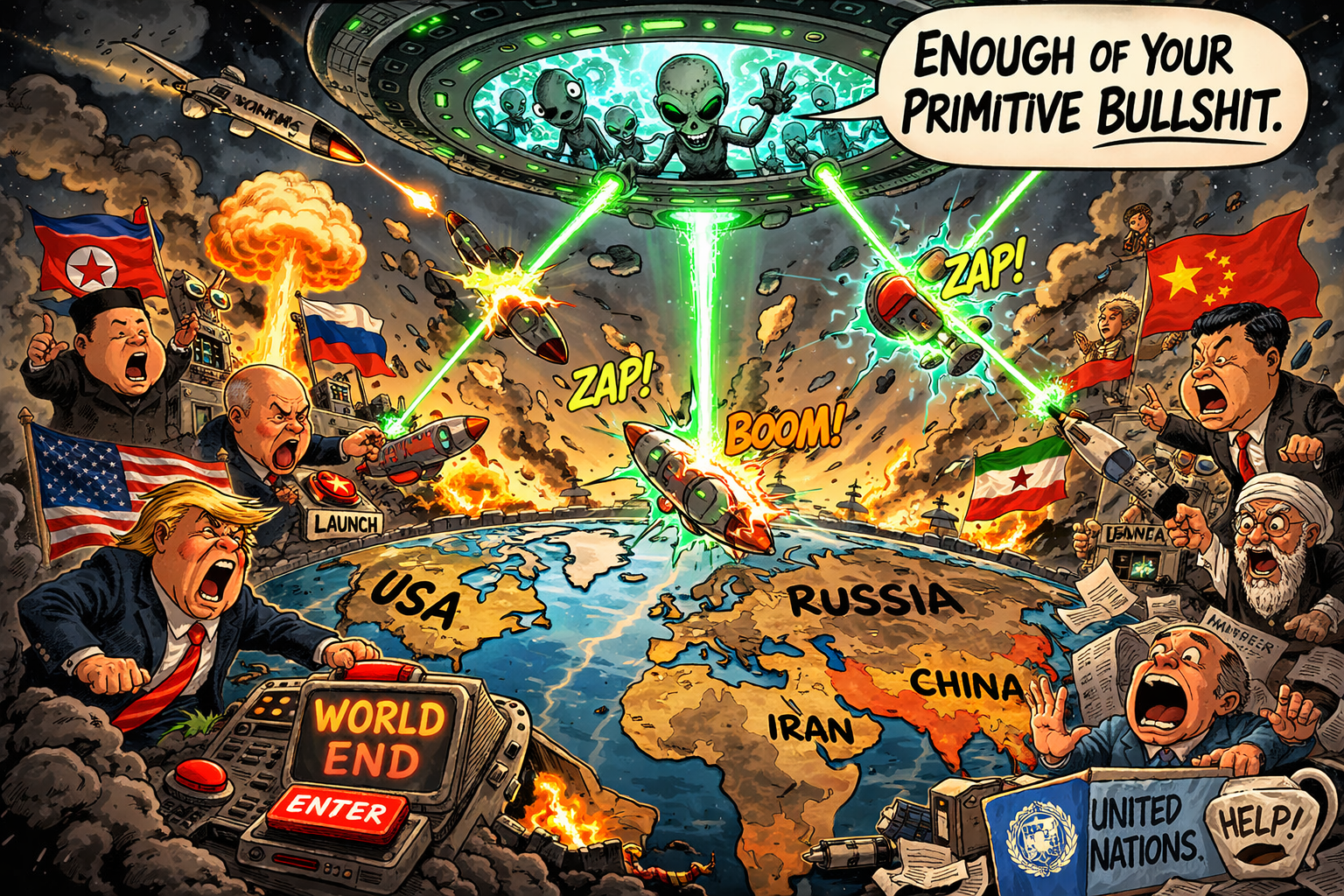
Strategic Risks, Political Contradictions, and Unexplained Phenomena
Executive Summary
Nuclear weapons remain one of the most significant existential threats facing humanity. Modern thermonuclear arsenals possess the capability to destroy entire cities within minutes while generating cascading humanitarian, environmental, and economic consequences that extend far beyond the battlefield. The risks associated with nuclear conflict include immediate blast damage, electromagnetic pulses that could cripple modern infrastructure, and long term radioactive fallout that affects populations far removed from the original target. In an interconnected global system, the use of even a limited number of nuclear weapons would likely produce worldwide repercussions that challenge the stability of international governance structures. For this reason, nuclear disarmament and non proliferation remain central issues in international security debates.
At the same time, the global non proliferation framework faces credibility challenges due to political inconsistencies among nuclear armed states. Major powers advocate strict controls on emerging nuclear programs while simultaneously maintaining and modernizing large strategic arsenals. This dynamic has created perceptions of unequal enforcement within the international system, particularly among states that view nuclear weapons as essential deterrents against stronger adversaries. Such tensions complicate efforts to strengthen global treaties and reduce the likelihood of further proliferation. Without credible commitments from established nuclear powers, the legitimacy of non proliferation norms may continue to erode.
Alongside these geopolitical concerns, a less conventional discussion has emerged regarding reports of unidentified aerial phenomena interacting with nuclear weapons systems. Testimonies from military personnel and declassified documents have described incidents in which unidentified craft appeared near nuclear facilities or weapons tests. In some accounts, these objects allegedly interfered with missile systems or surveillance equipment. While such claims remain controversial and require careful scrutiny, they have attracted attention from researchers and government agencies investigating unexplained aerial encounters. These reports raise questions about whether unknown actors or phenomena have monitored nuclear activity during the atomic age.
Taken together, these developments highlight the need for renewed strategic thinking regarding nuclear governance. Strengthening international arms control agreements remains essential to reducing the probability of nuclear conflict. Greater transparency regarding nuclear doctrine and weapons modernization could also help rebuild trust between competing states. At the same time, serious investigation of unexplained aerial phenomena may contribute to a broader understanding of potential security implications. Addressing these issues simultaneously may provide policymakers with new perspectives on managing one of the most dangerous technologies ever created.
The Brooks Brief Substack is a reader-supported publication. To receive new posts and support my work, consider becoming a free or paid subscriber.
Introduction
The nuclear age began in 1945 with the successful development of atomic weapons through the Manhattan Project and the subsequent bombings of Hiroshima and Nagasaki. These events demonstrated that technological breakthroughs could dramatically transform the nature of warfare and international power politics. Since that time, nuclear weapons have become central elements of deterrence strategies among major military powers. Their destructive capacity has produced a paradox in which the threat of catastrophic conflict is intended to prevent war between nuclear armed states. This logic has shaped global security policy for more than seven decades.
Today nine countries are widely recognized as possessing nuclear weapons. These states include the United States, Russia, China, France, the United Kingdom, India, Pakistan, Israel, and North Korea. Together they maintain thousands of warheads and delivery systems capable of striking targets across continents within minutes. The presence of these arsenals continues to influence diplomatic negotiations, regional rivalries, and alliance structures. While nuclear deterrence has arguably prevented direct conflict between major powers, it also sustains an environment in which the risk of escalation remains present.
International agreements have attempted to manage this risk by establishing norms and legal frameworks for nuclear restraint. The Treaty on the Non Proliferation of Nuclear Weapons has served as the cornerstone of global non proliferation efforts since 1970. More recently, the Treaty on the Prohibition of Nuclear Weapons has sought to establish a broader normative rejection of nuclear arms. Despite these initiatives, implementation challenges remain significant due to geopolitical rivalries and disagreements about enforcement mechanisms. Some nuclear states have resisted full participation in disarmament frameworks, arguing that security conditions do not yet permit large scale reductions.
The complexity of these issues requires a comprehensive assessment that addresses both strategic and political dimensions of nuclear policy. Nuclear weapons create universal risks that extend beyond the borders of any single nation. At the same time, enforcement of non proliferation norms often reflects power dynamics within the international system. In recent years, discussions of unexplained aerial phenomena near nuclear installations have also added a new dimension to debates about technological oversight and security. Understanding these intersecting factors is essential for developing effective strategies that reduce nuclear dangers while maintaining global stability.

DAYTON, UNITED STATES – Jan 16, 2021: A close-up shot of nuclear bombs, nukes, and weapons of mass destruction in the museum
The Existential Threat of Nuclear Weapons
Nuclear weapons present a level of destructive capability unmatched by any other category of military technology. A single modern thermonuclear warhead can generate an explosion equivalent to millions of tons of conventional explosives. Such a detonation would produce intense heat, pressure waves, and radiation capable of annihilating large metropolitan areas within seconds. In densely populated regions the resulting casualties could reach into the millions almost immediately. Infrastructure destruction would further compound humanitarian crises by disrupting healthcare systems, transportation networks, and communication channels.
Beyond the immediate destruction, nuclear weapons produce secondary effects that can destabilize the global environment. Firestorms ignited by nuclear detonations could release massive quantities of soot and debris into the upper atmosphere. Some scientific models suggest that a large scale nuclear exchange might trigger a phenomenon commonly referred to as nuclear winter. Under this scenario, sunlight reaching the Earth’s surface would decline significantly, causing global temperatures to fall and agricultural production to collapse. Even limited regional conflicts involving nuclear weapons could therefore have worldwide consequences.
Radioactive fallout represents another major hazard associated with nuclear detonations. After an explosion, radioactive particles are lifted into the atmosphere and carried by prevailing winds over vast distances. These particles eventually settle on land and water, contaminating ecosystems and entering food chains. Unlike conventional weapons, nuclear fallout does not remain confined to the battlefield or the borders of the combatant states. Countries far removed from the conflict zone may still experience environmental and public health consequences.
Historical events illustrate the long lasting effects of radioactive contamination. The 1986 nuclear disaster at Chernobyl demonstrated how radiation released in one location can spread across an entire continent. During the era of atmospheric nuclear testing in the mid twentieth century, radioactive particles circulated globally and were detected thousands of miles from the original test sites. These experiences show that nuclear hazards operate on a planetary scale rather than a purely national one. As a result, the consequences of nuclear conflict would almost certainly affect neutral states and allies alike.
The cumulative implications of these risks underscore the importance of preventing nuclear war under any circumstances. Military planners may view nuclear weapons primarily through the lens of deterrence and strategic balance. However, the environmental and humanitarian consequences extend far beyond traditional concepts of military victory or defeat. Even a limited exchange could produce irreversible damage to global ecosystems and human populations. This reality reinforces the urgency of reducing reliance on nuclear arsenals as instruments of national security.

Contradictions in Nuclear Non Proliferation Policy
Efforts to prevent the spread of nuclear weapons have long been complicated by the policies of established nuclear powers. The permanent members of the United Nations Security Council possess some of the largest nuclear arsenals in existence. At the same time, these states often lead international campaigns aimed at preventing other nations from acquiring similar capabilities. While these efforts are framed as necessary for global stability, they also create perceptions of unequal standards within the international system. Many observers argue that this imbalance undermines the legitimacy of non proliferation agreements.
The Treaty on the Non Proliferation of Nuclear Weapons was originally designed as a compromise between nuclear and non nuclear states. Under its framework, non nuclear countries agreed to refrain from developing atomic weapons in exchange for access to peaceful nuclear technology and a commitment by nuclear powers to pursue disarmament. Over time, however, progress toward meaningful reductions has been uneven. Several nuclear armed states have modernized their arsenals while maintaining thousands of operational warheads. This situation has led some critics to argue that the treaty structure allows powerful countries to retain strategic advantages indefinitely.
These tensions become especially visible when sanctions or diplomatic pressure are directed at states attempting to develop nuclear capabilities. Countries such as Iran and North Korea have faced extensive international scrutiny and punitive measures over their nuclear programs. Supporters of these policies argue that preventing additional nuclear states is essential for maintaining global security. Critics counter that such actions appear selective when other countries maintain large nuclear stockpiles with relatively limited pressure to disarm. This dynamic contributes to perceptions that nuclear governance is shaped by geopolitical alliances rather than universal principles.
Regional security concerns further complicate the issue of proliferation. India and Pakistan both developed nuclear weapons in response to longstanding rivalry and concerns about strategic vulnerability. Israel maintains a policy of nuclear ambiguity that has been widely understood but rarely addressed directly in international forums. In each case, national leaders have justified nuclear capabilities as essential deterrents against hostile neighbors. These examples illustrate how security dilemmas can motivate states to pursue nuclear weapons even when international agreements discourage such actions.
Addressing these contradictions requires a renewed commitment to equitable disarmament efforts. If nuclear powers expect other states to remain non nuclear, they must demonstrate credible progress toward reducing their own arsenals. Transparency in nuclear doctrine and modernization programs could also help rebuild confidence in international agreements. Without visible leadership from the largest nuclear states, the long term effectiveness of the non proliferation regime may continue to weaken. Strengthening global security therefore depends on aligning political commitments with practical policy actions.

Unidentified Aerial Phenomena and Nuclear Systems
In recent decades, reports have emerged describing unidentified aerial phenomena observed near nuclear facilities and weapons tests. These accounts have come from military personnel, radar operators, and intelligence officials in multiple countries. Some witnesses have claimed that unidentified craft appeared during missile tests or near strategic weapons installations. In several cases, these objects were reportedly tracked by radar or observed visually by trained personnel. Such incidents have contributed to ongoing debates about the nature and origin of unexplained aerial encounters.
One frequently cited event occurred in 1967 at a missile facility in Montana. According to testimony from former Air Force officers, a group of intercontinental ballistic missiles reportedly became temporarily inoperable during the appearance of an unidentified craft above the installation. Witnesses described the object as hovering silently before the missile systems unexpectedly shut down. Although technical explanations have been proposed, the incident has remained a subject of discussion among researchers studying unexplained military encounters. Similar claims have been reported at other locations associated with nuclear weapons operations.
Additional accounts involve missile testing environments where unidentified objects were allegedly observed near test vehicles. In one widely discussed case from the 1960s, a test missile off the coast of California was reportedly tracked by cameras when an unidentified object appeared to approach it. Some observers later suggested that the object emitted beams of light that disrupted the missile’s trajectory. While these claims remain disputed and difficult to verify, they have become part of the broader narrative linking unidentified phenomena with nuclear technology. Such stories continue to circulate in both academic discussions and popular media.
Reports of similar incidents have also surfaced in other countries. Former Soviet military personnel have described events in which unidentified aerial objects appeared near nuclear installations during the Cold War. In one account, officers reported that missile systems briefly entered an unexpected state of readiness before returning to normal operations. These testimonies suggest that unexplained encounters may not be limited to a single nation or military organization. Instead, they could represent a broader pattern of observations near strategic military infrastructure.
Government institutions have increasingly acknowledged the need to investigate unidentified aerial phenomena in a systematic manner. In the United States, defense agencies have established investigative offices tasked with analyzing reports from pilots and military personnel. These efforts focus primarily on determining whether the phenomena represent advanced foreign technology, sensor anomalies, or other unexplained events. While definitive conclusions remain elusive, the growing volume of documented encounters has encouraged further study. Understanding these incidents may eventually contribute to a more comprehensive picture of potential security risks.

Policy Recommendations
Strengthening international arms control agreements should remain a central priority for global security policy. Multilateral negotiations could encourage nuclear armed states to adopt verifiable reductions in their stockpiles. Establishing clear timelines and monitoring mechanisms would help ensure that commitments translate into measurable progress. Cooperative verification frameworks involving international inspectors could also increase confidence among participating states. Over time, such measures may lay the foundation for broader disarmament initiatives.
Transparency in nuclear doctrine and strategic modernization programs is equally important. Governments often classify large portions of their nuclear policies for security reasons. While secrecy can be necessary in some circumstances, excessive opacity can also fuel mistrust between states. Declassifying certain historical records and policy frameworks could provide greater clarity about strategic intentions. Increased openness may reduce misperceptions that contribute to arms races and escalation risks.
International cooperation should also extend to research regarding unidentified aerial phenomena. Governments around the world have collected reports from pilots, radar operators, and military observers over many decades. Establishing a multinational research initiative could help consolidate these data sets and analyze them using consistent scientific methods. Such collaboration would improve understanding of whether these phenomena represent natural events, technological systems, or unknown variables. Careful investigation may also clarify whether any connection exists between these observations and nuclear installations.
Public awareness and education represent another important component of nuclear risk reduction. Many citizens remain unaware of the full humanitarian and environmental consequences of nuclear conflict. Educational initiatives can help inform public discourse and encourage democratic accountability in nuclear policymaking. Universities, research institutes, and policy organizations all have roles to play in expanding public understanding. A more informed global population may place greater pressure on political leaders to pursue responsible nuclear policies.
Finally, international institutions should continue to serve as platforms for dialogue and cooperation on nuclear governance. Organizations such as the United Nations can facilitate negotiations, provide forums for dispute resolution, and coordinate scientific research efforts. While political disagreements between major powers remain significant, sustained diplomatic engagement is essential for managing nuclear risks. Even incremental progress toward transparency and arms reduction can contribute to long term stability. Continued collaboration across political boundaries will remain critical in addressing the nuclear challenge.
Thanks for reading The Brooks Brief Substack! This post is public so feel free to share it.
Conclusion
Nuclear weapons continue to shape global security in profound and complex ways. Their unparalleled destructive capacity ensures that any large scale conflict involving nuclear states would have consequences far beyond traditional battlefields. The environmental, humanitarian, and economic impacts of nuclear war would likely affect every region of the world. Preventing such an outcome therefore remains one of the most important responsibilities facing international policymakers. Achieving this objective requires sustained diplomatic engagement and credible commitments to arms reduction.
At the same time, the global non proliferation framework must confront persistent credibility challenges. When nuclear armed states maintain large arsenals while demanding restraint from others, perceptions of unequal enforcement inevitably emerge. Addressing these contradictions will require leadership from the most powerful countries in the international system. Demonstrating genuine progress toward disarmament could restore confidence in the broader non proliferation regime. Without such progress, the risk of additional states seeking nuclear capabilities may increase.
The emergence of renewed interest in unidentified aerial phenomena adds an unconventional dimension to the discussion of nuclear security. Reports of encounters near nuclear facilities have prompted governments to reexamine unexplained aerial events with greater seriousness. While definitive conclusions remain uncertain, systematic research may reveal whether these incidents have implications for national or international security. Careful investigation is therefore warranted as part of a broader effort to understand all potential risks surrounding nuclear technology. Integrating scientific inquiry with strategic policy analysis may help illuminate issues that have long remained unexplained.
Ultimately, nuclear weapons represent both a technological achievement and a profound moral dilemma. Humanity has developed the capacity to destroy itself while simultaneously attempting to manage that capability through political institutions and diplomatic agreements. Whether the future brings deeper disarmament or continued reliance on nuclear deterrence will depend on choices made by governments and societies. Expanding transparency, strengthening international cooperation, and pursuing rigorous research can all contribute to reducing nuclear dangers. The stakes involved ensure that the pursuit of these goals will remain a defining challenge of the twenty first century.
Leave a Reply