In November 2025, the United States faces a national debt that has surpassed $38 trillion. This staggering figure represents more than 100 percent of the country’s GDP. The mounting debt, fueled by years of deficit spending, tax cuts, and emergency economic measures, is no longer just a ledger entry. It is reshaping American foreign policy in profound ways. As interest payments consume an ever larger share of the federal budget and are projected to reach $1.2 trillion annually by the end of the decade, the pressure to secure economic advantages abroad intensifies. Analysts warn that this fiscal strain could push the United States toward more assertive and even hostile stances against resource rich nations. This echoes historical moments when economic desperation influenced geopolitical strategy. At home, the debt casts a long shadow over social programs and forces painful cuts that affect millions. While policymakers debate inflation, the spiraling debt has emerged as a true existential threat that could weaken America’s global standing and internal stability.
Historical Echoes: The Iraq Invasion and the Thirst for Oil
To understand where U.S. foreign policy might be headed under growing fiscal pressure, it helps to revisit the 2003 invasion of Iraq. Officially framed as a response to weapons of mass destruction and terrorism, the conflict has long been scrutinized for its underlying motives related to oil. Iraq sits atop some of the world’s largest proven oil reserves, and its industry was heavily nationalized prior to the war. Once the invasion ended Saddam Hussein’s regime, Iraq’s oil sector opened to Western companies that secured lucrative contracts and expanded global supply. Critics, including former Federal Reserve Chairman Alan Greenspan, have argued that the war was largely about oil, since securing access could stabilize prices and reduce reliance on foreign suppliers.
The invasion occurred at a time when U.S. debt was rising in the aftermath of 9/11, and military spending added trillions more. Yet the economic rationale was clear. Controlling Iraqi oil could help offset fiscal strain by ensuring cheaper energy imports and strengthening allied economies. This pattern of resource driven intervention remains a warning today. As debt climbs, similar impulses may resurface, targeting nations whose natural resources could help alleviate America’s economic burdens.
Current Flashpoints: Aggression Toward Venezuela and Nigeria
Fast forward to 2025 and signs of heightened U.S. assertiveness are emerging in dealings with Venezuela and Nigeria. Venezuela holds the largest proven oil reserves on Earth and has faced escalating pressure from the Trump administration. Recent U.S. actions have included a new phase of covert operations, increased intelligence activity, and legal designations aimed at destabilizing the Maduro regime. Measures such as labeling Venezuelan government linked groups as terrorist organizations, conducting maritime strikes, and even considering psychological warfare tactics all point to a more aggressive posture.
Many analysts argue that the underlying goal extends beyond promoting democracy. The United States may seek a government that is more aligned with American interests, especially if such a shift would open Venezuelan oil to U.S. markets. Maduro’s threats against neighboring Guyana, another emerging oil hotspot, have only heightened tensions and created opportunities for Washington to position itself as both a stabilizing force and a strategic beneficiary.
A similar pattern is developing with Nigeria, Africa’s largest oil producer. The Trump administration has redesignated Nigeria as a Country of Particular Concern over religious freedom issues, which opens the door to sanctions and expanded military involvement. Discussions of troop deployments and a $346 million weapons sale signal a shift toward a more aggressive policy. Although framed in terms of security and human rights, this pivot coincides with America’s need for reliable access to Nigeria’s oil as debt servicing demands more federal resources. The United States remains one of Nigeria’s top investors in petroleum, and deeper involvement could ensure more stable supplies and lower import costs.
These examples show how debt driven assertiveness manifests today. It does not always take the form of a full scale invasion. Instead, it emerges through escalating pressure, strategic partnerships, sanctions, and selective displays of military power aimed at securing resource access.
Domestic Fallout: Slicing Social Safety Nets
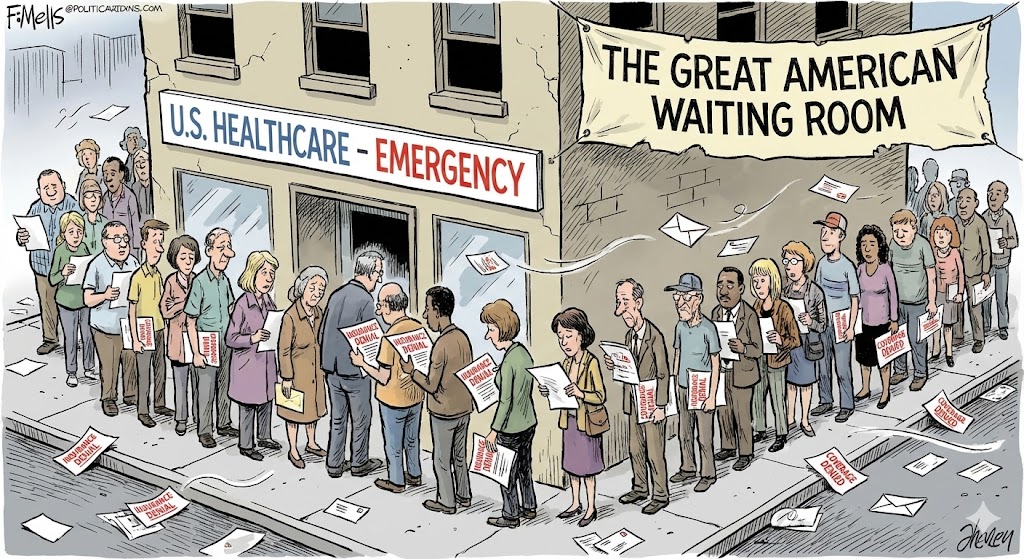
America’s aggressive pivot abroad is mirrored at home by sweeping austerity measures. In fiscal year 2025, the federal deficit reached $1.8 trillion, prompting sharp cost cutting. The One Big Beautiful Bill Act, led by Republican lawmakers, has triggered major reductions in food assistance, health care, education, and student loans. These are the largest cuts to social programs in U.S. history. Medicaid and SNAP face reductions of hundreds of billions of dollars over the coming decade, potentially stripping coverage from millions of low income Americans and triggering widespread job losses in the health care sector.
Medicare also faces major cuts, further burdening elderly and vulnerable populations. Although tariff revenues reached a record $195 billion in 2025, they are nowhere near enough to counterbalance rising debt costs. As interest rates on U.S. debt increase and the cost of servicing that debt grows, social programs become easy targets. Funds are diverted away from welfare and toward meeting financial obligations. The result is a society where fiscal priorities fuel widening inequality and weaken the foundations of the American dream.
The True Battle: Debt Over Inflation
While the Federal Reserve continues its battle against inflation, which hovered near 3 percent in late 2025, the national debt poses a more serious long term threat. Some financial analysts argue that escaping the $38 trillion debt trap may require accepting higher inflation to erode the real value of the debt. This approach carries risks for the independence of the Federal Reserve and could undermine long term economic stability. High levels of debt also threaten to crowd out private investment and push interest rates even higher. Government spending remains a primary driver of economic growth, but that growth increasingly relies on unsustainable borrowing. Debt grew by an astonishing $2.2 trillion in FY2025 alone. If left unaddressed, this pattern could create a vicious cycle that pushes the United States toward more aggressive foreign policies, deeper cuts at home, and a gradual erosion of global trust.
A Precarious Path Forward
America’s high national debt is far more than an economic statistic. It is a force that is reshaping the nation’s foreign policy and domestic landscape. From Iraq to Venezuela and Nigeria, the pattern of resource focused intervention continues. At home, millions face rising hardships as social safety nets fray. As inflation debates rage, the debt spiral demands urgent reform. Solutions might include balanced budgets, targeted tax reforms, or innovative financial strategies. Without decisive action, the debt will continue to push America toward more conflict abroad and deeper inequality at home. The question is not whether the debt will reshape the nation. The question is how far it will push the boundaries of power, policy, and sacrifice.
As climate change reshapes the planet, water is no longer a resource that can be taken for granted. It is the lifeblood of civilizations. Without enough freshwater, societies crumble, crops fail, livestock dies, and human populations face famine and displacement. As global demand surges and supplies shrink, tensions rise. Many experts warn that water scarcity could soon ignite future wars, turning conflicts over this essential resource into a common feature of international relations. The United Nations estimates that by 2040, nearly 40 percent of the world’s population may experience severe water shortages, deepening inequalities and geopolitical rivalries. This article explores the political undercurrents of water scarcity and how it threatens to spark international hostilities while highlighting the urgent need for diplomatic solutions.
Water: The Cornerstone of Civilization
Water is indispensable for human survival and progress. It sustains agriculture, which accounts for roughly 70 percent of global freshwater use. It enables the cultivation of staple crops, supports livestock, and underpins global food security. Beyond farming, water powers industries, generates electricity, and keeps sanitation systems functioning, preventing diseases that can devastate populations.
Yet the global supply is limited. Only a tiny fraction of Earth’s water is freshwater, and much of that is locked in glaciers and deep aquifers. As population growth continues toward nearly 10 billion people by 2050, demand rises sharply. Urbanization and industrialization only add more pressure. In regions such as sub-Saharan Africa and South Asia, where agriculture employs a majority of workers, water shortages can trigger economic collapse, political instability, and social unrest. Governments are often forced to choose between the needs of rural farmers and urban elites. These choices can fuel internal conflict, and when rivers cross borders, they can spill into international disputes.
Climate Change: Fueling the Fire of Scarcity
Climate change is accelerating water scarcity and transforming it from a regional challenge into a global crisis. Rising temperatures disrupt precipitation patterns, causing more frequent droughts and floods. Glaciers that feed major rivers are melting rapidly, creating short-term flooding but long-term declines in water flow. In arid regions, higher evaporation rates deplete lakes and reservoirs faster than they can be replenished.
The effects are already visible. In the Middle East, prolonged droughts have destroyed farmlands, helped drive migration, and intensified existing political tensions. In Africa, unpredictable rainfall threatens crops and livestock, pushing vulnerable communities into desperation. Experts warn that climate-driven water shortages could displace hundreds of millions of people by 2030, forcing them to cross borders in search of survival. This instability creates opportunities for political figures and movements that frame water access as a zero-sum struggle.
Lessons from History: Water as a Casus Belli
History shows that conflicts over water are not new. As early as 2500 BCE, the Sumerian city-states of Lagash and Umma fought for control of irrigation canals. Ancient Babylon weaponized water by redirecting rivers to flood enemy lands. In the modern era, disputes have erupted across the globe. India and Pakistan clashed over fertile riverlands in the 1950s. Turkey, Syria, and Iraq have long been at odds over the Euphrates and Tigris rivers. Yemen’s water scarcity has contributed to public unrest and civil conflict. The Nile Basin has remained a hotspot for decades as Egypt, Ethiopia, and Sudan struggle over control of the river.
These conflicts rarely occur in isolation. Water disputes often overlap with issues of ethnicity, territory, and economic inequality. In recent years, violence linked to water has increased, with infrastructure such as dams and pumping stations becoming targets in armed conflicts. Even during the war in Ukraine, water systems were attacked, demonstrating that water remains both a strategic asset and a weapon.
Future Flashpoints: Where Wars May Erupt
Looking ahead, many researchers warn that the likelihood of water-related wars is rising. Several regions stand out as potential flashpoints.
In Africa, tensions around the Nile River continue to escalate. Ethiopia’s Grand Ethiopian Renaissance Dam could reduce downstream water flows, threatening Egypt’s agriculture and economy. Egypt has called the issue existential, raising fears of future conflict.
In Asia, the Indus River system that sustains both India and Pakistan is under severe strain from climate change and the construction of dams. The Mekong River, essential for millions across Southeast Asia, has seen water levels fall due to upstream dams, damaging fisheries and agriculture. The Middle East remains one of the most water-scarce regions, with rivers such as the Jordan and Euphrates under intense pressure.
In the Americas, the Colorado River, which provides water to 40 million people, is overdrawn and dwindling. States such as Arizona, California, and Nevada are locked in disputes over allocations, raising the possibility of federal intervention or international tension between the United States and Mexico.
Globally, many nations in the Middle East and North Africa face extreme water stress. While desalination offers some relief, it requires massive energy resources and creates new geopolitical dependencies. As aquifers are depleted, some permanently, countries may feel compelled to use force to secure remaining freshwater reserves.
Political Ramifications and the Path to Peace
Water wars would reshape the global political landscape. Mass migrations could destabilize borders. Economic disruptions could weaken trade networks. Nations might see alliances fracture under the pressure of resource scarcity. Fragile governments in drought-stricken areas could become breeding grounds for extremist groups that exploit public anger and desperation.
Yet the future is not predetermined. History shows that cooperation is possible. Countries have signed thousands of water-sharing agreements that have helped maintain peace despite underlying tensions. The international community can build on this foundation by strengthening global frameworks for water governance, promoting equitable sharing practices, and investing in technologies such as efficient irrigation, wastewater recycling, and affordable desalination.
Political leaders must treat water as a shared human right rather than a bargaining chip. Without that shift, conflict will become increasingly likely.
A Call to Action in a Drying World
Water scarcity poses an existential threat to civilization. Without it, crops fail, livestock dies, and societies falter. As climate change and population growth intensify the strain, the possibility of future wars becomes more real. But through diplomacy, cooperation, and technological innovation, humanity can avoid conflict and secure a more stable future. The choice is stark but simple: fight over dwindling supplies or work together to protect the world’s most essential resource. The fate of billions depends on the path we choose.
In the dim corridors of power, where fortunes are made and scandals buried, few names evoke as much dread as Jeffrey Epstein’s. The financier and convicted sex offender, who died by suicide in 2019 while awaiting trial on federal sex-trafficking charges, left behind a labyrinth of documents capable of unraveling the facades of some of America’s most influential figures. This week, with President Donald Trump’s signature on the Epstein Files Transparency Act, the clock begins ticking. The Justice Department now has 30 days to declassify and release thousands of pages from its probe into Epstein and his accomplice, Ghislaine Maxwell. For victims, it is a long-delayed opportunity for accountability. For the public, it may become a political earthquake. And for The Brooks Brief, it stands as a reminder that no one, not even a sitting president, escapes responsibility when confronting the scourge of child exploitation.
The bipartisan fervor behind this bill, which passed the House 427 to 1 and the Senate with near-unanimous approval, reflects a rare moment of unity in Washington. Republicans and Democrats have drawn a firm line against crimes involving minors. Yet as these files inch toward public release, whispers of implicated names from Bill Clinton to Prince Andrew, and even tangential references to Trump himself, underscore how high the stakes truly are. If evidence emerges pointing to complicity, legal scholars warn of potential prison terms, forfeited titles, and shattered legacies. The Brooks Brief maintains that no one should be condemned without solid evidence, but the possibility alone has political and social elites on edge.
The Epstein Enigma: A Web of Wealth and Wickedness
Jeffrey Epstein was more than a predator; he was a connector. His private island, Manhattan townhouse, and Palm Beach estate served as gathering points for presidents, princes, scientists, professors, and CEOs. Though convicted in 2008 for procuring underage girls, he avoided serious prison time through a controversial plea deal orchestrated by then-U.S. Attorney Alex Acosta. His 2019 arrest revealed the scope of his sex-trafficking network, and Maxwell’s 2021 conviction confirmed her role in grooming and abusing minors.
The documents commonly called the Epstein files include court records, FBI memos, emails, flight logs from Epstein’s private jet, and witness statements collected over nearly two decades. The first major batch was unsealed in January 2024 during Virginia Giuffre’s lawsuit against Maxwell, revealing more than 900 pages naming over 150 associates. No definitive client list emerged, but the depositions depicted Epstein’s pattern clearly: using his influence to exploit vulnerable teenage girls under the guise of “massages.”
In 2025, the story intensified. Early declassifications revealed emails between Epstein and public figures discussing philanthropy, politics, and social networks. A later release included frantic communications sent by Epstein shortly before the 2016 election, suggesting efforts to influence political outcomes through intermediaries. These revelations form part of a broader tapestry of influence, access, and illicit behavior.
The upcoming full disclosure, required under H.R. 4405, promises even more. It may include unredacted victim statements, financial records revealing the origins of Epstein’s estimated six hundred million dollar fortune, and information related to alleged intelligence ties. While many rumors remain unproven, the possibility of new evidence has both Congress and the public bracing for impact. Exceptions for ongoing investigations and national security have drawn criticism from some lawmakers who fear they could be misused to protect powerful individuals. Meanwhile, victim advocacy groups are preparing for potential backlash and increased threats as release day approaches.
Elites in the Crosshairs
The danger these files pose to the establishment is real. Epstein’s network reached across party lines and social institutions. Clinton flew on Epstein’s jet multiple times. Trump once described Epstein as a “terrific guy” before distancing himself. Prince Andrew settled a lawsuit with Giuffre, though he denied wrongdoing. A number of public figures appeared in documents or on flight manifests with no proven criminal involvement, yet proximity alone has already prompted questions and reputational damage.
In today’s political climate, where Trump has returned to the presidency, scrutiny is sharper. Opponents point to past comments and old social associations. Supporters call for full transparency, convinced the files will expose Democratic elites, even as critics claim the administration is dragging its feet on releasing the documents. Clinton’s statements of innocence remain under public pressure due to his documented connections to Epstein, further complicating the partisan landscape.
If evidence emerges showing knowledge of or participation in crimes involving minors, federal statutes impose severe penalties, including mandatory minimum sentences. Civil suits, reputation collapses, and institutional fallout could follow even for those with indirect ties.
The House Oversight Committee recently expanded its investigation to include Epstein’s enablers, such as prosecutors, executives, social connectors, and financial managers who may have helped shield him after his 2008 conviction. Epstein’s ability to move through elite circles resulted from widespread indifference and quiet acceptance of behavior that should have raised alarms.
Theories and Guardrails: Speculation Without Verdicts
Online speculation has flourished for years. Some theories involve espionage, blackmail tapes, or secret client lists. Others resurrect old conspiracy narratives. The Brooks Brief stresses that speculation, no matter how intriguing, must never replace evidence. Many widely circulated claims are not supported by any verified documents. Even the idea of a definitive “client list” has consistently proven false, despite resurfacing in public discourse.
Concerns about cover-ups persist due to Epstein’s death in federal custody under questionable circumstances and Maxwell’s sealed exhibits. However, recent releases emphasize protecting victim identities, which explains some redactions.
Transparency must be balanced with the safety and dignity of survivors. This process should illuminate the truth, not become a witch hunt.
A Societal Reckoning Beyond Politics
The release of the Epstein files is not simply a political issue. It is a societal reckoning. The survivors of Epstein’s crimes, now adults grappling with trauma, deserve answers and recognition. The disclosures may push forward legislative reforms, such as extending statutes of limitations for child abuse cases, enforcing stricter oversight of elite nonprofits, and increasing penalties for enablers.
For the powerful, it sends a message: proximity to wrongdoing invites scrutiny, and status offers no shield from accountability. The world is watching, and consequences may reach across borders and political parties.
The Brooks Brief Forecast: Justice Delayed but Not Denied
At The Brooks Brief, we anticipate a turbulent December. Expect leaks, lawsuits, political clashes, and intense media attention. Bipartisan commitment to justice may hold, though influential actors will likely attempt to delay or dilute the release. While the files may not topple every figure in Epstein’s orbit, they may end the careers and reputations of some, reminding us that no pedestal is permanent.
In the struggle between power and accountability, sunlight remains the best disinfectant. As the nation prepares for what may emerge, one truth stands firm: no elite is beyond the reach of justice. Evidence will speak. Let it speak loudly.
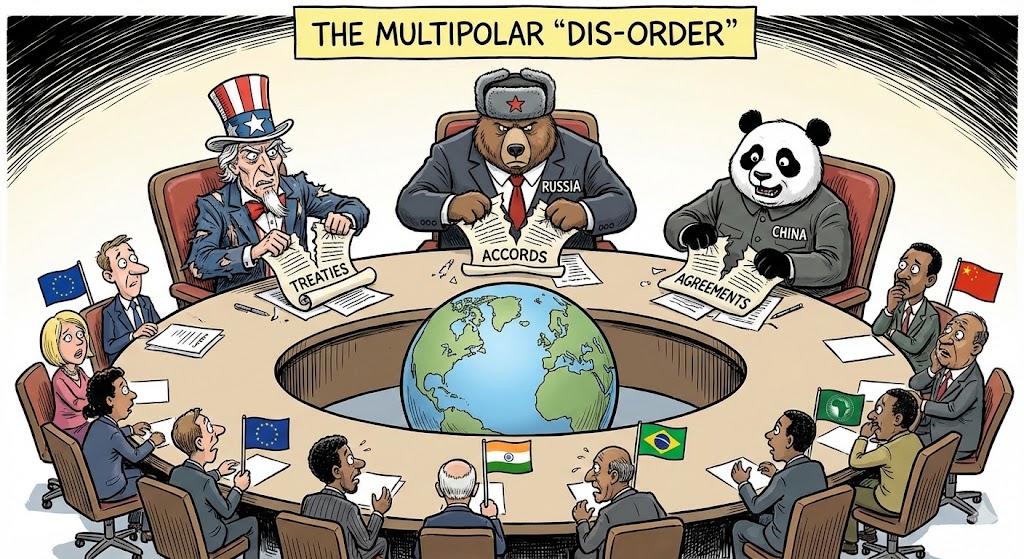
In the sweltering heat of the Caribbean, U.S. warships prowl the waters off Venezuela’s coast, a stark reminder that the ghosts of Cold War brinkmanship are far from buried. As President Trump’s administration weighs airstrikes and regime change against Nicolás Maduro’s government, the stakes extend far beyond oil fields and disputed elections. Venezuela’s overtures to join BRICS, the emerging bloc of Global South powerhouses, have ignited fears in Washington that a multipolar world is no longer a distant specter but an imminent reality. This potential flashpoint underscores a deeper geopolitical tremor: BRICS’ relentless expansion is eroding the U.S. dollar’s stranglehold as the world’s reserve currency, chipping away at America’s post-World War II hegemony one member at a time.
For decades, the dollar has been the lifeblood of global trade, sanctions, and financial leverage. As BRICS swells its ranks, nations are trading in local currencies, building parallel payment systems, and pursuing de-dollarization. The Brooks Brief’s forecast is unequivocal: the greenback faces an existential threat. If unchecked, this could cascade into economic chaos at home and abroad. Let’s unpack the bloc’s growth, its ripple effects, and the nightmare scenario of a dollar in decline.
The Core of BRICS: From Five to Ten and Beyond
BRICS began as an acronym in 2009 for Brazil, Russia, India, China, and South Africa, a loose coalition of fast-growing economies challenging Western-dominated institutions like the IMF and World Bank. These original five nations represent over 40 percent of the global population and a quarter of world GDP, with China as the undisputed heavyweight.
The real momentum came in 2023, when leaders invited new members to dilute dollar dependency. By January 1, 2024, Egypt, Ethiopia, Iran, and the United Arab Emirates formally joined, expanding BRICS to nine members and dubbing it BRICS+. This wave targeted resource-rich and strategically vital states. Egypt controls the Suez Canal, Ethiopia is Africa’s diplomatic hub, Iran wields oil leverage, and the UAE bridges East and West finance.
Fast-forward to 2025, and the bloc reached double digits. Indonesia, Southeast Asia’s largest economy, joined in January, drawn by infrastructure funding and trade diversification amid U.S.-China tensions. Today, the formal BRICS roster stands at ten: Brazil, China, Egypt, Ethiopia, India, Indonesia, Iran, Russia, South Africa, and the UAE. Collectively, they command 45 percent of the world’s population, 35 percent of global GDP at purchasing power parity, and a commanding share of energy exports.
The expansion is far from slowing. Over 20 countries have applied for full membership, with nine designated as partner countries in early 2025: Belarus, Bolivia, Cuba, Kazakhstan, Malaysia, Nigeria, Thailand, Uganda, and Uzbekistan. Others in the queue include Bahrain, Turkey, Vietnam, Sri Lanka, Mexico, and Kuwait. These applicants span Latin America, Africa, the Middle East, and Asia, united by a desire to escape dollar-centric trade traps and U.S. sanctions. Russia’s 2024–2025 chairmanship accelerated the process, culminating in a Kazan summit that greenlit partner status as a stepping stone to full integration.
How BRICS Undermines the Dollar’s Throne
At its heart, BRICS expansion strikes at the dollar’s core vulnerability: its role as the global reserve currency. Over 80 percent of international transactions and 60 percent of central bank reserves are dollar-denominated, granting the U.S. “exorbitant privilege”—cheap borrowing, sanction superpowers, and influence over global finance. BRICS is fostering alternatives. Members now settle 30 percent of intra-bloc trade in local currencies, up from 10 percent a decade ago, via systems like China’s CIPS and Russia’s SPFS. The New Development Bank, BRICS’ answer to the World Bank, has loaned $30 billion for projects, bypassing dollar loans and IMF strings.
This de-dollarization directly threatens U.S. hegemony. As more nations join, global demand for dollars declines, borrowing costs rise, and sanctions lose effectiveness. A hypothetical BRICS currency, floated in 2024, could accelerate this trend, stabilizing trade among members and eroding the dollar’s liquidity premium. Studies show intra-BRICS trade already correlates with lower dollar reserve shares in member banks.
America’s Debt and the Motivation for Resource Conflicts
The United States currently carries over $34 trillion in national debt, a figure that strains both domestic policy and global economic leverage. Servicing this debt requires significant inflows of capital, largely dependent on the dollar’s dominance. Resource-rich nations like Venezuela and Nigeria are increasingly critical to this strategy. Venezuela offers vast oil reserves and rare earth minerals essential for technology and energy sectors. Nigeria provides both oil and strategic minerals. Securing access, whether through diplomacy or military pressure, could help Washington maintain economic stability and continue financing its debt. These pressures create an incentive for U.S. policymakers to consider assertive foreign actions, particularly in regions where BRICS expansion threatens to sideline the dollar and reduce American influence over resource flows.
The Ripple Effects: What Joining BRICS Means for Nations and the World
For aspiring members, BRICS offers a lifeline from isolation. Nigeria, Africa’s top oil producer, could secure yuan-denominated deals with China, shielding itself from dollar volatility and U.S. policy influence. Malaysia and Thailand gain access to the New Development Bank for green tech and infrastructure. Cuba and Bolivia, long under U.S. sanctions, see BRICS as a sovereignty booster, while partner status builds diplomatic clout.
Broader consequences are seismic. Economically, BRICS creates a multipolar trade web: BRICS+ GDP could reach 50 percent of global output by 2030, diluting dollar pricing in commodities like oil. Politically, it provides cover for nations to hedge U.S.-China rivalry without full allegiance. For the U.S., the fallout is significant: weakened sanctions, allies like Saudi Arabia considering yuan oil sales, and Treasury demand declines, driving up interest rates.
Risks remain. Rapid growth strains cohesion—India and China have border tensions, while new members like Ethiopia face infrastructure gaps. U.S. countermeasures, including tariffs, asset freezes, or covert operations, remain possible, as Venezuela already knows.
The Dollar’s Slow Decline
Imagine the dollar gradually losing its reserve currency status. Central banks may reduce holdings of U.S. debt, yields could spike, and borrowing costs would soar. Imports would become more expensive, inflation would rise, and American households would feel the strain. Global markets would experience turbulence, emerging markets could default on dollar-denominated debt, and U.S. strategic flexibility would erode. Even a partial decline threatens both domestic stability and global influence.
The Brooks Brief Forecast: BRICS as Harbinger, Venezuela as Warning
BRICS expansion poses the gravest threat to dollar primacy since Bretton Woods. With partners like Nigeria and Thailand onboarding, intra-bloc trade could double by 2027, cutting dollar use by 20 percent. Venezuela exemplifies America’s concern. Maduro’s BRICS bid, coupled with deepening Russia-China ties, has prompted U.S. carrier deployments and strike considerations, framing Venezuela as a strategic bulwark against Beijing’s influence. Brazil’s emergency BRICS huddle signals bloc-wide alarm, with President Lula condemning U.S. tension-mongering. Escalation risks alienating the Global South, accelerating the very shifts Washington seeks to prevent.
A Multipolar Reckoning
U.S. hegemony was built on dollar supremacy, but BRICS is dismantling it from the margins. Policymakers must innovate financial tools, strengthen alliances, and engage rather than isolate. Ignore these trends, and the Venezuela flotilla becomes a prologue to a broader decline in global economic influence. The Brooks Brief will continue to monitor these developments. As the world rebalances, America must adapt or risk losing both its economic leverage and global authority.
Over the past several months, the United States has quietly increased its military posture in the Caribbean, moving naval assets and surveillance platforms closer to Venezuela. Although Washington frames these moves as part of long-running counter-narcotics operations, the timing, intensity, and political context suggest a more complex strategic calculus emerging beneath the surface.
Under the direction of President Trump, U.S. forces have reportedly intercepted, disabled, or destroyed multiple vessels in the region. These actions have taken place without public evidence, without transparent legal justification, and without granting the detained crews meaningful due process. Washington maintains the narrative of a “war on drugs,” but the pattern appears increasingly disconnected from narcotics interdiction and more aligned with a broader geopolitical struggle over energy, currency dominance, and the future of hemispheric influence.
This raises a serious question: Is the United States preparing for a conflict with Venezuela not because of cocaine routes, but because of the petrodollar and the global realignment surrounding BRICS?
The Geopolitical Foundations of a Brewing Conflict
The Venezuelan and American relationship has been adversarial for decades, but today’s conditions are fundamentally different. Three strategic pressure points are converging at once:
The petrodollar is under visible strain.
BRICS is expanding into a credible economic and diplomatic bloc.
Venezuela holds natural resources the United States increasingly needs, including oil and rare earth minerals essential for emerging technologies.
To understand why the Caribbean is heating up, these three factors must be viewed together.
BRICS, Saudi Arabia, and the Fragility of the Petrodollar
One of the most significant geopolitical stories of the decade has gone largely unnoticed in mainstream American coverage. Saudi Arabia has formally applied for BRICS membership and has openly discussed accepting the Chinese yuan for oil sales.
This is not symbolic. It strikes at the core of American economic power.
Since the 1970s, the global oil market has operated in U.S. dollars. This petrodollar arrangement artificially increases worldwide demand for the dollar and U.S. debt securities. It has allowed America to print, borrow, and spend at levels unmatched by any other nation while exporting inflation abroad.
If Saudi Arabia begins selling oil in yuan, it weakens the foundation of the entire system. If other major producers follow, including Russia, Iran, and Brazil, the petrodollar system could erode far more quickly than Washington is prepared to handle.
The consequences would include:
declining global demand for dollars
rising U.S. borrowing costs
reduced American leverage abroad
increased influence from China
This makes energy-rich Venezuela more than a troubled neighbor. It makes it a strategically vital asset in the Western Hemisphere.
America’s Debt Crisis and the New Incentive for Resource Conflicts
The United States faces a historic fiscal problem. Federal debt has surpassed levels that even optimistic analysts consider sustainable. As borrowing costs rise and global demand for U.S. bonds begins to weaken, Washington has fewer economic tools to maintain global leadership. This financial pressure creates a renewed incentive to secure foreign natural resources and stabilize the dollar’s role in global trade. In this context, Venezuelan oil and minerals become strategically important for U.S. solvency, not merely U.S. policy. Some analysts warn that similar pressures could push the United States toward deeper involvement in other resource-rich regions, including Nigeria, one of the world’s largest oil producers and an emerging target for Chinese and BRICS investment. As America’s debt grows, the motivation to secure resource access abroad is becoming a defining feature of its foreign policy strategy.
Why Venezuela Matters: More Than Oil
Venezuela possesses:
the largest proven oil reserves in the world
substantial deposits of gold and rare earth minerals
strategic Atlantic access for shipping routes
political alignment with Russia, China, and Iran
For a United States facing pressure from BRICS and the potential decline of the petrodollar, Venezuela’s resources are not a distant concern. They are a direct national interest.
Chinese firms have already invested heavily in Venezuela’s minerals. Russian military advisors are present. Iran has assisted in rebuilding Venezuela’s energy infrastructure. If the U.S. loses influence in Caracas entirely, it opens a strategic corridor for three rival powers only a few hundred miles from American shores.
From Washington’s perspective, allowing this alignment to deepen could be far more dangerous in the long run than confronting it now.
Why the Mobilization in the Caribbean Matters
The increased presence of the U.S. Navy is not merely symbolic. It signals three strategic intentions:
monitoring Iranian, Russian, and Chinese activity in real time
signaling to Caracas and its allies that the use of force is possible
positioning rapid-response assets close to Venezuelan territory
The pattern of intercepting foreign boats without trials or public justification fits a model of establishing maritime dominance ahead of potential escalation. These actions are consistent with pre-conflict shaping operations the U.S. has used in other regions.
Drug interdiction may be the official explanation, but the strategic posture reflects a far more serious agenda.
Military Outcome: The U.S. Would Likely Win, But at a High Cost
Militarily, the question is straightforward. Could the United States defeat Venezuela in a direct conflict? The answer is yes.
The United States has overwhelming advantages in:
air power
precision weapons
naval forces
intelligence and surveillance
logistical capacity
Venezuela’s military, although not insignificant, cannot withstand a full-scale American offensive.
But the real issue is not battlefield victory. It is perception, legitimacy, and long-term global fallout.
The Public Relations War: America’s Most Vulnerable Front
Even if the United States wins militarily, it could lose diplomatically and morally.
A unilateral invasion without clear provocation would inflame:
Latin American governments
global South nations
BRICS member states
human rights organizations
anti-U.S. political movements
Many countries are already skeptical of American interventionism. An unprovoked attack on Venezuela would reinforce longstanding criticisms that the United States uses military power to control weaker nations.
This matters because:
BRICS could accelerate efforts to undermine the dollar.
U.S. allies could distance themselves to avoid political backlash.
American soft power, already weakened, could decline even further.
In a world shifting toward multipolarity, legitimacy is as important as military capability.
Forecast: The Best Outcome for the United States is Avoiding Conflict
From a strategic perspective, the most advantageous path for the United States is to avoid war.
A diplomatic breakthrough with Venezuela, while unlikely in the near term, could provide:
access to natural resources
energy cooperation
reduced Russian and Chinese influence
regional stability
opportunities for U.S. tech and energy industries
By contrast, a military conflict could trigger consequences far beyond Venezuela:
rapid acceleration of BRICS expansion
faster global move away from the dollar
deeper Chinese and Russian involvement in Latin America
destabilization throughout the region
significant political backlash
Washington may win the military battle but lose the global narrative, and with it, the strategic advantage.
Conclusion
The slow buildup around Venezuela is more than a drug war. It reflects a transformative shift in global power: the rise of BRICS, the vulnerability of the petrodollar, the strain of America’s rising debt, and the intensifying competition for strategic resources.
Venezuela is not merely a troubled state on America’s doorstep. It is a potential flashpoint in a broader struggle over economic and geopolitical leadership in the twenty-first century.
The United States may have the military capability to win a conflict. But the real contest will be fought through diplomacy, public opinion, and competing economic systems.
Washington is now walking a narrow line. How it handles the Venezuelan question may determine the future of the U.S. dollar, the balance of power in the Western Hemisphere, and the wider trajectory of American influence in an increasingly divided world.
The “New World Order” has been a highly debated political concept for over one hundred years by many conspiracy theorists. The global government system has also been a topic of discussion for political scientists and world leaders for decades. Can this global political construct be realized in the modern world of globalization? This paper will examine past, present, and future concepts of world governing bodies, including the League of Nations, the United Nations, and the unforeseen global government that will enforce international law. There are numerous benefits to a global government, this paper will examine them all with an optimistic view. This essay will also analyze the shortcomings of an international political body but give possible solutions for realized concerns. The New World Order is already a reality to a certain extent in the form of the United Nations. This paper will examine the possibility of developing this New World Order concept into a more perfect reality by establishing checks and balances. The system of checks and balances recommended for a future global government will promote globalization and prevent totalitarianism. This paper will propose a balance of three councils to lead the global political system that hampers any dictatorship attempt by a person or nations. It will also form seven international regional unions to check the global governing system to defend against a worldwide police state.
Keywords: New World Order, World Government, Globalization, International Law, Divine Right, Global Government, International Union, Totalitarianism, Dictatorship
History Of A New World Order
The idea of a New World Order or World Government is not new; it is steeped with conspiracy theories and rumors. In reality, I will prove that the concept of a global government is already in effect but in a flawed manner. A true world government will include every single sovereign nation and give them an equal seat in a world body. This will allow for international laws and agreements to be enforced, which will decrease the number of global conflicts. The League of Nations failed because it did not include all countries, since the countries involved had their interests and little ability to enforce treaties or stop conflicts. The United Nations is a modern version of a global government, but it also fails to include all sovereign nations and, by its design, favors a few. This paper will examine the advantages and disadvantages of a global government that is becoming more necessary with the advancement of globalization.
The New World Order is a concept traced back to biblical times. Many leaders of empires attempted to conquer the known world, but only a man named Jesus claimed to have authority over the entire Earth and Heaven. Although religion and politics are rarely discussed in public nowadays, it is crucial to understand that many kings or other world leaders in the past used their “divine right” to establish their own rule. Divine right is a religious and political doctrine that gives power to the monarch from God. In the Book of Matthew, Jesus states, “All authority in heaven and on earth has been given to me”” (King James Bible, 1769/2025, Book of Matthew 28:18). Technically, Jesus’ authority and many kings of the past would claim their authority comes from a divine jurisdiction which would be higher than any international authority. The framework of a global system that governs the entire world is given to believers in the prophetic books of the bible. A global political system has never encompassed all sovereign nations with the ability to enforce international laws in the history of mankind. It is critical to understand that international relations are currently in anarchy, which is the lack of a government that can enforce laws in a jurisdiction. Globalization and the advancements of technology, such as artificial intelligence and air travel, will require more agreements with the current 195 sovereign nations. With the rise of globalization, the speed of travel, and advancements in military technology, the risk of conflict has increased significantly.
The modern idea of the New World Order, popularized by Dante Alighieri, is more of a global monarchy. Alighieri writes, “There must therefore be one person who directs and rules mankind, and he is properly called ‘Monarch’ or ‘Emperor.’ And thus it is apparent that the well-being of the world requires that there be a monarchy or empire” (Ghassim and Pauli, 2024). The idea of Alighieri’s international dictatorship, which some scholars believe would lead to corruption or tyranny, is dated. Alighieri may have never considered a democracy for the entire world, which could have relieved the concern of tyranny that many modern scholars have today. Even today, when a world government is mentioned, many people might scoff or dismiss the idea based on old ideals.
The Argument For A New World Government
Some of the oldest popular negative viewpoints of a global government are most notably expressed by Immanuel Kant. Ghassim and Pauli write, “For instance, Kant (1795, 38) argued that a world government would bear the danger of turning into a global tyranny—or ‘soulless despotism,’ as he called it” (Ghassim and Pauli, 2024). These feelings of soul less despotism by Kant may be accurate since a world monarchy is being examined by him and not a world democracy with checks and balances. It is my belief, based on research, that a democratic world government would be more beneficial to its citizens than detrimental. For tyranny to exist, real democracy cannot exist. After World War II, Albert Einstein was an advocate for a world government, possibly due to the invention of the nuclear bomb. In theory, a world government would be against the proliferation of nuclear weapons, which would give individual nations the ability to wipe out fellow citizens of Earth and fight the world power structure. It is easy to assume that nuclear weapons may only be used by the world government to fight external threats to the planet, such as hostile extraterrestrial nations in the future, if they exist, or asteroids that may be headed toward the planet.
In today’s age, with information at the touch of the fingertips, the whole world can make decisions together that govern their ideas, laws, and lives in a majority rule system. In the article, Global governance: present and future, the authors write, “Global governance is arguably inevitable for the survival of the human race in present and future generations” (Rashchupkina, 2016). Due to globalization, rising tension between nations, and the need for stability, a world government will be needed in the future to settle international disputes and enforce international law. There is currently no way for a sovereign country to enforce international law unless it uses its national military forces. The ambitions of a world government to resolve a conflict between two or more countries is crucial and more significant today than it has ever been.
Rashchupkina gives five reasons why the future of global governance is inevitable. First, social media in the information age allows citizens to be more involved in politics than they were a hundred years ago. Secondly, due to “individual empowerment,” a global government will need to pay more attention to the physical safety of its human population. Third, “institution complexity” may allow for third-party non-state actors (like Elon Musk) to have transnational agreements that can affect government behavior. Fourth, the changing international political landscape will keep evolving with more countries increasing multilateralism on a global scale. Finally, Rashchupkina states, “States and non-state or transnational actors tend to be more cooperative with global governance when a liberal world order is maintained” (Rashchupkina, 2016). It is important to note that global conflicts may still exist in a global government with hegemonic nations facing off with each other, but if liberal paradigms remain strong, conflict resolution would be more easily attainable. It is significantly easier for a world government to negotiate with two or more sovereign nations than with third-party nations’ involvement with little or no financial interest and weak political power.
In A Hobbesian Argument for World Government, Saetra writes, “A commonly used argument in favour of government is that without it, we would have chaos” (Saetra, 2022). Chaos can take many forms in a world with 195 sovereign nations vying for power. The most alarming consequence of Earth’s lack of a world government is the likelihood of more wars and unequal distribution of goods and services. Not only can a world government reduce the number of deadly conflicts around the world, but it would also have the ability to distribute medicine and food to parts of the world that need it most. Saetra states, “While international relations might not be pure anarchy, states currently exist in a situation in which there is no common power who can govern like national governments do on the domestic level” (Saetra, 2022). It is well known that the enforcement of international laws and treaties rely only on the nations in the agreement, but a world government could dedicate its resources to ensure that laws and treaties are fair and in the interest of the world’s citizens. This may appear to be unacceptable to major countries that participate in the United Nations today, but when new powerful nations arise, it will ensure more stability for all the nations since there will be more equity. For example, a world government will be able to make international laws that can be enforced regarding forces of nature, such as climate change and natural disasters that cross international borders.
The world government cannot simply be for show or secretly run by a few powerful nations since it must carry enough force to sway several sovereign nations or states in a smaller union. Saetra goes on to say, “Kant’s federation would, however, have no coercive power over what would remain sovereign states” (Saetra, 2022). It is not my argument to create an artificial global government that has no power or to take away the sovereign rights of a nation. Instead, the world government must prove itself to be more powerful than any sovereign nation or smaller group of nations. Not only must the global government have overwhelming military force, but it must also maintain justice, objectivity, and concern for human rights that may be ignored by some sovereign nations. The world government must be able to win and hold the hearts and minds of its fellow citizens to achieve longevity.
Another argument for the creation of a world government is the potential for economic stability in the world. Gone are the days of trade wars and unfair tariffs used as soft power weapons against nations. A world government can end trade tariffs and ensure the balancing of wealth to reduce global poverty. In Review of International Political Economy, “Treating countries in different economic conditions differently has been a common feature of the world trade regime since the mid-1960s, classifying countries either as ‘developed’ or ‘developing’” (Weinhardt and Barro, 2025). The classification of developed or developing country has further segregated the poor and disenfranchised countries from benefiting from their abundant resources in most cases. In some cases, countries in Africa with vast natural resources still struggle economically due to high-interest loans and bad treaties made by corrupt officials. A world government can limit the interest countries must pay or repay and ensure the treaty between nations is to the benefit of all citizens on Earth.
It is important to remember that international trade, without a world government, has fewer benefits since it must rely on a patchwork of agreements that carry more concerns. In certain situations, international trade can also cause social upheaval without a true governing world government. The United Nations Conference on Trade and Development Trade And Development Report 2023 states, “While international trade can bring significant benefits, it has also generated environmental and social concerns” (UNCTAD, 2023). Even with the best of intentions, global trade can be unpredictable and predatory. I believe that an international world government would be able to mitigate most of the social and environmental problems with its ability to enforce rules across international boundaries.
It may be common sense to most political scientists that a world government can offer more efficient problem solving with issues such as space exploration, pandemics, and international politics. Instead of the current anarchy that exists in the international realm, a stable world government can offer all sovereign nations solutions to the complex situations that may arise from technological advances in the future. Can we honestly say that the Moon or Mars belongs to one nation when we stare at it in the night sky? Or can we efficiently distribute medicine in the event of a pandemic to all countries on Earth to prevent the spread of the disease? These complex problems in today’s age would be non-existent to future generations with a world government.
The Case Against A Global Government
While there are many more examples of beneficial outcomes of a world government, I would be remiss if I did not mention the arguments against such a venture. As mentioned earlier, theorists like Immanuel Kant believed that a world government could lead to global tyranny. This may be the case if only one person or nation was in charge of such a world government, but a modern global government will more likely have the attributes of a constitutional republic or democracy. However, even in a global democracy, some would try to subvert the constitution and process for their exclusive gain. Checks and balances would be necessary for a successful world government, but without a system of checks and balances, there is a great threat of tyranny that has never been seen before. Imagine a single person with the ability to wage a successful war with multiple nations for personal gain. Or a likely scenario could be a world police state that infringes on human rights globally. Add to those concerns a slow, enormous bureaucracy that does not adequately address the needs of nations or their citizens. These significant concerns must be examined with viable solutions to prevent such tragedies in a future of further globalization.
Kalypso Nicolaidis & Gregory Shaffer write in Transnational Mutual Recognition Regimes: Governance Without Global Government:
On the one hand, there is no ‘government’ at the global level, whether in the form of a global legislature, global executive, or global court with mandatory jurisdiction and enforcement powers. On the other hand, the world is globalizing in terms of the intensity and extensiveness of exchange, governance mechanisms are emerging to deal with those exchanges, and publics are demanding that these mechanisms be more accountable (Nicolaidis and Shaffer, 2004).
Even though experts admit there is no global government to enforce international law, it seems that the concerns with bureaucracies and cooperation prevent its implementation. With changing times come changing strategies and tactics to deal with other nations on a global scale. Allowing globalization to continue at its current rate and naturally allowing the system to adapt is the stance of many experts in the field of international relations. Although the reasons range from accountability to the intensity of exchange, if left unchecked, we will only experience more chaos in the future. To mitigate the concerns, a well thought out global political system will be necessary for globalization to increase. The patchwork of agreements between two or more countries can be terminated without notice, with devastating effects on the countries involved. The global government may be a high-risk, high-reward situation that stable countries see no reason to be a part of. However, the more powerful the world government is, the less likely sovereign nations, even strong ones, will be able to resist. A global government that dominates foreign trade may be a threat today but an ally tomorrow.
Another downside of a global government may be the most obvious, which is implementation. Today, it is extremely difficult to get three nations to agree to treaties, but having 195 countries competing in a global setting with strong oversight may be enticing. If substantial gains of membership in the global government are made, more sovereign nations will likely participate. In Ruling ourselves: The deliberate evolution of … (2018), the authors write, “Today, evolution of global governance is limited primarily by the ability and willingness of the world’s nations to cooperate” (Harack et al., 2017). The most difficult part of implementing a world government is getting a majority of countries to join the global political system and come to a consensus. Due to the unpopularity of the idea of global government and the real concerns that may exist, many nations do not take the idea seriously, or they may feel that being a part of the United Nations is enough. The United Nations is progressive, but it lacks every country’s participation, and five permanent members of the UN Security Council can veto the wishes of the majority. A true global government should see all nations as equals, with representatives being voted on by the sovereign nations’ representatives to an executive council, legislative council, and judicial council within the world government.
Global government not only needs to involve every sovereign nation, but it must keep up with future technological advancements with the power to enforce treaties. Harack et al. go on to write, “It must not only solve enduring problems like war and climate change, it must also provide a structure for navigating newer and more difficult problems such as the prospective dangers of emerging technologies” (Harack et al., 2017). Predicting world issues is not a science that can be mastered. The ever-changing world will always have new problems and solutions that may or may not present themselves. It is easier for a world government with vast resources to address an international crisis than a single sovereign nation with limited resources. Furthermore, the beginning stages of a world government may likely have some problems until it is more properly established. The United Nations could be a great foothold or the genesis of a world government since it already has so many members. The design of the United Nations Security Council and the lack of admittance of every sovereign nation are considerably flawed.
Although many solutions can be gained from a world government, we must also consider the most threatening scenario. Ilya Somin (2024) writes the following:
As problematic as a democratic world government might be, things will be even worse if it becomes a dictatorship, or—in the worst-case scenario—a totalitarian state. A world government might start off as some sort of democracy, and is at the very least highly unlikely to begin as a totalitarian nightmare. But history shows that authoritarian and totalitarian political movements can seize power in a previously relatively free society, especially during a crisis.
A global government can indeed start as a democracy but transform into a dictatorship or totalitarian police state later on, but we already have the United Nations as a de facto world government. It seems Pandora’s box has already been opened, and we cannot put the genie back in the bottle. We cannot escape the need for a global government with globalization on the rise because of a fear that may or may not occur. With the ability of citizens to have the internet and the advent of artificial intelligence, people are more aware and informed today than they were in the 1930s. These new technological advancements can help and hurt us, but we do not simply stop progressing because of the possible and probable risks. I have faith in the majority rule system here in the United States because of the longevity and stability that it provides. A world government can provide the same solace if it is designed properly. Hopefully, we learn from the past so we do not repeat those same mistakes, and if we do, then it is up to the good in people to right the wrongs as we did before.
The greatest benefit of a world government is also the scariest, which is the scope of the global government’s reach. Somin writes, “If a world government becomes oppressive, falls victim to corruption, or adopts economic policies that stifle opportunity, there will be nowhere else to go” (Somin, 2024). I concur with the possibility of a world government becoming oppressive or enacting policies that may stifle progress, but if designed properly, that would not be a concern. Most countries already have continental unions such as the European Union or African Union. These unions of sovereign states will be in a better position to ally themselves for a conflict with the world government should the world government become corrupt. They may even offer asylum to people who want to leave the oppressive global regime. A proper world government would need a system of checks and balances that are much larger than a national party. This is why I would propose six to seven unions to support or oppose a world body. Each international regional union would represent multiple countries. In the case of a corrupt world body, four or more international regional unions would be able to overthrow the global government that can only recruit from the remaining two international regional unions. In this way, majority rule is still effective. I would personally propose a European Union, African Union, Asian Union, Middle Eastern Union, South American Union, and North American Union.
Figure 1.
Conclusion
In conclusion, the stories about a world government silently being created can be discredited since we have the beginnings of a public global government already in place. The fear of a global government being oppressive is a real threat, but with proper design, those threats can be mitigated. There are more benefits to a global government with globalization on the rise than there are disadvantages. The promise of a global government that can respond to climate change, global conflicts, increasing trade tariffs, pandemics, and more greatly outweighs the concern of a global dictatorship or international police state. The global government can offer immigration for refugees but also allow states to keep their sovereignty. A global government is necessary for space exploration since many countries will be competing for resources on other planets, and in the future, if we discover intelligent life on another planet, we will have a system in place to defend ourselves or make diplomatic strides. The children of the future will thank us for getting rid of anarchy in international relations. Stability, security, and access can be afforded to every citizen on our planet with proper planning and cooperation.
We need to learn from our mistakes by remembering where we come from and where we want to go. If we can imagine it, then in theory, we can achieve it. With artificial intelligence on the rise, a global political body will give us more protection from a rogue state or union of states. The biggest takeaways from a global government are fewer conflicts, more production, and more stable global financial markets. It may not be perfect in the beginning, but we need to begin before we see any results. You cannot win the game if you do not play it. In time, things will operate more smoothly, and the citizens of Earth will have a home without the detrimental and preventable problems that exist today.
Works Cited
Farsan Ghassim, Markus Pauli, Who on Earth Wants a World Government, What Kind, and Why? An International Survey Experiment, International Studies Quarterly, Volume 68, Issue 3, September 2024, sqae105, https://doi.org/10.1093/isq/sqae105
Marx, A., Depoorter, C., Verma, R., Araoz, M., Auld, G., Bemelmans, J., Bennett, E. A., Boonaert, E., Brandi, C., Dietz, T., Fouilleux, E., Grabs, J., Gulbrandsen, L. H., Harrison, J., Heilmayr, R., Hernandez, A., Hoekman, B., Lambert, S. R., Lambin, E., . . . Thorstensen, V. (2024). Global governance through voluntary sustainability standards: Developments, trends and challenges. Global Policy, 15(4), 708-728. https://doi.org/10.1111/1758-5899.13401
Nicolaidis, K., & Shaffer, G. (2004). Transnational mutual recognition regimes: governance without global government. Law & Contemp. Probs., 68, 263.
Rashchupkina Y (2016) Global governance: present and future. Palgrave Communications. 2:15045 doi: 10.1057/palcomms.2015.45.
Weinhardt, C., & Barros Leal Farias, D. (2025). Developing countries in global trade governance: comparing norms on inequality in the WTO and GSP schemes. Review of International Political Economy, 1–27. https://doi.org/10.1080/09692290.2025.2455504
The Brooks Brief delivers clear, independent political analysis focused on bridging the gap between government decisions and the everyday American experience. We examine major policies, national debates, and global developments through a practical, common-sense lens. Our commentary highlights overlooked perspectives, challenges partisan narratives, and encourages reasonable solutions rooted in accountability, transparency, and real-world impact. At The Brooks Brief, we believe informed citizens make stronger communities, and every issue deserves an honest, unfiltered look.