A Second-Term Assessment
Introduction
In March 2025, the Trump administration proceeded with the deportation of Venezuelan nationals despite a federal court order explicitly directing that the flights be halted. Among those deported were individuals accused, but not convicted, of gang affiliation, raising immediate concerns about due process and judicial authority. The episode marked one of the earliest and clearest confrontations between the executive branch and the federal judiciary during President Donald Trump’s second term. Legal scholars and civil liberties groups described the action as a deliberate act of defiance rather than a procedural misunderstanding. The incident set a tone for governance in which court rulings appeared increasingly conditional. As such, it serves as a critical entry point for assessing the state of constitutional governance under the second Trump administration.
President Trump’s return to office in January 2025 followed a first term already characterized by repeated tensions with democratic institutions. From 2017 to 2021, his administration frequently tested the limits of executive power, particularly in immigration enforcement, emergency declarations, and regulatory oversight. These earlier actions provoked extensive litigation and public debate but were often constrained by institutional resistance. In his second term, however, Trump entered office facing fewer internal checks and a more ideologically aligned judiciary. This shift has altered the balance of power between the branches of government. The result has been a more assertive executive posture toward constitutional limits.
Central to this transformation is a 2024 Supreme Court ruling that expanded presidential immunity for official acts. Supporters argue that the ruling provides necessary clarity and protection for executive decision-making in times of crisis. Critics contend that it effectively weakens accountability mechanisms that are foundational to constitutional democracy. The ruling has emboldened the administration to take actions previously viewed as legally precarious. This article examines how these developments have contributed to the erosion of constitutional rights. It does so by tracing historical patterns, analyzing second-term escalations, and evaluating the broader implications for American democracy.
The Brooks Brief Substack is a reader-supported publication. To receive new posts and support my work, consider becoming a free or paid subscriber.
Historical Context: Erosion During the First Term (2017–2021)
The constitutional concerns evident in President Trump’s second term did not emerge in isolation. During his first term, immigration policy became a central arena in which executive authority collided with constitutional protections. Travel bans targeting several Muslim-majority countries sparked immediate legal challenges and nationwide protests. Family separation policies at the southern border drew bipartisan condemnation and raised serious Fifth Amendment due process concerns. Many affected individuals were denied meaningful hearings or timely reunification with their families. These policies established a precedent for expansive executive discretion in immigration enforcement.
The federal response to the COVID-19 pandemic further strained constitutional norms. Emergency orders mandated widespread business closures, restricted religious services, and limited public gatherings. While public health concerns justified extraordinary measures, critics argued that the administration applied restrictions unevenly and without sufficient legislative oversight. Legal challenges questioned whether such actions violated First Amendment rights to assembly and religious exercise. Others raised concerns under the Fifth Amendment, particularly regarding uncompensated economic losses. The pandemic response normalized the use of emergency powers in ways that outlasted the crisis itself.
Press freedom also deteriorated during Trump’s first term, both rhetorically and institutionally. The administration regularly characterized major media organizations as adversaries of the state, undermining public trust in independent journalism. Government agencies were accused of suppressing or altering scientific and climate-related information. Whistleblowers and publishers faced aggressive prosecution strategies, signaling a hostile environment for dissent. These actions did not dismantle press freedom outright, but they weakened its institutional defenses. Together, these patterns laid the groundwork for more expansive challenges to constitutional rights in Trump’s second term.
Escalation in the Second Term (2025–Present)
During the first year of Trump’s second term, executive resistance to judicial authority intensified markedly. The administration’s continuation of deportation flights despite federal court orders signaled a willingness to treat judicial review as advisory rather than binding. Similar controversies arose from attempted deportations to third countries without established legal procedures. These actions revived debates over the enforceability of court rulings against the executive branch. Unlike the first term, institutional pushback has proven slower and less effective. The cumulative effect has been a weakening of judicial supremacy.
The administration has also revisited and expanded tactics related to congressional authority. Withholding or delaying congressionally approved foreign aid has reemerged as a tool of executive leverage. In the second term, these actions are reinforced by favorable Supreme Court precedents that narrow the scope of legislative oversight. Civil rights organizations report an increase in subpoenas, arrests, and administrative penalties targeting critics and activists. Such measures create a chilling effect on political participation. They also blur the line between lawful enforcement and political retaliation.
At the policy level, the dismantling of civil rights protections has been systematic rather than episodic. The administration has eliminated Diversity, Equity, and Inclusion programs across federal agencies. Environmental justice initiatives and fair housing enforcement mechanisms have been rolled back or defunded. Voting access has been restricted through administrative and legislative changes at both federal and state levels. The reinstatement of the federal death penalty and the politicization of military leadership further reflect a broader ideological shift. Collectively, these actions represent a coordinated retreat from post–civil rights era governance norms.
Specific Constitutional Rights Under Threat
First Amendment: Free Speech, Free Press, Assembly, and Religion
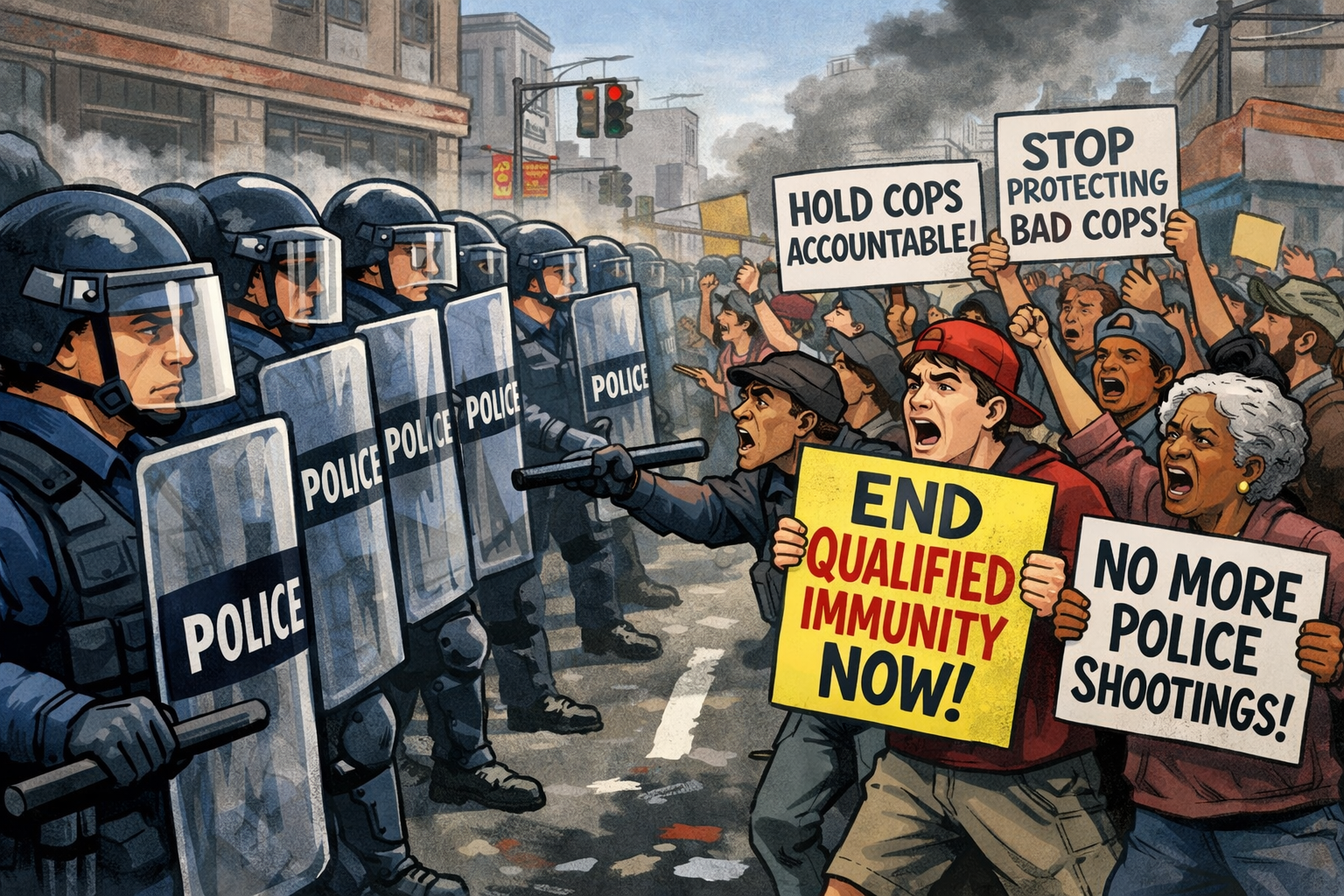
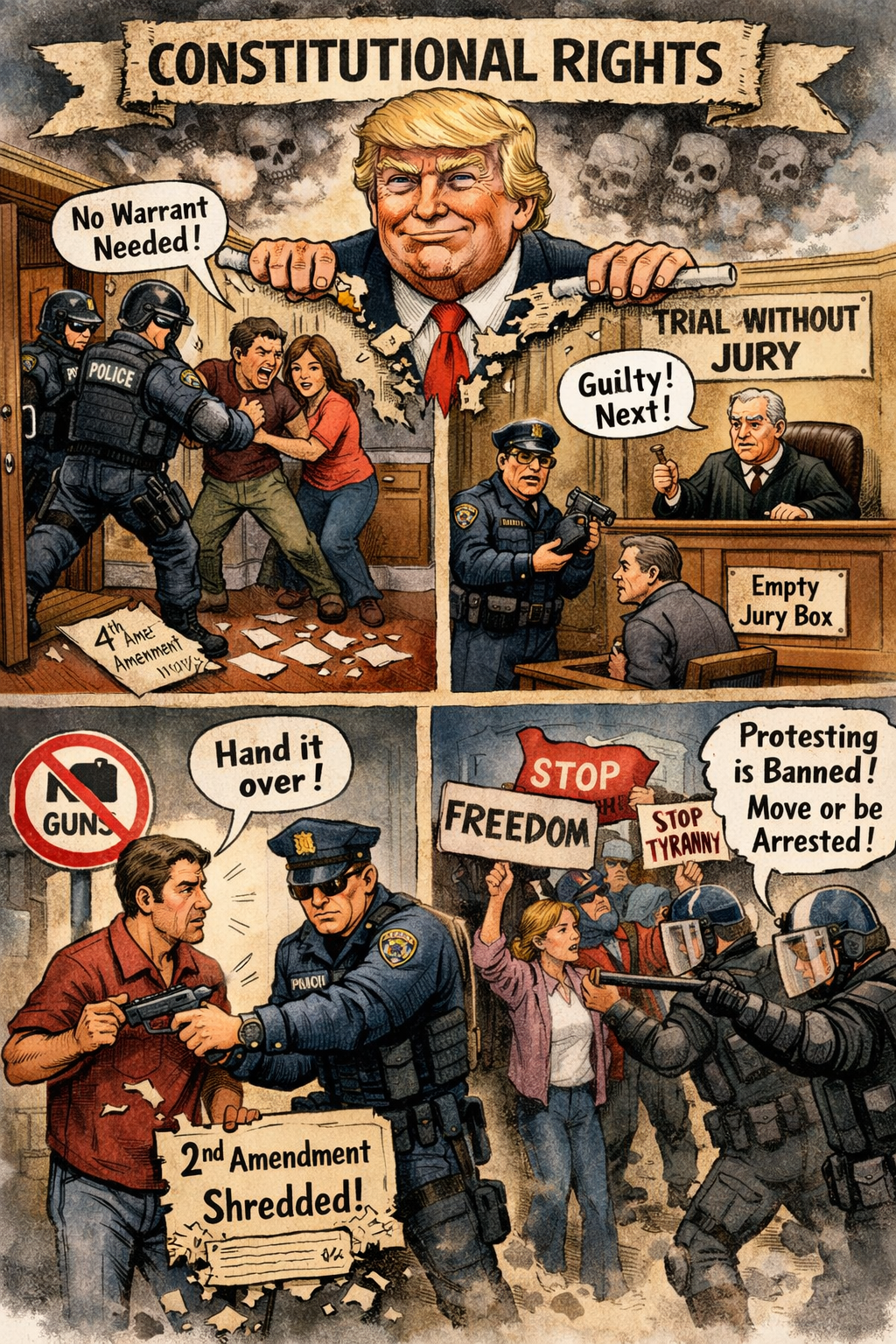
First Amendment protections have faced renewed pressure in Trump’s second term. Restrictions initially justified during the COVID-19 pandemic have evolved into broader limitations on protest and public assembly. Law enforcement responses to demonstrations, including the use of force, have raised serious constitutional questions. The administration has also targeted public broadcasters through funding cuts, citing alleged ideological bias. These actions weaken the infrastructure that supports free expression in a democratic society. Over time, they risk normalizing state intervention in speech.
Educational and cultural institutions have also become focal points of First Amendment conflict. Federal and state authorities aligned with the administration have restricted discussions of race, history, and gender under the banner of opposing “divisive” content. Lawsuits against media organizations and journalists have increased, even when claims lack clear legal merit. Digital platforms face mounting pressure to moderate or remove content deemed unfavorable to the administration. While framed as efforts to promote neutrality, these policies often function as viewpoint discrimination. The cumulative effect is a narrowing of permissible public discourse.
Religious freedom claims have been applied selectively, further complicating First Amendment analysis. Certain religious groups have received exemptions or favorable treatment, while others remain subject to restrictions. This uneven application undermines the principle of government neutrality toward religion. Courts have struggled to reconcile these contradictions within existing jurisprudence. The result is a fragmented and unstable First Amendment landscape. Such instability erodes public confidence in constitutional protections.
Fourth and Fifth Amendments: Searches and Due Process
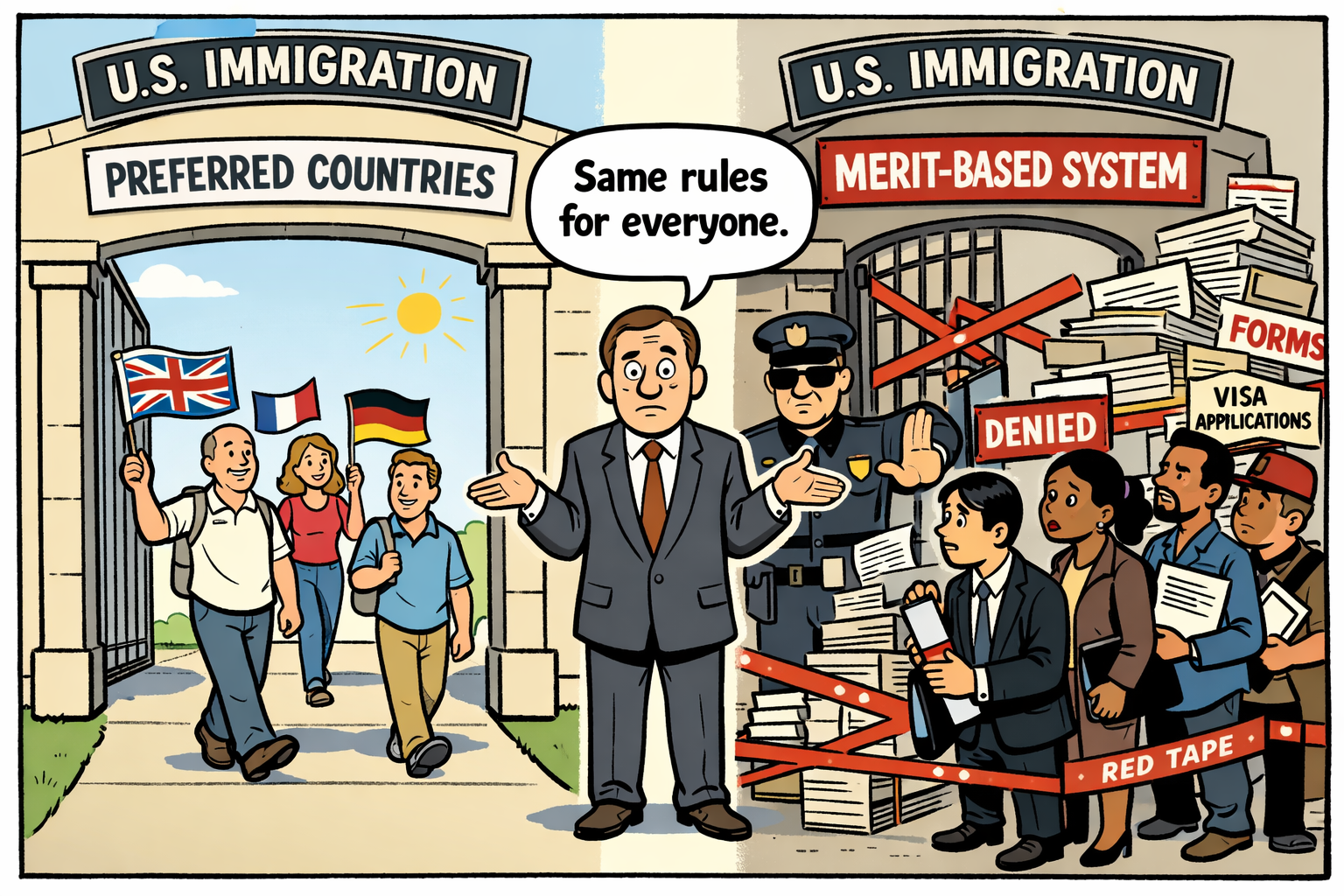
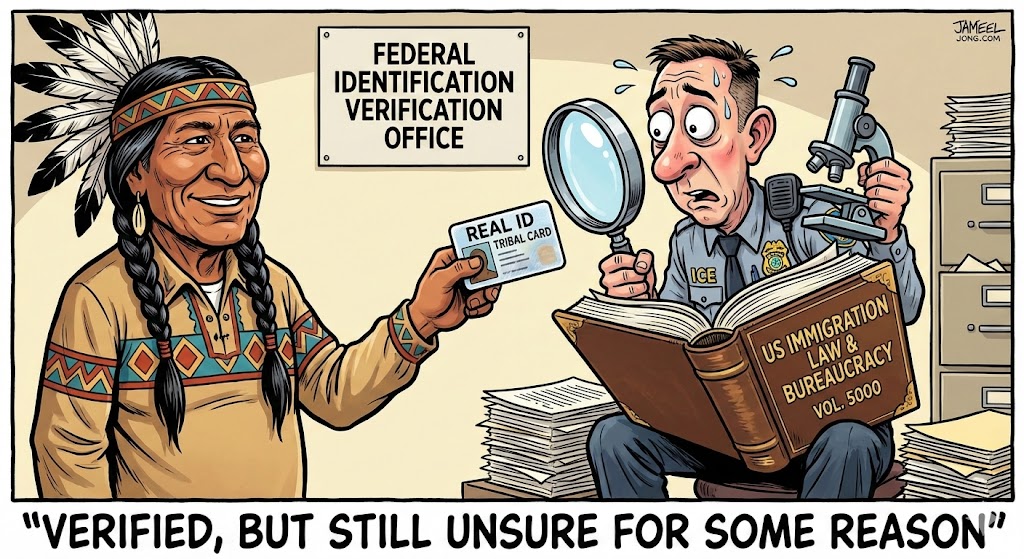
Immigration enforcement has become a primary site of Fourth and Fifth Amendment erosion. Reports of warrantless searches and raids have increased, particularly in immigrant communities. Individuals are frequently detained without timely access to legal counsel. These practices challenge long-standing protections against unreasonable searches and seizures. They also raise concerns about racial profiling and collective punishment. The absence of meaningful oversight exacerbates these risks.
Due process protections have similarly weakened under expanded detention and removal authorities. Expedited removal procedures limit opportunities for individuals to contest their detention or deportation. Prolonged detention without bond hearings has become more common. Judicial precedents have increasingly deferred to executive discretion in immigration matters. This deference has reduced the practical enforceability of due process guarantees. For affected populations, constitutional rights often exist only in theory.
Beyond immigration, broader surveillance and data collection practices raise additional constitutional questions. Expanded information sharing between agencies increases the risk of misuse and abuse. Privacy protections have not kept pace with enforcement technologies. Courts have been slow to articulate clear limits in this evolving context. As a result, Fourth and Fifth Amendment protections continue to erode incrementally. These changes may prove difficult to reverse.
Seventh Amendment and the Rule of Law
The right to a jury trial has also come under pressure in the second Trump term. Proposals to limit jury trials for certain corporate or national security-related cases undermine a core constitutional safeguard. Expanded claims of executive immunity further restrict access to judicial remedies. When official acts are shielded from review, accountability mechanisms weaken. This dynamic shifts power decisively toward the executive branch. Over time, it risks transforming the rule of law into a rule of discretion.
Judicial independence itself faces indirect challenges. Persistent rhetorical attacks on judges erode public confidence in the courts. Noncompliance with rulings further diminishes judicial authority. When court decisions lack enforcement, constitutional guarantees lose practical meaning. This erosion does not occur through a single dramatic rupture but through sustained institutional neglect. The long-term consequences for democratic governance are profound.
Impacts on Equality and Voting Rights
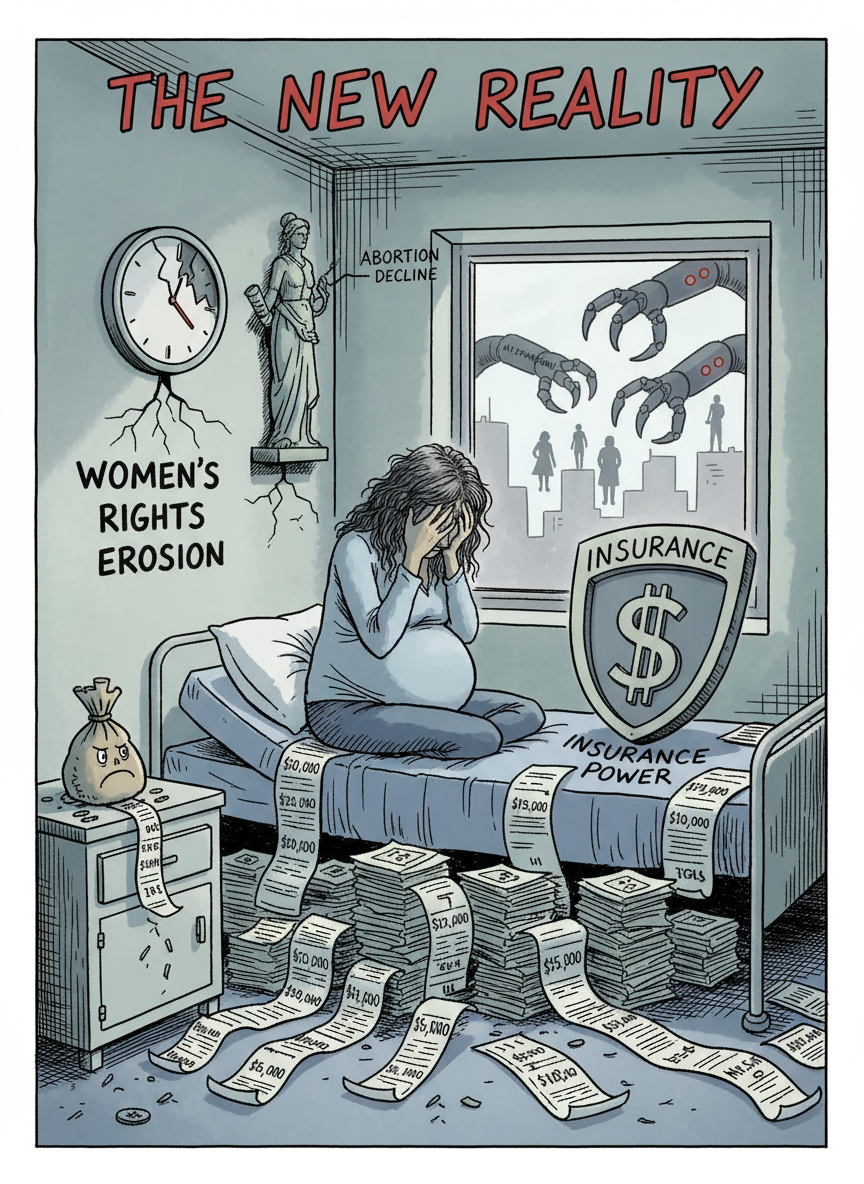
Policies enacted during Trump’s second term have had disproportionate effects on marginalized communities. The elimination of minority health offices and targeted social programs has widened existing disparities. Voting restrictions, including stricter identification requirements and reduced access to mail-in ballots, have limited participation among vulnerable populations. These measures often operate under the guise of election integrity. In practice, they reinforce structural inequalities. The resulting democratic deficits undermine the principle of equal protection.
Counterarguments and Defenses
Supporters of the administration argue that these policies restore order and reaffirm national sovereignty. They contend that aggressive enforcement is necessary to secure borders and protect public safety. Social media narratives often frame constitutional concerns as exaggerated or politically motivated. Defenders also point to similar actions taken by previous administrations. This argument emphasizes continuity rather than rupture. However, it often overlooks the scale and intensity of second-term measures.
Legally, the administration relies heavily on Article II powers and recent Supreme Court rulings. The expanded doctrine of presidential immunity is cited as constitutional validation. From this perspective, critics are portrayed as resisting legitimate executive authority. Some Republican lawmakers echo this defense, framing opposition as partisan obstruction. Nonetheless, bipartisan concern persists among legal scholars and former officials. The debate reflects deep divisions over the meaning of constitutional restraint.
Thanks for reading The Brooks Brief Substack! This post is public so feel free to share it.
Implications and Conclusion
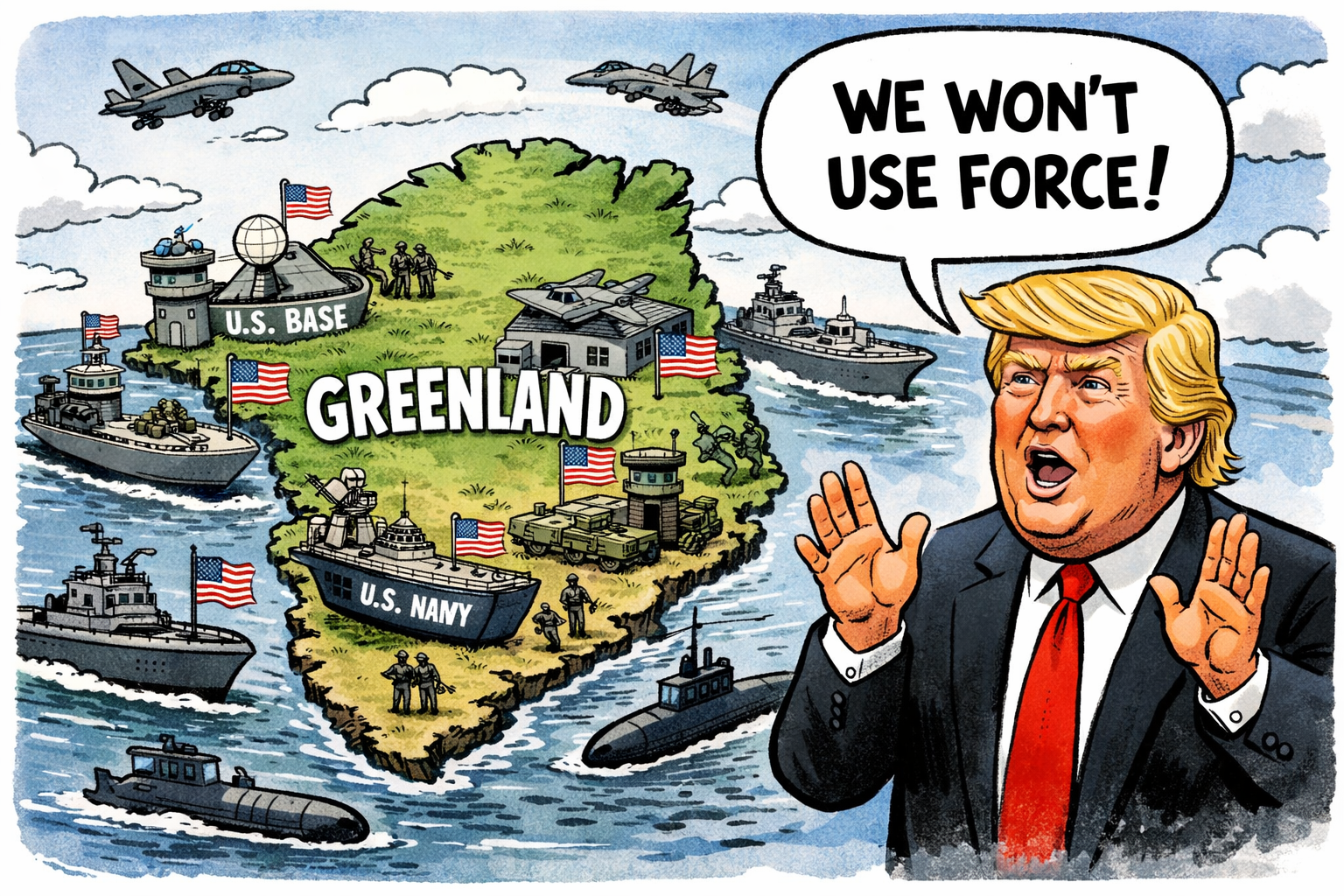
The long-term implications of these trends extend beyond individual rights. Erosion of constitutional norms undermines economic confidence, affecting investment, tourism, and currency stability. Democratic backsliding also weakens the United States’ international credibility. When domestic governance appears unstable, global leadership suffers. Scholars describe this trajectory as authoritarian legalism, where laws exist but are applied selectively. Such systems retain formal legality while hollowing out substantive democracy.
Restoring constitutional balance will require sustained institutional effort. Congress must reclaim its oversight responsibilities and assert its legislative authority. Courts must enforce rulings consistently and resist political intimidation. Civil society and the electorate play a critical role in demanding accountability. Whether the current erosion proves temporary or enduring remains uncertain. What is clear is that continued inaction risks redefining the American constitutional republic for generations to come.