Tag: the brooks brief

  • Raising the Minimum Wage

    Raising the Minimum Wage

    A Vote for Affordability or a Recipe for Inflation?


    I. Introduction

    In the United States in 2026, millions of Americans continue to face a persistent affordability crisis that affects nearly every aspect of daily life. Housing costs remain elevated, grocery prices strain household budgets, and healthcare and education expenses consume an increasing share of income. For many workers, wages have failed to keep pace with these rising costs, creating a widening gap between earnings and basic needs. This disconnect has become especially visible among low-wage workers who rely on hourly pay to meet essential expenses. As a result, economic insecurity has become a defining feature of the current labor market. The debate over how to address this imbalance has returned to the forefront of national policy discussions.

    At the center of this debate is the federal minimum wage, which has remained at $7.25 per hour since 2009. Over nearly two decades, inflation alone has significantly eroded the purchasing power of this wage floor. While some states and municipalities have acted independently to raise wages, federal inaction has produced a fragmented system in which a worker’s income depends heavily on geography. As of January 2026, nineteen states have enacted minimum wage increases, with several exceeding sixteen dollars per hour. These disparities have renewed questions about whether national standards are outdated and insufficient for modern economic conditions.

    From a historical perspective, the stagnation of the federal minimum wage appears even more pronounced. If the minimum wage had grown alongside inflation and labor productivity since the late 1960s, it would exceed twenty-five dollars per hour today. This gap underscores decades of wage stagnation even as worker output and corporate profitability have increased. Supporters argue that correcting this imbalance is necessary to restore fairness and economic stability. Critics counter that such increases may introduce new economic risks. This article evaluates both perspectives through empirical evidence, economic theory, and political context.

    The Brooks Brief Substack is a reader-supported publication. To receive new posts and support my work, consider becoming a free or paid subscriber.

    II. The Current Economic Landscape

    The U.S. economy in 2026 reflects a mixed recovery from the disruptions of the early 2020s. While inflation has moderated from its peak levels, prices for essential goods and services remain elevated relative to wages. Housing affordability continues to pose a major challenge, particularly for first-time buyers and renters in urban and suburban markets. In many regions, home prices would need to fall substantially to return to pre-pandemic affordability levels. Rent increases have similarly outpaced income growth, forcing households to devote a larger share of earnings to shelter. These pressures disproportionately affect lower-income workers with limited financial buffers.

    Food prices also remain a key driver of household stress. Even modest increases in grocery costs can significantly impact families living paycheck to paycheck. Minimum wage workers, who are heavily represented in retail, food service, and hospitality sectors, are especially vulnerable. A substantial portion of these workers report food insecurity or reliance on credit to cover routine expenses. Healthcare costs further compound the issue, as many low-wage jobs offer limited or no employer-sponsored insurance. Together, these factors create a cycle of economic precarity that is difficult to escape through employment alone.

    Recent state and local minimum wage increases reflect an attempt to respond to these conditions. In 2026, dozens of states, cities, and counties implemented wage hikes aimed at preserving purchasing power. These measures are often framed as necessary adjustments rather than aggressive policy shifts. However, businesses implementing these changes face their own constraints, including higher input costs and lingering supply chain disruptions. Critics argue that wage mandates risk amplifying these pressures, particularly for small businesses. The current landscape thus presents a complex tradeoff between worker relief and economic stability.

    III. Arguments in Favor of Raising the Minimum Wage

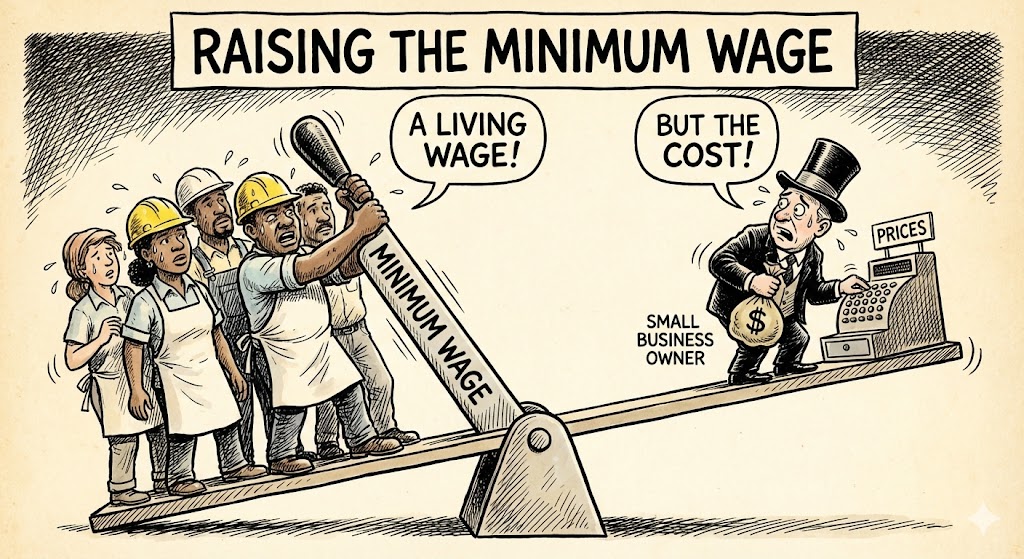
    Advocates of raising the minimum wage argue that higher wages are essential for improving affordability and economic security. Low-wage workers tend to spend a larger share of their income on necessities such as food, housing, and transportation. When wages increase, this spending can stimulate local economies through increased consumer demand. Economists often describe this as a multiplier effect, where additional income circulates through communities. Unlike tax cuts for higher earners, wage increases are more likely to produce immediate economic activity. Proponents view this as a practical tool for strengthening local and regional economies.

    Another central argument in favor of higher minimum wages is poverty reduction. Research indicates that wage increases can lift millions of workers above the poverty line. Higher earnings also reduce reliance on public assistance programs, including food aid and healthcare subsidies. This shift can ease pressure on government budgets while improving individual dignity and autonomy. From this perspective, higher wages function as both an economic and social policy. Supporters argue that the long-term fiscal benefits often outweigh short-term adjustment costs.

    Proponents also emphasize historical and structural considerations. Over decades, worker productivity has risen significantly, yet wages for low-income workers have remained largely stagnant. This divergence has contributed to income inequality and reduced social mobility. Aligning wages with productivity growth is viewed as a corrective measure rather than a radical intervention. Additional benefits cited include reduced employee turnover, higher morale, and improved health outcomes. Together, these effects suggest that higher wages may yield broader social gains beyond immediate income increases.

    IV. Arguments Against Raising the Minimum Wage

    Opponents of minimum wage increases warn that higher labor costs can contribute to inflationary pressures. Businesses facing increased payroll expenses may raise prices to maintain profitability. These price increases can offset wage gains, particularly for the same workers the policy intends to help. In sectors such as food service and retail, where profit margins are often thin, cost pass-throughs may be more pronounced. Critics argue that this dynamic risks creating a cycle in which wages and prices chase one another upward. In an economy already sensitive to inflation, such risks are viewed as significant.

    Employment effects are another major concern raised by critics. Mandated wage increases may prompt employers to reduce hours, cut positions, or accelerate automation. Entry-level and low-skilled workers are often seen as most vulnerable to these adjustments. Some studies suggest that younger workers and those with limited experience may face reduced job opportunities. Small businesses, in particular, may struggle to absorb higher labor costs without reducing staff or closing altogether. These potential outcomes raise concerns about unintended consequences for the labor market.

    From a conservative economic perspective, minimum wage laws are often framed as government overreach. Critics argue that wages should be determined by market forces such as supply, demand, and worker productivity. They contend that wage mandates distort labor markets and discourage hiring. Instead, opponents emphasize education, job training, and skills development as more effective paths to higher earnings. From this viewpoint, addressing affordability requires structural reforms rather than wage floors. The debate thus reflects deeper ideological differences about the role of government in the economy.

    V. Empirical Evidence and Case Studies

    Empirical research on minimum wage effects presents a mixed picture. Some studies find minimal negative employment impacts, particularly when increases are moderate and phased in over time. These analyses often report gains in earnings and reductions in poverty among low-wage workers. In some cases, higher wages are associated with increased productivity and employee retention. However, methodological differences make it difficult to draw universal conclusions. Outcomes often vary by region, industry, and economic conditions.

    Recent state-level wage increases in 2026 provide new data points. In states where minimum wages exceed fifteen dollars per hour, early surveys suggest workers experience modest improvements in financial stability. At the same time, many businesses report raising prices or reducing discretionary benefits. These adjustments highlight the tradeoffs involved in wage policy. While no widespread employment collapse has occurred, the long-term effects remain uncertain. Ongoing analysis will be necessary to assess durability and scalability.

    International comparisons also offer insight, though contexts differ significantly. Some countries with higher wage floors maintain strong employment levels through complementary policies such as social safety nets and labor market supports. These examples suggest that wage policy outcomes depend heavily on broader institutional frameworks. A balanced interpretation of the evidence indicates that moderate increases tend to produce net benefits. Conversely, abrupt or large hikes may introduce greater risks. Policymakers must therefore consider pace, scale, and local conditions.

    VI. The Political Divide and Path Forward

    The minimum wage debate reflects broader political polarization in the United States. Public opinion consistently shows majority support for higher wages, particularly when framed around cost-of-living adjustments. Voters in several states have approved wage increases through ballot initiatives. Despite this support, federal legislative action remains stalled. Partisan divisions and competing economic philosophies continue to impede consensus. As a result, state and local governments have taken the lead.

    Both supporters and critics increasingly acknowledge that wages alone cannot resolve affordability challenges. Inflation, housing shortages, and healthcare costs all contribute to economic strain. Some analysts argue that wage increases without complementary policies risk limited effectiveness. This recognition has opened space for alternative or supplemental approaches. These include expanding the Earned Income Tax Credit, reforming zoning laws, and subsidizing essential goods. Such measures aim to target affordability more directly.

    A pragmatic path forward may involve combining moderate wage increases with broader policy reforms. Phased adjustments tied to inflation could provide predictability for both workers and employers. Pairing wage policy with investments in housing supply and workforce development may reduce unintended consequences. Evidence-based policymaking, rather than ideological positioning, is critical. The challenge lies in balancing worker protection with economic flexibility. Achieving this balance will shape the future of affordability policy.

    VII. Conclusion

    Raising the minimum wage presents clear advantages, including improved purchasing power, reduced poverty, and greater economic equity. At the same time, concerns about inflation, employment effects, and business sustainability cannot be dismissed. Historical comparisons highlight how far wages have fallen behind productivity and living costs. A minimum wage aligned with long-term economic growth could have mitigated much of today’s affordability crisis. However, such alignment must be approached carefully. The evidence suggests that design and implementation matter greatly.

    Minimum wage increases alone are not a comprehensive solution to affordability challenges. Structural factors such as housing shortages, healthcare costs, and market concentration also play significant roles. Policymakers must therefore adopt a multifaceted strategy. Gradual, data-driven wage adjustments combined with targeted social and economic reforms offer the most promising path. Ideological stubbornness risks undermining effective solutions. A balanced approach grounded in evidence can better serve American workers in 2026 and beyond.

  • Birthright Citizenship and Constitutional Authority

    Birthright Citizenship and Constitutional Authority

    Precedent, Power, and the Limits of Executive Interpretation


    I. Introduction: A Constitutional Debate Reignited

    The national debate over birthright citizenship has reemerged with renewed intensity following the January 2025 executive order seeking to restrict automatic citizenship for children born in the United States. That order, now blocked by multiple federal courts, has become a focal point for broader disputes about immigration, constitutional authority, and the separation of powers. Proponents frame the issue as a long-overdue correction rooted in original intent, while opponents argue it represents an unprecedented executive overreach. The controversy is no longer merely academic, as it directly implicates the legal status of future generations. With the Supreme Court agreeing to hear the challenge, the issue now sits at the center of constitutional law and democratic governance. The stakes extend well beyond immigration policy into the integrity of constitutional interpretation itself.

    At the heart of the debate is the Citizenship Clause of the Fourteenth Amendment, particularly the phrase “subject to the jurisdiction thereof.” Critics of birthright citizenship argue this language has been misapplied and stretched beyond its original purpose. They contend the clause was designed narrowly to address the aftermath of slavery rather than establish a permanent rule of territorial citizenship. Supporters counter that the amendment’s text and subsequent judicial interpretation clearly establish broad birthright citizenship. This disagreement reflects a deeper tension between originalist theory and constitutional precedent. How that tension is resolved will shape not only citizenship law, but the balance of power among the branches of government.

    This analysis argues that while debates over original meaning are intellectually significant, they cannot override settled judicial precedent. Constitutional interpretation in the American system ultimately rests with the courts, not the executive branch. Once the Supreme Court has established a binding interpretation, that interpretation governs until it is lawfully overturned. Attempts to redefine constitutional rights through executive action undermine both legal stability and democratic legitimacy. Understanding this framework is essential to evaluating the current controversy and its potential consequences.

    The Brooks Brief Substack is a reader-supported publication. To receive new posts and support my work, consider becoming a free or paid subscriber.

    II. Historical Context of the Fourteenth Amendment

    The Fourteenth Amendment was ratified in 1868 during the Reconstruction era, a period defined by the effort to rebuild the Union and redefine citizenship after the Civil War. Its immediate impetus was the Supreme Court’s decision in Dred Scott v. Sandford in 1857, which declared that Black Americans could not be citizens of the United States. That ruling exposed the fragility of citizenship when left to political discretion or state authority. In response, Congress sought to constitutionalize national citizenship to prevent future exclusions. The amendment was intended to place citizenship beyond the reach of shifting political winds. This historical context is essential to understanding the breadth of the amendment’s language.

    The Citizenship Clause was designed first and foremost to guarantee citizenship to formerly enslaved people and their descendants. By establishing national citizenship at birth, the amendment stripped states of the power to deny legal membership based on race or ancestry. Lawmakers explicitly sought to prevent the creation of a permanent underclass excluded from political and legal rights. Citizenship was framed not as a privilege granted by the state, but as a constitutional status conferred by birth. This shift marked a profound transformation in American constitutional law. It established a uniform national rule in place of fragmented state practices.

    Importantly, congressional debates suggest the framers were also concerned with broader principles of inclusion and legal equality. While freed slaves were the immediate focus, lawmakers consistently emphasized universal rules rather than narrow carve-outs. The goal was to ensure that anyone born under U.S. law and authority would be recognized as a member of the political community. This approach reflected fears that future political coalitions might again attempt to exclude disfavored groups. By embedding citizenship in the Constitution, Congress sought to future-proof the principle against political manipulation. That foresight remains relevant in today’s debates.


    III. Interpreting “Subject to the Jurisdiction Thereof”

    The phrase “subject to the jurisdiction thereof” has become the most contested language in the Citizenship Clause. On its face, the clause declares that all persons born in the United States and subject to its jurisdiction are citizens. Historically, this language aligned with the common-law doctrine of jus soli, or citizenship by place of birth. Under that doctrine, jurisdiction referred to legal authority rather than political allegiance. Anyone required to obey the laws of the sovereign was considered subject to its jurisdiction. This understanding formed the baseline for early interpretations of the amendment.

    During Senate debates, lawmakers clarified that the clause excluded only narrow categories of individuals. These included children of foreign diplomats, members of invading armies, and others who were immune from U.S. law. Senator Jacob Howard, who introduced the amendment, emphasized that jurisdiction meant full and complete legal authority. This definition did not require parental citizenship or permanent allegiance. Instead, it focused on whether the individual was governed by U.S. law at birth. Such statements undermine claims that the clause was intended to exclude all children of non-citizens.

    Despite this historical record, critics argue for a more restrictive reading based on allegiance and consent. They contend that jurisdiction should be understood as mutual political obligation rather than mere territorial presence. Under this view, children born to undocumented immigrants or temporary visitors would fall outside the clause’s protection. However, this interpretation lacks support in contemporaneous legal doctrine. It also conflicts with how jurisdiction was commonly understood in nineteenth-century Anglo-American law. The broader, territorial reading has consistently prevailed in judicial interpretation.


    IV. Originalist Critiques of Birthright Citizenship

    Originalist critics argue that modern birthright citizenship extends far beyond what the framers envisioned. They claim the Fourteenth Amendment was crafted to resolve a specific historical injustice rather than establish a permanent rule applicable to all future immigration patterns. According to this view, applying the clause to children of undocumented immigrants represents a distortion of original meaning. Critics emphasize that large-scale unauthorized migration was not contemplated in 1868. As a result, they argue modern applications exploit constitutional language never intended for such use.

    A central focus of these critiques is the phenomenon often labeled “birth tourism.” Critics argue that individuals traveling to the United States for the sole purpose of giving birth undermine the integrity of citizenship. They contend that granting citizenship in such cases incentivizes abuse of the system. From this perspective, the Citizenship Clause becomes a loophole rather than a safeguard. Originalists argue that constitutional interpretation should adapt to prevent outcomes that conflict with the framers’ presumed expectations. This argument resonates politically, even if its legal foundation is contested.

    Supporters of restriction often cite international comparisons to bolster their case. Many countries rely on jus sanguinis, or citizenship by descent, rather than place of birth. They argue the United States should align with these models to maintain national sovereignty and control immigration outcomes. However, comparative policy preferences do not override constitutional text or precedent. The American system deliberately chose a different path rooted in common law. Changing that choice requires constitutional amendment, not reinterpretation.


    V. United States v. Wong Kim Ark and Judicial Authority

    The Supreme Court’s decision in United States v. Wong Kim Ark remains the cornerstone of birthright citizenship jurisprudence. Wong Kim Ark was born in San Francisco to Chinese immigrant parents who were legally present but barred from naturalization. After traveling abroad, he was denied reentry on the grounds that he was not a citizen. The case presented the Court with a direct test of the Fourteenth Amendment’s scope. In 1898, the Court ruled 6–2 that Wong Kim Ark was a citizen by birth. This decision firmly established the territorial interpretation of the Citizenship Clause.

    Justice Horace Gray’s majority opinion grounded its reasoning in English common law and American legal tradition. The Court held that jurisdiction meant being subject to U.S. laws, not possessing political allegiance or parental citizenship. Only narrow exceptions applied, such as diplomats and enemy forces. The ruling explicitly rejected arguments for a more restrictive reading. In doing so, the Court affirmed that the Fourteenth Amendment codified jus soli as a constitutional rule. This interpretation has remained intact for over a century.

    Since Wong Kim Ark, lower courts have repeatedly reaffirmed its holding. The Supreme Court has never overturned or meaningfully narrowed the decision. References in later cases, including Plyler v. Doe in 1982, reinforce the principle that constitutional protections extend regardless of parental immigration status. Together, these cases establish a stable and consistent legal framework. Any departure from this framework would require extraordinary justification. Precedent, not executive preference, governs constitutional meaning.


    VI. Precedent, Separation of Powers, and the Amendment Process

    Wong Kim Ark’s case underscores the significance of stare decisis (the principle of upholding previously established legal precedents) in constitutional law. Stare decisis ensures stability, predictability, and legitimacy in the legal system. Once the Supreme Court has interpreted a constitutional provision, that interpretation binds all branches of government. The executive branch has no authority to reinterpret constitutional text unilaterally. Its role is to enforce the law as interpreted by the judiciary. This division of responsibility is foundational to the separation of powers.

    Altering the meaning of the Citizenship Clause would require a constitutional amendment. The Constitution outlines a rigorous process involving supermajorities in Congress and ratification by the states. This difficulty is intentional, ensuring that fundamental rights are not easily altered. Executive orders cannot substitute for this process. Allowing presidents to redefine constitutional citizenship would concentrate excessive power in a single branch. Such a precedent would threaten the rule of law itself.

    Defenders of birthright citizenship also warn of serious practical and moral consequences if the precedent were overturned. Restrictive interpretations could create a class of stateless individuals born and raised in the United States. Administrative burdens associated with proving parental status would increase significantly. Discriminatory enforcement risks would rise, particularly for minority communities. These concerns underscore why constitutional change must occur through democratic consensus rather than unilateral action. Precedent serves as a safeguard against instability and abuse.


    VII. Contemporary Legal and Political Implications

    The 2025 executive order has brought these constitutional tensions into sharp relief. Federal courts have uniformly blocked its enforcement, citing clear conflicts with established precedent. These rulings reaffirm that the president cannot override constitutional guarantees through executive action. The Supreme Court’s decision to hear the case signals the seriousness of the challenge, but not a predetermined outcome. Any change to existing doctrine would require the Court to explicitly revisit Wong Kim Ark. Until then, the precedent remains controlling law.

    Politically, the debate reflects deep partisan divides over immigration and national identity. Restrictionist arguments often emphasize sovereignty, border control, and cultural cohesion. Defenders of birthright citizenship emphasize constitutional fidelity, equal protection, and historical continuity. These competing narratives shape public discourse and electoral politics. However, constitutional adjudication operates within a different framework than political debate. Legal outcomes depend on precedent and doctrine, not polling or partisan preference.

    International comparisons further complicate the discussion but do not resolve it. While some nations have limited jus soli, others retain it in various forms. The United States’ constitutional commitment to birthright citizenship is distinctive and deeply rooted. Changing that commitment would redefine American identity in profound ways. Such a decision requires careful deliberation and democratic legitimacy. Courts, not executives, are tasked with navigating that process.


    VIII. Conclusion: Constitutional Fidelity and Democratic Restraint

    The debate over birthright citizenship illustrates enduring tensions within American constitutionalism. Questions of original intent, modern application, and judicial authority intersect in complex ways. While historical analysis is valuable, it does not supersede binding precedent. For more than 125 years, the Supreme Court has interpreted the Fourteenth Amendment to guarantee broad birthright citizenship. That interpretation governs until lawfully changed.

    Efforts to bypass this framework through executive action threaten the separation of powers. They undermine the stability that constitutional precedent is designed to provide. If Americans wish to redefine citizenship, the Constitution provides a clear and legitimate path. That path runs through amendment, not unilateral reinterpretation. Respecting this process preserves both democratic accountability and constitutional integrity.

    As the Supreme Court prepares to weigh in once again, the lesson of Wong Kim Ark remains central. Birthright citizenship is not a policy preference subject to executive revision. It is a constitutional rule safeguarded by judicial authority. Upholding that distinction is essential to preserving the rule of law and the credibility of American democracy.

  • The Affordability Hoax

    The Affordability Hoax

    How Inflation, Wage Stagnation, and Policy Choices Are Crushing the American Middle Class


    I. Introduction

    Across the United States, millions of households are confronting a worsening affordability crisis that cuts across income levels but falls most heavily on the middle and working classes. The costs of housing, food, healthcare, transportation, and utilities continue to rise faster than wages, eroding purchasing power and financial stability. Surveys and economic data show that groceries represent the single largest strain for households, followed closely by housing and healthcare expenses. For many families, these pressures are no longer cyclical inconveniences but structural features of daily life. The result is a growing share of Americans who remain employed yet cannot reliably meet basic needs. This contradiction challenges official narratives of economic strength and recovery.

    By 2023, roughly one third of middle class households reported difficulty affording necessities, a figure that has worsened rather than improved in subsequent years. Even families earning between $50,000 and $100,000 annually increasingly report financial precarity once fixed costs are accounted for. These pressures are magnified for lower income households, where small price increases can immediately translate into skipped meals or delayed medical care. Despite these realities, political leaders frequently highlight aggregate indicators such as GDP growth or stock market performance as evidence of broad prosperity. Such metrics obscure the lived experience of most Americans. The gap between official optimism and household reality has become a defining feature of the current economic moment.

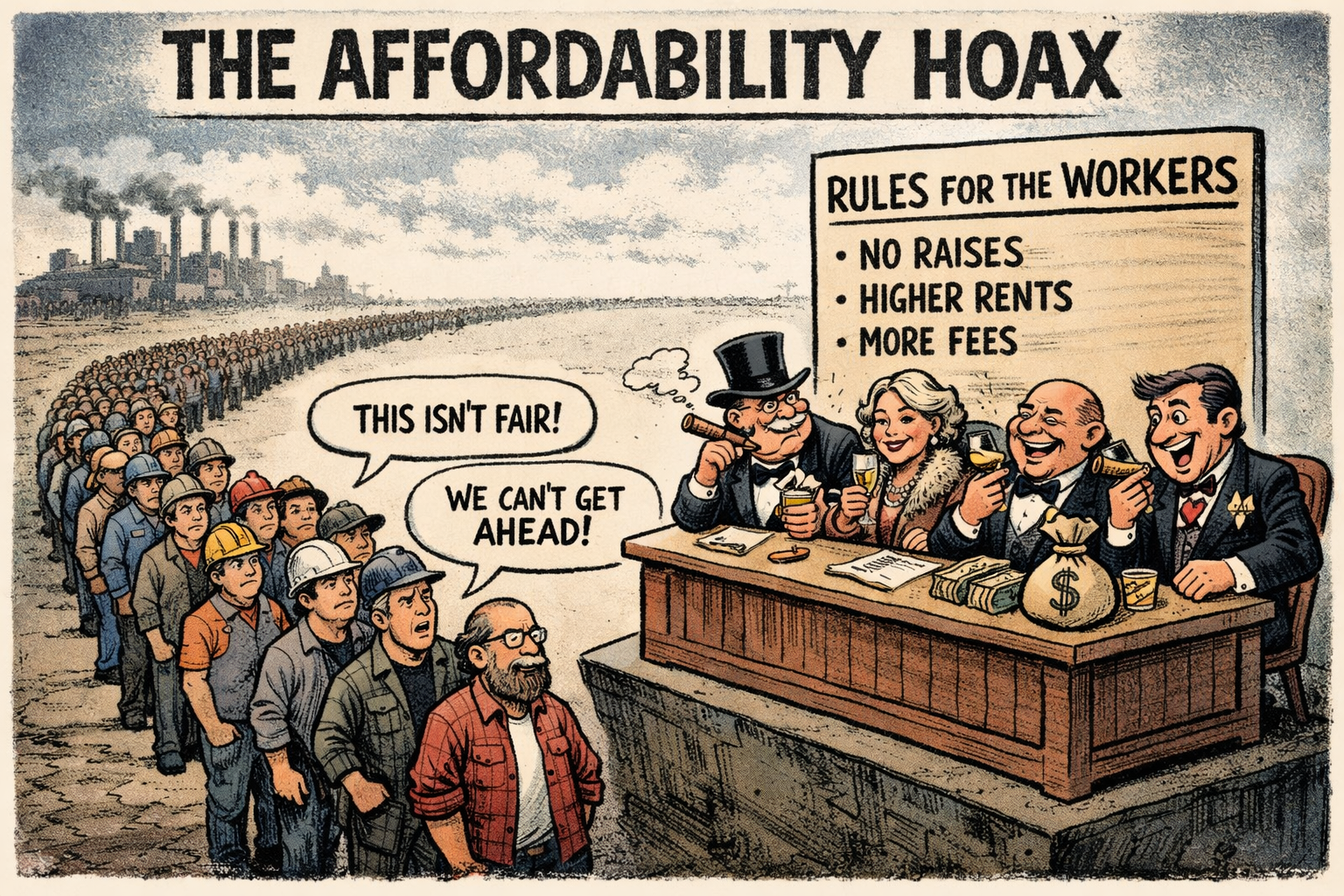
    The term “affordability hoax” captures this disconnect between political rhetoric and economic reality. It refers to the narrative advanced by the Trump Administration that inflation concerns are exaggerated and that wage growth has broadly offset rising costs. This framing minimizes structural problems such as decades long wage stagnation, rising corporate concentration, and the increasing privatization of basic necessities. By labeling affordability concerns as partisan or fabricated, policymakers deflect attention from policies that disproportionately benefit high earners. This analysis argues that inflation and wage stagnation have produced a genuine affordability crisis for middle and low income Americans. It further contends that the Trump Administration has systematically dismissed or exacerbated this crisis through policy choices and rhetorical denial.

    The Brooks Brief Substack is a reader-supported publication. To receive new posts and support my work, consider becoming a free or paid subscriber.

    II. The Roots of the Affordability Crisis: Inflation and Wage Stagnation

    The current affordability crisis did not emerge suddenly, but rather reflects long term structural trends in the U.S. economy. Since the late 1970s, wage growth for non supervisory and production workers has decoupled from productivity growth. While overall economic output has increased, the gains have disproportionately accrued to executives, shareholders, and higher income professionals. For the majority of workers, real wages have remained largely flat over decades. This divergence has left households increasingly vulnerable to price shocks. Inflation therefore operates on top of an already weakened income foundation.

    Inflation, even when headline rates appear moderate, erodes purchasing power unevenly. Essential goods and services such as food, housing, energy, and healthcare often rise faster than the overall inflation rate. In 2025, inflation remained above the Federal Reserve’s stated target, with particular spikes in electricity, insurance, and food costs. For households that spend a larger share of income on necessities, these increases function as regressive taxes. Middle and low income families have little discretionary spending to absorb higher prices. As a result, modest inflation can produce outsized hardship.

    Wage growth during this period has failed to compensate for these rising costs. Between 2021 and 2025, consumer prices rose faster than average wages, resulting in a net decline in real hourly earnings. While nominal wage increases were reported, these gains were unevenly distributed and often concentrated among higher earners or specific sectors. For low wage and service workers, wage growth frequently lagged inflation altogether. When adjusted for inflation, middle class wages in 2025 remained below their levels from decades earlier. This stagnation undermines long term financial security and limits upward mobility.

    The interaction between inflation and wage stagnation creates a self reinforcing cycle. As households devote larger shares of income to rent, food, and healthcare, they rely more heavily on credit to maintain living standards. Rising debt burdens further constrain consumption and savings, increasing vulnerability to economic shocks. This dynamic weakens overall economic resilience while masking hardship behind employment statistics. The affordability crisis is therefore not simply a short term inflationary episode. It is the product of decades of policy choices that prioritized capital accumulation over wage growth.

    III. Impacts on Middle and Low Income Classes

    The consequences of the affordability crisis are most visible in the daily tradeoffs faced by households. Middle and low income families increasingly report skipping meals, delaying medical care, or postponing essential purchases due to cost concerns. Even among households traditionally considered economically stable, financial buffers have eroded. Unexpected expenses such as car repairs or medical bills can now trigger cascading financial stress. This shift reflects a broader normalization of economic insecurity. Employment alone no longer guarantees material stability.

    Housing costs represent one of the most significant drivers of this pressure. Rent and mortgage payments consume a growing share of household income, particularly in metropolitan areas. For many renters, housing now absorbs more than 30 percent of monthly earnings, a level widely considered unaffordable. Lower income households face even higher burdens, often exceeding 40 percent of income. These conditions limit geographic mobility and constrain access to better job opportunities. Housing insecurity thus reinforces broader patterns of inequality.

    Food insecurity has also intensified, exacerbated by policy decisions at the federal level. In 2025, Congress enacted cuts to Supplemental Nutrition Assistance Program benefits, reducing monthly assistance for millions of recipients. These reductions came at a time when grocery prices remained elevated and wages had not fully recovered purchasing power. For low income families, the cuts translated directly into reduced food consumption or reliance on food banks. The decision to reduce food assistance amid rising costs highlights a policy mismatch between economic conditions and social support. It further deepens the affordability crisis for the most vulnerable households.

    Healthcare costs compound these pressures, particularly for families without comprehensive employer sponsored insurance. Out of pocket expenses, deductibles, and prescription drug costs continue to strain household budgets. Many Americans report delaying or foregoing care due to cost, increasing long term health risks and future expenses. Job insecurity in 2025 further weakened access to stable benefits for working class Americans. Together, these sector specific pressures illustrate how affordability challenges are interconnected rather than isolated. The cumulative effect is a pervasive sense of economic fragility.

    IV. Trump Administration Policies Exacerbating the Crisis

    Rather than mitigating affordability pressures, key Trump Administration policies have often intensified them. Tax policy remains a central example. The Tax Cuts and Jobs Act and its subsequent extensions disproportionately benefited high income households and corporations. While some middle income taxpayers received modest short term relief, these benefits were outweighed by long term fiscal costs and limited wage growth effects. The structure of the tax cuts prioritized capital gains and corporate profits over labor income. This approach reinforced existing inequalities rather than alleviating household cost pressures.

    Trade policy under the Trump Administration also contributed to higher consumer prices. Expanded tariffs raised the cost of imported goods, with the burden largely falling on U.S. consumers rather than foreign producers. These costs filtered through supply chains, increasing prices for household goods, appliances, and food products. While tariffs were framed as tools to protect domestic jobs, their inflationary effects undermined real wages. For households already struggling with affordability, tariffs functioned as an indirect tax. The resulting price increases further strained family budgets.

    Labor and regulatory policies compounded these effects. Rollbacks of worker protections weakened bargaining power and limited wage growth in key sectors. Cuts to housing assistance, rental support, and nutrition programs reduced the social safety net precisely as costs were rising. The reduction in food stamp benefits passed by Congress exemplifies this dynamic. Rather than expanding support during a period of elevated prices, policymakers chose austerity measures that shifted risk onto households. These decisions reflect a broader policy orientation that deprioritized affordability concerns.

    Administration officials frequently countered criticism by citing periods of nominal wage growth or low unemployment. However, these aggregate indicators obscure distributional realities and regional variation. Wage gains were uneven and often insufficient to offset rising costs of living. Low income workers, in particular, saw slower wage growth than inflation. The gap between rhetoric and outcomes underscores the limitations of the Administration’s economic framework. Policies focused on headline growth failed to address the structural drivers of affordability.

    V. Dismissal and Ignorance by the Trump Administration

    Beyond policy choices, the Trump Administration’s rhetorical approach further undermined efforts to address affordability. Officials repeatedly dismissed concerns about rising costs as exaggerated or politically motivated. Public statements emphasized falling prices or strong economic performance despite contrary evidence at the household level. This framing delegitimized lived experiences and discouraged serious policy engagement. By labeling affordability concerns as a “hoax,” the Administration shifted debate away from structural solutions. The result was policy paralysis in the face of mounting economic stress.

    This dismissal was accompanied by selective use of economic data. Aggregate inflation trends were cited without acknowledging category specific price increases that matter most to households. Similarly, wage statistics were presented without adjusting for inflation or accounting for distributional effects. Such selective framing obscured the erosion of real incomes. It also reinforced a narrative that blamed individual budgeting rather than systemic conditions. This approach weakened public trust in economic institutions and leadership.

    Policy inaction followed rhetorical dismissal. Promised initiatives to lower housing, childcare, and healthcare costs failed to materialize at scale. Instead, fiscal priorities remained aligned with tax relief for high earners and spending cuts to social programs. The food stamp reductions enacted by Congress exemplify this contradiction. At a time when families faced higher grocery prices, policymakers reduced nutritional support. This disconnect illustrates how dismissal translated into tangible harm.

    The Administration’s focus on cultural and partisan narratives further diverted attention from economic hardship. By emphasizing identity based conflicts, affordability concerns were sidelined in public discourse. This strategy fragmented political coalitions that might otherwise coalesce around shared economic interests. The dismissal of affordability therefore functioned not only as rhetoric but as a political strategy. It allowed structural economic problems to persist unchallenged.

    VI. Broader Consequences and Political Science Perspectives

    From a political economy perspective, the affordability crisis reflects patterns of elite capture and policy bias. Economic gains increasingly flow to those with capital and political influence, while costs are socialized downward. This dynamic erodes social mobility and entrenches inequality across generations. High living costs limit access to education, homeownership, and healthcare. Over time, these constraints weaken democratic participation and trust. Affordability thus becomes both an economic and political issue.

    Comparative evidence suggests alternative policy approaches are possible. Other advanced economies have mitigated affordability pressures through wage supports, housing investment, and stronger social safety nets. Targeted interventions have reduced household cost burdens without sacrificing economic growth. The contrast highlights the role of political choice rather than economic inevitability. In the United States, policy decisions have consistently prioritized market outcomes over household stability. This orientation shapes long term social outcomes.

    If current trends persist, the political consequences may be significant. Economic insecurity fuels voter dissatisfaction and political volatility. Households experiencing sustained cost pressures are more likely to disengage or support disruptive political movements. The affordability crisis therefore poses risks to institutional stability. Ignoring these pressures increases the likelihood of backlash in future electoral cycles. Addressing affordability is not only a matter of equity but of democratic resilience.

    VII. Conclusion

    The affordability crisis facing middle and low income Americans is real, measurable, and deeply rooted in structural economic trends. Inflation and wage stagnation have combined to erode purchasing power, while policy choices have failed to provide meaningful relief. The Trump Administration’s dismissal of these concerns, coupled with tax, trade, and spending policies favoring the wealthy, has worsened household insecurity. Congressional cuts to food stamp benefits further illustrate the gap between economic conditions and policy responses. Treating affordability as a hoax obscures the lived reality of millions of Americans. Confronting this crisis requires acknowledging its causes and pursuing policies that prioritize wages, affordability, and economic security for working families.

  • The Engine of Division

    The Engine of Division

    How Political Polarization Serves the Elite and Weakens the Masses


    Introduction

    In an era saturated with constant political conflict, public discourse has become dominated by emotionally charged debates over cultural and social issues. From immigration and gender policy to education and policing, these disputes are presented as existential struggles that demand total allegiance. The 2024 U.S. presidential election exemplified this dynamic, with candidates framing opponents as threats to democracy or national survival. Such rhetoric deepens an “us versus them” mentality that leaves little room for compromise or collective problem-solving. While these conflicts appear organic, they are routinely amplified by powerful interests that benefit from social fragmentation. The result is a distracted public less able to confront structural economic and political inequalities.

    Political division does not emerge in a vacuum, nor is it simply the byproduct of ideological diversity. It is actively cultivated through messaging strategies that emphasize identity conflict while marginalizing material concerns. Issues such as wealth concentration, corporate consolidation, and declining labor power receive far less sustained attention than cultural flashpoints. By keeping the public locked in perpetual outrage, elites redirect frustration away from institutions that shape economic outcomes. This pattern ensures that systemic failures remain intact while social trust erodes. Division, in this sense, functions as a governing strategy rather than a political accident.

    This analysis argues that polarization weakens democratic capacity by undermining solidarity among the lower and middle classes. It examines the historical roots of divide-and-rule tactics, the modern mechanisms that sustain them, and the concrete consequences for everyday people. It also evaluates contemporary case studies that illustrate how polarization correlates with elite economic gains. Finally, it outlines potential pathways for rebuilding social cohesion across political and cultural divides. The central claim is clear: societies fragmented by engineered conflict struggle to challenge entrenched power.

    Historical Context of Division as a Control Mechanism

    The use of division as a political tool predates modern democracy and is deeply embedded in imperial governance. Ancient Rome institutionalized the principle of divide and rule by fostering rivalries among conquered populations to prevent unified resistance. By distributing uneven privileges and encouraging intergroup competition, Roman authorities reduced the likelihood of coordinated rebellion. Power was preserved not through consensus but through managed conflict. This strategy proved effective precisely because it redirected resentment horizontally rather than upward. The lesson endured long after the empire itself declined.

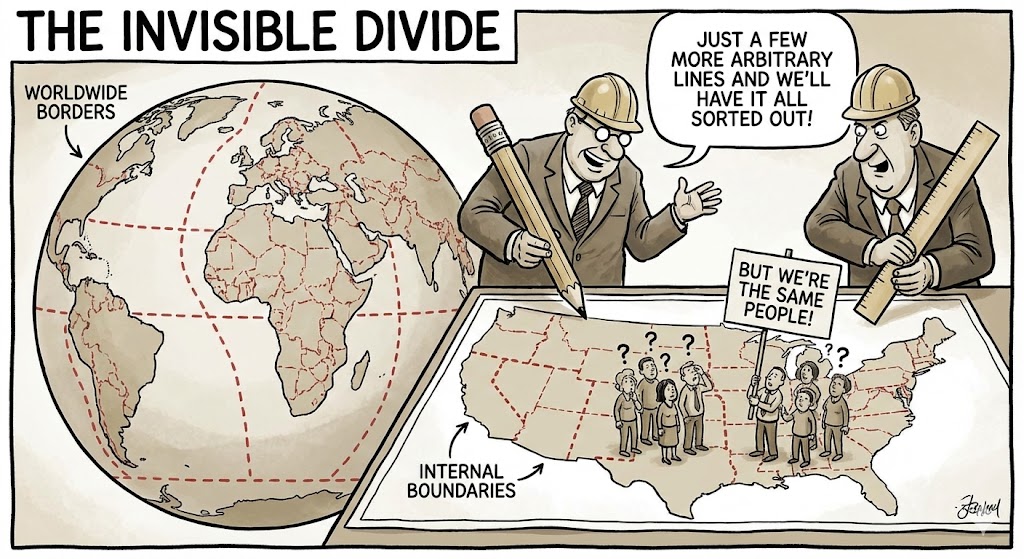
    Colonial powers refined these methods with greater precision and scale. In British-ruled India, administrators exploited religious and ethnic distinctions to weaken nationalist movements. Policies that categorized populations along rigid communal lines intensified divisions that had previously been more fluid. Similar approaches were deployed across Africa and the Middle East, where colonial borders and governance structures entrenched long-term instability. These divisions served imperial interests by preventing mass mobilization against colonial rule. The resulting conflicts often outlasted the colonial period itself.

    Industrial capitalism in the nineteenth and early twentieth centuries adapted divide-and-rule tactics to class conflict. In the United States, industrialists during the Gilded Age exacerbated racial and ethnic tensions among workers to undermine labor organizing. Employers routinely pitted white immigrant laborers against Black workers to prevent collective bargaining. Media narratives and political rhetoric reinforced these divisions, portraying labor solidarity as dangerous or unpatriotic. By fragmenting the working class, economic elites preserved exploitative labor arrangements. History consistently shows that division functions as a stabilizing force for entrenched power.

    Mechanisms of Political Division Today

    In the contemporary political environment, division is reinforced through complex and technologically advanced systems. Digital media platforms use algorithms designed to maximize engagement, often by promoting emotionally charged and polarizing content. Users are funneled into ideological echo chambers that reinforce existing beliefs while caricaturing opposing views. This dynamic elevates cultural wedge issues while marginalizing shared economic concerns such as healthcare access or wage stagnation. Outrage becomes more visible than policy analysis, distorting public priorities. The architecture of online discourse thus rewards division over deliberation.

    Economic policy debates are similarly reframed to obscure underlying class dynamics. Trade agreements, deregulation, and austerity measures are frequently presented as cultural or regional conflicts rather than economic choices. Urban and rural populations are cast as adversaries, even when both experience job insecurity and declining public services. This framing benefits corporate and financial elites who profit from globalization while avoiding accountability. By personalizing economic pain as cultural resentment, policymakers deflect scrutiny from structural decisions. Division becomes a narrative shield for inequality.

    Political institutions and campaign finance structures further entrench polarization. Wealthy donors and corporate-backed political action committees fund messaging that emphasizes fear and antagonism over substantive policy debate. Campaigns invest heavily in negative advertising that mobilizes voters through hostility rather than shared goals. As a result, electoral competition rewards extremism and punishes coalition-building. The political system becomes less responsive to broad public interests and more attuned to narrow elite priorities. Polarization is thus continuously reproduced through institutional incentives.

    Impacts on Lower and Middle Classes

    The consequences of engineered division are most severe for the lower and middle classes. Economically, polarization weakens collective bargaining power and reduces pressure for redistributive policies. Fragmented workers struggle to organize effectively, allowing wages to stagnate while productivity gains accrue to executives and shareholders. Labor protections erode with little resistance, as divided constituencies fail to mount unified opposition. The decline of unions and the rise of precarious work reflect this imbalance. Division ultimately translates into diminished economic security.

    Social cohesion also deteriorates under sustained political conflict. Constant exposure to hostile rhetoric fosters mistrust, anxiety, and a sense of isolation. Families, workplaces, and communities fracture along partisan lines, undermining informal support networks. Research increasingly links political polarization to negative mental health outcomes, including stress and depression. Civic life suffers as individuals withdraw from collective engagement. A society consumed by internal conflict becomes less resilient in the face of crisis.

    Politically, division breeds disengagement and vulnerability to authoritarian appeals. Voter apathy increases when citizens perceive politics as irredeemably hostile or corrupt. At the same time, extreme polarization creates openings for leaders who promise order through exclusion or repression. Democratic norms weaken as compromise is portrayed as betrayal rather than governance. In this environment, the lower and middle classes lose both representation and leverage. The promise of empowerment through division consistently proves illusory.

    Case Studies from Contemporary Politics

    Recent U.S. politics provides a clear example of how polarization benefits elites. During the Trump and Biden administrations, cultural conflict dominated media coverage while wealth inequality continued to rise. Debates over identity and national identity overshadowed bipartisan support for policies favoring capital over labor. Despite rhetorical differences, tax structures and regulatory frameworks largely preserved elite advantages. Scholars such as Thomas Piketty have documented how political polarization coincides with increased income concentration. Divided electorates struggle to demand redistributive reform.

    The United Kingdom’s Brexit process illustrates a similar pattern. Political elites framed the referendum as a cultural and sovereignty struggle, pitting “Leave” against “Remain” voters. This framing obscured the economic interests that stood to benefit from deregulation and labor market flexibility. Post-Brexit outcomes have disproportionately favored large firms and financial actors while wages stagnated. Social divisions deepened, but structural inequalities persisted. Polarization once again diverted attention from material outcomes.

    Comparable dynamics appear in other democracies. In India, religious nationalism has intensified alongside rising economic inequality and corporate concentration. Populist rhetoric mobilizes identity-based loyalty while deflecting scrutiny from crony capitalism. Data from global inequality research consistently show that polarized societies experience disproportionate income growth at the top. These cases reinforce a common conclusion: division serves elite stability, not popular empowerment.

    Pathways to Overcoming Division

    Countering polarization requires intentional strategies that prioritize shared material interests. Grassroots movements have historically demonstrated the potential of cross-group solidarity. Labor campaigns that unite workers across race, region, and ideology remain among the most effective challenges to elite power. Demands for universal healthcare, fair wages, and affordable housing cut across cultural divides. Such coalitions reframe politics around common needs rather than identity conflict. Solidarity becomes a practical necessity rather than an abstract ideal.

    Media reform and civic education are also critical. Expanding media literacy can help citizens recognize manipulative narratives and resist algorithm-driven outrage. Public pressure for transparency and accountability in digital platforms may reduce the amplification of divisive content. Electoral reforms such as ranked-choice voting could incentivize broader coalition-building. These institutional changes would not eliminate disagreement but could reduce zero-sum incentives. A healthier political environment depends on structural as well as cultural change.

    Finally, democratic education should emphasize collective agency and shared responsibility. Teaching political history through a lens of class, power, and solidarity can counter simplistic partisan narratives. Citizens equipped with this perspective are better positioned to identify who benefits from division. Rebuilding trust requires sustained engagement across differences, not the denial of conflict but its contextualization. Unity is not uniformity but coordinated action toward shared goals. Without it, democratic power remains fragmented.

    Thanks for reading The Brooks Brief Substack! This post is public so feel free to share it.

    Share

    Conclusion

    Political polarization is not merely a cultural phenomenon but a strategic tool that preserves elite dominance. By amplifying division, powerful interests divert attention from systemic inequalities and weaken collective resistance. Historical patterns and contemporary case studies demonstrate that this strategy consistently benefits the few at the expense of the many. The economic, social, and political costs to the lower and middle classes are substantial and enduring. Yet polarization is not inevitable or irreversible.

    Pathways toward solidarity exist in grassroots organizing, institutional reform, and civic education. Reclaiming a shared political identity rooted in material interests can counter the fragmenting effects of divisive rhetoric. A democratic society cannot function effectively when its citizens are locked in perpetual conflict. Strength emerges from cooperation, not constant antagonism. The challenge is not eliminating disagreement, but refusing to let it be weaponized against the public itself.

  • Is College Still a Viable Path to Upward Mobility for Middle and Low-Income Families?

    Is College Still a Viable Path to Upward Mobility for Middle and Low-Income Families?

    Opportunity, Risk, and the Future of Economic Mobility


    For generations, the promise of the American Dream has rested on a simple equation rooted in education and effort. Students were told that strong performance in high school followed by a college degree would open the door to economic security. For middle and low-income families in particular, higher education was framed as the most reliable escape from stagnant wages and limited opportunity. This belief shaped public policy, family decisions, and cultural expectations for decades. College became not just an option, but a presumed necessity for advancement.

    As of January 2026, that long-standing assumption is under intense scrutiny. Tuition continues to rise faster than wages, student debt remains a defining feature of early adulthood, and alternative career pathways are gaining legitimacy. Apprenticeships, certifications, and employer-led training programs now compete with traditional degrees for attention and investment. Families facing financial precarity are increasingly cautious about the risks associated with borrowing for college. The central question is no longer whether college matters, but under what conditions it still works.

    The answer is complex but ultimately affirmative. A college degree remains one of the strongest predictors of higher lifetime earnings and intergenerational mobility. At the same time, outcomes vary dramatically based on where students enroll, what they study, how much they borrow, and whether they complete their degree. Data from recent studies make clear that college is not a guaranteed solution to economic hardship. When pursued strategically, however, it continues to deliver meaningful returns for many disadvantaged students.

    Thanks for reading The Brooks Brief Substack! Subscribe for free to receive new posts and support my work.

    The Enduring Case for College as a Mobility Engine

    Broad economic data still supports higher education as a powerful driver of upward mobility. Analyses from the Georgetown University Center on Education and the Workforce in 2025 show that the majority of bachelor’s degree programs deliver positive returns over ten, twenty, and forty year time horizons. College graduates consistently out-earn workers with only a high school diploma across nearly all sectors of the economy. Median lifetime earnings premiums frequently exceed sixty percent, even after accounting for tuition and opportunity costs. These gains compound over time through better job stability, access to benefits, and career advancement.

    Public colleges and universities play a particularly critical role in this equation. Large state systems such as the California State University network and the City University of New York enroll substantial shares of low- and moderate-income students. These institutions tend to offer lower net costs while maintaining strong labor market outcomes. Cal State LA, for example, combines relatively low average net costs with post-graduation earnings that allow many students to recoup their investment quickly. For students from working-class backgrounds, such institutions often provide the clearest path into the middle class.

    Measures of social mobility reinforce this conclusion. Rankings such as the Social Mobility Index and U.S. News and World Report’s social mobility metrics consistently highlight regional public universities that serve large Pell Grant populations. At these schools, low-income graduates frequently earn wages comparable to their higher-income peers from the same institution. This outcome reflects the equalizing potential of well-funded and mission-driven public higher education. In a period of widening inequality, that function remains deeply significant.

    The Mounting Challenges and Risks

    Despite its strengths, college has become a riskier proposition for many families. Affordability remains the most visible obstacle, even after grants and scholarships are applied. Housing, transportation, and textbook costs can rival or exceed tuition itself. The total national student debt burden surpassed one point six trillion dollars in 2025, shaping household finances for an entire generation. For borrowers who do not complete a degree, the financial consequences are often severe.

    Completion gaps further complicate the picture. Low-income and first-generation students are less likely to graduate within six years, particularly when they attend under-resourced institutions. Many students undermatch by enrolling in colleges with weak support systems or low labor market returns because of limited guidance. Field of study also matters, as some majors yield minimal earnings growth relative to their cost. These disparities mean that the benefits of college are unevenly distributed, even among those who enroll.

    At the same time, non-college pathways have become more attractive and credible. Skilled trades, healthcare certifications, and information technology programs can lead to stable employment with far less debt. Employers increasingly value specific skills over credentials in certain sectors. For families facing immediate financial pressures, these options can appear more practical than a four-year degree. The growing appeal of alternatives does not negate the value of college, but it does challenge its dominance as the default path.

    Making College Work: The Path Forward

    Evidence suggests that college works best when students make informed and strategic choices. Attending high-mobility public institutions generally produces stronger outcomes than enrolling in high-cost private colleges with weak earnings records. Maximizing need-based aid, including Pell Grants and state subsidies, is essential to reducing long-term financial strain. Choosing majors aligned with labor market demand significantly improves return on investment. Completing a degree on time remains one of the most important predictors of positive outcomes.

    Families also need better information at the point of decision-making. Transparent data on graduation rates, average debt, and post-graduation earnings can help students assess risk realistically. Strong advising in high school and early college years can reduce undermatching and unnecessary borrowing. Community colleges with clear transfer pathways to four-year institutions offer another cost-effective route. When these systems function well, they expand access without sacrificing outcomes.

    Public policy is central to sustaining college as a mobility engine. Increased state investment in public universities can reduce tuition pressure and improve student support services. Expanding need-based aid and simplifying financial aid applications would disproportionately benefit low-income families. Targeted interventions for at-risk students can raise completion rates and narrow equity gaps. Without these reforms, the promise of higher education will continue to erode for those who need it most.

    Thanks for reading The Brooks Brief Substack! This post is public so feel free to share it.

    Share

    A Balanced Verdict in an Unequal Economy

    In 2026, college remains a viable and often powerful path to upward mobility. It continues to deliver strong economic returns for many middle- and low-income students. However, those returns are conditional rather than automatic. The era of unquestioned college attendance has given way to a more selective and data-driven approach. Success depends on institutional quality, affordability, and degree completion.

    This shift reflects broader changes in the American economy. Wage polarization and rising inequality have raised the stakes of educational decisions. A poorly chosen college pathway can leave students worse off than if they had not enrolled at all. Conversely, a well-chosen one can still transform a family’s economic trajectory. The difference lies in access to information, support, and opportunity.

    The American Dream has not disappeared, but it has become more demanding. College can still serve as a ladder to the middle class when aligned with labor market realities and supported by smart policy. Expanding access to proven institutions while strengthening alternative pathways is essential to a balanced system. Without such alignment, higher education risks reinforcing inequality rather than reducing it.