Narcissistic Ambition, Celebrity Oligarchy, and the Fragile Future of American Leadership
Executive Summary
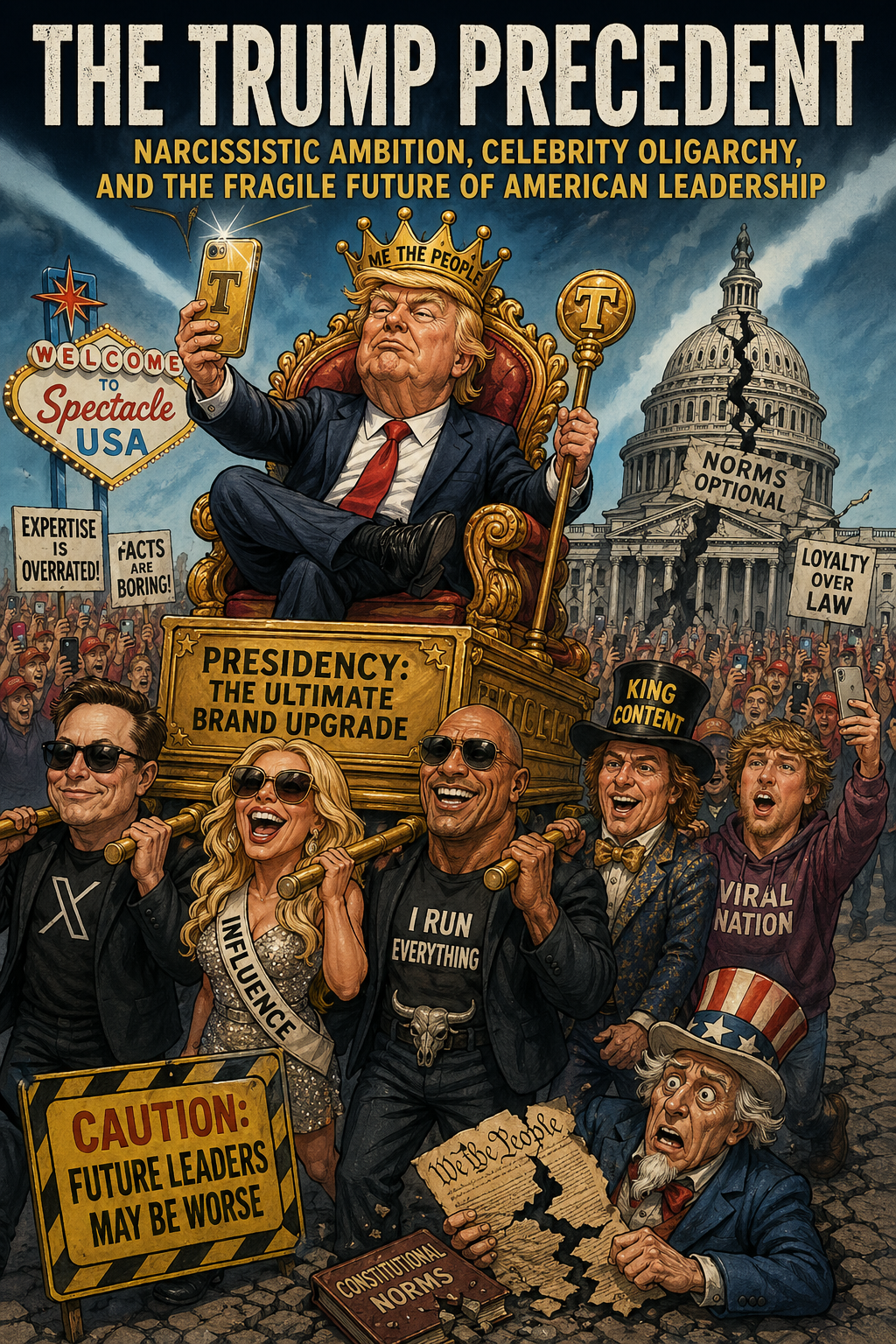
The re-election of Donald J. Trump in 2024 represents more than a political comeback. It signals the consolidation of a new paradigm in American leadership defined by spectacle, personality dominance, and a reconfiguration of traditional political qualifications. This moment is not an isolated disruption but a structural shift in how candidates emerge, campaign, and govern. The Trump model demonstrates that media fluency and personal branding can rival, and in some cases replace, institutional experience and policy expertise. As a result, the presidency is increasingly perceived as accessible to individuals outside conventional political pipelines. This recalibration has profound implications for democratic stability and governance norms.
The long-term concern is not limited to Trump himself but to the behavioral precedent his success has legitimized. The normalization of a leadership style rooted in personal narrative over institutional responsibility creates incentives for future candidates to amplify these traits. This dynamic encourages the emergence of figures who may lack even the limited constraints that shaped Trump’s decision making. Over time, the threshold for presidential credibility risks being lowered further, privileging charisma over competence. This trajectory could fundamentally alter voter expectations and candidate selection processes. The cumulative effect is a political environment more susceptible to volatility and less anchored in governance expertise.
This analysis argues that Trump may ultimately be remembered as a transitional figure rather than the endpoint of this evolution. His presidency provides a proof of concept for a model that future leaders are likely to replicate and intensify. The risk lies in successors who embrace the performative aspects of leadership without retaining any pragmatic restraint. Such individuals may exhibit stronger narcissistic tendencies and weaker connections to institutional norms. In this context, the dangers extend beyond domestic politics into global stability. The central thesis is that the Trump precedent lowers barriers in ways that could produce more destabilizing leadership in the decades ahead.
I. Introduction: Trump as Catalyst, Not Culmination
The elections of 2016 and 2024 disrupted long-standing assumptions about presidential qualifications in the United States. Historically, candidates were expected to demonstrate experience in governance, whether through legislative service, executive leadership, or military command. Trump’s victories challenged this norm by prioritizing outsider status and media visibility over institutional credentials. This shift reflects broader dissatisfaction with traditional political elites and technocratic governance. Voters increasingly value perceived authenticity and disruption over continuity and expertise. As a result, the definition of political viability has expanded significantly.
The “Trump Precedent” can be understood as a framework in which celebrity, narrative control, and anti-establishment messaging substitute for traditional pathways to power. This model relies on the ability to command attention and shape public discourse through direct communication channels. It diminishes the role of party structures and policy vetting in candidate selection. Instead, it elevates personal brand strength as the primary determinant of electoral success. This transformation has implications for both major political parties, which must adapt to candidates who operate outside conventional constraints. The precedent also reshapes voter engagement by emphasizing emotional resonance over policy detail.
Looking ahead, the critical concern is not whether this model persists but how it evolves. The electoral cycles between 2028 and 2040 are likely to feature candidates who adopt and refine the Trump approach. These individuals may lack the contextual awareness or strategic pragmatism that influenced Trump’s decisions. Without these moderating factors, the risks to democratic stability could intensify. The introduction of multiple candidates operating under this paradigm may fragment political discourse further. This environment increases the likelihood of governance driven by competition in spectacle rather than substance.
II. The Proliferation of Grandiose Delusions Among Would-Be Presidents
Trump’s political success demonstrated that a candidate can frame the presidency as an extension of personal mythology. This approach transforms political campaigns into narratives of individual destiny and national salvation. Such framing resonates with voters who feel disconnected from institutional processes and seek transformative leadership. The appeal lies in its simplicity and emotional clarity rather than its policy coherence. As this model gains traction, more candidates are likely to adopt similar rhetorical strategies. This trend contributes to a shift in how leadership is conceptualized and communicated.
Evidence from recent electoral cycles indicates a growing number of non-traditional candidates entering the political arena. These include business figures, media personalities, and digital influencers who possess substantial public followings. Their campaigns often emphasize personal narratives over detailed policy platforms. This pattern reflects a broader cultural shift toward personality-driven engagement. The accessibility of social media amplifies these dynamics by enabling direct communication with large audiences. Consequently, the barriers to entry for presidential campaigns are lower than in previous eras.
The psychological dimension of this trend is equally significant. Grandiose self-perception can be politically advantageous when it aligns with voter dissatisfaction. However, the internalization of such narratives poses risks for governance. Leaders who believe their own mythologies may resist evidence-based decision making. This creates a disconnect between policy needs and leadership behavior. Over time, the normalization of such traits could reshape expectations for presidential conduct. By 2032, it is plausible that multiple candidates in each primary will adopt variations of this approach.

III. The Celebrity Oligarchy: An Unofficial Power Elite Enters the Arena
The concept of a “celebrity oligarchy” refers to a network of individuals whose influence derives from cultural visibility rather than formal authority. This group includes entertainers, athletes, technology leaders, and social media figures. Their ability to shape public opinion rivals that of traditional political actors. Trump’s rise to the presidency validated the political potential of this influence. It demonstrated that cultural capital can be converted into electoral power. This realization has implications for how elites engage with the political system.
Trump’s career trajectory serves as a proof of concept for this transformation. His background in entertainment and real estate provided a foundation for national recognition. This visibility translated into political viability without the need for traditional credentials. For peers within the celebrity ecosystem, this pathway represents a new form of upward mobility. Political office becomes an extension of brand development rather than a distinct career path. This shift blurs the boundaries between governance and entertainment.
Structural factors reinforce this trend. Fragmented media environments prioritize attention-grabbing content over substantive analysis. Algorithms amplify personalities who generate engagement, often favoring controversy and spectacle. Declining trust in institutions further reduces resistance to unconventional candidates. Together, these dynamics create a feedback loop that encourages celebrity participation in politics. The result is a system in which governance risks becoming secondary to performance. This evolution poses challenges for accountability and policy continuity.
IV. Narcissistic Ambition Meets Empathy Deficit: Global Distress as Collateral Damage
Narcissistic traits such as grandiosity, entitlement, and limited empathy can have significant implications when combined with executive authority. These characteristics influence decision making by prioritizing personal validation over collective outcomes. In a political context, this can lead to policies driven by short-term considerations. The concentration of power in the presidency amplifies these effects. When such traits are normalized, they can reshape expectations for leadership behavior. This dynamic has both domestic and international consequences.
Historical examples illustrate how leadership psychology can impact global stability. While Trump operated within institutional constraints, future leaders may encounter fewer limitations. The erosion of norms reduces the effectiveness of checks and balances. Leaders with stronger narcissistic tendencies may be less responsive to institutional feedback. This increases the likelihood of decisions that prioritize personal narratives over strategic considerations. The risks are particularly acute in areas such as foreign policy and economic strategy.
Potential scenarios highlight the scope of these challenges. Trade policies could be shaped by personal grievances rather than national interest. Alliances may be treated as transactional relationships subject to abrupt changes. Domestic polarization could intensify as leaders leverage division for political gain. In each case, the absence of empathy influences both tone and substance. The cumulative effect is an increase in systemic instability. Over time, these patterns could undermine both national cohesion and international cooperation.
V. Thesis Core: Why Trump May Not Be the Worst Leader in America’s Future
A key aspect of this analysis is the recognition that Trump possesses certain moderating characteristics. His background in business introduces a degree of pragmatism into decision making. Electoral considerations also create incentives for responsiveness to public opinion. These factors act as informal constraints on behavior. While imperfect, they differentiate Trump from potential successors. This distinction is critical for understanding future risks.
The concept of a degradation gradient helps frame this concern. As the Trump model is replicated, its constraints may weaken. Future candidates may embrace the performative aspects of leadership without adopting pragmatic considerations. This could result in a purer form of narcissistic governance. Without feedback mechanisms, decision making becomes more volatile. The absence of restraint increases the likelihood of extreme policy shifts.
Voter demand plays a central role in this process. The appeal of authenticity and anti-elite rhetoric remains strong across the political spectrum. This creates incentives for candidates to differentiate themselves through increasingly bold claims. The supply of such candidates is likely to grow in response. Over time, this dynamic could normalize more extreme forms of leadership behavior. In this context, Trump may be viewed as an early stage in a broader transformation rather than its endpoint.
VI. Implications for Democratic Resilience
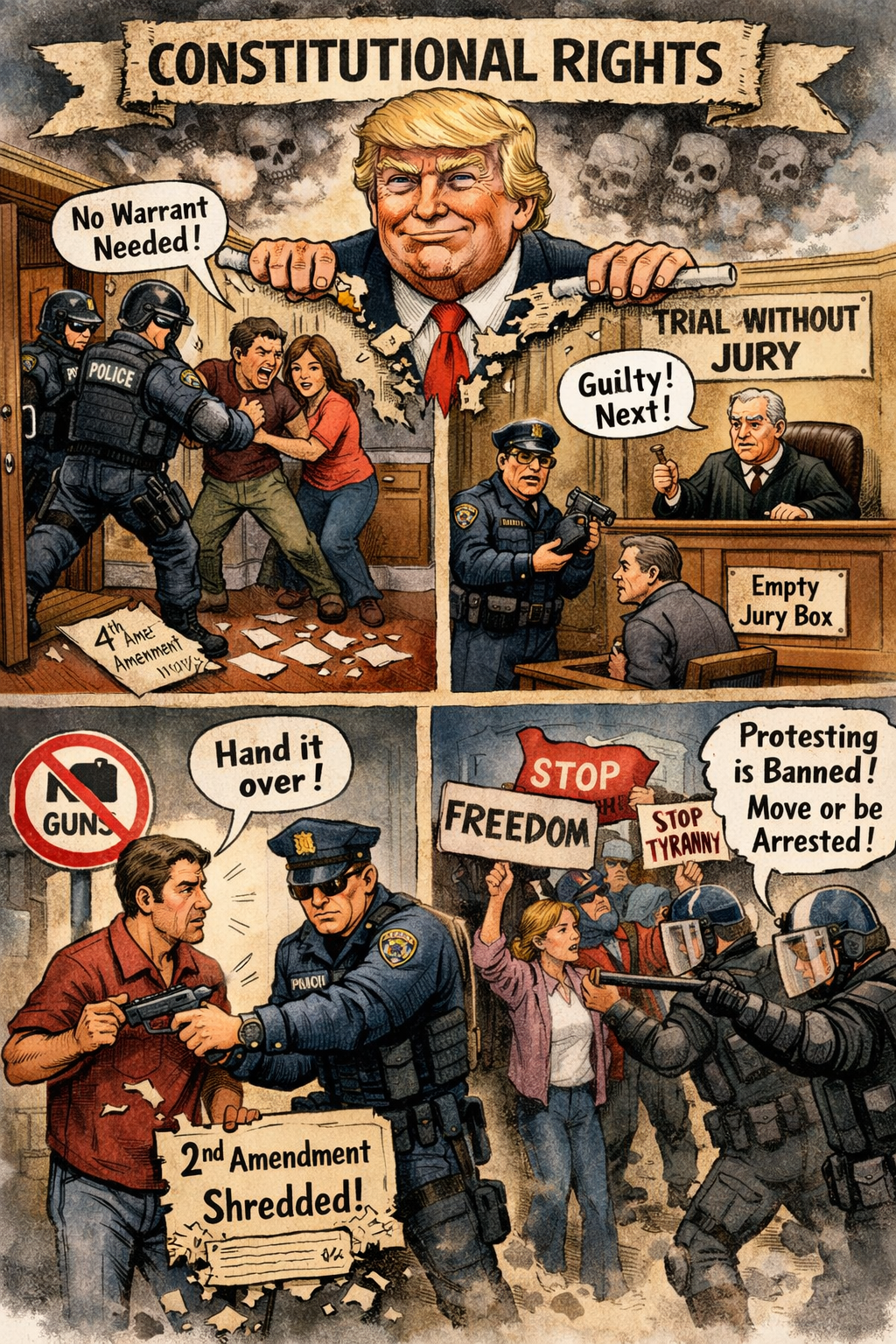
The institutional implications of these trends are significant. Political parties may continue to lose influence as gatekeepers in candidate selection. Norms that once guided behavior could erode further under sustained pressure. Expertise-based governance may be devalued in favor of personality-driven leadership. These changes challenge the ability of institutions to maintain stability. The result is a more fragmented and unpredictable political system.
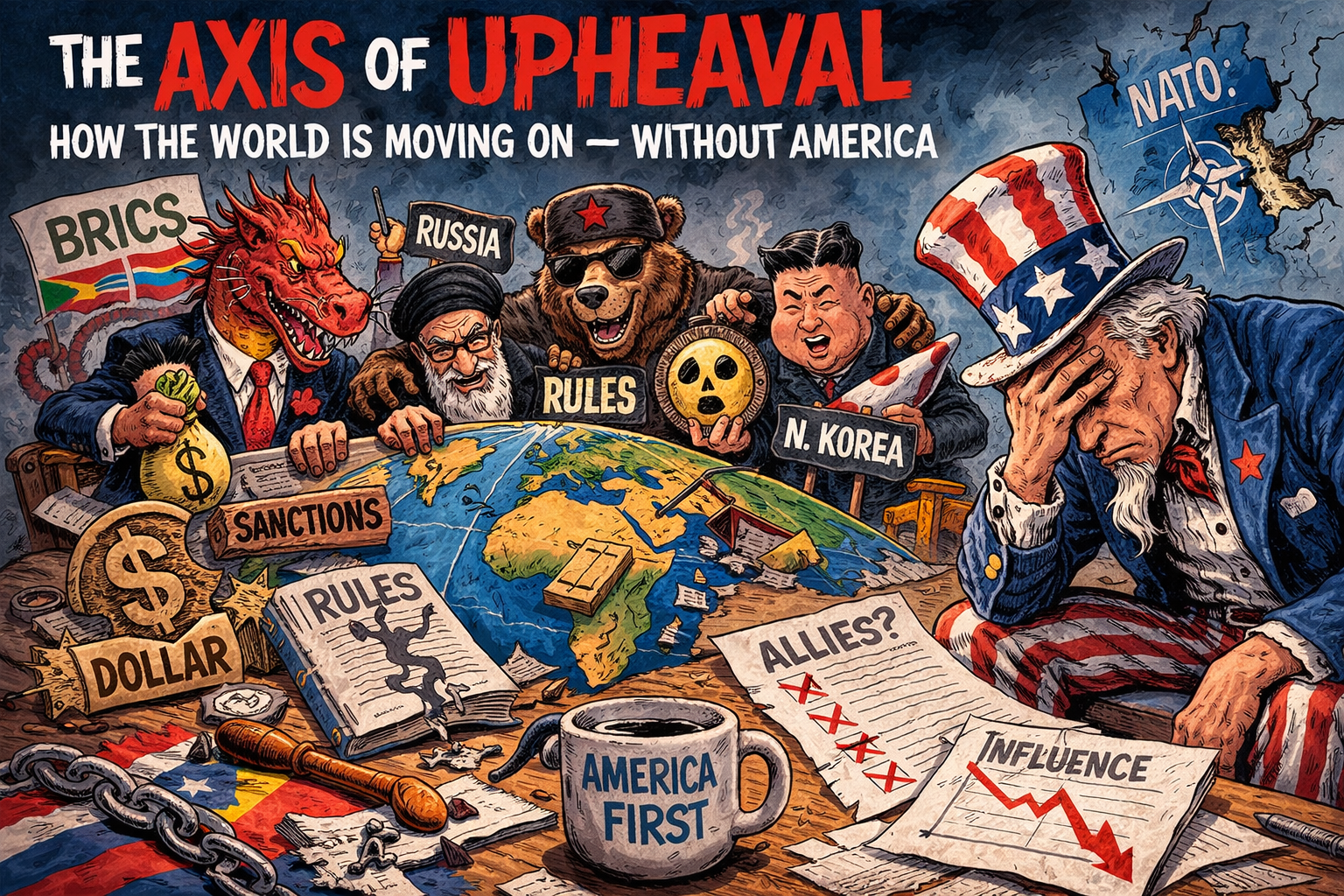
Globally, the effects extend beyond the United States. Allies may adopt more cautious strategies in response to perceived unpredictability. Adversaries could exploit perceived weaknesses in leadership consistency. Multilateral institutions may struggle to function effectively in this environment. The erosion of trust complicates coordination on issues such as security and climate policy. These dynamics contribute to a more uncertain international landscape.
Domestic safeguards remain a critical area of focus. Potential reforms include adjustments to campaign finance structures and media accountability mechanisms. Civic education initiatives could strengthen public understanding of governance processes. Efforts to rebuild institutional trust are essential for long-term stability. These measures must balance inclusivity with the need for competence. The goal is to enhance resilience without suppressing democratic participation.
Thanks for reading The Brooks Brief Substack! This post is public so feel free to share it.
VII. Conclusion and Strategic Recommendations
The central conclusion of this analysis is that Trump represents the beginning of a broader transformation in American leadership. His presidency highlights the power of spectacle and personal branding in modern politics. However, it also exposes vulnerabilities in institutional frameworks. The normalization of this model creates opportunities for more extreme iterations. Addressing these risks requires proactive engagement from multiple stakeholders.
Think tanks, policymakers, and civil society organizations play a vital role in this process. The current period should be treated as an opportunity for diagnostic analysis and reform. Identifying weaknesses in existing systems is a prerequisite for effective intervention. Collaborative approaches can strengthen resilience across institutional levels. This includes both domestic and international partnerships.
Ultimately, the future of American leadership depends on cultural as well as structural factors. A political culture that values empathy, competence, and restraint is essential for stability. Encouraging these values requires sustained effort and public engagement. The challenge is not limited to any single individual but extends to the system as a whole. The ability to navigate this transition will shape the durability of democratic governance in the decades ahead.
Endnotes / Methodology Note
This analysis is based on observable trends in political behavior, voter psychology, and institutional dynamics through 2026. It adopts a forward-looking perspective, treating current developments as indicators rather than conclusions. The framework emphasizes systemic risk over partisan interpretation. It is intended to support policy discussions in governmental, academic, and international contexts.