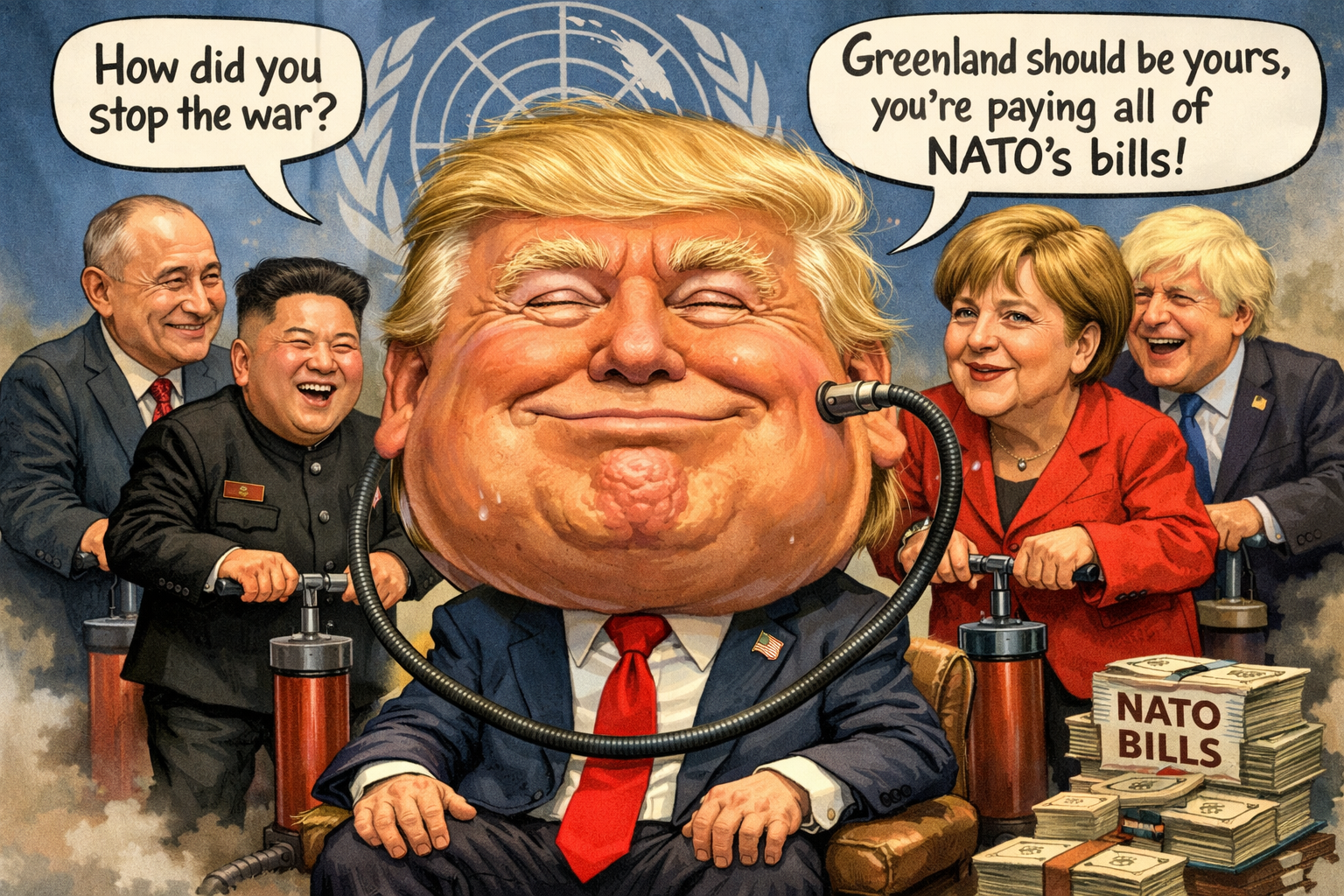
How World Leaders Court Trump to Shape U.S. Deals
I. Introduction
In the high-stakes arena of international diplomacy, flattery has long existed as a subtle instrument of influence, but under Donald Trump it has evolved into an overt governing strategy. During recent high-profile summits, foreign leaders have increasingly used exaggerated praise to curry favor with the U.S. president, recognizing his sensitivity to personal validation. One moment that captured this shift was NATO Secretary-General Mark Rutte’s joking reference to Trump as “Daddy,” a remark that symbolized how far allies are willing to go to stay in his good graces. These gestures are not accidental or lighthearted; they are deliberate calculations rooted in Trump’s transactional worldview. For many leaders, flattering Trump is seen as a shortcut to policy access in an administration that prioritizes personal rapport over institutional process.
This dynamic reflects a broader transformation in how American power is negotiated. Traditional diplomatic channels that once relied on formal alliances, policy expertise, and multilateral norms now compete with personal appeals to Trump’s ego. Praise has become a form of currency, exchanged for trade concessions, security guarantees, or rhetorical support. While such tactics can generate immediate attention from the White House, they also introduce volatility into decision-making. Outcomes often hinge less on strategic alignment than on Trump’s perception of loyalty and admiration.
This article examines how flattery functions as an informal yet influential tool of foreign policy in Trump’s second presidency. Drawing on patterns from his first term and new examples since 2025, it assesses whether this approach produces sustainable results or merely short-term advantages. The analysis explores historical precedents, contemporary case studies, and the broader consequences for U.S. credibility abroad. Ultimately, the rise of ego-driven diplomacy reveals both vulnerabilities and leverage points within American foreign policy. Understanding this phenomenon is essential for assessing the future of global leadership under a personalized presidency.
Thanks for reading The Brooks Brief Substack! Subscribe for free to receive new posts and support my work.
II. Historical Context: Flattery in Trump’s First Term (2017–2021)
Trump’s first term marked a decisive break from the procedural norms that had long defined U.S. diplomacy. Rather than relying on structured negotiations and expert briefings, Trump favored personal chemistry and symbolic gestures. This shift made flattery an especially effective tactic for foreign leaders seeking to bypass institutional constraints. Compliments were interpreted not as diplomatic formalities but as affirmations of Trump’s self-image as a master negotiator. As a result, summits often resembled performances aimed at pleasing the president rather than advancing policy coherence.
North Korean leader Kim Jong Un’s engagement with Trump exemplified this approach. The exchange of effusive letters and public praise helped de-escalate immediate tensions and produced unprecedented leader-level meetings. However, despite the optics, negotiations failed to yield lasting agreements on denuclearization. The episode demonstrated both the power and limits of flattery, opening doors without guaranteeing results. Symbolism proved easier to achieve than substance.
Other leaders refined the tactic with greater discipline. Japanese Prime Minister Shinzo Abe cultivated a close personal relationship with Trump through frequent compliments, shared leisure activities, and public displays of respect. This rapport helped stabilize the U.S.-Japan alliance during a period of intense trade friction. While Abe’s strategy softened some rhetoric and delayed harsher measures, it did not eliminate underlying economic pressures. The lesson was clear: flattery could manage conflict, but not fully resolve it.
European leaders also experimented with spectacle as a form of praise. French President Emmanuel Macron’s invitation for Trump to attend the Bastille Day parade in 2017 was designed to appeal to his admiration for military pageantry. The gesture generated goodwill and temporarily eased tensions over NATO spending. Yet Trump continued to publicly criticize European allies, underscoring the fragility of flattery-based diplomacy. By the end of Trump’s first term, global leaders had learned that admiration could influence tone, but rarely dictated outcomes.
III. Flattery in Action: Examples from Trump’s Second Term (2025–Present)
Trump’s return to the presidency prompted a swift revival of ego-focused diplomacy. Foreign leaders arrived prepared, armed with refined messaging tailored to Trump’s priorities on trade, security, and migration. Israeli Prime Minister Benjamin Netanyahu has been particularly adept, repeatedly calling Trump the strongest ally Israel has ever had. He has credited Trump with historic military and diplomatic achievements, framing U.S. actions as decisive turning points. This praise appears to reinforce Washington’s support for Israeli policy preferences in a volatile regional environment.
European leaders have adopted more creative rhetorical strategies. U.K. Prime Minister Keir Starmer and Italian Prime Minister Giorgia Meloni have framed cooperation with the United States as essential to Trump’s historical legacy. Meloni’s adaptation of Trump’s campaign slogan into “Make the West Great Again” explicitly linked European security to his personal brand. These gestures are intended to secure continued U.S. engagement in Ukraine and NATO at a time of growing uncertainty. However, such efforts have produced uneven results, reflecting the limits of symbolic alignment.
Beyond Europe, flattery has been paired with transactional offers. El Salvador’s President Nayib Bukele has proposed detaining U.S. migrants in exchange for political favor, while Japan’s Prime Minister Shigeru Ishiba praised Trump’s commanding leadership style. Canadian Prime Minister Mark Carney described Trump as “transformational,” yet still faced renewed trade disputes. These cases suggest that praise alone cannot override structural economic conflicts. Even well-calibrated admiration does not guarantee immunity from Trump’s confrontational instincts.
Trump’s fixation on the Nobel Peace Prize has inspired another wave of international flattery. Leaders and political figures from Israel, Pakistan, and Venezuela’s opposition have linked nominations or accolades to Trump’s involvement in regional issues. In Africa, presidents have publicly praised Trump’s negotiating skills while proposing joint business ventures and investments. These overtures underscore how flattery functions as a low-cost entry point to Trump’s attention. When combined with economic incentives, it becomes a central feature of global engagement with the White House.
IV. Analysis: Does Flattery Work?
The effectiveness of flattery under Trump is best described as inconsistent. In some cases, praise has translated into tangible policy benefits, including delayed tariffs or muted criticism. Netanyahu’s sustained admiration appears to have reduced U.S. pressure on Israeli military actions. During Trump’s first term, Abe’s personal diplomacy helped preserve alliance stability during contentious negotiations. These examples show how ego reinforcement can accelerate access and soften rhetoric.
Yet flattery frequently falls short when confronted with hard policy constraints. Canada’s praise did not prevent trade escalation, and European efforts have failed to fully resolve NATO funding disputes. Leaders who combine admiration with firm boundaries often achieve better outcomes than those relying on praise alone. Germany’s occasional pushback, for example, has preserved negotiating leverage without fully alienating the White House. This suggests that flattery works best as a supplement, not a substitute, for strategic positioning.
Psychologically, Trump’s responsiveness to praise reflects well-documented narcissistic tendencies. Flattery can temporarily shape behavior but risks backlash if perceived as manipulative or insincere. Strategically, overreliance on personal validation undermines policy consistency and institutional trust. It also incentivizes foreign leaders to compete for favor rather than cooperate collectively. Over time, this dynamic weakens alliance cohesion.
Ethical concerns further complicate the picture. The blending of diplomatic praise with business proposals, gifts, or personal benefits raises questions about corruption and conflicts of interest. Critics argue that such practices blur the line between statecraft and personal enrichment. This erosion of norms invites legal scrutiny and damages democratic credibility. Flattery, when tied too closely to material inducements, becomes a liability rather than an asset.
V. Broader Implications for Global Diplomacy
The normalization of flattery-based diplomacy signals a structural shift in how U.S. power is exercised. Alliances increasingly resemble transactional arrangements rather than shared commitments. Institutions like NATO risk being sidelined in favor of bilateral relationships shaped by personal approval. This model favors authoritarian leaders who face fewer domestic constraints and can flatter without political cost. Democratic allies, by contrast, must balance praise with accountability.
For global stability, ego-driven decision-making introduces significant unpredictability. Sudden policy reversals on Ukraine, trade, or security cooperation can unsettle markets and destabilize regions. Allies are forced to hedge their strategies, unsure whether commitments will endure beyond the next compliment or perceived slight. Over time, this uncertainty erodes confidence in U.S. leadership. The long-term costs may outweigh short-term diplomatic gains.
Looking ahead, alternative approaches may emerge. Some leaders are experimenting with what might be called respectful firmness, combining acknowledgment of Trump’s authority with clear red lines. In a multipolar world, influence is increasingly diffuse, reducing the effectiveness of personality-centric diplomacy. Sustainable engagement will likely require a return to substantive bargaining grounded in shared interests. Flattery may persist, but its dominance is unlikely to endure indefinitely.
Thanks for reading The Brooks Brief Substack! This post is public so feel free to share it.
VI. Conclusion
Flattery has become a defining feature of Trump-era diplomacy, offering foreign leaders a direct but unstable route to influence. From Kim Jong Un’s letters to Netanyahu’s tributes, praise has shaped tone and access without consistently delivering lasting outcomes. While ego-driven engagement can produce short-term advantages, it often undermines institutional trust and alliance cohesion. As global challenges intensify, reliance on personal validation exposes significant weaknesses in U.S. foreign policy. The central question remains whether world leaders will continue to indulge this approach or pivot toward diplomacy rooted in mutual interests and shared principles. In the long run, substance may prove more durable than praise.
Leave a Reply