Tag: american foreign policy

  • Cuba’s Shadow War

    Cuba’s Shadow War

    Why the Next American Conflict May Not Be the “Easy Win” Washington Expects


    I. Introduction

    In quiet policy rooms across Washington, the map of the Western Hemisphere is being reconsidered with renewed urgency. Among the familiar pressure points, Cuba stands out as both a lingering challenge and a perceived opportunity. Some policymakers increasingly view Havana not as a relic of Cold War rivalry but as unfinished business in a broader campaign to reshape regional order. The logic is simple on its surface: decades of economic pressure have weakened the island, and escalating tensions across the globe create an opening to act decisively. In this framing, Cuba becomes less a sovereign state and more a strategic problem waiting for resolution. Yet beneath this apparent clarity lies a far more complex and dangerous reality.

    The United States has maintained pressure on Cuba for more than sixty years, creating conditions that many analysts now describe as unsustainable. This prolonged campaign has brought the Cuban state to the edge of systemic breakdown, making it appear vulnerable to external coercion. For some in Washington, this moment represents a rare convergence of weakness and proximity, a chance to achieve regime change with limited cost. However, this perception risks repeating a familiar pattern of strategic overconfidence. Recent experiences in Iran have demonstrated that military superiority does not guarantee political success. The assumption that Cuba would be a quick and decisive victory ignores the broader geopolitical environment.

    The central argument of this analysis is that while Cuba may seem like an easy target in isolation, it does not exist in isolation. Any direct confrontation would almost certainly trigger involvement from major global powers, transforming a regional conflict into a wider geopolitical crisis. The United States may win the opening stages of a war, but the aftermath could prove far more difficult to control. Victory on the battlefield is only one phase of conflict, and often the least complicated. The real challenge lies in shaping a stable and favorable peace. In the case of Cuba, that challenge could expose the limits of American power in ways that policymakers have not fully accounted for.


    II. The Embargo as a Permanent Punishment

    The roots of the U.S. embargo against Cuba stretch back to the early 1960s, when Cold War tensions transformed the island into a frontline state in the ideological struggle between Washington and Moscow. Initially conceived as a targeted response to nationalization policies and alignment with the Soviet Union, the embargo evolved into one of the most comprehensive sanction regimes in modern history. Over time, it became institutionalized through legislation and reinforced by successive administrations. What began as a temporary measure hardened into a permanent fixture of U.S. foreign policy. Its longevity has outlasted the very geopolitical context that gave rise to it. Today, the embargo functions less as a tool of negotiation and more as a structural constraint on Cuba’s economic survival.

    The humanitarian consequences of this policy have intensified in recent years, pushing the island toward a state of chronic crisis. Fuel shortages have disrupted transportation and electricity generation, leading to frequent blackouts and economic paralysis. Access to medicine has deteriorated, undermining a healthcare system once considered a regional model. Food scarcity has become increasingly visible, with long lines and rationing becoming part of daily life. These conditions are not episodic but systemic, reflecting a broader breakdown in the island’s economic infrastructure. The cumulative effect is a society under sustained pressure, where resilience is tested against material deprivation. For external observers, this deterioration reinforces the perception of a state nearing collapse.

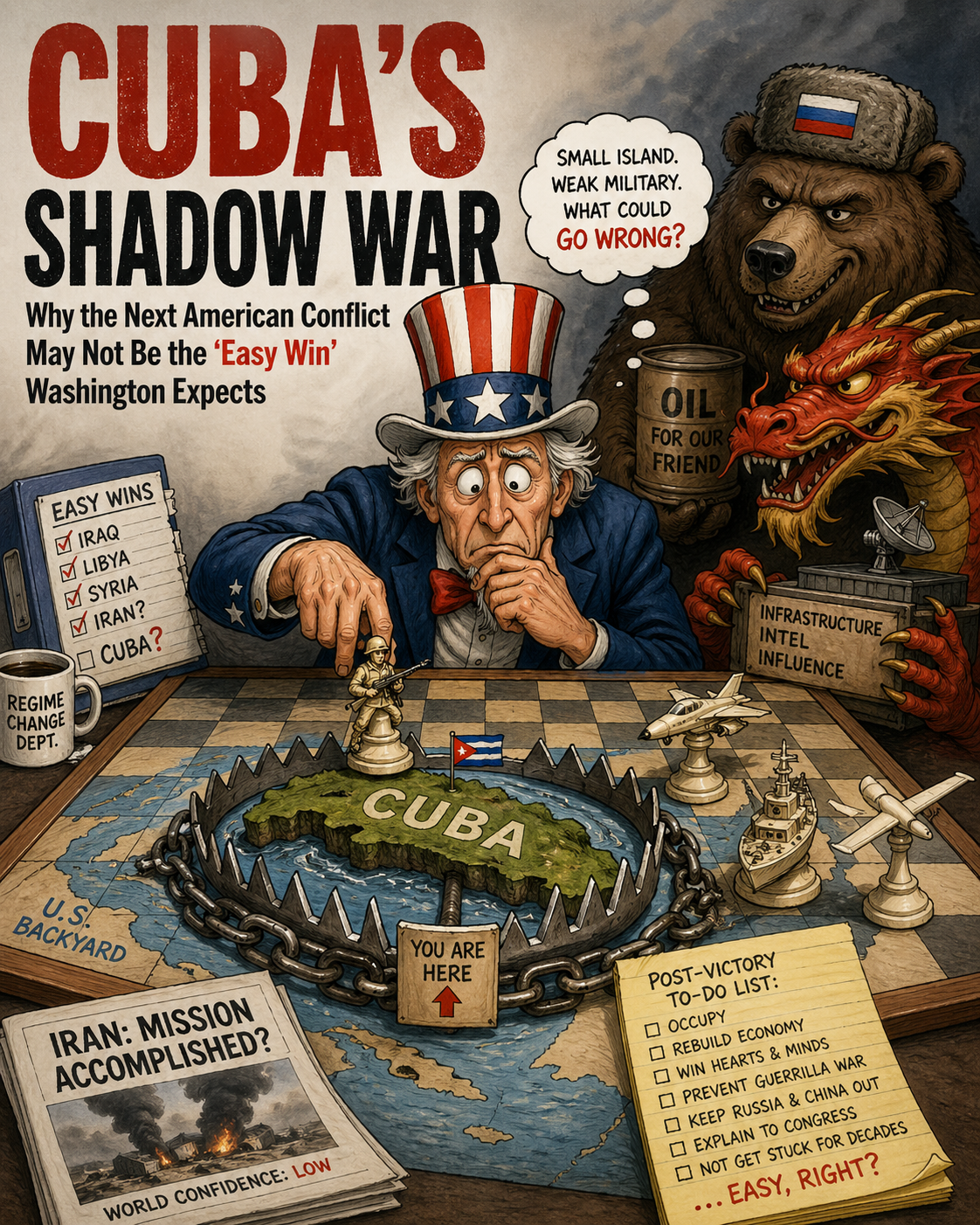
    Within Washington, these conditions are often interpreted through a strategic lens rather than a humanitarian one. Policymakers who favor a harder line argue that increased pressure could accelerate political change or even trigger regime collapse. Options under discussion range from tightening sanctions to more aggressive measures such as a naval blockade or limited military strikes. In this view, Cuba represents a low-cost opportunity to demonstrate resolve and achieve a long-standing objective. The logic mirrors earlier phases of containment policy, where incremental pressure was seen as a pathway to eventual transformation. Yet such calculations often underestimate the unintended consequences of escalation. To the hawks in Washington, Cuba looks like unfinished business. To the island itself, it looks like a trap waiting to spring.


    III. The Military Calculus: America Wins Alone, But Cuba Will Not Fight Alone

    From a purely rational standpoint, the United States possesses significant advantages over Cuba. Its air and naval forces dominate the region, supported by advanced surveillance and cyber capabilities. Geographic proximity further amplifies this advantage, allowing rapid deployment and sustained operations. In a scenario where Cuba stands alone, the outcome of a conventional conflict would be highly predictable. U.S. forces could neutralize Cuban defenses within days, if not hours. Military planners often view such scenarios as low-risk engagements with high probability of success. This perception contributes to the belief that intervention would be swift and decisive.

    However, this analysis rests on a critical assumption that does not align with Cuban strategic doctrine. For decades, Havana has operated under the expectation that any conflict with the United States would involve external partners. This assumption is not theoretical but embedded in military planning and political signaling. Cuban leadership has consistently emphasized that it would not confront Washington in isolation. The island’s history of alliance with major powers reinforces this posture. As a result, any U.S. intervention would likely trigger a broader response. The battlefield would expand beyond the immediate theater of operations.

    The involvement of external powers would fundamentally alter the nature of the conflict. What begins as a bilateral confrontation could quickly evolve into a proxy struggle between global rivals. This escalation would introduce new domains of warfare, including cyber operations, economic retaliation, and strategic signaling. The risks of miscalculation would increase significantly, thereby raising the likelihood of unintended escalation. In such a scenario, the initial military advantage of the United States could be offset by the complexity of a multi-actor conflict. The question would no longer be whether the U.S. can defeat Cuba, but whether it can manage the consequences of a wider conflict.


    IV. Russia and China Step In: The Alliance Lifeline

    Recent developments suggest that Russia is already positioning itself as a critical lifeline for Cuba. Moscow has delivered oil shipments to the island, framing these actions as humanitarian assistance in response to the ongoing energy crisis. While modest in scale, these deliveries carry significant symbolic weight. They signal a willingness to challenge U.S. pressure in its own hemisphere. For Russia, the cost of such support is relatively low compared to the strategic benefits. By sustaining Cuba, Moscow can complicate U.S. decision-making and stretch its resources. This approach reflects a broader strategy of indirect competition rather than direct confrontation.

    Beyond symbolism, Russia’s involvement introduces a layer of strategic ambiguity. Energy shipments can easily evolve into broader forms of support, including military cooperation or intelligence sharing. Even limited assistance can have outsized effects in a constrained environment like Cuba. The presence of Russian assets, however small, would act as a deterrent against unilateral U.S. action. It would also create the risk of direct confrontation between nuclear-armed powers. This dynamic transforms Cuba from a local issue into a global flashpoint. The island becomes a lever in a much larger geopolitical contest.

    Meanwhile, China plays a quieter but potentially more consequential role. Beijing has invested in infrastructure projects across Cuba, deepening economic ties and expanding its influence. Reports of intelligence cooperation suggest that China views the island as a strategic vantage point near the United States. In a conflict scenario, these relationships could translate into logistical support, cyber capabilities, or even limited basing access. Such involvement would complicate any U.S. operation across multiple domains. Cuba alone is a speed bump. Cuba backed by Russia and China is a tripwire.


    V. The Iran Hangover: Global Loss of Faith in American Leadership

    Recent U.S. actions in Iran have left a lasting impression on the international community. What was intended as a demonstration of strength has instead raised questions about strategic coherence and long-term planning. Allies have expressed concern about the unpredictability of American decision-making. Adversaries have taken note of perceived inconsistencies and gaps in execution. The result is a credibility deficit that transcends any single conflict. This erosion of trust complicates future efforts to build coalitions or secure international support.

    In Europe, governments have shown increasing reluctance to align with U.S. military initiatives that lack clear objectives or exit strategies. Across Latin America, skepticism runs even deeper, shaped by historical memories of intervention and regime change. Many countries in the Global South view potential action against Cuba as a continuation of past patterns rather than a response to present conditions. This perception limits Washington’s ability to frame its actions as legitimate or necessary. Without broad support, any intervention risks isolation on the world stage. The diplomatic costs could rival or exceed the military ones.

    This environment emboldens rival powers to challenge U.S. initiatives more directly. If Washington appears unable to sustain long-term commitments, adversaries may calculate that they can outlast or outmaneuver it. In the context of Cuba, this dynamic increases the likelihood of external intervention. Russia and China may see an opportunity to test American resolve in a controlled setting. The stakes are not limited to the island itself but extend to the broader balance of power. A misstep in Cuba could reverberate across multiple regions. Iran’s shadow looms large over any future decision.


    VI. The Regime-Change Trap: Why Cuba Is Harder Than It Looks

    At first glance, Cuba appears to be a straightforward target for regime change. Its leadership is aging, its economy is struggling, and its military capabilities are limited. These factors create an impression of vulnerability that is difficult to ignore. For policymakers seeking a decisive victory, the appeal is clear. A successful intervention could be framed as a restoration of stability and democracy. It could also serve as a signal of renewed American strength. However, this surface-level assessment overlooks deeper structural realities.

    Cuban society is shaped by decades of resistance and national pride, rooted in defiance of external pressure. This identity is not confined to political elites but extends across broad segments of the population. Historical experiences, including the Bay of Pigs Invasion, have reinforced the narrative of resistance against foreign intervention. The government has also invested heavily in asymmetric defense strategies, including guerrilla tactics and decentralized resistance. These preparations are designed to complicate any occupation or stabilization effort. Even if the Cuban administration were removed, the conditions for prolonged unrest would remain.

    The challenge of post-conflict stabilization presents an even greater obstacle. Installing a new government in the aftermath of intervention would require significant resources and sustained commitment. Economic reconstruction would be complicated by existing shortages and damaged infrastructure. Public perception of a U.S.-backed administration could fuel resentment and undermine legitimacy. These factors create a high risk of prolonged instability. Toppling the regime may take weeks. Stabilizing the island could take decades and cost far more in blood, treasure, and prestige than any war-game scenario suggests.


    VII. Strategic Implications: The Next American Conflict in Context

    A conflict involving Cuba would have implications far beyond the Caribbean. It would divert attention and resources from other strategic priorities, particularly in the Indo-Pacific region. U.S. forces are already managing multiple commitments, and a wider conflict would strain readiness and logistics. The risk of simultaneous crises would increase, creating vulnerabilities in other theaters. Adversaries could exploit this distraction to advance their own interests. The results would be a more fragmented and unstable global security environment.

    Domestically, the appetite for another military intervention is limited. Public opinion reflects fatigue after years of conflict in various regions. Congressional support for new conflict is uncertain, especially in the absence of a clear and compelling rationale. The experience of Iran has reinforced concerns about escalation and unintended consequences. These factors limit the political space available to policymakers. Any decision to act would face significant scrutiny and opposition. The domestic dimension cannot be separated from the strategic calculus.

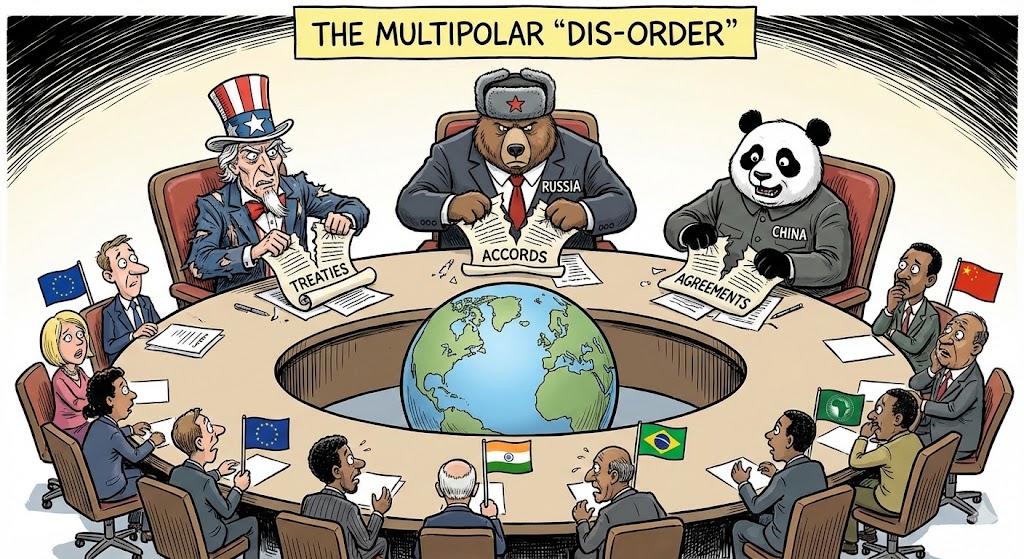
    In the long term, escalation over Cuba could accelerate the emergence of a multipolar world order. Efforts to assert dominance may instead highlight the limits of American influence. Rival powers would have the opportunity to expand their roles and challenge existing structures. This shift wouldn’t happen overnight; instead, it would unfold gradually through a series of interconnected developments. Cuba has the potential to catalyze significant shifts in global alignment. The implications would extend well beyond the immediate conflict. What begins as a regional issue could reshape the international system.


    Thanks for reading The Brooks Brief Substack! This post is public so feel free to share it.

    Share

    VIII. Conclusion

    The suffering of the Cuban people under decades of economic pressure is undeniable. It creates a moral and strategic dilemma for policymakers in Washington. The temptation to resolve this situation through decisive action is strong. Yet the lessons of recent history caution against simplistic solutions. Military force alone cannot address the complexities of political and social dynamics. Any intervention would carry risks that extend far beyond the initial objectives. The costs of miscalculation could be profound.

    An easy victory against Cuba is an illusion once the broader geopolitical context is taken into account. The involvement of external powers would transform the conflict into something far more dangerous. The challenges of post-conflict stabilization would further complicate any success on the battlefield. These realities demand a more measured and realistic approach. Policymakers must weigh not only the potential gains but also the long-term consequences. Strategic patience may prove more effective than rapid escalation.

    The question that remains is whether Washington will internalize these lessons. Iran’s experience serves as a cautionary tale, highlighting the stark contrast between intentions and actual outcomes. As tensions persist, the decisions made in the coming years will significantly influence the future of American foreign policy. Will leaders choose restraint and recalibration, or will they repeat patterns of overreach? The answer will determine not only the fate of Cuba but also the trajectory of U.S. influence on the global stage.
  • Flattery as Foreign Policy

    Flattery as Foreign Policy

    How World Leaders Court Trump to Shape U.S. Deals


    I. Introduction

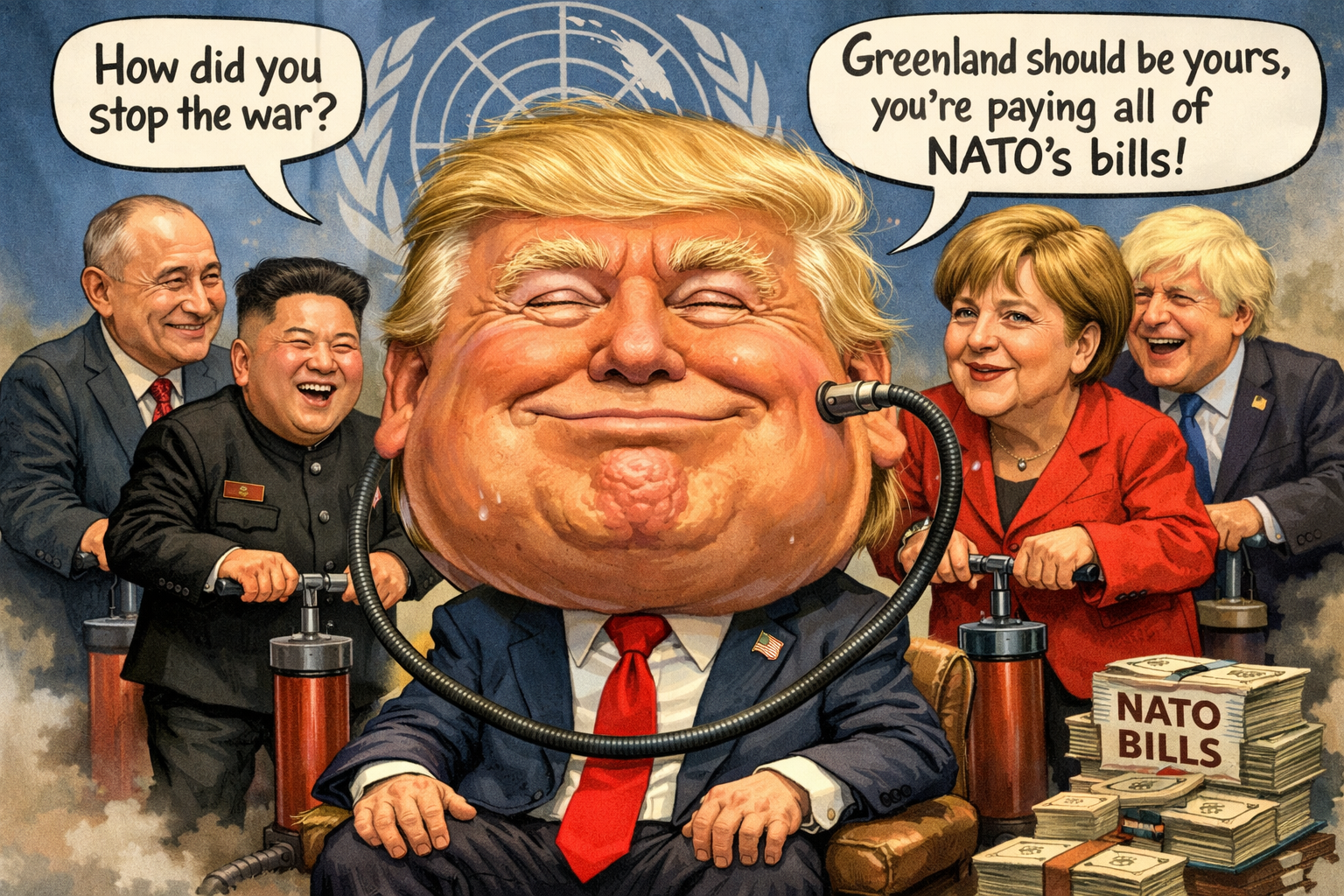
    In the high-stakes arena of international diplomacy, flattery has long existed as a subtle instrument of influence, but under Donald Trump it has evolved into an overt governing strategy. During recent high-profile summits, foreign leaders have increasingly used exaggerated praise to curry favor with the U.S. president, recognizing his sensitivity to personal validation. One moment that captured this shift was NATO Secretary-General Mark Rutte’s joking reference to Trump as “Daddy,” a remark that symbolized how far allies are willing to go to stay in his good graces. These gestures are not accidental or lighthearted; they are deliberate calculations rooted in Trump’s transactional worldview. For many leaders, flattering Trump is seen as a shortcut to policy access in an administration that prioritizes personal rapport over institutional process.

    This dynamic reflects a broader transformation in how American power is negotiated. Traditional diplomatic channels that once relied on formal alliances, policy expertise, and multilateral norms now compete with personal appeals to Trump’s ego. Praise has become a form of currency, exchanged for trade concessions, security guarantees, or rhetorical support. While such tactics can generate immediate attention from the White House, they also introduce volatility into decision-making. Outcomes often hinge less on strategic alignment than on Trump’s perception of loyalty and admiration.

    This article examines how flattery functions as an informal yet influential tool of foreign policy in Trump’s second presidency. Drawing on patterns from his first term and new examples since 2025, it assesses whether this approach produces sustainable results or merely short-term advantages. The analysis explores historical precedents, contemporary case studies, and the broader consequences for U.S. credibility abroad. Ultimately, the rise of ego-driven diplomacy reveals both vulnerabilities and leverage points within American foreign policy. Understanding this phenomenon is essential for assessing the future of global leadership under a personalized presidency.

    Thanks for reading The Brooks Brief Substack! Subscribe for free to receive new posts and support my work.

    II. Historical Context: Flattery in Trump’s First Term (2017–2021)

    Trump’s first term marked a decisive break from the procedural norms that had long defined U.S. diplomacy. Rather than relying on structured negotiations and expert briefings, Trump favored personal chemistry and symbolic gestures. This shift made flattery an especially effective tactic for foreign leaders seeking to bypass institutional constraints. Compliments were interpreted not as diplomatic formalities but as affirmations of Trump’s self-image as a master negotiator. As a result, summits often resembled performances aimed at pleasing the president rather than advancing policy coherence.

    North Korean leader Kim Jong Un’s engagement with Trump exemplified this approach. The exchange of effusive letters and public praise helped de-escalate immediate tensions and produced unprecedented leader-level meetings. However, despite the optics, negotiations failed to yield lasting agreements on denuclearization. The episode demonstrated both the power and limits of flattery, opening doors without guaranteeing results. Symbolism proved easier to achieve than substance.

    Other leaders refined the tactic with greater discipline. Japanese Prime Minister Shinzo Abe cultivated a close personal relationship with Trump through frequent compliments, shared leisure activities, and public displays of respect. This rapport helped stabilize the U.S.-Japan alliance during a period of intense trade friction. While Abe’s strategy softened some rhetoric and delayed harsher measures, it did not eliminate underlying economic pressures. The lesson was clear: flattery could manage conflict, but not fully resolve it.

    European leaders also experimented with spectacle as a form of praise. French President Emmanuel Macron’s invitation for Trump to attend the Bastille Day parade in 2017 was designed to appeal to his admiration for military pageantry. The gesture generated goodwill and temporarily eased tensions over NATO spending. Yet Trump continued to publicly criticize European allies, underscoring the fragility of flattery-based diplomacy. By the end of Trump’s first term, global leaders had learned that admiration could influence tone, but rarely dictated outcomes.

    III. Flattery in Action: Examples from Trump’s Second Term (2025–Present)

    Trump’s return to the presidency prompted a swift revival of ego-focused diplomacy. Foreign leaders arrived prepared, armed with refined messaging tailored to Trump’s priorities on trade, security, and migration. Israeli Prime Minister Benjamin Netanyahu has been particularly adept, repeatedly calling Trump the strongest ally Israel has ever had. He has credited Trump with historic military and diplomatic achievements, framing U.S. actions as decisive turning points. This praise appears to reinforce Washington’s support for Israeli policy preferences in a volatile regional environment.

    European leaders have adopted more creative rhetorical strategies. U.K. Prime Minister Keir Starmer and Italian Prime Minister Giorgia Meloni have framed cooperation with the United States as essential to Trump’s historical legacy. Meloni’s adaptation of Trump’s campaign slogan into “Make the West Great Again” explicitly linked European security to his personal brand. These gestures are intended to secure continued U.S. engagement in Ukraine and NATO at a time of growing uncertainty. However, such efforts have produced uneven results, reflecting the limits of symbolic alignment.

    Beyond Europe, flattery has been paired with transactional offers. El Salvador’s President Nayib Bukele has proposed detaining U.S. migrants in exchange for political favor, while Japan’s Prime Minister Shigeru Ishiba praised Trump’s commanding leadership style. Canadian Prime Minister Mark Carney described Trump as “transformational,” yet still faced renewed trade disputes. These cases suggest that praise alone cannot override structural economic conflicts. Even well-calibrated admiration does not guarantee immunity from Trump’s confrontational instincts.

    Trump’s fixation on the Nobel Peace Prize has inspired another wave of international flattery. Leaders and political figures from Israel, Pakistan, and Venezuela’s opposition have linked nominations or accolades to Trump’s involvement in regional issues. In Africa, presidents have publicly praised Trump’s negotiating skills while proposing joint business ventures and investments. These overtures underscore how flattery functions as a low-cost entry point to Trump’s attention. When combined with economic incentives, it becomes a central feature of global engagement with the White House.

    IV. Analysis: Does Flattery Work?

    The effectiveness of flattery under Trump is best described as inconsistent. In some cases, praise has translated into tangible policy benefits, including delayed tariffs or muted criticism. Netanyahu’s sustained admiration appears to have reduced U.S. pressure on Israeli military actions. During Trump’s first term, Abe’s personal diplomacy helped preserve alliance stability during contentious negotiations. These examples show how ego reinforcement can accelerate access and soften rhetoric.

    Yet flattery frequently falls short when confronted with hard policy constraints. Canada’s praise did not prevent trade escalation, and European efforts have failed to fully resolve NATO funding disputes. Leaders who combine admiration with firm boundaries often achieve better outcomes than those relying on praise alone. Germany’s occasional pushback, for example, has preserved negotiating leverage without fully alienating the White House. This suggests that flattery works best as a supplement, not a substitute, for strategic positioning.

    Psychologically, Trump’s responsiveness to praise reflects well-documented narcissistic tendencies. Flattery can temporarily shape behavior but risks backlash if perceived as manipulative or insincere. Strategically, overreliance on personal validation undermines policy consistency and institutional trust. It also incentivizes foreign leaders to compete for favor rather than cooperate collectively. Over time, this dynamic weakens alliance cohesion.

    Ethical concerns further complicate the picture. The blending of diplomatic praise with business proposals, gifts, or personal benefits raises questions about corruption and conflicts of interest. Critics argue that such practices blur the line between statecraft and personal enrichment. This erosion of norms invites legal scrutiny and damages democratic credibility. Flattery, when tied too closely to material inducements, becomes a liability rather than an asset.

    V. Broader Implications for Global Diplomacy

    The normalization of flattery-based diplomacy signals a structural shift in how U.S. power is exercised. Alliances increasingly resemble transactional arrangements rather than shared commitments. Institutions like NATO risk being sidelined in favor of bilateral relationships shaped by personal approval. This model favors authoritarian leaders who face fewer domestic constraints and can flatter without political cost. Democratic allies, by contrast, must balance praise with accountability.

    For global stability, ego-driven decision-making introduces significant unpredictability. Sudden policy reversals on Ukraine, trade, or security cooperation can unsettle markets and destabilize regions. Allies are forced to hedge their strategies, unsure whether commitments will endure beyond the next compliment or perceived slight. Over time, this uncertainty erodes confidence in U.S. leadership. The long-term costs may outweigh short-term diplomatic gains.

    Looking ahead, alternative approaches may emerge. Some leaders are experimenting with what might be called respectful firmness, combining acknowledgment of Trump’s authority with clear red lines. In a multipolar world, influence is increasingly diffuse, reducing the effectiveness of personality-centric diplomacy. Sustainable engagement will likely require a return to substantive bargaining grounded in shared interests. Flattery may persist, but its dominance is unlikely to endure indefinitely.

    Thanks for reading The Brooks Brief Substack! This post is public so feel free to share it.

    Share

    VI. Conclusion

    Flattery has become a defining feature of Trump-era diplomacy, offering foreign leaders a direct but unstable route to influence. From Kim Jong Un’s letters to Netanyahu’s tributes, praise has shaped tone and access without consistently delivering lasting outcomes. While ego-driven engagement can produce short-term advantages, it often undermines institutional trust and alliance cohesion. As global challenges intensify, reliance on personal validation exposes significant weaknesses in U.S. foreign policy. The central question remains whether world leaders will continue to indulge this approach or pivot toward diplomacy rooted in mutual interests and shared principles. In the long run, substance may prove more durable than praise.

  • Navigating the New World Order

    Navigating the New World Order

    Multipolarity Amid U.S. Retreat and Rising Rivals


    Introduction

    In the crisp Arctic winds of 2026, a seemingly outlandish U.S. proposal to acquire Greenland ignited a firestorm among NATO allies, encapsulating the tectonic shifts reshaping global power dynamics. President Donald Trump’s aggressive push for control over the Danish territory, framed as essential for national security and missile defense, has not only strained transatlantic ties but also accelerated the transition from a U.S.-dominated unipolar world toward a multipolar system in which influence is dispersed among competing powers.

    This reversal in American foreign policy, marked by threats to withdraw from NATO and impose tariffs on dissenting allies, has created fertile ground for traditional adversaries such as Russia and China to expand their spheres of influence. Meanwhile, nations like Canada are pivoting toward Beijing, forging new economic partnerships that underscore the erosion of U.S. hegemony. As domestic challenges including a weakening dollar, ballooning debt, and persistent inflation undermine America’s global posture, the stage is set for a more fragmented international order. Recent global surveys reinforce this shift, revealing a growing consensus that China’s ascendancy is inevitable and that it will emerge as the preeminent power in a multipolar era.

    The U.S. Reversal in NATO: From Ally to Adversary

    Trump’s Greenland Ambitions

    At the center of the current NATO rift lies Trump’s insistence on U.S. sovereignty over Greenland, justified by its strategic value for Arctic defense and access to natural resources. The administration has escalated its rhetoric, warning of potential military action or economic sanctions against Denmark if negotiations collapse. This posture has deeply offended NATO partners, who view it as a blatant violation of sovereignty and alliance norms.

    Denmark has categorically rejected the proposal and responded by reinforcing its military presence on the island. Canada and several European nations have pledged additional forces in a coordinated show of solidarity, framing the situation as a defense against unilateral aggression. The Greenland controversy highlights a broader U.S. shift toward isolationism, in which alliances are treated as transactional arrangements rather than enduring commitments.

    Broader NATO Strain

    Beyond Greenland, the United States has imposed firm deadlines for European NATO members to assume primary responsibility for continental defense by 2027, paired with explicit threats of withdrawal if spending targets are not met. While bipartisan efforts in Congress have sought to restrain these actions through legislation designed to protect allied relationships, the damage to trust is already evident.

    This policy reversal dismantles the post-World War II framework that cast the United States as the guarantor of Western security. In its place are emerging vacuums that invite exploitation by non-Western powers. The result is a fractured alliance in which members increasingly question Washington’s reliability and explore independent security and diplomatic paths.

    Canada’s Strategic Pivot: Deals with China Amid U.S. Uncertainty

    The Landmark Trade Agreement

    In a striking departure from its historical alignment with Washington, Canada has finalized a preliminary trade agreement with China scheduled to take effect in March 2026. The pact allows the importation of up to 49,000 Chinese electric vehicles at a reduced tariff rate of 6.1 percent, in exchange for lowered Chinese barriers on Canadian exports such as canola, lobsters, and other agricultural products.

    Domestic reactions within Canada have been mixed. Prairie provinces welcome expanded access to Chinese markets, while Ontario’s auto sector and U.S.-aligned critics warn that the deal threatens domestic jobs and national security. The agreement nonetheless reflects Ottawa’s growing willingness to chart an independent economic course.

    Implications for Multipolarity

    Canada’s pivot illustrates a pragmatic response to U.S. unpredictability, including tariff threats and provocative rhetoric about annexation. By diversifying its partnerships, Ottawa embodies the logic of multipolarity, where middle powers hedge against the retreat of a dominant ally. For China, the agreement extends its economic footprint into North America, challenging U.S. influence and demonstrating how American policies can inadvertently create opportunities for rivals.

    Opportunities for Traditional U.S. Foes: Russia and China in Ascendance

    Russia’s Gains from NATO Weakness

    The visible fractures within NATO have emboldened Russia, which views U.S. retrenchment as validation of its long-standing advocacy for a multipolar world order. Moscow has leveraged forums such as BRICS to promote de-dollarization and reform of global institutions, capitalizing on Western divisions to deepen ties with the Global South.

    Russia’s expanding military and economic coordination with China further amplifies its influence. Together, the two powers present themselves as architects of an alternative system that challenges Western dominance and redefines global power centers.

    China’s Expanding Influence

    Global perceptions increasingly favor China’s rise. Polling data shows majorities in many countries, particularly across the developing world, expect Beijing to surpass Washington as the world’s leading power. Through initiatives such as the Belt and Road, China has filled gaps left by U.S. disengagement in trade and diplomacy, offering infrastructure investment and economic integration on a massive scale.

    Ironically, American tariffs and NATO disputes have accelerated this shift. By alienating allies and retreating from leadership roles, Washington has hastened the very outcome it seeks to prevent, pushing partners toward Beijing and reinforcing China’s multipolar ambitions.

    U.S. Domestic Vulnerabilities: Tariffs, Debt, and Economic Decline

    Tariff Threats and Inflation Risks

    Trump’s renewed reliance on tariffs, including proposed levies of 10 to 25 percent on European imports linked to the Greenland dispute, threatens to fuel inflation by an estimated 1 to 1.5 percent. These costs would likely offset the benefits of proposed tax cuts and raise consumer prices.

    Retaliatory measures from trading partners could further erode U.S. economic performance, potentially reducing long-term GDP by up to 0.7 percent. Such outcomes underscore the self-inflicted economic damage associated with aggressive protectionism.

    Declining Dollar, Debt, and Inflation

    Compounding these pressures, the U.S. dollar has faced renewed weakness in early 2026 amid fiscal instability, mounting debt that now exceeds $38 trillion, and political threats to Federal Reserve independence. Tariff-driven uncertainty has only intensified these trends, weakening America’s financial leverage abroad.

    As confidence in U.S. economic stewardship erodes, alternatives to dollar dominance gain traction, accelerating the global shift toward a multipolar financial system.

    Thanks for reading The Brooks Brief Substack! This post is public so feel free to share it.

    Share

    Conclusion: Prospects for a Multipolar Future

    The convergence of U.S. reversals within NATO, allied realignments such as Canada’s engagement with China, and the rising influence of Russia and China signals the irreversible emergence of a multipolar world. This new world order promises greater autonomy for middle powers but also carries heightened risks of economic volatility and geopolitical instability.

    Yet multipolarity also presents opportunities for more balanced global governance, where no single nation dictates the rules. To succeed in this multi-speed, multipolar landscape, states must prioritize adaptability and resilience over outdated notions of dominance, forging partnerships that reflect the distributed realities of power in 2026 and beyond.

  • Venezuela’s Silent Revolution

    Venezuela’s Silent Revolution

    How the U.S. Ouster of Maduro Muzzled a Nation


    Operation Absolute Resolve and the Promise of Liberation

    In the early hours of January 3, 2026, American forces entered Caracas under an operation labeled Operation Absolute Resolve, capturing President Nicolás Maduro and his wife, Cilia Flores, on charges of narco terrorism and election fraud. President Donald Trump quickly framed the raid as a decisive victory against a failed state, asserting that the United States would help guide Venezuela toward stability and reform. The announcement was delivered with familiar rhetoric about restoring order, eliminating corruption, and giving the Venezuelan people a fresh start. International attention briefly focused on the dramatic nature of the arrest and the symbolism of removing a long sanctioned leader. For many observers, the moment appeared to signal the end of an era defined by repression and economic collapse. Expectations of rapid democratic transition rose almost immediately.

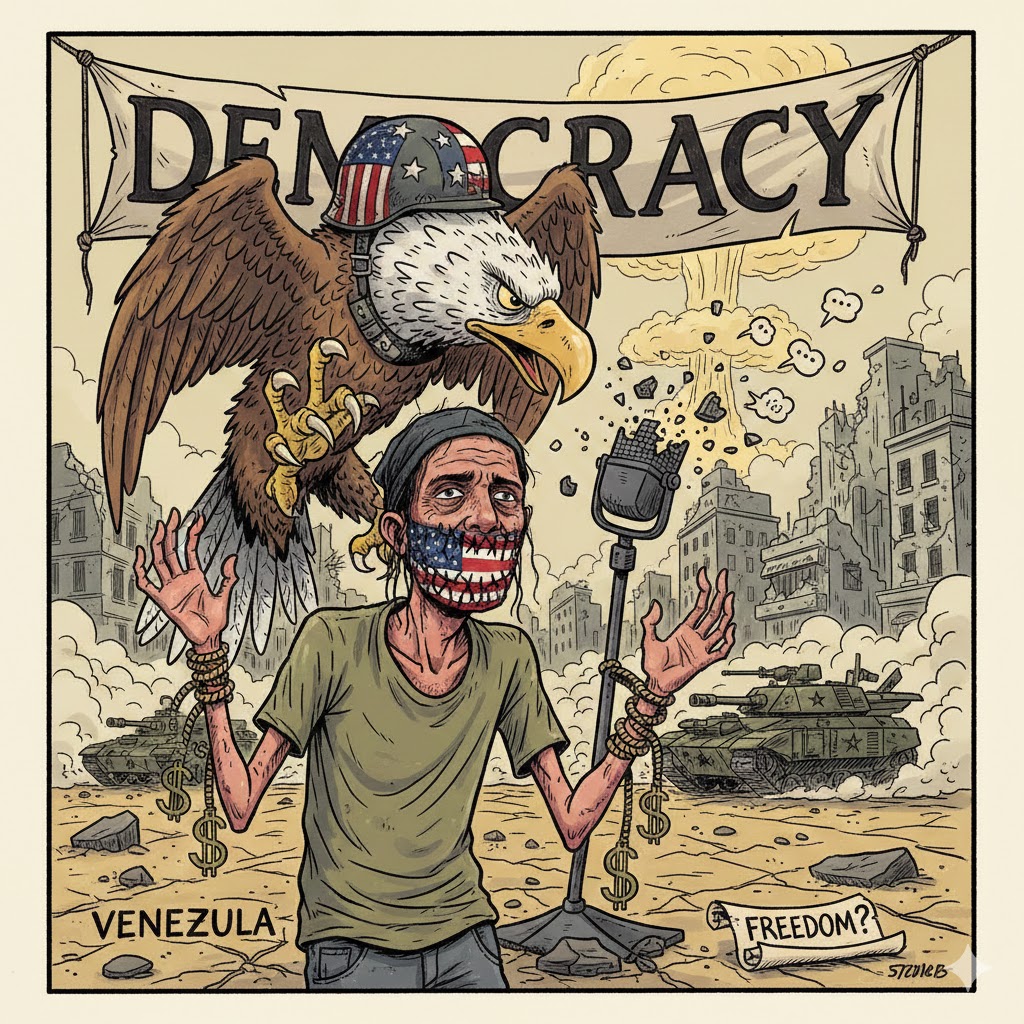
    Within days, however, the reality on the ground diverged sharply from those expectations. Rather than experiencing political liberation, Venezuelans found themselves suspended in uncertainty and silence. Public dissent remained dangerous, and the structures that had enforced loyalty under Maduro showed no sign of weakening. The promised transformation failed to materialize as ordinary citizens encountered the same restrictions on speech, assembly, and political participation. Instead of opening space for reform, the intervention reinforced a sense of powerlessness. The gap between American declarations and lived Venezuelan reality widened with each passing day.

    Thanks for reading The Brooks Brief Substack! Subscribe for free to receive new posts and support my work.

    Continuity of Power Under a New Face

    The appointment of Delcy Rodríguez as interim president underscored the continuity of Venezuela’s ruling elite. Rodríguez, a long standing ally of Maduro and vice president since 2018, has been deeply embedded in the country’s political, economic, and security apparatus for years. Sworn in by the Supreme Court under constitutional provisions intended for temporary leadership, she denounced Maduro’s capture as a kidnapping and pledged loyalty to Maduro. Her elevation was backed by powerful insiders, including Maduro’s son and senior party figures. To many Venezuelans, the change in leadership probably feels cosmetic rather than transformative. The same networks of influence and control remain firmly in place.

    For a population already exhausted by hyperinflation, shortages, and mass emigration, Rodríguez’s leadership may offer little hope of relief. Her government has continued to rely on entrenched institutions that prioritize regime survival over public accountability. Efforts to purge internal rivals and consolidate authority have reinforced the sense that political renewal is not on the agenda. Economic ties to favored elites remain intact, while opposition voices are further marginalized. The promise of a clean break from the past has instead been replaced by familiar patterns of governance. In effect, the system endured, merely reshaped around a different figurehead.

    Between Occupation Narratives and Suppressed Dissent

    Alongside domestic continuity, a competing narrative has taken hold that the United States is now effectively directing Venezuela’s future. President Trump has publicly suggested American oversight of reconstruction efforts and even raised the prospect of extracting Venezuelan oil as compensation. These statements have fueled fears of external domination rather than partnership. At the same time, senior Venezuelan officials have rejected any notion of U.S. authority. Interior Minister Diosdado Cabello has described the operation as an occupation and called for revenge.

    This clash of narratives has further narrowed the space for public expression. Citizens who question the legitimacy of Rodríguez’s government risk repression, while those who appear sympathetic to American involvement are labeled traitors. Security forces accused of past human rights abuses continue to operate with broad discretion. Anti imperialist rhetoric is used to justify crackdowns and silence criticism. As a result, Venezuelans are caught between competing power centers that both limit their agency. The outcome is deeper polarization and a chilling effect on already fragile civil liberties.

    Thanks for reading The Brooks Brief Substack! This post is public so feel free to share it.

    Share

    The Absence of Elections and the Erosion of Sovereignty

    The constitutional path out of this crisis remains conspicuously blocked. Venezuela’s constitution mandates that a new election be held within 30 days of a president’s permanent absence, a safeguard designed to protect democratic legitimacy. Despite this provision, no serious effort has been made to organize or enforce such a vote. The United States has prioritized reconstruction and stability over electoral timelines, explicitly ruling out near term elections. Meanwhile, Venezuela’s judiciary has remained silent, declining to assert its constitutional responsibilities. The result is an open ended interim presidency with no clear mandate from the public.

    This prolonged suspension of electoral rights has deepened public disillusionment. Maduro’s last reelection was widely criticized as fraudulent, a claim later reinforced by international indictments and investigations. Yet the intervention justified as a corrective to that fraud has failed to restore the basic mechanism of democratic choice. Instead, Venezuelans are left without representation or recourse. Sovereignty has eroded not through open reform but through stagnation and external influence. Until credible elections are held and institutions regain independence, the Venezuelan people remain observers rather than participants in shaping their future.

  • America’s Faltering Grip

    America’s Faltering Grip

    Occupation Without Lasting Democracy


    I. Introduction

    The United States has long cast itself as the world’s leading champion of democracy, often using military force to depose authoritarian rulers and promise political renewal. In practice, American military operations have demonstrated remarkable proficiency in rapid regime change, relying on technological superiority and overwhelming force to seize control quickly. Yet the far more difficult task of nurturing stable, legitimate democratic systems has repeatedly proven elusive. Many interventions that began with decisive victories have deteriorated into prolonged instability, insurgency, and popular resentment. The January 3, 2026, Operation Absolute Resolve in Venezuela, which resulted in the capture of Nicolás Maduro and his wife Cilia Flores, exemplifies this recurring pattern. While tactically impressive, the operation has left the country’s democratic future uncertain. This contrast underscores a central argument that American power excels at military decapitation but struggles with sustainable nation-building.

    As of early 2026, Maduro’s prosecution in New York on drug trafficking and weapons charges has intensified debates over the legality and wisdom of U.S. interventionism. President Trump’s statement that the United States would temporarily “run” Venezuela revived memories of past occupations that evolved into long and costly entanglements. Venezuela’s shattered economy and deep political divisions further complicate any transition effort. Critics warn that administrative control without broad legitimacy risks inflaming nationalist backlash. Supporters counter that removing Maduro created an opening for reform that had been impossible under his rule. Whether that opening leads to democracy or renewed turmoil remains unresolved. The episode places Venezuela squarely within a long historical continuum of American interventions.

    II. Historical Successes in Occupation and Democratic Transition

    The occupations of Germany and Japan after World War II stand as the most successful examples of U.S. led democratic transformation. Both cases followed unconditional surrender, eliminating organized resistance and granting the occupiers extraordinary authority. In Germany, massive economic aid through the Marshall Plan, combined with denazification and allied coordination, laid the foundation for a stable Federal Republic. Japan’s reconstruction under General Douglas MacArthur introduced sweeping constitutional reforms, land redistribution, and demilitarization while respecting cultural continuity. These societies already possessed strong bureaucratic traditions and industrial bases that enabled rapid recovery. Broad international consensus and long-term U.S. commitment further reinforced the legitimacy of the transitions. As a result, democratic norms took hold with relatively limited resistance.

    These successes, however, were products of rare historical conditions that proved difficult to replicate. Total defeat, homogeneous societies, and shared Cold War imperatives created unusually favorable environments. Later interventions lacked similar clarity of purpose and unity of effort. Policymakers often assumed that the German and Japanese models could be exported wholesale to very different contexts. In reality, those achievements were exceptions rather than templates. Their rarity highlights the dangers of extrapolating from unique postwar circumstances. Subsequent history would show how fragile imposed political orders can be without those enabling factors. The contrast serves as a cautionary benchmark rather than a reliable precedent.

    III. Notable Failures and Mixed Outcomes

    The Vietnam War marked an early demonstration of America’s difficulties in sustaining a democratic ally under fire. Despite years of military and financial support, South Vietnam suffered from corruption, weak legitimacy, and internal divisions. These flaws undermined public confidence and allowed communist forces to maintain momentum. When U.S. forces withdrew, the government collapsed, culminating in the fall of Saigon in 1975. In Iraq, the 2003 invasion swiftly removed Saddam Hussein but dismantled state institutions through de-Ba’athification. The resulting power vacuum fueled sectarian violence and eventually enabled the rise of the Islamic State. What began as liberation devolved into prolonged instability.

    Afghanistan followed a similar trajectory on a longer timeline. Initial success against the Taliban gave way to entrenched corruption, dependence on foreign aid, and weak national cohesion. By 2021, the Afghan government collapsed almost overnight as U.S. forces departed. Shorter interventions in Haiti, Somalia, and Libya also failed to produce lasting political order. In each case, early gains dissolved into factional conflict or warlordism. These experiences reveal consistent miscalculations about local dynamics and governance capacity. Military success alone proved insufficient to secure durable political outcomes.

    IV. Recent Example: U.S. Efforts at Regime Change in Venezuela (2019–2026)

    Venezuela’s economic and humanitarian collapse under Nicolás Maduro set the stage for escalating U.S. involvement beginning in 2019. Hyperinflation, collapsing oil production, and mass emigration eroded the regime’s domestic credibility. Washington initially pursued diplomatic pressure by recognizing Juan Guaidó as interim president and imposing sweeping sanctions. Regional and international partners largely supported these measures, yet Maduro retained control through loyal security forces. Negotiations failed to produce a breakthrough, and the failed 2020 incursion underscored the limits of indirect pressure. The widely condemned 2024 election further isolated the regime but did not dislodge it. By late 2025, allegations linking Venezuelan leadership to narcotics trafficking accelerated the move toward direct action.

    Operation Absolute Resolve on January 3, 2026, marked a decisive shift in U.S. strategy. Coordinated airstrikes neutralized key defenses, allowing special forces to capture Maduro and Flores in Caracas. The operation involved more than 150 aircraft and concluded without American casualties. Within days, the couple appeared in federal court in Manhattan to face criminal charges. Venezuela’s Supreme Court appointed Vice President Delcy Rodríguez as acting president, initially rejecting U.S. authority before signaling openness to talks. President Trump emphasized American oversight of oil assets and reconstruction plans. Excluding prominent opposition figures from early arrangements raised concerns about legitimacy and representation. The rapid success avoided a full-scale invasion but revived familiar questions about the aftermath.

    International reaction was swift and divided. Some governments condemned the action as a violation of sovereignty, while others quietly welcomed Maduro’s removal. Reports of Cuban casualties heightened regional tensions. Russia and China warned against precedent-setting unilateral interventions. Inside Venezuela, uncertainty prevailed as citizens weighed relief against fear of foreign control. The operation’s focus on energy security complicated narratives of democratic liberation. These dynamics mirror earlier interventions where short-term success masked long-term fragility. Venezuela thus stands at a crossroads shaped as much by geopolitics as by internal reform.

    V. Factors Influencing U.S. Ability to Occupy and Transition

    American military doctrine prioritizes speed, precision, and overwhelming force, qualities evident in the Venezuela operation. Such capabilities allow the United States to dismantle hostile regimes with remarkable efficiency. Sustaining order afterward, however, requires prolonged political and financial commitment that often proves unpopular at home. Counterinsurgency and institution-building demand patience that clashes with electoral cycles and public fatigue. Reconstruction programs frequently falter in environments marked by corruption and weak administrative capacity. Attempts to impose Western-style governance can alienate local populations whose political cultures differ significantly. These tensions undermine legitimacy and fuel resistance.

    External actors further complicate post-intervention environments. Rival powers exploit instability to expand influence and discredit U.S. intentions. Proxy support and information campaigns erode fragile transitional authorities. In Venezuela, rhetoric emphasizing oil control risks portraying the intervention as economic exploitation. Such perceptions weaken claims of democratic intent. Without broad international backing, legitimacy remains contested. The cumulative effect limits America’s ability to translate battlefield victories into political success. Structural constraints thus shape outcomes as much as strategy.

    VI. Current Capabilities and Future Prospects (as of 2026)

    By 2026, U.S. foreign policy increasingly reflects competition with major powers rather than expansive nation-building. Lessons from Afghanistan have reinforced skepticism toward prolonged occupations. Policymakers now favor targeted operations and partnerships over large-scale deployments. Venezuela’s intervention aligns with this approach, emphasizing precision and limited exposure. Fiscal pressures and domestic polarization further restrict ambitions for transformative reconstruction. Instead, U.S. objectives increasingly prioritize stability, resource security, and counter-narcotics efforts. This shift represents a more realist assessment of American influence.

    Whether this model can succeed remains uncertain. Venezuela’s political transition will test the effectiveness of limited intervention combined with external pressure. Acting President Rodríguez faces competing demands from domestic factions and foreign sponsors. U.S. leverage may prove sufficient to shape outcomes without direct governance. Alternatively, unresolved tensions could reignite conflict. The case will influence future policy debates about the scope of American power. Its outcome may signal whether adaptive restraint can replace ambitious interventionism.

    VII. Challenges and Criticisms

    U.S. interventions routinely attract accusations of imperialism, particularly when conducted without broad multilateral approval. Reports of civilian harm and selective enforcement of international law erode moral authority. Venezuela’s case has sparked intense debate within the United Nations and regional organizations. Critics argue that unilateral regime change undermines global norms of sovereignty. Domestic constraints also limit staying power, as Congress and voters resist open-ended commitments. Political divisions weaken policy coherence over time. Adversaries amplify these critiques to challenge American leadership.

    Economic motivations further complicate perceptions. Emphasis on Venezuelan oil assets has fueled suspicions of profiteering. Such narratives resonate in regions with histories of foreign exploitation. Even successful transitions risk being delegitimized by their origins. Balancing strategic interests with ethical claims remains a persistent challenge. These criticisms expose the vulnerability of interventions conducted largely alone. They also shape global responses to future U.S. actions.

    Thanks for reading The Brooks Brief Substack! This post is public so feel free to share it.

    Share

    VIII. Conclusion

    The historical record reveals a consistent pattern in U.S. interventions: decisive military success followed by uncertain political outcomes. Postwar Germany and Japan remain rare exceptions rather than enduring models. Venezuela’s 2026 operation demonstrates that America still excels at removing hostile leaders. It also illustrates the enduring difficulty of translating force into legitimate democratic governance. Resource-driven narratives and limited international backing heighten the risk of failure. More inclusive, multilateral, and locally grounded approaches may offer better prospects. Ultimately, democracy cannot be sustainably imposed from outside. The Venezuelan case underscores the need for humility and restraint in pursuing democratic ideals abroad.

  • America’s Potential Next Targets

    America’s Potential Next Targets

    Resource-Driven Foreign Policy in the Post-Maduro Era

    The Brooks Brief

    Jan 03, 2026


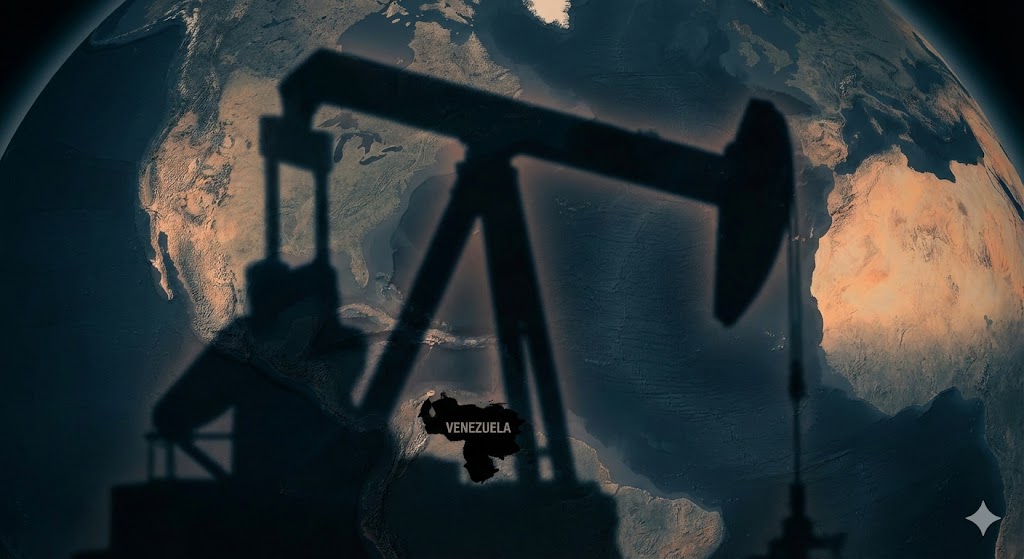
    In the wake of the swift removal of Nicolás Maduro from power in Venezuela, the United States finds itself at a crossroads in its foreign policy. The operation, which culminated in a full-scale military intervention, has been openly framed by President Donald Trump as a strategic move centered on resources, specifically Venezuela’s vast oil reserves. In a recent interview discussing the invasion, Trump candidly confirmed what many observers had long suspected: “It’s about the oil, folks. We’ve got to secure what’s ours.” This blunt admission underscores a shift in American diplomacy under the current administration, one that appears unapologetic about prioritizing economic interests over traditional claims of democracy promotion or humanitarian intervention. Whether the oil belongs to the United States or remains Venezuelan property is a question likely to linger in international courts for years. What is clear, however, is that the reserves are physically located in Venezuela, and future control over them now tilts heavily toward American influence.

    This aggressive posture raises an inevitable question. With Maduro removed and U.S. forces consolidating gains in Latin America, which country might be next? The Trump administration’s willingness to use force with limited concern for global perception or domestic oversight, reinforced by a largely compliant Republican Congress, suggests that resource-rich nations deemed vulnerable or adversarial could soon find themselves in Washington’s sights. The strategic landscape, however, is complicated by a handful of global powers capable of pushing back against American dominance. Below is an analysis of the most plausible candidates, based on geopolitical trends, historical precedent, and the administration’s own rhetoric.

    The Big Powers: China and Russia as Existential Threats, Not Immediate Targets

    At the top of any list of challengers to U.S. hegemony sit China and Russia, both of which pose systemic threats to American interests. Russia, despite being bogged down in its prolonged conflict with Ukraine, has demonstrated resilience in the face of Western sanctions. China continues its ascent as both an economic and military superpower. Their deepening cooperation through the BRICS coalition, now expanded to include Brazil, India, South Africa, and others, represents a direct challenge to the U.S.-led petrodollar system. BRICS initiatives such as alternative payment frameworks and resource-sharing agreements threaten to weaken the dollar’s dominance, particularly in global energy markets.

    Despite this, a direct U.S. military confrontation with either nation appears unlikely in the near term. Trump’s recent comments regarding Venezuela hinted at deteriorating relations with Vladimir Putin, suggesting that the previously touted rapport between the two leaders has frayed amid competing energy interests. “Putin’s got his hands full,” Trump remarked, signaling reluctance to escalate into a broader conflict. China’s military modernization and nuclear capabilities similarly make it a high-risk target. Rather than invasion, the United States is more likely to apply indirect pressure through proxy conflicts, increased support for Taiwan, or expanded involvement in Ukraine. These powers are unlikely to be next on the invasion list, but they remain the actors most capable of mobilizing international opposition should the United States overextend itself elsewhere.

    Latin American Neighbors: Colombia and Mexico Under the Guise of Security

    Closer to home, Latin America remains fertile ground for U.S. intervention, where long-standing doctrines provide ideological cover. Colombia and Mexico stand out as potential flashpoints, often justified through narratives surrounding drug trafficking and organized crime. The Trump administration could frame any military action as an extension of border security or counter-narcotics enforcement, similar to how Venezuela’s instability was used as justification for intervention.

    Colombia, which shares a border with Venezuela and possesses significant untapped oil and mineral reserves, could be portrayed as a refuge for remnants of Maduro’s regime or dissident armed groups. Mexico continues to struggle with cartel violence that spills across the U.S. border, offering a politically palatable rationale for deeper military involvement. Beneath these justifications lies access to Mexico’s Pemex oil fields and Colombia’s emerald, coal, and mineral deposits. With U.S. forces already mobilized in the region following Venezuela, any spillover operation could occur with limited additional justification. The danger lies in regional backlash, which could unify left-leaning governments against renewed perceptions of American imperialism.

    Cuba: The Longstanding Adversary Back on the Radar

    Cuba has occupied a unique and antagonistic place in American foreign policy for more than six decades, making it a perennial candidate whenever Washington adopts a more aggressive posture in the Western Hemisphere. While Cuba lacks the vast oil reserves that motivated intervention in Venezuela, its strategic location, political symbolism, and potential offshore energy resources make it a compelling target in a broader campaign to reassert U.S. dominance in the region.

    The island’s proximity to Florida has always magnified its importance. Any instability in Cuba immediately raises concerns over migration, regional security, and the influence of rival powers. In recent years, Havana has strengthened ties with Russia and China, allowing both to expand their intelligence and economic footprints just miles from U.S. shores. From Washington’s perspective, Cuba represents an unresolved Cold War relic that now risks becoming a forward operating platform for America’s geopolitical competitors.

    Domestically, Cuba’s ongoing economic hardship provides a familiar justification framework. Chronic shortages, infrastructure decay, and public protests could be framed as evidence of state failure, opening the door to calls for humanitarian intervention or regime change. The Trump administration, which rolled back Obama-era normalization efforts and reimposed hardline sanctions, has consistently portrayed the Cuban government as illegitimate and oppressive. In a post-Maduro environment, these narratives could be amplified to argue that decisive action is necessary to stabilize the region.

    While Cuba’s known oil reserves are modest compared to Venezuela or Nigeria, offshore exploration in the Gulf of Mexico remains an underdeveloped asset. More importantly, control over Cuba would deliver strategic leverage rather than raw resources. It would effectively eliminate a hostile government from the U.S. perimeter, disrupt Russian and Chinese influence in the Caribbean, and signal to Latin American nations that ideological resistance carries tangible consequences.

    An outright invasion of Cuba would carry serious risks, including international condemnation, regional unrest, and the possibility of asymmetric retaliation. However, a combination of economic strangulation, covert operations, cyber pressure, and support for internal opposition could achieve similar ends without a full-scale military commitment. Given the administration’s demonstrated willingness to bypass traditional restraints, Cuba’s long-standing defiance and symbolic value make it a plausible target should Washington seek another high-impact move closer to home.

    In an era where American power is increasingly exercised without apology, Cuba’s unresolved status may no longer be tolerated indefinitely. The question is not whether Cuba remains a thorn in U.S. foreign policy, but whether the post-Maduro momentum turns that historical rivalry into direct action.

    Africa’s Resource Giant: Nigeria’s Oil in the Spotlight

    Beyond the Western Hemisphere, Nigeria emerges as a compelling candidate in Africa, where energy security and resource extraction increasingly shape foreign policy. As Africa’s largest oil producer and a member of OPEC, Nigeria holds reserves that rival those of Venezuela, alongside substantial natural gas and mineral wealth. Persistent instability, including insurgencies and corruption scandals, could provide a convenient pretext for U.S.-led stabilization efforts.

    From a resource standpoint, Nigeria aligns perfectly with the administration’s priorities. Securing its oil would bolster U.S. energy leverage while reducing dependence on Middle Eastern suppliers. Unlike Venezuela, Nigeria lacks strong military alliances with adversarial powers such as Russia or China, making it a comparatively softer target. Still, ethnic divisions and the risk of prolonged entanglement echo the cautionary lessons of past African interventions. If Trump seeks a decisive and symbolic victory, Nigeria’s vulnerabilities could prove tempting.

    Middle East Redux: Iran’s Protests as a Window for Regime Change

    In the Middle East, Iran remains a persistent fixation for U.S. policymakers, with regime change ambitions stretching back decades. Ongoing protests driven by economic hardship and demands for reform may present an opening. The Trump administration, which withdrew from the Iran nuclear agreement and pursued a strategy of maximum pressure, could view this unrest as an opportunity to reshape Tehran’s leadership.

    Iran’s oil reserves, among the largest in the world, fit neatly into the resource-driven pattern evident in Venezuela. A successful intervention could also weaken Iran’s regional influence and disrupt its support for allied militias, recalibrating power dynamics in favor of U.S. partners. However, Iran’s strategic ties with Russia and China, along with its missile capabilities, raise the stakes considerably. While internal unrest may appear to offer leverage, miscalculation risks igniting a broader and far more costly conflict.

    The Wild Card: Greenland’s Strategic “Takeover”

    An unconventional but increasingly discussed prospect is Greenland. Trump has previously floated the idea of acquiring the Danish territory, framing it as a strategic necessity rather than a novelty. Greenland’s melting ice has exposed significant deposits of rare earth minerals, along with potential oil reserves vital to technology and energy industries. Its Arctic location also offers strategic military value amid rising competition with Russia and China.

    Because Greenland is an autonomous territory rather than a sovereign state, acquisition could theoretically occur through economic leverage or negotiation rather than force. Still, in a post-Venezuela environment marked by growing confidence, coercive measures cannot be ruled out. Such a move would strain relations with European allies but aligns closely with the administration’s transactional worldview.

    Share

    Conclusion: Unpredictability in an Era of Unchecked Power

    Identifying the next target with certainty is difficult, given President Trump’s impulsive leadership style and the Republican Party’s consistent deference to his agenda. Congressional oversight appears diminished, as demonstrated by the rapid approval of the Venezuela operation and the lack of accountability for openly resource-driven motives. The common thread is unmistakable. Strategic conflicts are increasingly about asset control, and the administration is no longer disguising that reality. Whether the objective is oil in Nigeria, minerals in Greenland, or leverage against BRICS-aligned powers, even Cuba may be targeted next for a host of reasons. The post-Maduro era signals a more overt and unapologetic phase of American exceptionalism. Global observers should prepare for heightened instability as the boundary between threat and opportunity continues to blur. The Brooks Brief will continue to monitor these developments as they unfold.