Tag: American Politics

  • The Homefront Priority

    The Homefront Priority

    Reassessing America’s Global Mandate in an Era of Domestic Fragility


    I. Introduction: The Pendulum of American Engagement

    In 2026, the United States finds itself at a strategic inflection point shaped less by external threats than by internal strain. The nation’s fiscal position, marked by nearly $39 trillion in national debt and rapidly rising borrowing costs, has shifted the policy conversation from long-term sustainability to immediate risk management. Interest payments alone are projected to consume roughly 14 percent of federal outlays, signaling a structural constraint on future governance capacity (Joint Economic Committee). At the same time, households face a persistent affordability crisis, and public systems such as healthcare remain under pressure. These converging realities suggest that the traditional model of expansive global engagement may be increasingly misaligned with domestic needs. The central thesis of this analysis is that the United States must transition from a “Global Policeman” to a “Domestic Architect” to preserve long-term stability.

    This shift raises a fundamental question about the purpose of American power in the modern era. Historically, U.S. foreign policy has been justified as both a moral project and a strategic necessity, aimed at exporting democratic governance and market capitalism. However, the domestic consequences of sustained global intervention are becoming more visible and politically salient. As economic pressures intensify at home, the legitimacy of outward-facing commitments is increasingly contested. Citizens are beginning to question whether national resources are being allocated in alignment with their lived realities. This tension defines the current moment and frames the broader policy debate.

    The pendulum of American engagement has always oscillated between internationalism and restraint. In previous eras, external crises often pulled the United States outward, reinforcing its role as a global leader. Today, however, the internal condition of the country is exerting a countervailing force, pulling attention inward. This recalibration does not necessarily imply isolationism but rather a reordering of priorities. The challenge lies in balancing global responsibilities with domestic renewal. Without such balance, the credibility and sustainability of American leadership may erode from within.


    II. Historical Context: The Ghost of Isolationism

    The period following World War I provides a useful parallel for understanding contemporary debates. After the devastation of the conflict, the American public embraced a “Return to Normalcy,” prioritizing domestic growth and stability over international commitments. This sentiment manifested in the rejection of the League of Nations and a broader skepticism toward entangling alliances. Policymakers at the time believed that geographic distance and economic strength would insulate the United States from global instability. The focus shifted toward industrial expansion, protective tariffs, and internal development. This inward turn reflected both war fatigue and a belief in self-sufficiency.

    However, the 1930s exposed the limitations of this approach. The Neutrality Acts, designed to keep the United States out of foreign conflicts, proved inadequate in the face of rising authoritarian aggression. As global tensions escalated, the assumption that America could remain detached became increasingly untenable. Economic interdependence and ideological conflict eventually drew the nation back into global affairs. The failure of neutrality underscored the risks of disengagement in an interconnected world. It also laid the groundwork for a more interventionist posture in the decades that followed.

    The conclusion of World War II marked a decisive shift towards sustained global leadership. The United States emerged as a hegemonic power, shaping international institutions and security architectures. This role was justified by both strategic necessity and ideological ambition during the Cold War. Over time, however, the costs of maintaining this position have grown more complex and diffuse. In the post-Cold War era, interventions have often produced mixed outcomes, raising questions about their long-term value. The historical lesson is not that engagement is inherently flawed, but that its benefits must be continuously reassessed. In 2026, the question is whether the returns on global leadership are diminishing relative to its domestic costs.


    III. The Crisis at Home: Debt, Health, and Survival

    The most immediate constraint on American policy is fiscal. As of early 2026, the national debt has reached approximately $38.9 trillion, with projections indicating continued rapid growth (Joint Economic Committee). Interest payments are rising alongside the debt, consuming an increasing share of federal resources and limiting discretionary spending. This dynamic creates a feedback loop in which borrowing begets more borrowing, reducing fiscal flexibility. The Congressional Budget Office projects deficits of nearly $1.9 trillion for the year, reinforcing concerns about long-term sustainability (House Budget Committee). What was once framed as a future challenge is now an immediate policy constraint. The debt burden is no longer abstract; it directly shapes the government’s ability to respond to domestic needs.

    Parallel to this fiscal strain is a widening affordability gap affecting millions of Americans. Housing costs have outpaced wage growth in many regions, while energy prices remain volatile due to global supply disruptions. This divergence erodes purchasing power and contributes to economic insecurity. Middle- and working-class households are increasingly forced to allocate a larger share of income to basic necessities. The result is a gradual decline in living standards despite nominal economic growth. This disconnect between macroeconomic indicators and lived experience fuels political dissatisfaction.

    The healthcare system represents another critical pressure point. Despite high levels of spending, health outcomes in the United States lag behind those of other developed nations. Federal efforts to contain costs have often resulted in reduced access for vulnerable populations. Cuts to social safety net programs exacerbate these challenges, particularly for low-income communities. The combination of rising costs and uneven access creates a system that is both expensive and inefficient. In this context, domestic policy appears reactive rather than strategic. Addressing these systemic issues requires sustained investment and policy coherence, both of which are constrained by current fiscal realities.


    IV. Domestic Policy Critique: “The Big Beautiful Bill”

    Recent legislative efforts, particularly the so-called “One Big Beautiful Bill Act,” illustrate the disconnect between policy design and domestic need. The bill’s tax provisions disproportionately benefit high-income households, with estimates suggesting that over 70 percent of tax cuts accrue to the top 1 percent. This distribution raises concerns about equity and fiscal responsibility. By reducing federal revenue, the policy contributes to an already significant budget deficit. The resulting gap, estimated at approximately $1 trillion, must be financed through additional borrowing. This approach amplifies existing fiscal pressures rather than alleviating them.

    At the same time, the bill includes substantial reductions in social spending, particularly in programs such as Medicaid. These cuts, projected to total hundreds of billions of dollars, disproportionately affect lower-income Americans. The juxtaposition of tax relief for the wealthy and reduced support for the vulnerable creates a stark policy imbalance. This dynamic undermines social cohesion and exacerbates inequality. It also raises questions about the priorities guiding federal decision-making. In a period of domestic strain, such trade-offs are particularly consequential.

    The broader implication is that internal stability is being compromised by policy choices that favor capital accumulation over public welfare. Economic inequality is not merely a social issue but a strategic one, affecting national resilience and cohesion. When large segments of the population experience declining living standards, the legitimacy of institutions is called into question. This erosion of trust can have far-reaching political consequences. A sustainable policy framework must balance growth with distribution, ensuring that economic gains are broadly shared. Without such balance, domestic fragility will continue to deepen.


    V. Foreign Entanglements: The Oil Factor in Venezuela and Iran

    Recent geopolitical developments highlight the risks associated with continued foreign entanglements. Escalations involving oil-producing regions, including Venezuela and Iran, have introduced new volatility into global energy markets. Actions such as the seizure of oil assets and heightened military tensions have disrupted supply chains. These disruptions have immediate economic consequences, particularly for energy-dependent economies. The interconnected nature of global markets means that foreign policy decisions can quickly translate into domestic price shocks. In this context, the costs of intervention are not confined to distant regions.

    One of the most significant risks is the potential disruption of critical chokepoints such as the Strait of Hormuz. This narrow passage is a key conduit for global oil shipments, and any closure would have far-reaching implications. Even the threat of disruption can drive up prices, contributing to volatility in energy markets. In 2026, such tensions have already contributed to rising fuel costs, with gasoline prices exceeding $4.00 per gallon in many areas. This “gasoline shock” acts as a regressive tax on consumers, disproportionately affecting lower-income households. The domestic impact of foreign instability is thus both immediate and unevenly distributed.

    The broader lesson is that interventionist policies often produce unintended economic consequences. Efforts to influence political outcomes in Caracas or Tehran may be motivated by strategic considerations, but they also carry tangible costs for American consumers. These costs are often diffuse and difficult to attribute, making them less visible in policy debates. However, their cumulative effect is significant, contributing to economic fragility at home. As domestic pressures mount, the tolerance for such trade-offs is likely to decline. A more restrained approach to foreign policy may therefore be both economically and politically prudent.


    Thanks for reading The Brooks Brief Substack! This post is public so feel free to share it.

    Share

    VI. Conclusion: The Case for a New Realism

    The United States cannot sustain its role as a global leader if its domestic foundation continues to weaken. Rising debt, increasing inequality, and strained public systems collectively undermine national resilience. These challenges are not isolated but interconnected, reinforcing one another in ways that complicate policy responses. Addressing them requires a reallocation of resources and a redefinition of priorities. The current trajectory, characterized by high spending abroad and constrained investment at home, is increasingly difficult to justify. A recalibration is necessary to restore balance.

    A new realism in American policy would prioritize domestic renewal as the basis for international credibility. Investments in infrastructure, healthcare, and education would strengthen the underlying capacity of the nation. At the same time, a more selective approach to foreign engagement would reduce exposure to external shocks. This does not imply disengagement but rather strategic restraint. By aligning policy with domestic needs, the United States can enhance both its stability and its global standing. The goal is not to retreat from the world but to engage it from a position of strength.

    Ultimately, true American power is derived from the well-being of its people. A prosperous, healthy, and stable population is the foundation of sustainable leadership. Military strength and diplomatic influence are important, but they cannot substitute for domestic vitality. In an era of increasing complexity and constraint, the case for prioritizing the homefront is both practical and necessary. The path forward requires difficult choices, but the alternative is a gradual erosion of capacity and credibility. The time for reassessment is not in the future; it is now.

  • When the State Kills Its Own

    When the State Kills Its Own

    Federal Agents, Legal Immunity, and the Crisis of Accountability


    Introduction

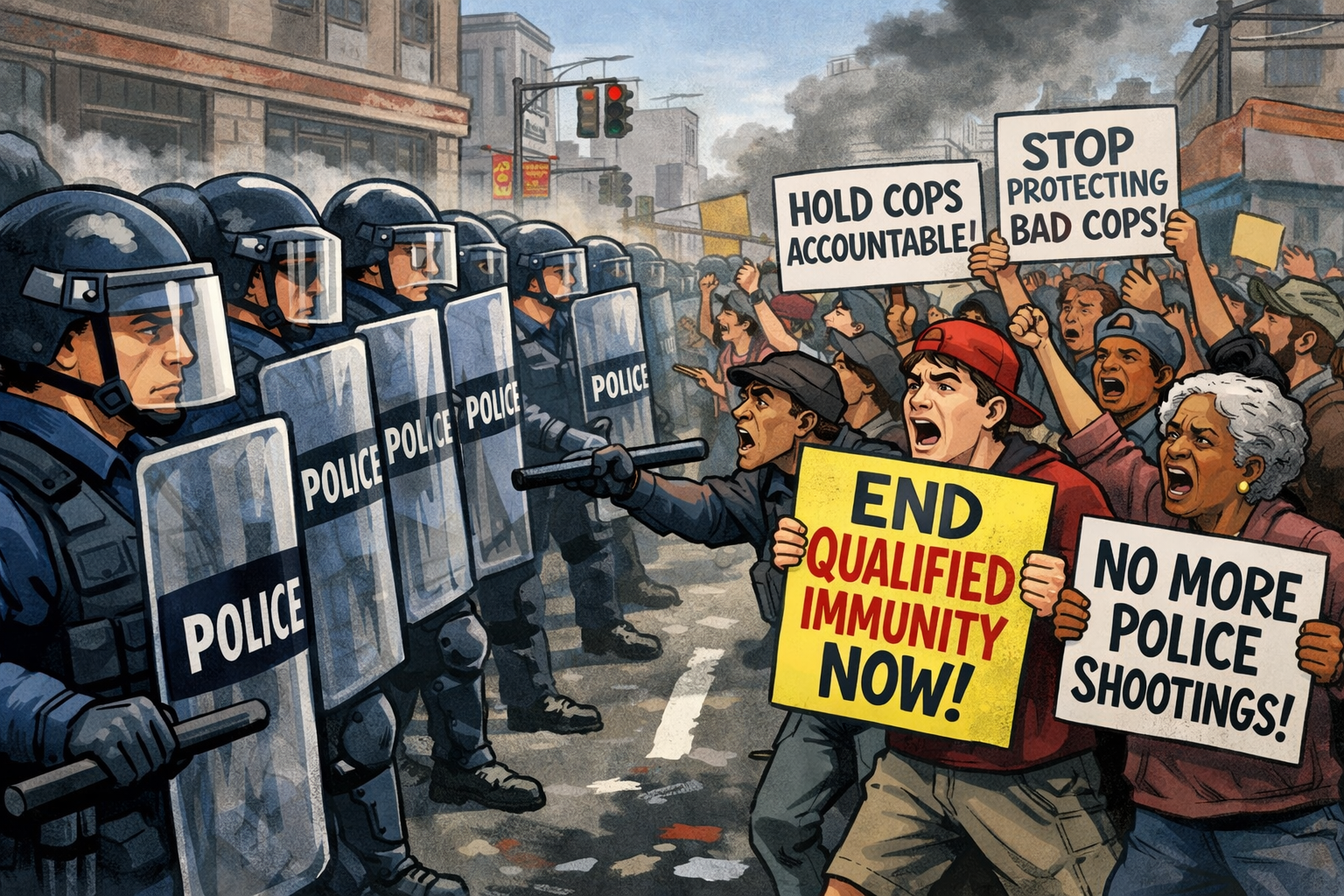
    The killing of a U.S. citizen by a U.S. Border Patrol agent in Minneapolis today has ignited fierce debate across the country about how federal law enforcement is shielded from accountability. A 37-year-old Minneapolis resident, identified as Alex Pretti, was shot and killed during a federal immigration operation, marking the third fatal encounter involving federal immigration agents in the city this month. Protesters have taken to the streets, demanding transparency and justice as local officials clash with federal authorities over access to the investigation. The incident follows the January 7 killing of Renée Good by an ICE agent, which itself sparked widespread protest and ongoing scrutiny of federal tactics. Both deaths have amplified long-standing critiques of how legal protections like qualified immunity operate in deadly use-of-force cases involving federal agents. This backdrop makes today’s shooting not just a singular tragedy but a flashpoint for broader systemic concerns about enforcement, oversight, and public trust. As policymakers and civil rights advocates raise alarms, the discussion has shifted from the specifics of the operation to the legal doctrines that govern liability and review.

    Qualified immunity is central to this debate because it shapes how courts evaluate claims against law enforcement officers, including Border Patrol agents and ICE personnel. Under the doctrine, government officials are protected from civil lawsuits unless they violated a “clearly established” constitutional right that a reasonable agent would have known. In practice, this standard is exceptionally difficult for plaintiffs to meet, especially in deadly force cases where the factual record may be contested or murky. As a result, many cases are dismissed before courts ever examine the substance of alleged misconduct. Critics argue that this creates a legal shield that insulates federal agents from meaningful accountability, even when the public perceives force as unjustified. Supporters of qualified immunity maintain that it protects officers from liability for split-second decisions made in dangerous situations, preserving effective law enforcement. However, those assurances ring hollow for families and communities affected by shootings that feel avoidable or excessive.

    The killings in Minneapolis highlight the disconnect between community standards and legal doctrine. Public outrage has skyrocketed not only because of the loss of life but also because of the appearance that federal agents, acting deep inside a city far from any border, used deadly force under questionable circumstances. State officials, including Minnesota Governor Tim Walz, have demanded that state investigators lead the inquiries after being denied access by federal agents. This clash between state and federal authority underscores how qualified immunity and related protections can obscure accountability by placing federal agents beyond easy judicial or public review. As facts continue to surface and videos circulate, demands for reform of qualified immunity have grown louder. For many advocates, abolishing or significantly revising the doctrine is essential to restoring trust in law enforcement and ensuring that the death of U.S. citizens at the hands of federal agents does not go unanswered.

    The Brooks Brief Substack is a reader-supported publication. To receive new posts and support my work, consider becoming a free or paid subscriber.

    Qualified Immunity Explained

    Qualified immunity began as a judicial doctrine designed to balance effective law enforcement with constitutional protections. It intends to shield officers from personal liability when performing discretionary functions unless they clearly violate established rights. In theory, it protects officials from the threat of endless lawsuits over difficult, on-the-ground decisions. In practice, the doctrine often prevents courts from even addressing whether conduct was lawful or reasonable. Instead, judges focus on whether a prior case has already established nearly identical conduct as unconstitutional. This threshold is so exacting that it often leaves victims’ families without any avenue to seek remedy in court.

    In the context of federal immigration enforcement, qualified immunity takes on unique significance. Agents from U.S. Customs and Border Protection, including Border Patrol, and U.S. Immigration and Customs Enforcement operate under a broad mandate that includes deportation, detention, and interior enforcement. Their use of force policies generally mirror those of other law enforcement agencies, permitting lethal force only when agents reasonably believe there is an imminent threat of death or serious bodily injury. Still, in practice, these standards are interpreted by federal leadership, and accountability mechanisms are weak. When incidents like today’s shooting occur, the legal shield of qualified immunity means that even if evidence later suggests excessive force, civil lawsuits by families may fail at the threshold because the rights at issue were not previously defined with precision.

    Critics argue that qualified immunity has consistently favored law enforcement at the expense of victims, particularly in controversial use-of-force cases. The killing of Renée Good in early January, ruled a homicide by state medical examiners, has become emblematic of these concerns. In that case, local authorities and the victim’s family have disputed the federal narrative that she posed an imminent threat, while the Department of Justice has led the investigation and restricted state access to evidence. This dynamic further fuels questions about how federal agents are held to account when using deadly force. The public perception that federal agents operate above meaningful legal scrutiny intensifies calls for reform. Abolishing qualified immunity or adjusting its standards could, proponents argue, ensure that wrongful deaths by federal agents are subject to genuine legal review rather than procedural dismissal.

    Supporters of qualified immunity caution that removing it outright could expose agents to a flood of litigation and undermine their ability to act decisively in dangerous situations. They argue that officers often must make rapid judgments in complex environments and that unreasonable fear of personal liability could chill essential law enforcement functions. However, recent events in Minneapolis and across other cities suggest that the current balance may err too far in favor of institutional protection. Advocates for reform point to alternative accountability measures, such as stricter internal oversight, mandatory body cameras for all federal agents, and clearer use-of-force policies that align with constitutional standards. Many argue that such changes would improve both officer conduct and public trust without compromising safety.

    The public response to today’s shooting reflects deep frustration with the status quo. Protesters have demanded transparency and justice, with some calling for the removal of federal agents from Minnesota and for independent investigations that include state authorities. This friction between local demands and federal immunity protections underscores a broader crisis of legitimacy facing federal law enforcement. If qualified immunity continues to shield agents from civil liability in deadly force cases, communities may grow increasingly skeptical of the rule of law itself. Reform efforts, already gaining traction in some states and at the federal legislative level, may now find a new sense of urgency as the nation grapples with the consequences of these tragedies.

    Broader Implications and Debate

    The Minneapolis shootings are not isolated incidents but part of a larger pattern of controversial use-of-force encounters involving immigration enforcement agents. National human rights groups have documented a series of shootings by ICE and Border Patrol officers in recent years under the broader federal immigration crackdown. These include cases where claims of imminent threat were disputed by eyewitnesses or video evidence later surfaced. Critics argue that these patterns reflect systemic issues rather than rare anomalies. When qualified immunity rules out meaningful civil redress in such cases, public confidence in fair and impartial justice is undermined.

    The debate over qualified immunity intersects with broader concerns about federal law enforcement’s expanding role in domestic policing far from borders. Minneapolis, hundreds of miles from any border, has become a focal point for federal enforcement under “Operation Metro Surge,” drawing thousands of agents into a city already shaped by high-profile policing controversies. The heavy federal presence and repeated use of deadly force raise questions about how and why these operations are conducted. Qualified immunity, in this context, compounds the problem by making it legally difficult for civilians and families to challenge forceful actions in court.

    Reform advocates argue that the doctrine’s original justifications have eroded over time, particularly as federal agents engage in more interior enforcement roles with minimal transparency. They call for a reevaluation of the legal standards that have insulated agents from liability and a shift toward accountability models that respect both officer safety and civilian rights. Some proposals include abolishing qualified immunity entirely, while others seek to clarify that constitutional rights should be defined broadly enough to encompass new enforcement contexts. These debates will likely intensify as legal scholars, civil rights organizations, and lawmakers respond to the Minneapolis shootings and similar cases nationwide.

    The current crisis highlights a broader democratic tension: how to balance effective law enforcement with the imperative of holding state power accountable. Qualified immunity sits at the heart of that tension, shaping not just the fate of individual lawsuits but the public’s perception of justice itself. If the doctrine continues to block meaningful review of deadly encounters by federal agents, communities may increasingly view the government as unaccountable and arbitrary. Conversely, carefully calibrated reforms could reinforce the principle that state authority exists to protect the public rather than shield itself from scrutiny.

    Thanks for reading The Brooks Brief Substack! This post is public so feel free to share it.

    Share

    Conclusion

    Today’s killing of a U.S. citizen by a U.S. Border Patrol agent in Minneapolis has thrust qualified immunity into the center of national discourse. The doctrine’s rigid standards have a direct impact on whether families can seek civil redress and whether the public can trust that the rule of law applies equally to all. As protests continue and investigations unfold, the pressure to revisit and reform qualified immunity has intensified. Balancing the need for effective law enforcement with genuine accountability remains a central challenge for policymakers. The Minnesota shootings may become a defining moment in that debate, pushing qualified immunity from the periphery of legal doctrine into the forefront of democratic reform efforts.

  • Flattery as Foreign Policy

    Flattery as Foreign Policy

    How World Leaders Court Trump to Shape U.S. Deals


    I. Introduction

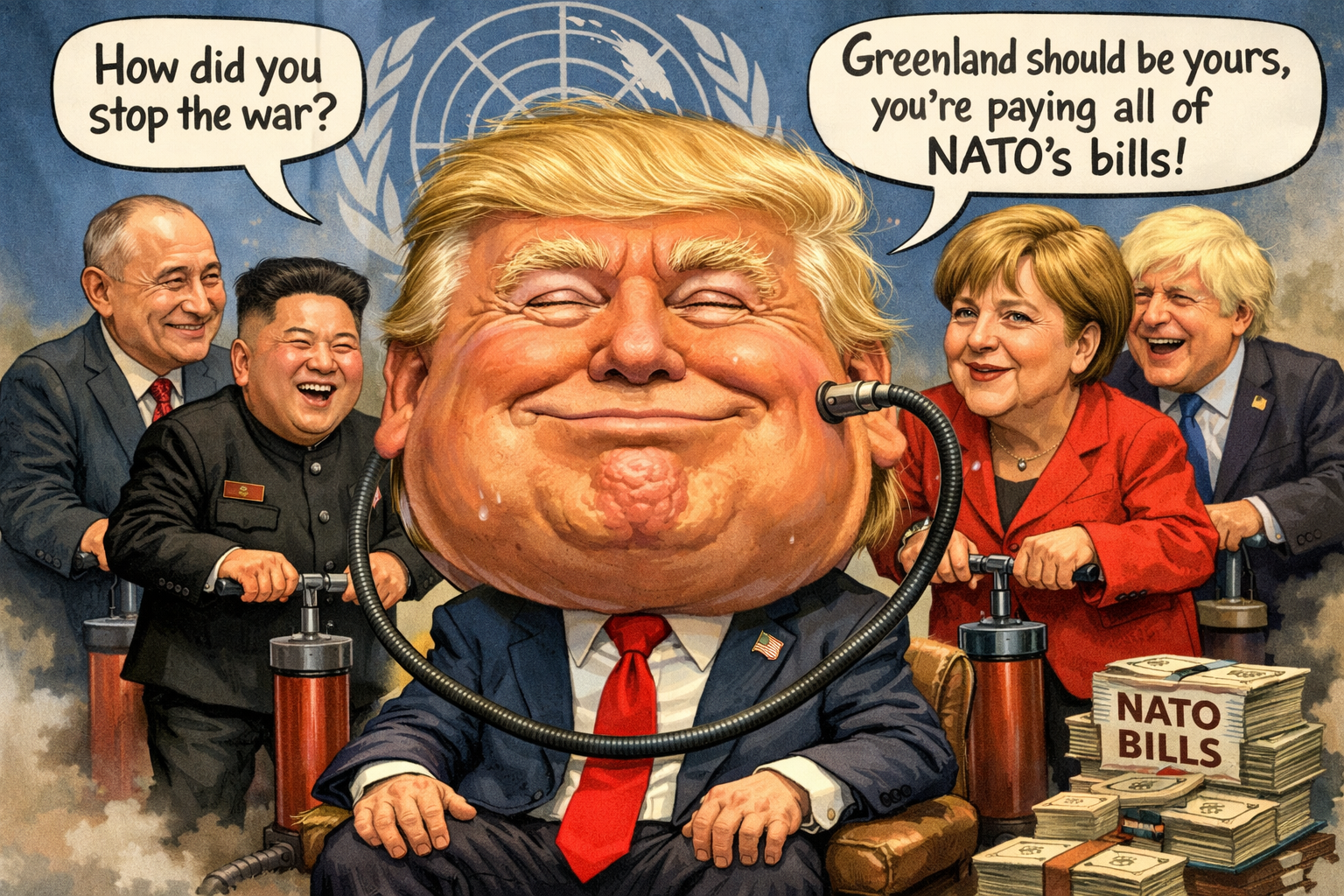
    In the high-stakes arena of international diplomacy, flattery has long existed as a subtle instrument of influence, but under Donald Trump it has evolved into an overt governing strategy. During recent high-profile summits, foreign leaders have increasingly used exaggerated praise to curry favor with the U.S. president, recognizing his sensitivity to personal validation. One moment that captured this shift was NATO Secretary-General Mark Rutte’s joking reference to Trump as “Daddy,” a remark that symbolized how far allies are willing to go to stay in his good graces. These gestures are not accidental or lighthearted; they are deliberate calculations rooted in Trump’s transactional worldview. For many leaders, flattering Trump is seen as a shortcut to policy access in an administration that prioritizes personal rapport over institutional process.

    This dynamic reflects a broader transformation in how American power is negotiated. Traditional diplomatic channels that once relied on formal alliances, policy expertise, and multilateral norms now compete with personal appeals to Trump’s ego. Praise has become a form of currency, exchanged for trade concessions, security guarantees, or rhetorical support. While such tactics can generate immediate attention from the White House, they also introduce volatility into decision-making. Outcomes often hinge less on strategic alignment than on Trump’s perception of loyalty and admiration.

    This article examines how flattery functions as an informal yet influential tool of foreign policy in Trump’s second presidency. Drawing on patterns from his first term and new examples since 2025, it assesses whether this approach produces sustainable results or merely short-term advantages. The analysis explores historical precedents, contemporary case studies, and the broader consequences for U.S. credibility abroad. Ultimately, the rise of ego-driven diplomacy reveals both vulnerabilities and leverage points within American foreign policy. Understanding this phenomenon is essential for assessing the future of global leadership under a personalized presidency.

    Thanks for reading The Brooks Brief Substack! Subscribe for free to receive new posts and support my work.

    II. Historical Context: Flattery in Trump’s First Term (2017–2021)

    Trump’s first term marked a decisive break from the procedural norms that had long defined U.S. diplomacy. Rather than relying on structured negotiations and expert briefings, Trump favored personal chemistry and symbolic gestures. This shift made flattery an especially effective tactic for foreign leaders seeking to bypass institutional constraints. Compliments were interpreted not as diplomatic formalities but as affirmations of Trump’s self-image as a master negotiator. As a result, summits often resembled performances aimed at pleasing the president rather than advancing policy coherence.

    North Korean leader Kim Jong Un’s engagement with Trump exemplified this approach. The exchange of effusive letters and public praise helped de-escalate immediate tensions and produced unprecedented leader-level meetings. However, despite the optics, negotiations failed to yield lasting agreements on denuclearization. The episode demonstrated both the power and limits of flattery, opening doors without guaranteeing results. Symbolism proved easier to achieve than substance.

    Other leaders refined the tactic with greater discipline. Japanese Prime Minister Shinzo Abe cultivated a close personal relationship with Trump through frequent compliments, shared leisure activities, and public displays of respect. This rapport helped stabilize the U.S.-Japan alliance during a period of intense trade friction. While Abe’s strategy softened some rhetoric and delayed harsher measures, it did not eliminate underlying economic pressures. The lesson was clear: flattery could manage conflict, but not fully resolve it.

    European leaders also experimented with spectacle as a form of praise. French President Emmanuel Macron’s invitation for Trump to attend the Bastille Day parade in 2017 was designed to appeal to his admiration for military pageantry. The gesture generated goodwill and temporarily eased tensions over NATO spending. Yet Trump continued to publicly criticize European allies, underscoring the fragility of flattery-based diplomacy. By the end of Trump’s first term, global leaders had learned that admiration could influence tone, but rarely dictated outcomes.

    III. Flattery in Action: Examples from Trump’s Second Term (2025–Present)

    Trump’s return to the presidency prompted a swift revival of ego-focused diplomacy. Foreign leaders arrived prepared, armed with refined messaging tailored to Trump’s priorities on trade, security, and migration. Israeli Prime Minister Benjamin Netanyahu has been particularly adept, repeatedly calling Trump the strongest ally Israel has ever had. He has credited Trump with historic military and diplomatic achievements, framing U.S. actions as decisive turning points. This praise appears to reinforce Washington’s support for Israeli policy preferences in a volatile regional environment.

    European leaders have adopted more creative rhetorical strategies. U.K. Prime Minister Keir Starmer and Italian Prime Minister Giorgia Meloni have framed cooperation with the United States as essential to Trump’s historical legacy. Meloni’s adaptation of Trump’s campaign slogan into “Make the West Great Again” explicitly linked European security to his personal brand. These gestures are intended to secure continued U.S. engagement in Ukraine and NATO at a time of growing uncertainty. However, such efforts have produced uneven results, reflecting the limits of symbolic alignment.

    Beyond Europe, flattery has been paired with transactional offers. El Salvador’s President Nayib Bukele has proposed detaining U.S. migrants in exchange for political favor, while Japan’s Prime Minister Shigeru Ishiba praised Trump’s commanding leadership style. Canadian Prime Minister Mark Carney described Trump as “transformational,” yet still faced renewed trade disputes. These cases suggest that praise alone cannot override structural economic conflicts. Even well-calibrated admiration does not guarantee immunity from Trump’s confrontational instincts.

    Trump’s fixation on the Nobel Peace Prize has inspired another wave of international flattery. Leaders and political figures from Israel, Pakistan, and Venezuela’s opposition have linked nominations or accolades to Trump’s involvement in regional issues. In Africa, presidents have publicly praised Trump’s negotiating skills while proposing joint business ventures and investments. These overtures underscore how flattery functions as a low-cost entry point to Trump’s attention. When combined with economic incentives, it becomes a central feature of global engagement with the White House.

    IV. Analysis: Does Flattery Work?

    The effectiveness of flattery under Trump is best described as inconsistent. In some cases, praise has translated into tangible policy benefits, including delayed tariffs or muted criticism. Netanyahu’s sustained admiration appears to have reduced U.S. pressure on Israeli military actions. During Trump’s first term, Abe’s personal diplomacy helped preserve alliance stability during contentious negotiations. These examples show how ego reinforcement can accelerate access and soften rhetoric.

    Yet flattery frequently falls short when confronted with hard policy constraints. Canada’s praise did not prevent trade escalation, and European efforts have failed to fully resolve NATO funding disputes. Leaders who combine admiration with firm boundaries often achieve better outcomes than those relying on praise alone. Germany’s occasional pushback, for example, has preserved negotiating leverage without fully alienating the White House. This suggests that flattery works best as a supplement, not a substitute, for strategic positioning.

    Psychologically, Trump’s responsiveness to praise reflects well-documented narcissistic tendencies. Flattery can temporarily shape behavior but risks backlash if perceived as manipulative or insincere. Strategically, overreliance on personal validation undermines policy consistency and institutional trust. It also incentivizes foreign leaders to compete for favor rather than cooperate collectively. Over time, this dynamic weakens alliance cohesion.

    Ethical concerns further complicate the picture. The blending of diplomatic praise with business proposals, gifts, or personal benefits raises questions about corruption and conflicts of interest. Critics argue that such practices blur the line between statecraft and personal enrichment. This erosion of norms invites legal scrutiny and damages democratic credibility. Flattery, when tied too closely to material inducements, becomes a liability rather than an asset.

    V. Broader Implications for Global Diplomacy

    The normalization of flattery-based diplomacy signals a structural shift in how U.S. power is exercised. Alliances increasingly resemble transactional arrangements rather than shared commitments. Institutions like NATO risk being sidelined in favor of bilateral relationships shaped by personal approval. This model favors authoritarian leaders who face fewer domestic constraints and can flatter without political cost. Democratic allies, by contrast, must balance praise with accountability.

    For global stability, ego-driven decision-making introduces significant unpredictability. Sudden policy reversals on Ukraine, trade, or security cooperation can unsettle markets and destabilize regions. Allies are forced to hedge their strategies, unsure whether commitments will endure beyond the next compliment or perceived slight. Over time, this uncertainty erodes confidence in U.S. leadership. The long-term costs may outweigh short-term diplomatic gains.

    Looking ahead, alternative approaches may emerge. Some leaders are experimenting with what might be called respectful firmness, combining acknowledgment of Trump’s authority with clear red lines. In a multipolar world, influence is increasingly diffuse, reducing the effectiveness of personality-centric diplomacy. Sustainable engagement will likely require a return to substantive bargaining grounded in shared interests. Flattery may persist, but its dominance is unlikely to endure indefinitely.

    Thanks for reading The Brooks Brief Substack! This post is public so feel free to share it.

    Share

    VI. Conclusion

    Flattery has become a defining feature of Trump-era diplomacy, offering foreign leaders a direct but unstable route to influence. From Kim Jong Un’s letters to Netanyahu’s tributes, praise has shaped tone and access without consistently delivering lasting outcomes. While ego-driven engagement can produce short-term advantages, it often undermines institutional trust and alliance cohesion. As global challenges intensify, reliance on personal validation exposes significant weaknesses in U.S. foreign policy. The central question remains whether world leaders will continue to indulge this approach or pivot toward diplomacy rooted in mutual interests and shared principles. In the long run, substance may prove more durable than praise.

  • America’s Affordable Housing Crisis

    America’s Affordable Housing Crisis

    How Decades of Policy Failures Created a National Emergency


    In January 2026, the American Dream of homeownership or even stable, affordable renting is increasingly out of reach for millions. Data from Harvard’s Joint Center for Housing Studies and the National Low Income Housing Coalition show renter cost burdens at record levels, with roughly half of all renters, more than 22 million households, spending over 30 percent of their income on housing. Millions more face severe cost burdens, devoting over half of their income to rent and utilities. The country also suffers from a shortage of at least 7.1 million affordable and available rental homes for extremely low-income households. This leaves only 35 affordable units for every 100 households that need them. At the same time, home prices remain near historic highs relative to wages. The income required to afford a median-priced home now far exceeds what typical families earn.

    These conditions are often framed as the unavoidable result of supply and demand or post pandemic volatility. That framing obscures the reality that the crisis is largely man made. Decades of policy decisions have constrained supply, encouraged speculation, and failed to protect renters and first time buyers. Housing has been treated primarily as an investment vehicle rather than essential infrastructure. As a result, affordability has deteriorated even during periods of strong construction. The disconnect between policy intent and lived outcomes has widened. What was once a pathway to stability has become a source of uncertainty.

    Purely market based solutions have repeatedly fallen short because housing does not function like other commodities. Developers rationally pursue the highest returns, which usually means luxury units rather than workforce or low income housing. Regulatory barriers and financing structures further skew production away from need. Low income households are left competing for a shrinking pool of aging units. When shortages persist, prices rise regardless of broader economic conditions. Without corrective policy, the market reproduces scarcity rather than resolving it.

    Thanks for reading The Brooks Brief Substack! Subscribe for free to receive new posts and support my work.

    The Zoning Straitjacket: How Local Rules Block Homes

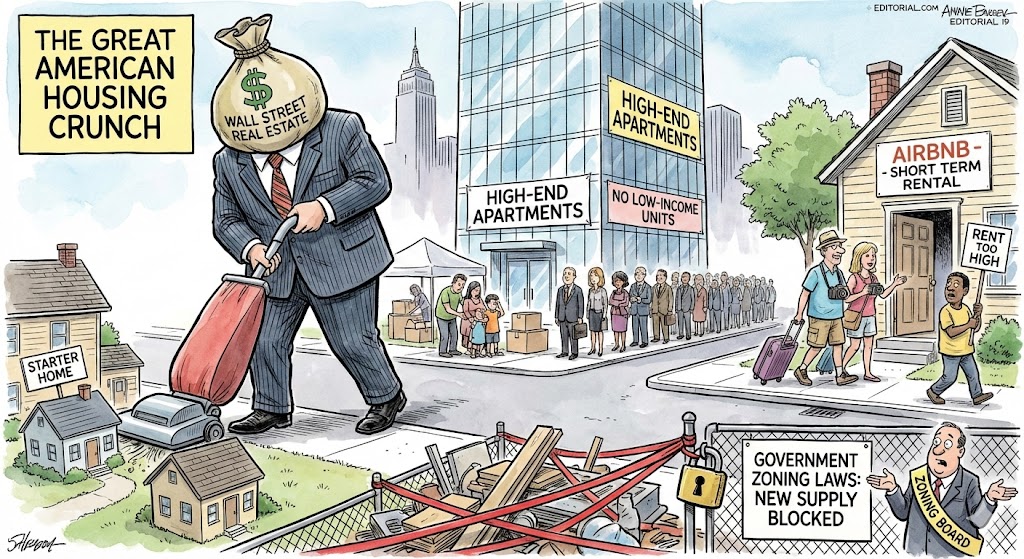
    At the core of the housing shortage is the dominance of single family zoning across much of the United States. Rooted in early twentieth century land use rules and reinforced by decisions such as Euclid v. Ambler Realty in 1926, these policies prohibit apartments, duplexes, and townhomes on vast areas of residential land. In many cities, 70 percent or more of residential land is reserved exclusively for detached single family homes. This dramatically limits the number of homes that can be built in high opportunity areas. Over time, these constraints have hardened into political orthodoxy. The result is a chronic mismatch between where people want to live and what is legally allowed to be built.

    The economic and social consequences are severe. Artificial scarcity pushes up rents and home prices while encouraging sprawl that increases transportation costs and environmental damage. Workers are forced farther from jobs, undermining productivity and quality of life. Restrictive zoning also entrenches racial and economic segregation by excluding lower income households from well resourced neighborhoods. Local control mechanisms amplify these effects by empowering small groups of residents to block new housing. Lengthy permitting processes, discretionary reviews, and lawsuits turn even modest projects into multi year battles.

    Some progress has been made in recent years as states like California, Washington, Montana, and Texas moved to ease parking minimums, allow greater density, or reduce minimum lot sizes. These reforms represent an important shift in recognizing housing as a statewide concern rather than a purely local one. However, the scale and speed of change remain inadequate. Most reforms are incremental and leave core exclusionary structures intact. Even optimistic projections suggest it could take a decade or more for current policies to meaningfully close supply gaps. Without stronger state level preemption of local obstruction, shortages will persist.

    Private Equity’s Takeover: Wall Street as Landlord

    The modern wave of institutional ownership began in the aftermath of the 2008 financial crisis. Private equity firms such as Blackstone identified foreclosed and distressed homes as an opportunity for large scale acquisition. Hundreds of thousands of single family homes were purchased and converted into rental properties. Over time, these portfolios expanded and professionalized, creating a new asset class. Institutional investors now control roughly 3 to 4 percent of the national single family rental stock. While modest in aggregate, their presence is heavily concentrated in specific metro areas and starter home segments.

    This concentration has tangible impacts on households and communities. Large landlords can impose rent increases, add fees, defer maintenance, and pursue aggressive eviction strategies with limited local accountability. Algorithmic rent setting tools have drawn scrutiny for potentially coordinating price increases across markets. By removing entry level homes from the for sale market, institutional buyers also reduce opportunities for first time homeowners. These dynamics disproportionately affect lower income families and communities of color. Housing insecurity becomes embedded in financial strategy.

    Public policy has struggled to keep pace with these changes. Federal housing and finance programs often provide indirect support to large investors without requiring long term affordability or tenant protections. Recent political attention, including President Trump’s January 2026 proposal to restrict large institutional buyers from acquiring additional single family homes, reflects growing bipartisan concern. Yet symbolic measures are insufficient on their own. Effective reform would require limits on excessive concentration, stronger tenant rights, and incentives for long term stewardship. Without these guardrails, private equity will continue to treat housing primarily as a speculative asset.

    Short-Term Rentals: Tourism’s Hidden Toll on Neighborhoods

    Short term rental platforms such as Airbnb and Vrbo have transformed local housing markets over the past decade. Millions of listings now operate nationwide, representing an estimated 1 to 2 percent of total housing stock. Many of these units are entire homes used year round for commercial purposes rather than occasional home sharing. In popular tourist destinations, the share is often much higher. These conversions remove housing from the long term rental market. The financial incentive to cater to visitors frequently outweighs commitments to local residents.

    Research shows that short term rentals can measurably increase nearby rents and home prices. Studies estimate that each additional listing may raise local rents by 0.4 to 3 percent, with similar effects on sale prices. While these impacts are highly localized, they are significant in already tight markets. Neighborhoods experience displacement as long term tenants are priced out. Local services suffer as communities hollow out. What appears as a tourism boom often masks a housing squeeze.

    Municipal responses have varied widely. Some cities have implemented caps, bans, or principal residence requirements to curb commercial operations. Others have struggled with enforcement due to limited resources or platform resistance. In many cases, regulations arrived only after significant damage had been done. Short term rentals are not the sole driver of the national crisis, but they exacerbate shortages where demand is highest. Without consistent rules and enforcement, their negative effects will continue.

    Why the Free Market Alone Cannot Fix This

    Proponents of deregulation often argue that simply building more will resolve affordability concerns. While increasing supply is essential, the type and distribution of new housing matter greatly. Left to its own incentives, the market prioritizes high end units that deliver the greatest returns. Luxury apartments and condos dominate new construction even in cities with acute affordability crises. This pattern persists regardless of overall production levels. As a result, new supply often fails to reach those most in need.

    Housing markets also exhibit classic market failures. Land is finite, development is slow, and information asymmetries disadvantage tenants and buyers. Scarcity premiums reward holding and speculation rather than broad access. In lower income segments, cost pressures can lead to disinvestment and deteriorating conditions. Wage stagnation and inequality further weaken the ability of households to absorb rising costs. These structural issues prevent self correction.

    Government therefore has an indispensable role. Removing barriers is necessary but insufficient on its own. Public policy must actively shape outcomes through investment, regulation, and enforcement. Social housing models, nonprofit development, and long term affordability requirements can counterbalance market distortions. Without such intervention, affordability gains will remain elusive. The evidence from decades of experimentation is clear.

    Thanks for reading The Brooks Brief Substack! This post is public so feel free to share it.

    Share

    A Path Forward: Bold Reforms or Continued Crisis

    America’s housing emergency reflects choices made over generations. Reversing course requires a comprehensive and coordinated strategy rather than isolated fixes. Zoning reform must move beyond pilot programs toward widespread liberalization. State governments should override exclusionary local rules and require meaningful density in high opportunity areas. Eliminating parking minimums and allowing multi family housing by right are critical steps. Supply must increase where demand is strongest.

    Addressing speculation and consolidation is equally important. Policymakers should consider caps on institutional ownership in vulnerable markets and strengthen tenant protections nationwide. Transparency and limits around algorithmic rent setting deserve serious scrutiny. Tax policy can discourage short term speculation while rewarding long term affordability. These measures would help realign housing with its social function. Stability should be valued alongside efficiency.

    Short term rentals and public investment also demand attention. Principal residence requirements and targeted caps can preserve housing in stressed neighborhoods. Revenues from tourism should support local affordability funds. At the federal level, expanded funding for affordable housing production, preservation, and vouchers is essential. Without sustained public commitment, reforms will fall short. In 2026, the question is not whether action is possible, but whether continued inaction is acceptable.

  • Tribal Lands, Federal Hands: Homeland Security and Indigenous Communities

    Tribal Lands, Federal Hands: Homeland Security and Indigenous Communities

    Challenges, Controversies, and Policy Solutions for Effective Collaboration


    Introduction

    The relationship between U.S. indigenous tribes and the Department of Homeland Security (DHS) has long been marked by tension and complexity, rooted in disputes over sovereignty, border enforcement, and civil rights. Established in 2002 following the September 11 attacks, DHS oversees agencies such as Immigration and Customs Enforcement (ICE) and Customs and Border Protection (CBP), both of which frequently operate on or near tribal lands, particularly those along international borders. These interactions have generated controversy, including accusations of racial profiling, inadequate funding for tribal security programs, and perceived encroachments on tribal autonomy. Many indigenous communities are located near the U.S.-Mexico and U.S.-Canada borders, creating overlapping jurisdictions that complicate law enforcement and security initiatives. Historical mistrust toward federal authorities further exacerbates these challenges, reflecting centuries of policies that have undermined tribal self-governance. Key grievances include unequal funding for homeland security programs on reservations compared to states, limited consultation in federal operations, and the broader perception that tribal concerns are consistently deprioritized. Understanding these tensions requires a careful examination of historical context, contemporary security policies, and the ongoing balance between national security objectives and tribal sovereignty.

    The stakes are particularly high as tribes navigate the intersection of federal mandates and local governance. Many reservations lack the infrastructure, personnel, and technological resources to meet federal expectations for border and security management. This creates a persistent tension between cooperation and resistance, as tribes seek to protect their communities without relinquishing authority. For federal agencies, operating on tribal lands often entails navigating complex legal frameworks and treaties, which can slow response times and complicate enforcement. These challenges highlight the broader question of how national security policy can coexist with tribal sovereignty in a manner that respects both legal and ethical obligations. Moreover, the public perception of tribal lands as sites of criminal activity or security vulnerability further strains relationships and fuels political debate. Addressing these tensions requires not only legal reforms but also sustained engagement and trust-building between federal authorities and tribal leaders. Without meaningful dialogue, these disputes risk undermining both the effectiveness of homeland security initiatives and the civil rights of indigenous communities.

    Ultimately, the relationship between DHS and tribal nations is a microcosm of larger structural challenges in American governance. It reflects ongoing struggles over resource allocation, jurisdiction, and accountability. By examining historical developments, border security policies, immigration enforcement practices, and tribal advocacy efforts, policymakers can gain insight into the mechanisms of conflict and cooperation that define this dynamic. The implications extend beyond tribal lands, touching on questions of national security, civil liberties, and social equity. In this context, the perspectives of indigenous communities are critical for shaping policy that is both effective and just. Understanding these dynamics is essential for any comprehensive analysis of homeland security and its impact on marginalized communities.

    Thanks for reading The Brooks Brief Substack! Subscribe for free to receive new posts and support my work.

    Historical Context

    The creation of the Department of Homeland Security represented a profound shift in federal-tribal relations, particularly for communities situated near national borders. In the years following the September 11 attacks, tribes experienced increased federal presence on their lands for border surveillance, anti-terrorism initiatives, and immigration enforcement. These operations were often conducted without sufficient consultation with tribal governments, leaving communities vulnerable to regulatory overreach. Chronic underfunding has compounded the issue, as tribal infrastructure for security and emergency management remains significantly below that of states. This disparity has forced many tribes to rely on limited local resources to meet federally mandated responsibilities, creating both operational strain and resentment toward federal authorities. Historical patterns of neglect and paternalism reinforce the perception that federal agencies prioritize national objectives over tribal rights.

    This historical context also includes high-profile controversies involving federal officials whose statements or actions have further eroded trust. For example, Kristi Noem, former Governor of South Dakota and current DHS Secretary as of 2026, has been barred from entry on several reservations due to prior unsubstantiated claims about Mexican drug cartels infiltrating tribal lands. Such remarks were widely criticized by tribal leaders as inflammatory and misrepresentative, leading to formal resolutions barring her entry. These incidents illustrate the persistent tension between federal messaging and tribal sovereignty, highlighting the sensitivity of border and security issues for indigenous communities. They also underscore the importance of communication and credibility in shaping the perceptions and cooperation of tribal nations.

    Moreover, the historical relationship between tribes and federal agencies has been shaped by treaties and legal precedents that establish both rights and limitations for indigenous governance. Over centuries, federal policies have oscillated between recognizing tribal sovereignty and imposing federal authority, leaving behind a legacy of ambivalence and mistrust. In this context, modern DHS operations must navigate legal obligations alongside ethical considerations to avoid repeating past mistakes. Failure to adequately consult and fund tribal programs reinforces structural inequalities and perpetuates cycles of tension. Understanding these historical dynamics is essential for evaluating current policies and developing strategies that respect both national security objectives and tribal autonomy.

    Border Security and Sovereignty Challenges

    Indigenous tribes occupy critical positions along U.S. international borders, where their cooperation is often essential for managing smuggling, unauthorized migration, and potential terrorist activity. Yet, tribes frequently operate without proportional federal support, leaving them under-resourced relative to the expectations placed upon them. Approximately 40 tribes are directly impacted by border security measures, creating jurisdictional overlaps with CBP and other federal agencies. Conflicts arise when federal initiatives, such as border walls, checkpoints, or surveillance infrastructure, are implemented without tribal consultation. Such actions are often viewed as violations of treaties and tribal sovereignty, fostering legal and political disputes.

    The challenges are further intensified by the dual responsibility tribes face in managing both federal mandates and local governance. Many reservations lack sufficient personnel, training, and technology to enforce security measures effectively while simultaneously maintaining community services. This situation creates a cycle of dependence on federal assistance, which is often perceived as insufficient or inconsistently distributed. As a result, tribal leaders frequently express frustration over a system that demands compliance without providing adequate resources. The imbalance has implications not only for security outcomes but also for the credibility and authority of tribal governance structures.

    These tensions also highlight a broader policy dilemma: how to align national security priorities with respect for tribal autonomy. Federal agencies must recognize that tribes are not merely extensions of state authority but sovereign entities with legal and cultural rights. Negotiating access, resources, and operational responsibilities requires nuanced strategies that incorporate tribal perspectives. Without such engagement, border security policies risk provoking resistance, undermining enforcement effectiveness, and exacerbating longstanding grievances. Collaboration that respects sovereignty while enhancing security can serve as a model for reconciling competing objectives in other federal-tribal interactions.

    Immigration Enforcement and Racial Profiling

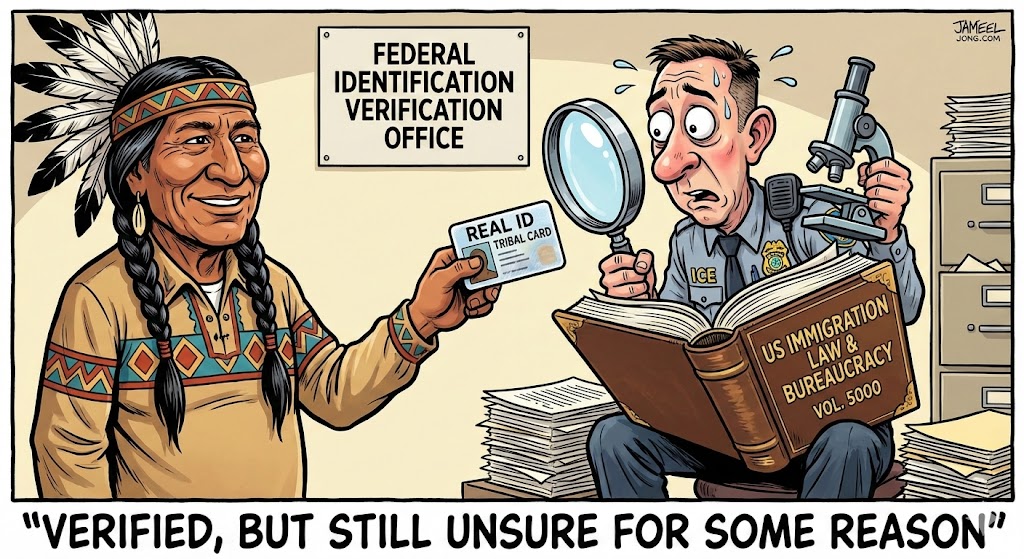
    Immigration enforcement represents one of the most contentious areas of interaction between DHS and indigenous tribes. ICE operations have occasionally led to incidents where Native Americans were detained or questioned due to mistaken identity or racial profiling. Tribal identification cards, which comply with federal Real ID standards, are sometimes dismissed by agents, resulting in wrongful stops and interrogations. Such experiences contribute to a broader sense of vulnerability and distrust toward federal authorities.

    Tribal leaders have responded by issuing advisories instructing members to carry both tribal and state-issued identification during encounters with federal agents. Despite these precautions, DHS has often denied the existence of records confirming such detentions of Native Americans, creating a stark contrast with firsthand tribal accounts. This discrepancy fosters perceptions of opacity and selective enforcement within federal agencies. Advocacy organizations argue that these practices disproportionately target indigenous communities under the guise of border security.

    The implications extend beyond individual incidents to the broader context of civil rights. Indigenous communities are particularly sensitive to enforcement practices that echo historical patterns of discrimination and displacement. The perceived targeting of Native Americans during immigration enforcement reinforces longstanding grievances and complicates efforts to foster cooperative relationships with DHS. Addressing these concerns requires policy reforms that improve transparency, standardize identification protocols, and integrate tribal input into operational planning.

    Recent Incidents and Controversies

    In recent years, several high-profile incidents have underscored the fragility of tribal-DHS relations. The Oglala Sioux Tribe accused DHS of pressuring members and making arrests during immigration crackdowns under the Trump administration, though some claims were later revised. These events highlighted community anxieties about mass deportation policies that could impact indigenous populations directly or indirectly. The perception that tribal lands are vulnerable to federal overreach has become a central concern for leaders seeking to protect their communities from arbitrary enforcement.

    Other tribes, including the Sault Tribe of Chippewa Indians, have publicly condemned ICE for using intimidation tactics during operations near reservations. Such practices, combined with a U.S. Supreme Court ruling permitting ethnicity-based stops, have intensified fears during periods of heightened enforcement. Tribal councils have responded through protests, formal statements, and legal challenges, emphasizing that these policies not only infringe on civil rights but also evoke historical traumas of displacement and marginalization.

    These controversies reveal the broader challenge of balancing national security priorities with respect for tribal sovereignty. Federal agencies must navigate complex legal, social, and cultural dynamics to avoid exacerbating existing tensions. At the same time, tribes are increasingly asserting their authority and advocating for policy changes that protect their communities. These disputes illustrate the ongoing negotiation between enforcement imperatives and human rights considerations within U.S. homeland security policy.

    Contracts and Intra-Tribal Divisions

    Some tribes have entered agreements with ICE to provide services such as designing or operating immigration detention facilities, often viewing them as economic opportunities amid persistent resource constraints. These contracts, however, have provoked internal dissent, as other members criticize participation in a system that contributes to the deportation of vulnerable communities. Such debates illustrate the moral and political dilemmas tribes face when balancing economic development against ethical concerns and community solidarity.

    The Prairie Band Potawatomi Nation exemplifies these intra-tribal conflicts. Leadership decisions to contract with ICE prompted protests, internal divisions, and terminations, reflecting disagreement over the appropriateness of profiting from federal detention operations. These disputes highlight the tension between short-term economic gains and long-term reputational and ethical considerations. Tribal communities must weigh the immediate benefits of collaboration against the potential costs to unity and political credibility.

    These dynamics underscore the broader complexity of tribal-federal relations. Collaboration with DHS can provide financial and infrastructural advantages, yet it may simultaneously deepen internal divisions and provoke criticism from other indigenous groups. Understanding these conflicts is critical for policymakers seeking to navigate tribal partnerships in a manner that respects sovereignty and maintains ethical standards.

    Tribal Responses and Advocacy

    Tribes have responded to these challenges with a range of strategies, including advisories for members, legal action, and public advocacy. The Oneida Nation, for instance, has emphasized the importance of maintaining composure during encounters with ICE while asserting members’ legal rights. Organizations such as the Native American Rights Fund have played a critical role in highlighting instances of racial profiling and pushing for reforms in federal enforcement practices.

    Advocacy efforts have focused on securing equitable recognition of tribal identification cards and ensuring that federal funding for security initiatives is commensurate with the responsibilities placed upon tribes. Tribal leaders have also engaged in dialogue with DHS officials, seeking to bridge gaps in communication and foster cooperative relationships. These efforts demonstrate a proactive approach to protecting sovereignty while navigating complex federal mandates.

    The cumulative impact of these advocacy measures is significant. By asserting their legal and political authority, tribes are shaping national debates about civil rights, immigration enforcement, and homeland security. Their engagement highlights the importance of including indigenous perspectives in policymaking processes and underscores the potential for constructive federal-tribal collaboration when trust and resources are aligned.

    Thanks for reading The Brooks Brief Substack! This post is public so feel free to share it.

    Share

    Ongoing and Future Tensions

    As of 2026, tensions between indigenous tribes and DHS remain acute, with potential for escalation under policies such as mass raids and expanded border fortifications. These disputes have far-reaching implications, not only for civil rights and sovereignty but also for the effectiveness of homeland security operations. Without sustained dialogue and structural reforms, distrust between tribal nations and federal agencies is likely to persist and deepen.

    Addressing these challenges requires a multifaceted approach. Equitable funding for security programs, full recognition of tribal identification and authority, and transparent anti-profiling measures are essential steps. Collaborative frameworks that respect sovereignty while advancing national security goals can mitigate conflict and improve operational outcomes.

    Ultimately, the resolution of these tensions depends on the willingness of both tribal and federal leaders to engage in constructive negotiation and conflict resolution. Meaningful progress will require acknowledging historical grievances, addressing resource disparities, and implementing policies that are informed by tribal expertise and lived experience. The future of tribal-federal relations will hinge on the ability to balance security imperatives with the fundamental rights and autonomy of indigenous communities.

  • Marriage, Paternity, and Power

    Marriage, Paternity, and Power

    How DNA Testing and Family Law Reshape Male Risk in Modern Relationships


    Introduction

    Marriage has historically functioned as a legal framework designed to manage uncertainty around parentage, responsibility, and inheritance. Before the advent of DNA testing, societies relied on marriage to establish paternal certainty, assigning financial and legal responsibility to husbands regardless of biological truth. This system prioritized social stability over individual accuracy, embedding risk within the marital institution itself. For centuries, men accepted this risk in exchange for social legitimacy, inheritance rights, and family continuity. However, technological and legal changes have altered this balance in ways that disproportionately expose men to financial vulnerability.

    In contemporary society, marriage rates are declining across the developed world, coinciding with expanded reproductive autonomy for women and heightened legal obligations for men. In the United States, marriage rates have fallen sharply since 2000, while nonmarital births and cohabitation have increased. At the same time, family law has evolved to prioritize child welfare outcomes over biological or relational fairness. These changes have intensified male perceptions of marriage as a legally asymmetric institution. Marriage is increasingly viewed not as a mutual safeguard, but as a high-risk financial contract.

    This article argues that declining marriage rates are partly driven by structural imbalances in reproductive and family law that expose men to obligations they cannot legally avoid. DNA paternity testing has made biological truth accessible, but courts often subordinate that truth to legal presumptions. Men cannot compel an abortion in failed relationships, yet may be financially bound for decades if a child is born. These realities reshape male incentives around marriage, cohabitation, and fatherhood. The result is not merely cultural change, but a rational recalculation of legal risk.

    Thanks for reading The Brooks Brief Substack! Subscribe for free to receive new posts and support my work.

    Marriage, Parenthood, and Asymmetric Reproductive Choice

    Modern reproductive policy grants women near-exclusive authority over pregnancy outcomes. A woman may choose to continue or terminate a pregnancy regardless of the father’s wishes, a framework rooted in bodily autonomy and constitutional privacy. Men, by contrast, have no legal mechanism to decline parenthood once a child is born. This asymmetry creates a fundamental imbalance in reproductive responsibility. While both parties contribute biologically, only one retains decisive legal control.

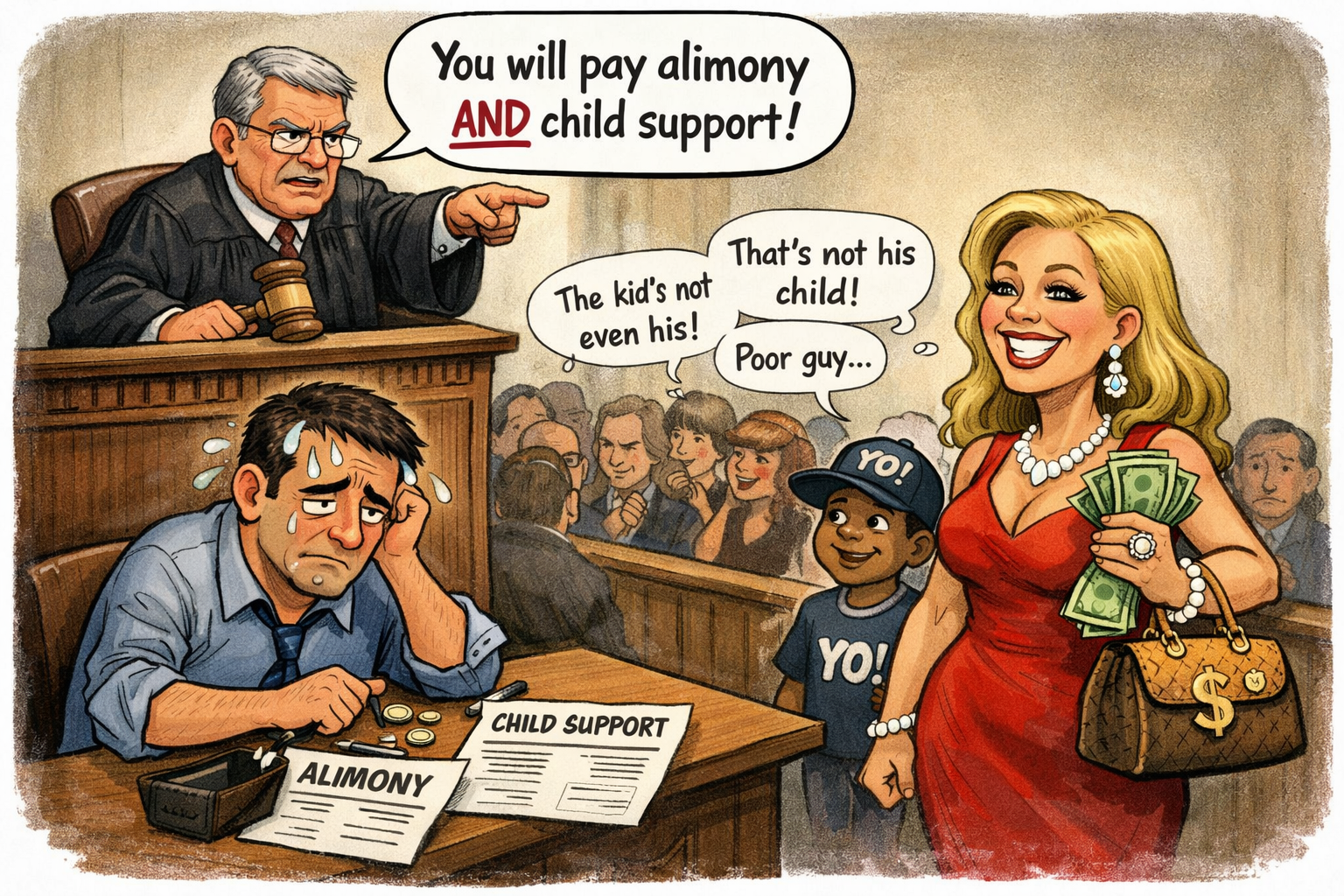
    In failed or short-term relationships, this imbalance can produce severe financial consequences for men. A man may explicitly state he does not want a child, yet still be held legally and financially responsible for the outcome of a unilateral decision. Child support obligations can extend for 18 years or longer, regardless of relationship duration or intent. Courts do not evaluate consent to parenthood, only biological or legal attachment. This system effectively decouples reproductive choice from financial liability for men.

    Historically, marriage mitigated this risk by aligning sexual relationships with long-term partnership and shared decision-making. As marriage declines, more children are born outside stable unions, increasing the frequency of contested parenthood. Without marital protections or shared governance, men bear risk without reciprocal authority. This legal structure shapes male behavior, discouraging commitment and encouraging avoidance of formal relationships. The decline in marriage is thus linked not only to culture, but to rational responses to asymmetric law.

    DNA Testing, Birth Certificates, and Legal Paternity Traps

    DNA paternity testing has made biological parentage verifiable with near-perfect accuracy. However, family courts often prioritize legal paternity over genetic truth. In many jurisdictions, signing a birth certificate establishes permanent legal fatherhood, regardless of DNA evidence discovered later. Men who sign under social pressure, misinformation, or assumed trust may unknowingly assume lifelong financial obligations. Courts frequently interpret the signature as voluntary acceptance of responsibility.

    This legal framework creates what critics describe as a paternity trap. Even when DNA testing later proves non-paternity, courts may still compel child support payments. Judges often justify these rulings by citing the child’s best interests and the need for financial stability. Biological truth becomes secondary to administrative convenience and welfare outcomes. As a result, men who are not genetic parents can be legally treated as such indefinitely.

    These outcomes undermine confidence in both marriage and fatherhood. The knowledge that legal obligations can persist despite fraud or mistake fuels distrust in intimate relationships. DNA testing, rather than resolving uncertainty, exposes a legal system unwilling to reconcile truth with responsibility. For many men, this disconnect signals unacceptable risk. The rational response is hesitation toward marriage, cohabitation, and even long-term relationships.

    Divorce Law and Gendered Financial Outcomes

    Divorce law further compounds male financial risk within marriage. In most jurisdictions, divorce settlements disproportionately award financial assets, alimony, and primary custody to wives. Although laws are formally gender-neutral, outcomes consistently favor women in practice. Men are more likely to pay spousal support and child support, often simultaneously. These obligations persist regardless of fault, infidelity, or unequal contribution.

    From a male perspective, marriage increasingly resembles a one-way financial commitment. The combination of no-fault divorce and income redistribution creates incentives misaligned with long-term partnership stability. Men face the possibility of losing assets, income, and access to children even in short marriages. This reality contrasts sharply with historical expectations of marriage as a mutual economic alliance. The risk-reward balance has shifted decisively.

    These outcomes influence marriage decisions long before divorce occurs. Younger men, observing divorce statistics and legal precedents, incorporate these risks into their life planning. Avoiding marriage becomes a strategy for financial self-preservation rather than ideological opposition. The decline in marriage is thus not solely cultural, but structurally induced. Family law shapes behavior as much as values do.

    Political and Policy Implications

    Conservatives often call for a revival of marriage while overlooking the legal incentives that deter it. Promoting marriage without reforming family law fails to address the root causes of male disengagement. Policies that emphasize responsibility without authority create resentment rather than stability. Mandatory paternity testing at birth is sometimes proposed as a corrective measure. However, without broader legal reform, testing alone does little to rebalance obligations.

    Liberals emphasize reproductive autonomy and child welfare, often dismissing male financial vulnerability as secondary. Yet ignoring asymmetry undermines confidence in legal institutions. A system perceived as unfair erodes voluntary participation, particularly in marriage. Public policy that seeks stable families must account for incentives on both sides. Stability cannot be coerced through obligation alone.

    Potential reforms include allowing men to contest legal paternity within defined timeframes, aligning financial responsibility with genetic truth, and reevaluating divorce settlement norms. Voluntary parenthood, rather than automatic liability, could restore trust in family formation. Without such reforms, marriage rates are unlikely to recover. The institution cannot survive if it is widely perceived as punitive.

    Thanks for reading The Brooks Brief Substack! This post is public so feel free to share it.

    Share

    Conclusion

    The decline in marriage cannot be understood without examining how modern family law redistributes risk. Historically, marriage managed uncertainty around parentage in a pre-scientific world. DNA testing has eliminated that uncertainty, yet the legal system often refuses to adapt. Men face financial obligations without reproductive authority, biological certainty without legal protection, and divorce outcomes that magnify loss. These realities reshape behavior.

    Marriage has shifted from a stabilizing institution to a potential financial liability for many men. Declining participation reflects rational adaptation, not moral collapse. Policymakers seeking to strengthen families must confront legal asymmetries directly. Without aligning authority, responsibility, and truth, marriage will continue to erode. The issue is not whether men value family, but whether the system values fairness.

  • The Erosion of Women’s Rights in U.S. Healthcare

    The Erosion of Women’s Rights in U.S. Healthcare

    Abortion Decline, Insurance Power, AI Expansion, and the Cost Crisis


    I. Introduction

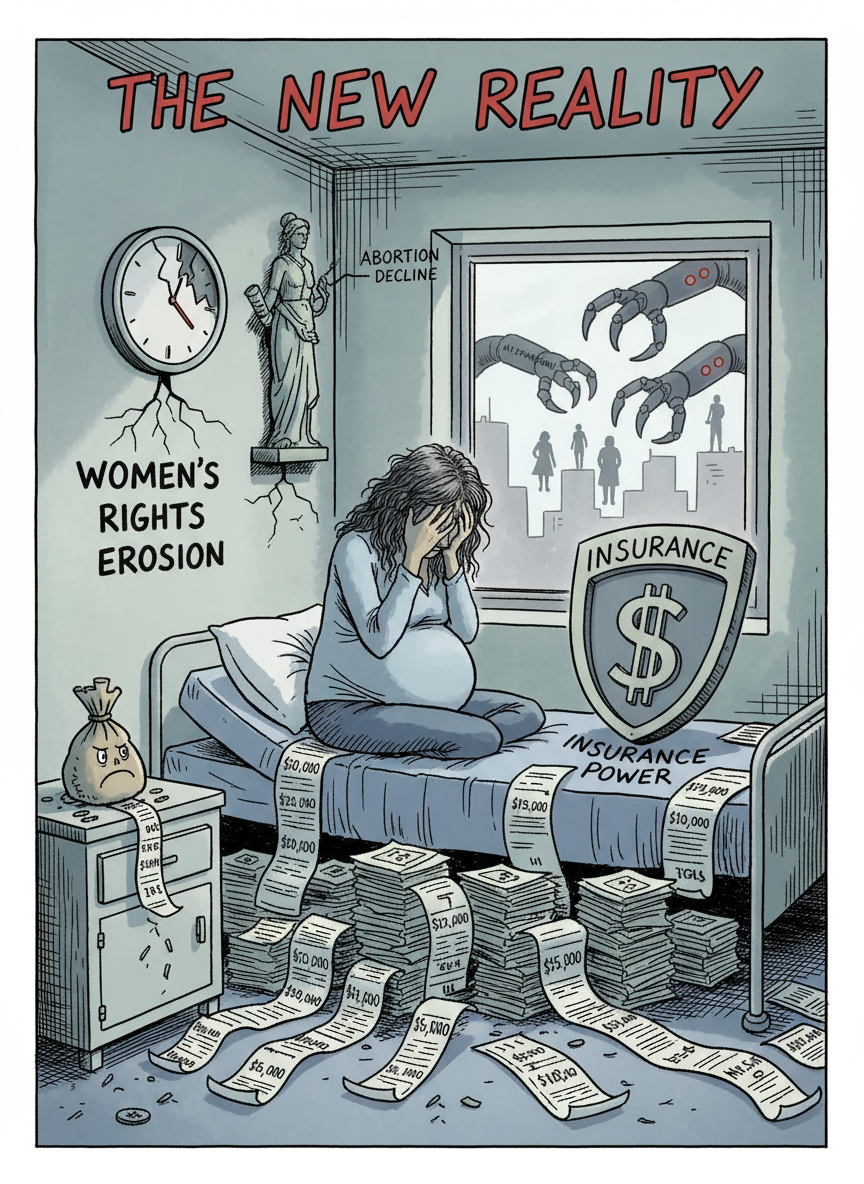
    In early 2026, the post-Dobbs healthcare landscape reveals a profound rollback of women’s rights across much of the United States. Abortion is now banned outright in 13 states and restricted at early gestational stages in six more, reshaping reproductive outcomes nationwide. Research indicates these policies have already resulted in tens of thousands of additional births and hundreds of preventable infant deaths in restrictive states. These outcomes are not evenly distributed, falling most heavily on low-income women, women of color, and those with limited access to healthcare infrastructure. The shift represents not only a legal change but a measurable deterioration in public health outcomes tied directly to reproductive policy.

    Beyond abortion restrictions, women’s healthcare rights are increasingly constrained by broader structural forces within the healthcare system. Insurance industry dominance continues to shape access, affordability, and scope of reproductive care. At the same time, artificial intelligence tools are being rapidly deployed in healthcare without adequate safeguards against gender bias. Rising healthcare costs further compound these pressures, placing disproportionate financial burdens on women who already face wage and wealth gaps. Together, these forces form a multilayered erosion of autonomy, equity, and health security.

    This analysis argues that women’s healthcare rights in 2026 are under coordinated strain from four intersecting dynamics. The decline in abortion access undermines bodily autonomy and maternal health. Insurance industry power limits reproductive coverage and shifts costs onto women. Emerging AI systems risk encoding longstanding gender disparities into medical decision making. Escalating healthcare costs transform legal rights into hollow promises for millions. Taken together, these trends threaten not only reproductive freedom but broader gender equality and economic stability in the United States.

    Thanks for reading The Brooks Brief Substack! Subscribe for free to receive new posts and support my work.

    II. The Decline of Women’s Rights Regarding Abortion Access

    The erosion of abortion rights since the Supreme Court’s 2022 Dobbs decision has accelerated into a systemic rollback of reproductive autonomy. State-level bans and early gestational limits have fundamentally reshaped access to care, particularly in the South and Midwest. In several states, abortion services have effectively ceased to exist, forcing women to travel hundreds of miles or forgo care entirely. These restrictions have transformed abortion from a standard medical service into a privilege dependent on geography, income, and social capital. The result is a fragmented national system in which women’s rights vary sharply by state.

    The legal landscape has continued to harden through 2025 and 2026 with the introduction of fetal personhood laws and expanded enforcement mechanisms. Federal policy shifts have further narrowed access for populations reliant on government programs, including veterans and low-income women. These measures extend beyond abortion itself, creating uncertainty around miscarriage care, fertility treatment, and emergency obstetric services. Providers in restrictive states report chilling effects that delay or deny care even in medically urgent situations. Such policies have institutionalized fear and risk within women’s healthcare.

    The health and socioeconomic consequences of these restrictions are increasingly visible. States with abortion bans have experienced higher-than-expected fertility rates alongside measurable increases in infant mortality. These outcomes disproportionately affect Black, Latina, low-income, and unmarried women, who already face structural barriers to healthcare access. Denial of abortion care has been linked to higher poverty rates, reduced labor force participation, and long-term economic instability. Forced continuation of unwanted pregnancies compounds inequality rather than supporting family well-being.

    Beyond individual outcomes, abortion restrictions represent a broader assault on women’s fundamental rights. Travel costs, lost wages, childcare expenses, and medical risks create additional burdens that function as de facto barriers to care. Federal threats to revive outdated statutes and restrict medication access further entrench inequity. Policy choices under the Trump administration have reinforced this trajectory by defunding providers and promoting misinformation around abortion pills. These actions collectively frame reproductive control as a tool of political governance rather than a matter of healthcare.

    III. Insurance Industry Influence and the Erosion of Women’s Rights

    The insurance industry plays a central role in shaping women’s access to healthcare, particularly reproductive services. Policy changes entering effect in 2026 have strengthened insurer leverage while weakening consumer protections. The expiration of Affordable Care Act (ACA) subsidies has led to dramatic premium increases for millions of enrollees. Women, who make up a majority of ACA marketplace participants, face significantly higher out-of-pocket costs than men. These financial pressures disproportionately affect women of childbearing age and older women managing chronic conditions.

    Cuts to Medicaid and Title X family planning programs have further reduced access to affordable reproductive care. Clinic closures and service reductions have left many communities without nearby providers. Low-income women are especially vulnerable to these gaps, as Medicaid remains the primary source of coverage for maternity and reproductive services. Insurance design often excludes abortion coverage entirely, even in states where the procedure remains legal. As a result, legal rights are frequently rendered inaccessible by financial barriers.

    Insurance policies also enable indirect restrictions on reproductive autonomy. Conscience protections and gag rules allow providers and institutions to deny or withhold information about reproductive services. Limitations on contraceptive coverage and maternity care represent a rollback of earlier ACA gains. Women are increasingly forced to choose between affordability and comprehensive care. These constraints transform reproductive healthcare into a conditional benefit rather than a guaranteed right.

    The broader consequences of insurance dominance extend beyond healthcare access. Women consistently pay more out of pocket despite earning less on average, reinforcing gender-based economic inequality. Maternal health outcomes worsen as cost pressures delay or prevent care. Black and Latina women experience compounded harms due to intersecting racial and economic disparities. Federal policy decisions, including privacy rollbacks and targeted defunding of reproductive health providers, further centralize control over women’s healthcare choices within market-driven systems.

    IV. The Rise of AI in Healthcare and Threats to Women’s Rights

    Artificial intelligence is rapidly reshaping healthcare delivery, with widespread adoption in diagnostics, scheduling, and treatment planning by 2026. While these tools promise efficiency, they also reflect the biases embedded in their underlying data. Many AI systems are trained on datasets that underrepresent women or misinterpret gender-specific symptoms. This is particularly concerning in areas such as reproductive health, oncology, and cardiovascular care, where women’s symptoms have historically been understudied. Without correction, AI risks replicating and amplifying existing disparities.

    The use of AI in reproductive and preventive care raises distinct concerns for women’s rights. Algorithms may underestimate risks related to fertility, menopause, or pregnancy complications due to limited training data. In abortion-restricted environments, AI tools can be used to monitor, flag, or indirectly surveil reproductive behavior. Weak governance allows unregulated or “shadow” AI systems to influence care without transparency or accountability. These developments blur the line between clinical decision making and rights enforcement.

    Privacy risks further complicate the expansion of AI in women’s healthcare. Digital health data related to menstruation, pregnancy, or fertility can be vulnerable to misuse. In states hostile to reproductive rights, such data may expose women to legal or social consequences. The erosion of privacy protections transforms healthcare technologies into potential tools of control. This dynamic undermines trust between patients and providers.

    Despite these risks, AI also presents opportunities if governed responsibly. Ethical oversight, representative datasets, and gender-aware design could improve diagnostic accuracy and personalized care for women. Without deliberate intervention, however, AI will widen the gender health gap rather than close it. Women’s rights in healthcare depend on ensuring that emerging technologies serve equity rather than entrench discrimination. Policy frameworks must prioritize women’s data, consent, and autonomy in the digital health era.

    V. Rising Healthcare Costs and Barriers to Reproductive Rights

    Healthcare costs in the United States are projected to rise sharply through 2026, with annual increases driven by aging populations, chronic disease, and policy retrenchment. The expiration of ACA subsidies has more than doubled premiums for many families. Medicaid and marketplace cuts threaten to increase the uninsured population by tens of millions. Women, who are more likely to require ongoing reproductive and preventive care, face higher financial exposure. Cost inflation transforms access to care into a function of income rather than need.

    Reproductive healthcare is particularly sensitive to cost pressures. Abortion restrictions increase ancillary expenses such as travel, lodging, childcare, and lost wages. For many women, these added costs are prohibitive even when abortion remains legal. Defunding of clinics further reduces access to affordable contraception and preventive services. Cost barriers push women toward delayed care or no care at all, increasing long-term health risks.

    The broader consequences of rising costs extend beyond individual decisions. The growing number of uninsured women creates feedback loops that exacerbate health outcomes and put a strain on safety net providers. Maternal mortality and morbidity rise as preventive and prenatal care become less accessible. Economic insecurity deepens as women absorb higher medical debt and reduced workforce participation. Healthcare costs thus function as a structural barrier to women’s rights and autonomy.

    Addressing these challenges requires deliberate policy intervention. Without cost containment and coverage expansion, legal protections alone will fail to secure meaningful access. Rising healthcare costs threaten to hollow out women’s reproductive rights even in supportive jurisdictions. Economic barriers are increasingly central to the erosion of healthcare equity.

    VI. Forced Birth, Brain Death, and the Financialization of Reproductive Control

    One of the most stark illustrations of reproductive rights erosion in the post-Dobbs era is the case of a woman declared brain dead who was legally compelled to remain on life support in order to continue a pregnancy. Under strict abortion bans and fetal personhood frameworks, physicians were prohibited from withdrawing medical intervention despite the absence of maternal consciousness or recovery prospects. The state effectively assumed control over the woman’s body, transforming her into a biological vessel rather than a patient with rights. This case underscores how abortion restrictions extend beyond elective procedures into end-of-life care and medical ethics. The legal prioritization of fetal status over maternal autonomy represents a radical departure from established healthcare norms. It signals a system in which women’s bodily integrity can be overridden entirely by statute.

    The consequences of this intervention did not end at birth. The infant, delivered under extraordinary circumstances, now requires extended hospitalization and specialized medical care. These costs are substantial, often reaching hundreds of thousands of dollars within weeks, and responsibility for payment remains legally ambiguous. In the absence of comprehensive public coverage, medical debt may ultimately be transferred to the woman’s surviving family members. This shifts the financial burden of a state-mandated medical decision onto private citizens who had no authority over the outcome. Reproductive control thus becomes intertwined with financial liability.

    This case exposes how abortion bans and fetal personhood laws externalize moral and political decisions onto families least equipped to bear them. The state mandates birth but disclaims long-term responsibility for care, leaving families to absorb emotional, financial, and medical fallout. Such outcomes redefine reproductive coercion as both a civil rights issue and an economic one. Forced birth under these conditions transforms healthcare into an instrument of state power rather than patient-centered care. It also sets a precedent in which women’s bodies, even in death, are subject to compulsory use without consent. The implications for medical ethics, family autonomy, and women’s rights are profound and enduring.

    Thanks for reading The Brooks Brief Substack! This post is public so feel free to share it.

    Share

    VII. Conclusion

    By 2026, women’s rights in U.S. healthcare are being undermined through intersecting legal, economic, technological, and institutional forces. Abortion access has declined sharply, producing measurable harms to maternal and infant health. Insurance industry dominance limits reproductive coverage and shifts costs onto women. Artificial intelligence threatens to encode gender bias into clinical systems while exposing women to new privacy risks. Escalating healthcare costs further restrict access and deepen inequality.

    These trends pose long-term threats to gender equality, health equity, and economic stability. When reproductive autonomy is constrained, women’s educational attainment, labor participation, and family well-being suffer. Disparities widen along racial and socioeconomic lines, reinforcing structural inequality. Healthcare systems that marginalize women ultimately weaken public health outcomes for society as a whole.

    Reversing this trajectory requires coordinated policy action. Federal protections for reproductive rights, renewed investment in affordable coverage, and strict governance of healthcare AI are essential. Cost containment and insurance reform must prioritize equity rather than profit. Without decisive intervention, the erosion of women’s healthcare rights will continue to reshape American democracy and economic security in profoundly unequal ways.

  • Trump’s Reversal on Epstein Files Transparency

    Trump’s Reversal on Epstein Files Transparency

    Political Pressure, Institutional Resistance, and the Limits of Accountability


    Introduction

    The controversy surrounding the Jeffrey Epstein files has become one of the most politically charged transparency debates of the modern era. What began as a slow drip of courtroom disclosures evolved into a defining test of whether elite accountability could withstand partisan and institutional resistance. Partial releases in 2024 revealed fragments of Epstein’s social and political network, but the absence of comprehensive disclosure fueled widespread suspicion. As the 2024 election cycle intensified, the files transformed from legal artifacts into symbols of public distrust in government secrecy. By late 2025, depositions, flight logs, internal emails, and investigative memoranda were widely viewed as a measure of whether the political system could police itself. The issue increasingly transcended Epstein himself, becoming a referendum on power, protection, and credibility.

    Jeffrey Epstein’s 2019 death while in federal custody left unresolved questions about his criminal enterprise and the individuals who benefited from it. His conviction for sex trafficking and decades of documented abuse implicated not only enablers, but institutions that failed to intervene. For many Americans, the secrecy surrounding the Epstein case reinforced long standing beliefs that the wealthy and politically connected operate under different rules. These perceptions were amplified by conspiracy theories, media fragmentation, and declining trust in federal law enforcement. The files came to represent more than evidence; they symbolized whether democratic oversight could penetrate elite networks. That symbolic weight ensured the issue would resurface at the highest levels of politics.

    President Donald Trump’s handling of the Epstein files during his second term exemplifies the tension between populist rhetoric and executive self preservation. After initially dismissing calls for disclosure, Trump signed the Epstein Files Transparency Act in November 2025 under intense political pressure. The law mandated broad disclosure by the Department of Justice, setting a December deadline for compliance. Yet by January 2026, only a fraction of the materials had been released, with millions of documents still under review. This reversal highlighted the influence of Trump’s political base while also exposing institutional reluctance within the executive branch. The episode raised fundamental questions about transparency, separation of powers, and the durability of public trust.

    Trump’s Initial Resistance to Releasing the Files

    Upon returning to office in January 2025, Trump confronted immediate expectations to fulfill campaign promises centered on declassification and transparency. Throughout the 2024 campaign, he framed himself as an opponent of entrenched secrecy and claimed that federal agencies concealed damaging information from the public. Supporters interpreted these pledges as a guarantee that the Epstein files would be fully released. However, the administration’s posture shifted rapidly once governing realities replaced campaign rhetoric. Within weeks, White House messaging emphasized caution rather than disclosure. This abrupt pivot signaled that institutional risk management had overtaken populist commitments.

    In public statements, Trump characterized demands for full release as a partisan distraction designed to undermine his policy agenda. He repeatedly labeled the issue a political hoax, arguing that Democrats were weaponizing Epstein to divert attention from economic and immigration priorities. These remarks were reinforced through official briefings and social media posts that framed transparency advocates as bad faith actors. The Department of Justice echoed this position, citing concerns related to national security, victim privacy, and ongoing investigations. While such justifications are common in sensitive cases, their broad application drew skepticism from watchdog groups. Critics argued that the rationale lacked specificity and functioned primarily as a delay tactic.

    Underlying the administration’s resistance were concerns about potential political exposure. Trump’s name appears in Epstein related materials documenting social interactions during the 1990s and early 2000s. Although no criminal wrongdoing has been established, the presence of these references heightened political sensitivity. From a strategic standpoint, minimizing attention to the files aligned with broader Republican efforts to contain reputational damage within elite networks. By reframing transparency demands as partisan attacks, the administration sought to delegitimize oversight itself. This approach deepened public cynicism while reinforcing perceptions of selective accountability.

    Administration Officials’ Public Advocacy vs. In-Office Reluctance

    The contradiction between campaign promises and governing behavior was not limited to the president alone. Senior administration officials publicly endorsed transparency while overseeing a disclosure process marked by delay and limitation. This disconnect became a focal point of bipartisan criticism, with observers accusing the administration of bad faith engagement. Public assurances created expectations that were repeatedly unmet, eroding confidence in official statements. The resulting credibility gap proved politically costly, particularly among Trump’s core supporters. The discrepancy illustrated how institutional incentives often override rhetorical commitments once power is secured.

    Trump’s own statements exemplified this pattern. During the campaign, he repeatedly claimed that releasing the Epstein files would expose corruption among powerful elites. Once in office, however, he dismissed further disclosures as unnecessary and destabilizing. When backlash emerged from within his own political base, Trump defended Department of Justice leadership rather than embracing their demands. He framed internal critics as divisive actors undermining unity, rather than constituents seeking accountability. This response signaled a shift from populist confrontation to executive insulation. The change further intensified skepticism about the administration’s sincerity.

    Attorney General Pam Bondi played a central role in managing the disclosure process. Early in 2025, she announced an initial release that included heavily redacted flight logs and contact lists. In interviews, Bondi suggested that additional materials were under active review, reinforcing expectations of eventual transparency. Yet subsequent Department of Justice memoranda sharply narrowed the scope of disclosure, asserting that no comprehensive client list existed. By December 2025, the department missed the statutory deadline, citing the sheer volume of documents. Lawmakers and advocacy groups accused the department of misleading the public through selective framing.

    Deputy Attorney General Todd Blanche reinforced this cautious approach. While describing the review as exhaustive and resource intensive, his office supervised releases that avoided politically sensitive material until later stages. Court filings in related lawsuits suggested internal flagging of documents referencing the president or senior officials. These revelations raised concerns about politicization within the review process. The gap between public advocacy and internal conduct underscored how institutional self protection can override transparency mandates. Taken together, these dynamics illustrated the structural limits of executive branch accountability.

    The Shift Toward Transparency

    By mid 2025, sustained pressure began to fracture the administration’s resistance. Leaks of partially redacted documents highlighted inconsistencies in the Department of Justice’s explanations for withholding materials. Congressional hearings amplified these concerns, forcing officials to reconcile public statements with documentary evidence. Media coverage increasingly framed the issue as one of institutional obstruction rather than legal necessity. As scrutiny intensified, bipartisan frustration grew within Congress. The momentum shifted decisively toward legislative intervention.

    The Epstein Files Transparency Act emerged from this environment of escalating pressure. Although introduced by Democratic Representative Ro Khanna, the bill attracted significant support from populist Republicans. This cross ideological coalition reflected the unique political salience of the issue among grassroots voters. The legislation mandated searchable, downloadable releases of all unclassified materials, with narrowly tailored exceptions. It also required detailed reporting on any documents withheld. The bill’s design sought to limit executive discretion while preserving legitimate privacy protections.

    Despite White House opposition, the bill advanced through procedural mechanisms that bypassed leadership resistance. A discharge petition forced a floor vote in the House, where the measure passed overwhelmingly. The Senate followed with unanimous consent, reflecting the political risk of opposing transparency. Trump signed the bill shortly thereafter, portraying the decision as a victory over bureaucratic obstruction. While the law included allowances for redactions, it significantly constrained the Department of Justice’s ability to delay indefinitely. The signing marked a clear, if reluctant, pivot toward disclosure.

    DOJ Claims of Judicial Non Enforcement and Opposition to Special Master Review

    Following the law’s enactment, the Department of Justice adopted a more aggressive legal posture to preserve control over the disclosure process. In court filings, DOJ attorneys argued that federal courts lacked authority to compel enforcement of the Transparency Act’s timelines. The department asserted that disclosure decisions remained within the exclusive discretion of the executive branch. This position effectively challenged congressional oversight by insulating agency action from judicial review. Legal scholars noted that such arguments, if upheld, would significantly weaken transparency statutes. The claim represented a broader assertion of executive autonomy.

    The DOJ also opposed efforts to appoint a special master to review redactions and withheld materials. Advocates argued that an independent reviewer was necessary to ensure that the administration was not improperly concealing information eligible for public release. The department countered that judicial involvement would violate separation of powers principles. It maintained that courts could not supervise executive document review without infringing on prosecutorial discretion. This stance alarmed transparency groups, who viewed it as an attempt to avoid meaningful oversight. The dispute underscored the limits of statutory enforcement absent judicial willingness to intervene.

    Critics argued that the DOJ’s position amounted to functional nullification of the law. By asserting that courts could neither enforce deadlines nor oversee redactions, the department effectively rendered congressional mandates optional. This approach reinforced perceptions that transparency laws lack teeth when they conflict with executive interests. The controversy highlighted structural weaknesses in accountability mechanisms within the federal system. It also intensified calls for reform, including clearer enforcement provisions in future legislation. At stake was not only the Epstein files, but the broader question of whether transparency statutes can constrain executive power.

    Role of the MAGA Base in Driving the Reversal

    The MAGA base played a decisive role in forcing the administration’s shift toward disclosure. Grassroots activists framed the Epstein files as proof of elite corruption, integrating the issue into broader populist narratives. Online campaigns, rallies, and petitions sustained pressure on Republican lawmakers and the White House. Hashtags demanding release trended repeatedly, signaling the depth of voter engagement. For many supporters, transparency became a loyalty test rather than a policy preference. This sustained mobilization limited the administration’s room to maneuver.

    Divisions within the Republican Party became increasingly visible. Populist figures openly challenged leadership, accusing them of protecting powerful interests. These lawmakers argued that failure to release the files would permanently damage the party’s credibility with its base. Polling data suggested declining support among core voters if delays continued. Influencers and donors amplified these warnings through direct engagement with the White House. The internal conflict exposed fault lines between institutional conservatism and populist accountability.

    Ultimately, Trump’s decision to sign the Transparency Act reflected his political instincts. While personally wary of the files’ contents, he recognized the risk of alienating his most loyal supporters. The reversal demonstrated the primacy of base loyalty in his governing calculus. However, it also carried inherent risks if disclosures implicated individuals within his orbit. The episode illustrated how populist pressure can force transparency even when executive incentives favor concealment.

    Implications for U.S. Politics

    In the short term, the partial release of Epstein materials has reshaped the political landscape. Investigations into associates have intensified, with implications for the 2026 midterm elections. Partisan actors have selectively emphasized disclosures that damage political opponents. Democrats have accused the administration of manipulating releases for political advantage. Republicans, meanwhile, have largely fallen silent on DOJ noncompliance following the law’s passage. The result is a transparency process deeply entangled with electoral strategy.

    Over the long term, the episode underscores both the power and limitations of grassroots pressure. While sustained mobilization forced legislative action, institutional resistance blunted its impact. Delays and legal maneuvering have fueled conspiracy theories rather than dispelling them. Public trust in federal institutions continues to erode amid perceptions of selective accountability. The case demonstrates how transparency failures can destabilize democratic legitimacy. It also highlights the need for stronger enforcement mechanisms.

    The Epstein files controversy reveals a deeper structural problem within American governance. When executive agencies can resist disclosure with minimal consequence, statutory mandates lose credibility. Bipartisan frustration reflects recognition that transparency should not depend on political convenience. Without reforms to strengthen oversight and judicial enforcement, similar conflicts will recur. The implications extend far beyond a single case. They speak to the health of democratic accountability itself.

    Thanks for reading The Brooks Brief Substack! This post is public so feel free to share it.

    Share

    Conclusion

    Trump’s reversal on the Epstein files represents a defining episode of his second presidency. Driven by intense pressure from his political base, the shift exposed the tension between populist demands and institutional self protection. While the Transparency Act marked a legislative victory, the Department of Justice’s resistance revealed the fragility of enforcement. The controversy illustrates how executive power can constrain accountability even in the face of overwhelming public support. As disclosures continue slowly and selectively, the broader challenge remains unresolved. Restoring trust will require not only transparency, but structural reforms that ensure it cannot be indefinitely delayed.

  • COINTELPRO’s Enduring Legacy of State Repression

    COINTELPRO’s Enduring Legacy of State Repression

    From the Black Panthers to Black Lives Matter


    I. Introduction

    In the early morning hours of December 4, 1969, Chicago police raided an apartment on the city’s West Side where Black Panther Party leader Fred Hampton was sleeping beside his pregnant partner. Nearly one hundred shots were fired by police, killing Hampton and fellow Panther Mark Clark. Subsequent investigations revealed that the raid was not a spontaneous police action but a coordinated operation enabled by the Federal Bureau of Investigation. Hampton had been heavily surveilled, infiltrated, and ultimately neutralized as part of a broader counterintelligence campaign. The killing shocked civil rights advocates and exposed the violent extremes of state repression against Black political organizing. It remains one of the most consequential examples of government overreach in modern U.S. history.

    This incident was part of the FBI’s Counterintelligence Program, commonly known as COINTELPRO, which began in 1956 and formally ended in 1971. Originally justified as a national security initiative targeting communism, the program expanded to encompass civil rights organizations, antiwar movements, and Black liberation groups. Under the leadership of FBI Director J. Edgar Hoover, Black nationalist organizations were identified as uniquely dangerous to internal stability. The Black Panther Party was singled out as the most significant domestic threat, not because of criminal activity but because of its political potential. COINTELPRO sought to dismantle movements before they could achieve mass legitimacy or institutional power.

    The legacy of COINTELPRO raises enduring questions about the boundaries between democratic governance and authoritarian control. Intelligence agencies justified extraordinary measures by framing political dissent as subversive or terroristic. These tactics not only destroyed organizations but also traumatized communities and distorted public discourse. The echoes of this era are visible in contemporary surveillance practices aimed at movements such as Black Lives Matter. Understanding COINTELPRO is therefore essential to evaluating whether the United States has meaningfully constrained its repressive capacities or merely adapted them to new political contexts.

    Thanks for reading The Brooks Brief Substack! Subscribe for free to receive new posts and support my work.

    II. Historical Background of COINTELPRO

    COINTELPRO was launched in 1956 with the stated goal of disrupting the Communist Party USA during the height of Cold War paranoia. Over time, its mandate broadened to include a wide range of domestic groups perceived as politically threatening. By the 1960s, civil rights organizations, feminist groups, antiwar activists, and Black nationalist movements were frequent targets. Internal FBI documents reveal that ideological dissent, not criminal conduct, was often the primary criterion for surveillance. This expansion reflected Hoover’s belief that social movements could destabilize the existing political order. As a result, COINTELPRO blurred the line between intelligence gathering and political suppression.

    The methods employed under COINTELPRO were extensive and frequently illegal. They included warrantless wiretapping, mail interception, and the planting of false information in the press. The FBI forged letters to incite conflict between rival organizations and to discredit movement leaders in the eyes of their supporters. Agents worked closely with local police departments to coordinate arrests, raids, and prosecutions. These practices were designed not merely to monitor but to actively disrupt and destroy political organizations from within. The secrecy of the program allowed it to operate with little oversight or accountability.

    Public awareness of COINTELPRO emerged in 1971, when activists broke into an FBI office in Media, Pennsylvania, and leaked internal documents to journalists. These revelations prompted congressional investigations, most notably the Church Committee hearings in 1975. The committee concluded that COINTELPRO had systematically violated constitutional rights, particularly freedoms of speech and association. Although the program was officially terminated, no senior officials were criminally prosecuted. This lack of accountability has fueled ongoing skepticism about the federal government’s commitment to civil liberties.

    III. COINTELPRO’s Assault on the Black Panther Party

    The Black Panther Party was founded in 1966 in Oakland, California, by Huey P. Newton and Bobby Seale in response to police brutality and systemic racism. The organization combined armed self-defense with community-based social programs, including free breakfast initiatives and health clinics. Its political ideology emphasized self-determination, economic justice, and resistance to state violence. The Panthers’ visibility and grassroots appeal quickly attracted national attention. For many marginalized communities, the party filled gaps left by government neglect.

    Federal authorities viewed the Panthers’ growth as an existential threat rather than a legitimate political movement. The FBI deployed informants to infiltrate local chapters and gather intelligence on leadership and internal dynamics. These informants often escalated tensions, encouraged reckless behavior, or fabricated evidence. False letters were used to provoke violent rivalries between Black organizations, resulting in deadly consequences. The goal was not law enforcement but organizational collapse through internal fracture and public delegitimization.

    Fred Hampton’s assassination illustrates the extreme measures taken to neutralize Panther leadership. An FBI informant provided detailed floor plans of Hampton’s apartment and intelligence on his daily routines. Evidence later suggested Hampton was drugged prior to the raid, rendering him unconscious. Police gunfire overwhelmingly came from law enforcement, contradicting claims of a shootout. Hampton’s death eliminated a leader who was building multiracial coalitions and advocating systemic change. His killing sent a chilling message to activists nationwide about the risks of political mobilization.

    IV. The MOVE Bombing of 1985: Domestic Militarization and State Violence

    The 1985 bombing of the MOVE organization in Philadelphia represents a later but equally devastating manifestation of state repression against Black radical movements. MOVE was a Black liberation group that combined anti-police activism with environmental and communal living principles. After years of tension between MOVE members and city authorities, Philadelphia police escalated the conflict into a military-style operation. On May 13, 1985, police dropped an explosive device onto the group’s row house. The resulting fire was deliberately allowed to burn.

    Eleven people were killed in the bombing, including five children, and more than sixty homes in a predominantly Black neighborhood were destroyed. City officials later acknowledged that the decision to let the fire spread was a conscious tactical choice. Despite the scale of destruction, no city officials or police officers were criminally convicted. The incident marked the first time a U.S. city used an aerial bomb against its own residents. It demonstrated how counterinsurgency logic had migrated from federal intelligence agencies to local law enforcement.

    The MOVE bombing illustrates the continuity of COINTELPRO’s logic beyond its formal termination. Black political dissent continued to be framed as inherently dangerous and deserving of extraordinary force. The lack of accountability mirrored earlier failures to prosecute abuses tied to COINTELPRO. For political scientists, MOVE underscores how state repression can persist through institutional culture rather than formal programs. It also highlights how militarized policing has become a normalized response to racialized dissent.

    V. Political Science Analysis: Undermining Dissent in a Democratic State

    From a political science perspective, COINTELPRO aligns with theories of state repression and social control. Governments often justify surveillance and disruption by framing dissenting movements as security threats. In practice, these determinations are deeply influenced by race, ideology, and power relations. Black liberation movements were disproportionately targeted because they challenged both economic hierarchies and racial authority. This selective repression reveals how national security frameworks can be weaponized against marginalized groups.

    The democratic costs of such repression are substantial. COINTELPRO undermined public trust in institutions and constrained the range of acceptable political expression. Movements advocating structural change were delegitimized, while state violence was normalized. This imbalance distorted democratic participation by punishing dissent rather than engaging it. Over time, such practices weaken the foundational principle that democracy requires robust and protected political opposition.

    The targeting of figures such as Martin Luther King Jr. further demonstrates the breadth of repression. King’s opposition to the Vietnam War and his critique of economic inequality triggered intensified surveillance. Similar tactics were used against student groups and antiwar organizations. These patterns suggest that COINTELPRO was less about preventing violence and more about preserving ideological conformity. The program thus represents a cautionary case of how democratic states can erode their own legitimacy.

    VI. Modern Parallels: From the Black Panther Party to Black Lives Matter

    Contemporary surveillance of Black Lives Matter reflects striking similarities to COINTELPRO-era practices. Federal and local agencies have monitored activists, tracked social media activity, and compiled intelligence reports on protest organizers. In some cases, activists have been labeled as extremists despite a lack of evidence linking them to violence. This framing echoes earlier efforts to criminalize Black political mobilization. It also diverts attention from demonstrably violent far-right movements.

    During protests following police killings in Ferguson and later in 2020, law enforcement deployed advanced surveillance technologies. Drones, facial recognition software, and geofencing tools expanded the state’s capacity to monitor dissent. These technologies enable broader and more intrusive data collection than was possible during COINTELPRO. The result is a chilling effect on political participation, particularly in Black communities. Activists must now contend with both physical and digital forms of repression.

    While the tools have evolved, the underlying logic remains consistent. Movements demanding racial justice are framed as destabilizing forces rather than participants in democratic debate. This continuity raises questions about whether lessons from COINTELPRO have been meaningfully internalized. Without structural reforms and accountability, surveillance practices risk reproducing historical injustices. The comparison between past and present underscores the resilience of repressive state power.

    Thanks for reading The Brooks Brief Substack! This post is public so feel free to share it.

    Share

    VII. Probing the Boundaries of Political Activism and State Power

    Determining when activism becomes terrorism remains a deeply contested issue. The Black Panther Party’s armed patrols were intended as community self-defense but were portrayed as aggressive threats. Similarly, Black Lives Matter protests are frequently mischaracterized as violent despite evidence that most demonstrations are peaceful. These narratives shape public perception and justify state intervention. They also obscure the political goals and grievances driving these movements.

    Legal definitions of terrorism emphasize intent to intimidate civilians for political ends. By this standard, many state actions during COINTELPRO and the MOVE bombing warrant scrutiny. Yet state violence is often exempt from the labels applied to nonstate actors. This asymmetry reveals how power influences the construction of legitimacy. It also complicates efforts to hold governments accountable for abuses.

    Ultimately, COINTELPRO’s legacy forces a reckoning with the limits of democratic tolerance. A healthy democracy must protect dissent, especially when it challenges entrenched power structures. The suppression of Black political movements has left lasting scars on American political life. As surveillance technologies expand, the risk of repeating these patterns grows. Confronting this history is essential to preventing its recurrence.

  • Faith, Power, and Pluralism in American Politics

    Faith, Power, and Pluralism in American Politics

    How Christian Nationalism, Black Church Activism, Jewish Political Engagement, and Muslim Civic Mobilization Compete to Define Democracy


    I. Introduction: Religion as a Political Force in a Polarized Democracy

    As the United States enters 2026, the role of religion in politics has once again moved to the center of democratic debate. In the wake of the 2024 presidential election and ahead of contentious midterms, faith-based institutions continue to shape voter behavior, policy priorities, and political identity. Religious communities are not simply cultural actors; they are organizational forces with the capacity to mobilize millions of voters. Their influence extends from local school boards to national elections and foreign policy debates. In an era of polarization, faith increasingly functions as both a source of moral authority and a tool of political power. Understanding this dynamic is essential to evaluating the health of American democracy.

    Within this landscape, stark contrasts have emerged among religious actors. Some white-aligned Christian institutions have become closely associated with nationalist ideologies that frame the United States as an exclusively Christian and implicitly white nation. These movements often claim divine justification for exclusionary policies, ranging from immigration restrictions to rollbacks of civil rights protections. In contrast, Black churches have historically embraced a theology rooted in liberation, collective struggle, and civic participation. Their political engagement emphasizes inclusion and democratic expansion rather than cultural dominance. These divergent paths illustrate how the same religious tradition can be mobilized toward radically different political ends.

    Religion’s political role in the United States has never been uniform. Different faith traditions have developed distinct relationships with the state, informed by history, theology, and social position. Some religious movements emphasize pluralism, civil rights, and democratic participation. Others gravitate toward exclusionary nationalism, hierarchy, and cultural preservation. These divergent approaches are not abstract theological debates but material political forces with real consequences. The tension between inclusion and exclusion defines much of today’s religious-political landscape.

    This article examines four major religious currents shaping American politics: white Christian nationalism, Black church activism, Jewish political engagement, and the growing civic influence of Muslim Americans. Together, these communities illustrate the wide spectrum of ways faith interacts with power. Some use religion to justify dominance, while others deploy it as a framework for justice and participation. Comparing these approaches reveals not only religious differences but competing visions of democracy itself. The future of American pluralism will depend on which vision prevails.

    II. White Christian Nationalism and the Politics of Exclusion

    White Christian nationalism has emerged as one of the most consequential religious-political movements in contemporary America. At its core, this ideology asserts that the United States was founded as a Christian nation and should remain culturally and politically aligned with a narrow vision of Christianity. This vision is often inseparable from racial and ethnic identity, implicitly framing whiteness as normative. Political goals typically include restrictive immigration policies, opposition to LGBTQ+ rights, and resistance to racial justice initiatives. These positions are framed as moral imperatives rather than political preferences. As a result, political compromise is often treated as moral betrayal.

    Churches aligned with Christian nationalism frequently serve as political organizing centers. Clergy and religious media figures reinforce narratives of cultural loss and existential threat. Electoral participation is framed as a spiritual duty to “take back” the nation. This mobilization strategy has proven effective in shaping Republican primaries and policy platforms. Candidates who reject nationalist framing often face backlash from religious constituencies. In this way, theology becomes a gatekeeping mechanism within conservative politics.

    Critics argue that Christian nationalism represents a sharp departure from core Christian teachings of Jesus Christ himself. The movement prioritizes power, hierarchy, and national dominance over humility, compassion, and service to the marginalized. Biblical themes of welcoming the stranger and rejecting worldly authority are often minimized or ignored. Instead, scripture is selectively interpreted to justify exclusion and control. This instrumentalization of faith transforms religion into a political weapon rather than a moral guide. The result is a theology that reinforces polarization rather than ethical reflection.

    The democratic implications are significant. Christian nationalism undermines pluralism by defining legitimate citizenship in religious terms. It weakens norms of equal protection by privileging one faith identity over others. In extreme forms, it normalizes authoritarian impulses by framing leaders as divinely sanctioned. These dynamics pose a structural challenge to democratic governance. Rather than serving as a unifying moral force, religion becomes a mechanism of division and domination.


    III. Black Churches and the Theology of Democratic Inclusion

    Black churches occupy a fundamentally different position in American political history. Born out of slavery, segregation, and systemic exclusion, they developed as institutions of survival and resistance. From the abolitionist movement to the Civil Rights era, Black churches provided organizational infrastructure for democratic struggle. Clergy framed political participation as a moral obligation rooted in justice and collective liberation. Voting, protest, and civic engagement were understood as expressions of faith. This tradition continues to shape Black church activism today.

    In the contemporary period, Black churches remain among the most effective mobilizers of democratic participation. Voter registration drives, early voting initiatives, and civic education campaigns are common features of church life. These efforts are often coordinated with civil rights organizations and local advocacy groups. Policy priorities extend beyond elections to include housing affordability, healthcare access, labor rights, and criminal justice reform. The emphasis is consistently on expanding democracy rather than restricting it. Faith is used to motivate participation, not to police belonging.

    However, Black religious politics are not without internal tension. The rise of prosperity theology has introduced a market-oriented logic into some congregations. This theology elevates individual wealth and success as indicators of divine favor, which contradicts Jesus’ teachings that the love of money is the root of all evil. While appealing in contexts of economic deprivation, critics argue it departs from traditions of collective struggle and sacrifice. It can shift attention away from structural inequality toward personal advancement. This tension reflects broader debates about the role of religion in confronting systemic injustice.

    Despite these challenges, Black churches remain among the strongest institutional defenders of pluralistic democracy. Their political engagement is rooted in lived experience with exclusion and disenfranchisement. Rather than seeking dominance, they advocate inclusion and equal participation. This approach stands in direct contrast to nationalist religious movements. It offers a vision of faith as a force for democratic expansion rather than contraction.


    IV. Jewish Faith in America: Pluralism, Power, and Pro-Israel Advocacy

    Judaism has played a distinctive and enduring role in American political life, shaped by immigration, persecution, and a strong commitment to constitutional protections. Jewish Americans have historically viewed pluralism and the separation of church and state as essential safeguards. High levels of voter participation and civic engagement reflect this orientation. Many Jewish institutions frame political involvement as a moral responsibility rooted in ethical tradition. Concepts such as justice, communal obligation, and historical memory strongly influence political priorities. This has positioned Jewish Americans as consistent defenders of democratic norms.

    Politically, the Jewish community is diverse but has leaned toward liberal and progressive coalitions for much of the modern era. Advocacy around civil rights, immigration reform, labor protections, and religious freedom has been central. At the same time, ideological diversity within the community is significant. Orthodox, Conservative, Reform, and secular Jewish populations often emphasize different policy priorities. These internal differences complicate simplistic portrayals of Jewish political alignment. Judaism’s political influence is best understood as plural rather than monolithic.

    In recent years, pro-Israel advocacy has become the most visible dimension of Jewish political power. Organizations like the American Israel Public Affairs Committee have garnered significant public attention for their effective lobbying and electoral influence, especially after the events on October 7th, 2022. However, some individuals have accused Israel of committing genocide and other war crimes against the Palestinians. AIPAC’s bipartisan strategy and willingness to engage directly in primary elections have demonstrated its organizational strength. Supporters view this as legitimate democratic participation in foreign policy advocacy. Critics argue that such influence can narrow debate and marginalize dissenting voices, including within the Jewish community itself. This tension reflects broader questions about power, accountability, and democratic deliberation.

    The prominence of pro-Israel lobbying highlights a central tension in Jewish political life. While many Jewish Americans prioritize pluralism and minority rights domestically, foreign policy advocacy has increasingly aligned with establishment and conservative actors. This has created friction with progressive Jewish organizations that emphasize human rights and diplomatic restraint. These debates mirror national struggles over the role of money, lobbying, and influence in democracy. Judaism’s political engagement thus illustrates both the strengths and contradictions of faith-based advocacy. It underscores how minority communities can wield power while still grappling with pluralistic ideals.


    V. Muslim Americans and the Struggle for Civic Belonging

    Muslim Americans represent one of the fastest-growing and most politically dynamic religious communities in the United States. Over the past decade, Muslim civic engagement has expanded significantly at the local, state, and national levels. Record numbers of Muslim candidates have been elected to public office, reflecting sustained grassroots organizing. Voter registration and turnout efforts have intensified, particularly among younger Muslims. These developments signal a maturation of Muslim political participation. Faith has become a catalyst for civic inclusion rather than withdrawal.

    Mosques and Islamic centers increasingly function as hubs of political education and social services. Much like Black churches, they provide spaces for organizing, mutual aid, and voter engagement. Islamic teachings emphasizing justice, charity, and accountability inform this activism. Muslim communities often align with broader coalitions advocating civil rights and immigrant protections. Despite theological differences, there are shared ethical commitments across faith traditions. These commonalities create opportunities for interfaith democratic cooperation.

    At the same time, Muslim political participation continues to face intense scrutiny. Islamophobia remains deeply embedded in political rhetoric and media narratives. Muslim candidates and officials are frequently portrayed as outsiders, regardless of their civic credentials. Symbolic expressions of faith, such as swearing an oath on the Quran, provoke disproportionate backlash. These reactions expose the fragility of religious freedom in practice. They also reveal how national identity is often policed along religious lines.

    Nevertheless, Muslim Americans continue to assert their place in the democratic system. Advocacy efforts focus on combating hate, countering disinformation, and building multiracial coalitions. Rather than retreating in the face of hostility, Muslim civic engagement has intensified. This trajectory reinforces the possibility of a pluralistic democracy rooted in equal participation. It also challenges exclusionary narratives that define “Americanness” in narrow terms. Muslim political engagement represents both resistance and renewal.


    VI. Comparative Analysis: Faith as a Tool of Dominance or Inclusion

    Across these religious traditions, faith functions as a powerful organizing force, but its political expression varies dramatically. White Christian nationalism uses religion to justify hierarchy and exclusion. Black churches deploy faith to expand democratic participation and social equity. Jewish political engagement balances pluralism with assertive advocacy, particularly in foreign policy. Muslim Americans mobilize faith as a pathway to belonging and representation. These differences reflect competing moral frameworks rather than theological inevitabilities.

    The central divide is not religion versus secularism, but dominance versus inclusion. Nationalist movements frame politics as zero-sum and identity-based. Inclusive traditions emphasize shared humanity and democratic access. Prosperity theology and lobbying power complicate this divide by introducing market logics into faith-based politics. In every case, religion amplifies existing political incentives. The question is how that amplification is directed.


    VII. Implications for America’s Democratic Future

    Religious polarization increasingly maps onto partisan divisions in American politics. Conservative Christian identities align closely with Republican coalitions, while Democrats draw support from multifaith and secular constituencies. This alignment intensifies conflict over immigration, education, and civil rights. In its most extreme forms, religious nationalism threatens democratic norms and institutional trust. The risk is not religion itself, but its fusion with exclusionary power.

    Yet faith also offers pathways to democratic resilience. Black churches, Jewish pluralist traditions, and Muslim civic mobilization demonstrate how religion can strengthen participation and accountability. Interfaith coalitions and theological critiques of extremism provide counterweights to authoritarian impulses. As the United States approaches its 250th anniversary, these dynamics will shape debates over identity and democracy. The outcome will depend on which moral visions gain institutional power. Faith remains a battleground for the future of pluralism.


    Thanks for reading The Brooks Brief Substack! This post is public so feel free to share it.

    Share

    VIII. Conclusion

    Religion in American politics is neither inherently democratic nor inherently authoritarian. Its impact depends on how faith is interpreted, organized, and mobilized. White Christian nationalism illustrates how religion can be distorted to justify exclusion and hierarchy. Black church activism highlights faith’s capacity to expand democracy and demand justice. Jewish political engagement demonstrates both pluralistic commitment and the complexities of institutional power. Muslim civic participation underscores the ongoing struggle for equal belonging. Together, these traditions reveal that the future of American democracy will be shaped not by faith itself, but by how faith is wielded.