Challenges, Controversies, and Policy Solutions for Effective Collaboration
Introduction
The relationship between U.S. indigenous tribes and the Department of Homeland Security (DHS) has long been marked by tension and complexity, rooted in disputes over sovereignty, border enforcement, and civil rights. Established in 2002 following the September 11 attacks, DHS oversees agencies such as Immigration and Customs Enforcement (ICE) and Customs and Border Protection (CBP), both of which frequently operate on or near tribal lands, particularly those along international borders. These interactions have generated controversy, including accusations of racial profiling, inadequate funding for tribal security programs, and perceived encroachments on tribal autonomy. Many indigenous communities are located near the U.S.-Mexico and U.S.-Canada borders, creating overlapping jurisdictions that complicate law enforcement and security initiatives. Historical mistrust toward federal authorities further exacerbates these challenges, reflecting centuries of policies that have undermined tribal self-governance. Key grievances include unequal funding for homeland security programs on reservations compared to states, limited consultation in federal operations, and the broader perception that tribal concerns are consistently deprioritized. Understanding these tensions requires a careful examination of historical context, contemporary security policies, and the ongoing balance between national security objectives and tribal sovereignty.
The stakes are particularly high as tribes navigate the intersection of federal mandates and local governance. Many reservations lack the infrastructure, personnel, and technological resources to meet federal expectations for border and security management. This creates a persistent tension between cooperation and resistance, as tribes seek to protect their communities without relinquishing authority. For federal agencies, operating on tribal lands often entails navigating complex legal frameworks and treaties, which can slow response times and complicate enforcement. These challenges highlight the broader question of how national security policy can coexist with tribal sovereignty in a manner that respects both legal and ethical obligations. Moreover, the public perception of tribal lands as sites of criminal activity or security vulnerability further strains relationships and fuels political debate. Addressing these tensions requires not only legal reforms but also sustained engagement and trust-building between federal authorities and tribal leaders. Without meaningful dialogue, these disputes risk undermining both the effectiveness of homeland security initiatives and the civil rights of indigenous communities.
Ultimately, the relationship between DHS and tribal nations is a microcosm of larger structural challenges in American governance. It reflects ongoing struggles over resource allocation, jurisdiction, and accountability. By examining historical developments, border security policies, immigration enforcement practices, and tribal advocacy efforts, policymakers can gain insight into the mechanisms of conflict and cooperation that define this dynamic. The implications extend beyond tribal lands, touching on questions of national security, civil liberties, and social equity. In this context, the perspectives of indigenous communities are critical for shaping policy that is both effective and just. Understanding these dynamics is essential for any comprehensive analysis of homeland security and its impact on marginalized communities.
Thanks for reading The Brooks Brief Substack! Subscribe for free to receive new posts and support my work.
Historical Context
The creation of the Department of Homeland Security represented a profound shift in federal-tribal relations, particularly for communities situated near national borders. In the years following the September 11 attacks, tribes experienced increased federal presence on their lands for border surveillance, anti-terrorism initiatives, and immigration enforcement. These operations were often conducted without sufficient consultation with tribal governments, leaving communities vulnerable to regulatory overreach. Chronic underfunding has compounded the issue, as tribal infrastructure for security and emergency management remains significantly below that of states. This disparity has forced many tribes to rely on limited local resources to meet federally mandated responsibilities, creating both operational strain and resentment toward federal authorities. Historical patterns of neglect and paternalism reinforce the perception that federal agencies prioritize national objectives over tribal rights.
This historical context also includes high-profile controversies involving federal officials whose statements or actions have further eroded trust. For example, Kristi Noem, former Governor of South Dakota and current DHS Secretary as of 2026, has been barred from entry on several reservations due to prior unsubstantiated claims about Mexican drug cartels infiltrating tribal lands. Such remarks were widely criticized by tribal leaders as inflammatory and misrepresentative, leading to formal resolutions barring her entry. These incidents illustrate the persistent tension between federal messaging and tribal sovereignty, highlighting the sensitivity of border and security issues for indigenous communities. They also underscore the importance of communication and credibility in shaping the perceptions and cooperation of tribal nations.
Moreover, the historical relationship between tribes and federal agencies has been shaped by treaties and legal precedents that establish both rights and limitations for indigenous governance. Over centuries, federal policies have oscillated between recognizing tribal sovereignty and imposing federal authority, leaving behind a legacy of ambivalence and mistrust. In this context, modern DHS operations must navigate legal obligations alongside ethical considerations to avoid repeating past mistakes. Failure to adequately consult and fund tribal programs reinforces structural inequalities and perpetuates cycles of tension. Understanding these historical dynamics is essential for evaluating current policies and developing strategies that respect both national security objectives and tribal autonomy.
Border Security and Sovereignty Challenges
Indigenous tribes occupy critical positions along U.S. international borders, where their cooperation is often essential for managing smuggling, unauthorized migration, and potential terrorist activity. Yet, tribes frequently operate without proportional federal support, leaving them under-resourced relative to the expectations placed upon them. Approximately 40 tribes are directly impacted by border security measures, creating jurisdictional overlaps with CBP and other federal agencies. Conflicts arise when federal initiatives, such as border walls, checkpoints, or surveillance infrastructure, are implemented without tribal consultation. Such actions are often viewed as violations of treaties and tribal sovereignty, fostering legal and political disputes.
The challenges are further intensified by the dual responsibility tribes face in managing both federal mandates and local governance. Many reservations lack sufficient personnel, training, and technology to enforce security measures effectively while simultaneously maintaining community services. This situation creates a cycle of dependence on federal assistance, which is often perceived as insufficient or inconsistently distributed. As a result, tribal leaders frequently express frustration over a system that demands compliance without providing adequate resources. The imbalance has implications not only for security outcomes but also for the credibility and authority of tribal governance structures.
These tensions also highlight a broader policy dilemma: how to align national security priorities with respect for tribal autonomy. Federal agencies must recognize that tribes are not merely extensions of state authority but sovereign entities with legal and cultural rights. Negotiating access, resources, and operational responsibilities requires nuanced strategies that incorporate tribal perspectives. Without such engagement, border security policies risk provoking resistance, undermining enforcement effectiveness, and exacerbating longstanding grievances. Collaboration that respects sovereignty while enhancing security can serve as a model for reconciling competing objectives in other federal-tribal interactions.
Immigration Enforcement and Racial Profiling
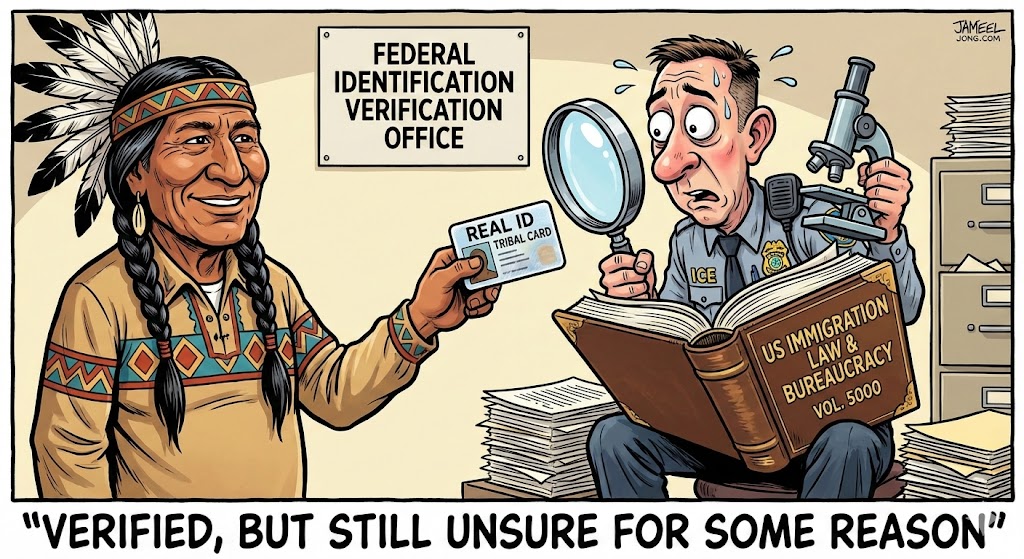
Immigration enforcement represents one of the most contentious areas of interaction between DHS and indigenous tribes. ICE operations have occasionally led to incidents where Native Americans were detained or questioned due to mistaken identity or racial profiling. Tribal identification cards, which comply with federal Real ID standards, are sometimes dismissed by agents, resulting in wrongful stops and interrogations. Such experiences contribute to a broader sense of vulnerability and distrust toward federal authorities.
Tribal leaders have responded by issuing advisories instructing members to carry both tribal and state-issued identification during encounters with federal agents. Despite these precautions, DHS has often denied the existence of records confirming such detentions of Native Americans, creating a stark contrast with firsthand tribal accounts. This discrepancy fosters perceptions of opacity and selective enforcement within federal agencies. Advocacy organizations argue that these practices disproportionately target indigenous communities under the guise of border security.
The implications extend beyond individual incidents to the broader context of civil rights. Indigenous communities are particularly sensitive to enforcement practices that echo historical patterns of discrimination and displacement. The perceived targeting of Native Americans during immigration enforcement reinforces longstanding grievances and complicates efforts to foster cooperative relationships with DHS. Addressing these concerns requires policy reforms that improve transparency, standardize identification protocols, and integrate tribal input into operational planning.
Recent Incidents and Controversies
In recent years, several high-profile incidents have underscored the fragility of tribal-DHS relations. The Oglala Sioux Tribe accused DHS of pressuring members and making arrests during immigration crackdowns under the Trump administration, though some claims were later revised. These events highlighted community anxieties about mass deportation policies that could impact indigenous populations directly or indirectly. The perception that tribal lands are vulnerable to federal overreach has become a central concern for leaders seeking to protect their communities from arbitrary enforcement.
Other tribes, including the Sault Tribe of Chippewa Indians, have publicly condemned ICE for using intimidation tactics during operations near reservations. Such practices, combined with a U.S. Supreme Court ruling permitting ethnicity-based stops, have intensified fears during periods of heightened enforcement. Tribal councils have responded through protests, formal statements, and legal challenges, emphasizing that these policies not only infringe on civil rights but also evoke historical traumas of displacement and marginalization.
These controversies reveal the broader challenge of balancing national security priorities with respect for tribal sovereignty. Federal agencies must navigate complex legal, social, and cultural dynamics to avoid exacerbating existing tensions. At the same time, tribes are increasingly asserting their authority and advocating for policy changes that protect their communities. These disputes illustrate the ongoing negotiation between enforcement imperatives and human rights considerations within U.S. homeland security policy.
Contracts and Intra-Tribal Divisions
Some tribes have entered agreements with ICE to provide services such as designing or operating immigration detention facilities, often viewing them as economic opportunities amid persistent resource constraints. These contracts, however, have provoked internal dissent, as other members criticize participation in a system that contributes to the deportation of vulnerable communities. Such debates illustrate the moral and political dilemmas tribes face when balancing economic development against ethical concerns and community solidarity.
The Prairie Band Potawatomi Nation exemplifies these intra-tribal conflicts. Leadership decisions to contract with ICE prompted protests, internal divisions, and terminations, reflecting disagreement over the appropriateness of profiting from federal detention operations. These disputes highlight the tension between short-term economic gains and long-term reputational and ethical considerations. Tribal communities must weigh the immediate benefits of collaboration against the potential costs to unity and political credibility.
These dynamics underscore the broader complexity of tribal-federal relations. Collaboration with DHS can provide financial and infrastructural advantages, yet it may simultaneously deepen internal divisions and provoke criticism from other indigenous groups. Understanding these conflicts is critical for policymakers seeking to navigate tribal partnerships in a manner that respects sovereignty and maintains ethical standards.
Tribal Responses and Advocacy
Tribes have responded to these challenges with a range of strategies, including advisories for members, legal action, and public advocacy. The Oneida Nation, for instance, has emphasized the importance of maintaining composure during encounters with ICE while asserting members’ legal rights. Organizations such as the Native American Rights Fund have played a critical role in highlighting instances of racial profiling and pushing for reforms in federal enforcement practices.
Advocacy efforts have focused on securing equitable recognition of tribal identification cards and ensuring that federal funding for security initiatives is commensurate with the responsibilities placed upon tribes. Tribal leaders have also engaged in dialogue with DHS officials, seeking to bridge gaps in communication and foster cooperative relationships. These efforts demonstrate a proactive approach to protecting sovereignty while navigating complex federal mandates.
The cumulative impact of these advocacy measures is significant. By asserting their legal and political authority, tribes are shaping national debates about civil rights, immigration enforcement, and homeland security. Their engagement highlights the importance of including indigenous perspectives in policymaking processes and underscores the potential for constructive federal-tribal collaboration when trust and resources are aligned.
Thanks for reading The Brooks Brief Substack! This post is public so feel free to share it.
Ongoing and Future Tensions
As of 2026, tensions between indigenous tribes and DHS remain acute, with potential for escalation under policies such as mass raids and expanded border fortifications. These disputes have far-reaching implications, not only for civil rights and sovereignty but also for the effectiveness of homeland security operations. Without sustained dialogue and structural reforms, distrust between tribal nations and federal agencies is likely to persist and deepen.
Addressing these challenges requires a multifaceted approach. Equitable funding for security programs, full recognition of tribal identification and authority, and transparent anti-profiling measures are essential steps. Collaborative frameworks that respect sovereignty while advancing national security goals can mitigate conflict and improve operational outcomes.
Ultimately, the resolution of these tensions depends on the willingness of both tribal and federal leaders to engage in constructive negotiation and conflict resolution. Meaningful progress will require acknowledging historical grievances, addressing resource disparities, and implementing policies that are informed by tribal expertise and lived experience. The future of tribal-federal relations will hinge on the ability to balance security imperatives with the fundamental rights and autonomy of indigenous communities.




Leave a Reply