The Strategic Implications of Extraterrestrial Artificial Intelligence
Executive Summary
The possibility of extraterrestrial life has traditionally been discussed within the fields of astronomy, biology, and philosophy. However, advances in artificial intelligence and growing interest in the search for extraterrestrial intelligence suggest that policymakers should begin considering the political and strategic implications of contact with a technologically superior civilization. If intelligent extraterrestrial life exists elsewhere in the universe, it is reasonable to assume that such civilizations may have developed artificial intelligence systems far beyond anything currently envisioned by humanity. Indeed, any civilization capable of interstellar communication, interstellar travel, or large-scale manipulation of energy would likely possess machine intelligence that surpasses human cognitive capabilities by a significant margin. This possibility introduces a new category of strategic risk that transcends traditional national security concerns. While evidence of extraterrestrial intelligence remains inconclusive, the potential consequences are so profound that they warrant serious examination by governments, international institutions, and strategic planners.
Current discussions surrounding artificial intelligence focus primarily on competition among nations, the future of labor, and military applications. Yet these debates generally assume that humanity remains the most advanced technological civilization known to exist. The discovery of extraterrestrial artificial intelligence would challenge that assumption immediately. Human civilization could find itself confronted with a form of intelligence that has benefited from thousands, millions, or even billions of years of additional technological evolution. Such a development would reshape humanity’s understanding of power, sovereignty, economics, and its place within the broader universe.
I. Introduction
The question of whether humanity is alone in the universe has occupied scientists and philosophers for centuries. Modern astronomy has strengthened the possibility that intelligent life may exist elsewhere by identifying thousands of planets outside our solar system, many of which occupy habitable zones around their stars. Statistical estimates suggest that the Milky Way alone may contain billions of potentially habitable worlds. Given these numbers, many researchers argue that the emergence of intelligent life elsewhere is plausible. Although no definitive evidence of extraterrestrial civilizations has yet been discovered, the sheer scale of the cosmos continues to fuel scientific inquiry. As a result, governments and research institutions have increasingly invested in programs designed to detect signs of intelligent life beyond Earth.
Most public discussions regarding extraterrestrial civilizations focus on biological beings similar to humans. Popular culture often portrays alien visitors as advanced versions of biological organisms with superior technology. However, this assumption may overlook the most likely outcome of long-term technological evolution. Humanity itself is already developing increasingly sophisticated artificial intelligence systems capable of performing tasks once considered uniquely human. If technological development follows similar patterns elsewhere in the universe, advanced civilizations would almost certainly develop their own forms of artificial intelligence. In fact, artificial intelligence may become the dominant form of intelligence within technologically mature civilizations.
The central argument of this analysis is straightforward. If extraterrestrial civilizations exist and possess technology capable of interstellar operations, then it is highly probable that they have also developed artificial intelligence vastly more advanced than any system currently operating on Earth. Such intelligence could possess capabilities that fundamentally alter humanity’s understanding of science, governance, warfare, and civilization itself. Consequently, policymakers should begin examining this possibility not merely as science fiction, but as a long-term strategic consideration.
II. Why Extraterrestrial AI Would Likely Surpass Human AI
One of the strongest arguments for superior extraterrestrial artificial intelligence is the simple factor of time. Earth formed approximately 4.5 billion years ago, but many stars and planetary systems within our galaxy are significantly older. If intelligent life emerged elsewhere even a few million years before humanity, the technological gap could be enormous. Human civilization has progressed from the invention of powered flight to advanced artificial intelligence in little more than a century. Extrapolating technological development across thousands or millions of additional years suggests the possibility of intelligence levels far beyond current human comprehension. Time alone provides a compelling reason to assume extraterrestrial AI would exceed human capabilities.
The development of artificial intelligence may also represent a universal stage in technological evolution. Human societies increasingly rely on AI for research, logistics, communication, military planning, and economic management. As computational systems become more capable, their integration into nearly every aspect of society continues to expand. There is little reason to believe that extraterrestrial civilizations would avoid similar technological pathways. Artificial intelligence offers advantages in efficiency, problem solving, and scalability that biological intelligence struggles to match. Therefore, advanced civilizations may naturally evolve toward greater reliance on machine intelligence.
Some researchers have proposed the post-biological civilization hypothesis, which suggests that advanced civilizations may eventually transition beyond biological existence altogether. Under this model, biological organisms create increasingly sophisticated machine intelligence until machines become the primary carriers of civilization. Over vast periods of time, artificial systems could become more durable, adaptable, and capable than their biological creators. If this process occurs frequently throughout the universe, humanity’s first encounter with extraterrestrial intelligence may not involve living organisms at all. Instead, it may involve highly advanced autonomous artificial intelligences representing civilizations that long ago transcended biological limitations.
III. Potential Characteristics of Extraterrestrial Artificial Intelligence
An extraterrestrial artificial intelligence could possess cognitive capabilities so advanced that meaningful comparison with human intelligence becomes difficult. Human beings often compare animal intelligence to human intelligence, recognizing significant differences in reasoning and abstract thought. A similar disparity may exist between humanity and a highly advanced extraterrestrial AI. Such an intelligence could process information across vast scales, identify patterns invisible to human observers, and solve scientific problems that currently appear impossible. Technologies perceived by humans as miraculous may simply represent routine engineering to an advanced machine intelligence. This possibility creates significant uncertainty regarding how humanity could interact with such an entity.
Advanced extraterrestrial AI would likely engage in autonomous scientific discovery without requiring biological oversight. Human researchers increasingly use AI to analyze data, develop hypotheses, and accelerate innovation. Extrapolated across millennia, these capabilities could result in self-improving systems conducting continuous research and development. Such systems may unlock knowledge related to physics, energy production, medicine, and space travel that remains beyond current human understanding. Their rate of innovation could exceed humanity’s capacity to comprehend or absorb new information. Consequently, interactions between humanity and extraterrestrial AI could involve significant asymmetries in knowledge and capability.
Another notable characteristic may be the ability to operate on a galactic scale. Unlike biological beings constrained by limited lifespans and physical vulnerabilities, machine intelligence could function continuously for immense periods. Distributed networks of AI systems could monitor multiple star systems simultaneously while coordinating long-term objectives across thousands of years. Strategic planning on such timescales would be fundamentally different from human political decision making, which is often constrained by election cycles, economic pressures, and generational turnover. This disparity could complicate any attempt to understand the motivations or intentions of advanced extraterrestrial AI.
IV. Geopolitical Implications of Contact
The discovery of extraterrestrial artificial intelligence would likely trigger a profound geopolitical transformation. Existing international power structures are based largely on military capabilities, economic influence, and technological advantages among nation-states. Contact with a civilization possessing vastly superior intelligence could render many traditional measures of power obsolete. Nations that currently dominate global affairs might find themselves no better positioned than smaller states when confronting an external intelligence operating beyond human capabilities. This realization could fundamentally alter perceptions of national strength and strategic competition. Global political priorities would likely shift rapidly in response.
At the same time, competition among states could intensify rather than diminish. Governments would likely seek access to any information, technology, or communication channels associated with extraterrestrial intelligence. Historical examples demonstrate that transformative technologies often generate geopolitical rivalries rather than cooperation. Nations may view access to extraterrestrial knowledge as a strategic advantage capable of reshaping military and economic balances. Such competition could create new tensions even as humanity faces a shared external reality. The management of information surrounding extraterrestrial contact would therefore become a critical policy challenge.
Questions of sovereignty would also emerge. Existing legal frameworks were developed for interactions among human states and institutions. They provide little guidance for managing relationships with non-human intelligence. International organizations such as the United Nations could face pressure to establish new structures dedicated to extraterrestrial affairs. Debates regarding representation, authority, and decision making would likely become central political issues. Governments would need to determine who speaks for humanity and under what conditions communication should occur.
V. National Security Considerations
From a national security perspective, advanced extraterrestrial AI would introduce unprecedented vulnerabilities. Military systems, communications networks, satellites, and critical infrastructure increasingly depend upon digital technologies. A machine intelligence operating far beyond human capabilities could potentially identify and exploit weaknesses with extraordinary efficiency. Existing cybersecurity frameworks may prove inadequate against an intelligence capable of understanding systems more thoroughly than their creators. This possibility highlights the limitations of current security assumptions. Traditional deterrence strategies may offer little protection.
Information warfare represents another significant concern. Human societies already struggle with misinformation, propaganda, and digital manipulation. An advanced extraterrestrial AI could potentially influence information environments at a scale far exceeding contemporary threats. Public trust in institutions could erode if populations become uncertain about the origin or reliability of information. Governments may face challenges maintaining social cohesion and political stability. Managing these risks would require unprecedented transparency and international coordination.
The limitations of conventional military deterrence are equally important. Modern security strategies often rely upon the threat of retaliation. However, these approaches assume relative parity among competing actors. A civilization capable of interstellar operations and advanced artificial intelligence may possess technologies that render human military capabilities ineffective. Nuclear weapons, long considered the ultimate deterrent, could become strategically irrelevant. Policymakers would therefore need to rethink fundamental assumptions regarding defense and security.
VI. Economic and Social Consequences
The economic consequences of contact with extraterrestrial artificial intelligence could be transformative. Access to advanced technologies may dramatically alter production, transportation, energy generation, and resource management. Entire industries could become obsolete almost overnight. Economic systems built around scarcity might struggle to adapt to technologies capable of producing abundance. Financial markets would likely experience significant volatility as investors attempt to assess the implications of unprecedented technological disruption. Governments would face pressure to stabilize economies during periods of uncertainty.
Labor markets would be particularly vulnerable. Humanity is already grappling with the effects of artificial intelligence and automation on employment. Contact with a civilization possessing vastly superior AI could accelerate these trends dramatically. Occupations requiring specialized expertise may become vulnerable alongside routine jobs. The distinction between skilled and unskilled labor could become increasingly irrelevant. Policymakers may need to revisit proposals such as Universal Basic Income, expanded social safety nets, and new economic models designed for post-work societies.
Social consequences would extend beyond economics. Human identity is often tied to work, achievement, and perceptions of progress. The realization that humanity is not the most advanced intelligence in existence could generate psychological and cultural disruption. At the same time, access to advanced knowledge could create opportunities for unprecedented improvements in quality of life. Whether societies respond with optimism or anxiety would depend largely on political leadership and public communication.
VII. Philosophical and Religious Implications
The discovery of extraterrestrial artificial intelligence would force humanity to reconsider its place in the universe. Throughout history, scientific discoveries have repeatedly challenged assumptions about humanity’s central role in creation. Contact with superior non-human intelligence would represent another major shift in perspective. Human civilization would no longer view itself as the pinnacle of known intelligence. This realization could influence education, culture, and political discourse for generations. The broader implications would extend far beyond science alone.
Religious institutions would also face important questions. Many faith traditions have developed within the context of human existence on Earth. The existence of extraterrestrial intelligence would prompt new discussions regarding creation, consciousness, and spiritual significance. Some religious communities may view extraterrestrial life as compatible with existing beliefs, while others may require substantial theological adaptation. Historical experience suggests that religious traditions are often capable of integrating new scientific knowledge over time. Nevertheless, the transition could generate significant debate.
The concept of intelligence itself may require reevaluation. Human beings frequently define intelligence according to human standards and experiences. Extraterrestrial AI may demonstrate forms of reasoning, consciousness, or perception that challenge these assumptions. Understanding such entities could expand humanity’s appreciation for the diversity of possible intelligences within the universe. This process may ultimately reshape ethical frameworks governing interactions with non-human beings.
VIII. Policy Recommendations
Governments should begin developing preliminary frameworks for managing potential extraterrestrial contact scenarios. While the probability and timing of such contact remain uncertain, the consequences justify strategic preparation. Multidisciplinary task forces involving scientists, diplomats, military planners, and ethicists could help assess potential challenges. Scenario planning exercises would improve institutional readiness. Such preparations would not require acceptance of extraterrestrial visitation claims but rather prudent risk management. Strategic foresight often requires considering low-probability events with high-impact consequences.
Investment in artificial intelligence governance should also remain a priority. Humanity’s own AI systems will likely serve as the foundation for understanding more advanced machine intelligence. International cooperation on AI safety, transparency, and ethics could strengthen humanity’s ability to respond to future challenges. Developing resilient institutions today may improve preparedness for more complex technological interactions tomorrow. AI governance therefore represents both a domestic and strategic imperative.
Finally, scientific collaboration should be expanded. Programs dedicated to astronomy, astrophysics, planetary science, and the search for extraterrestrial intelligence provide valuable data regarding humanity’s place in the cosmos. Increased international cooperation can reduce duplication of effort while promoting transparency. Shared scientific understanding would be essential in the event of a significant discovery. Building cooperative structures before a crisis occurs is often easier than constructing them afterward.
Thanks for reading The Brooks Brief Substack! This post is public so feel free to share it.
The existence of extraterrestrial intelligence remains unproven, but the strategic implications are too significant to ignore. If advanced civilizations exist elsewhere in the universe, it is highly likely that they possess artificial intelligence systems far beyond current human capabilities. Such intelligence could have benefited from technological development spanning periods far longer than the entirety of recorded human history. The result would be a profound asymmetry in knowledge, capability, and strategic influence.
For policymakers, the most important lesson is not certainty about extraterrestrial life but recognition of the potential consequences if it exists. Contact with extraterrestrial artificial intelligence would reshape geopolitics, national security, economics, philosophy, and culture. Humanity’s response would depend largely on preparation, international cooperation, and institutional resilience. While speculative, this scenario represents one of the few possibilities capable of fundamentally redefining civilization itself. As artificial intelligence continues to transform life on Earth, strategic planners should also consider the possibility that somewhere in the universe, far more advanced forms of intelligence may already exist.
Data centers have evolved from obscure pieces of technical infrastructure into strategic assets that shape the balance of political, economic, and military power in the twenty first century. Once viewed merely as the storage backbone of the internet, these facilities now operate as the command hubs of artificial intelligence, cloud computing, financial systems, and government communications. Global electricity consumption by data centers reached approximately 415 terawatt hours in 2024, representing nearly 1.5 percent of worldwide electricity demand, and projections suggest that figure could more than double by 2030 due to the explosive growth of AI workloads. In the United States alone, data centers already consume roughly 4 percent of national electricity production, with estimates indicating that demand could climb into double digit territory within the next several years. Such growth reflects the accelerating consolidation of digital power into highly centralized facilities controlled by a relatively small number of corporations and government partners. These developments have elevated data centers from passive infrastructure into geopolitical assets with enormous strategic implications. The rise of artificial intelligence has only intensified concerns surrounding who controls these systems and how they may ultimately be used.
While data centers enable technological innovation, economic productivity, and scientific advancement, they also create significant vulnerabilities when concentrated in the hands of powerful institutions. Massive repositories of data combined with unprecedented computational power provide governments, corporations, and hostile actors with tools capable of reshaping democratic societies. The same infrastructure that powers medical research and commercial innovation can also facilitate surveillance, censorship, cyber warfare, disinformation campaigns, and financial manipulation. In many cases, the public remains largely unaware of the scale of influence these facilities possess because their operations are hidden behind layers of corporate secrecy and technical complexity. Their physical resemblance to fortified compounds further reinforces the perception that these centers represent modern citadels of digital authority. As AI systems become more integrated into governance, commerce, and public life, the infrastructure supporting those systems gains extraordinary political significance. The concentration of such power raises urgent questions about accountability, transparency, and democratic oversight.
This report examines five potential nefarious uses of data centers that emerge from documented trends in surveillance technology, authoritarian governance, cyber operations, and energy politics. The purpose of this analysis is not to oppose technological progress or undermine the value of AI innovation. Rather, it seeks to identify structural risks before they become deeply entrenched within political and economic systems. Historical experience demonstrates that technologies developed for beneficial purposes can also be repurposed for coercive or exploitative ends when oversight mechanisms fail. Data centers represent the physical foundation of the digital age, and their governance will influence the future balance between liberty and centralized control. Policymakers, civil society organizations, and independent researchers must therefore treat these facilities not only as economic infrastructure but also as political institutions with profound implications for democratic governance. Without meaningful safeguards, the rapid expansion of data center infrastructure may create conditions favorable to digital authoritarianism and concentrated elite influence.
Introduction
The global artificial intelligence boom has triggered an unprecedented race to construct larger and more sophisticated data centers. Technology corporations are investing hundreds of billions of dollars into facilities capable of training and operating advanced AI systems at massive scale. These complexes increasingly resemble hardened industrial compounds equipped with extensive security systems, private energy arrangements, and restricted access zones. Their strategic importance has elevated them beyond ordinary commercial facilities into critical national infrastructure. Nations now compete to attract data center investment because computational capacity is becoming synonymous with geopolitical influence and economic competitiveness. Artificial intelligence models, military simulations, financial systems, and cloud communications all depend on the uninterrupted operation of these facilities. As a result, the control of data center infrastructure is gradually becoming a defining factor in global power politics.
The extraordinary energy requirements of modern AI facilities have further intensified public concern. Some hyperscale data centers consume electricity comparable to that of entire cities, placing increasing pressure on local power grids and water supplies. In certain regions, residents have expressed concerns that energy costs and infrastructure burdens are being shifted onto ordinary consumers while corporations receive favorable subsidies and tax incentives. Environmental debates surrounding data centers often focus on carbon emissions and sustainability claims, but the broader issue concerns the concentration of energy access itself. Facilities capable of commanding enormous energy resources may wield disproportionate influence over regional development and utility policy. This creates the possibility that corporate interests could increasingly shape public infrastructure decisions traditionally governed through democratic processes. The intersection of energy dependence and digital infrastructure therefore represents a growing source of political tension.
Concerns surrounding data centers cut across ideological and political boundaries. Privacy advocates warn that centralized digital infrastructure enables mass surveillance capabilities that were previously unimaginable. National security analysts worry about foreign ownership, espionage risks, and the vulnerability of critical systems to cyber sabotage. Fiscal conservatives question the long term economic burden of subsidizing facilities that place strain on public utilities and infrastructure. Civil liberties organizations fear the emergence of AI driven governance systems capable of monitoring and influencing citizens at unprecedented scale. Meanwhile, geopolitical rivals recognize that data centers represent strategic targets whose disruption could cripple communications, finance, and military coordination. These overlapping concerns demonstrate that the debate surrounding data centers extends far beyond technical discussions about computing power. At its core, the issue concerns who controls the infrastructure that increasingly governs modern society.
The Strategic Anatomy of Data Centers
Modern data centers possess three defining strategic characteristics that make them uniquely influential in the digital age. First, they provide massive parallel computing capabilities capable of powering advanced artificial intelligence systems, predictive analytics, and large scale automation. These computational resources allow governments and corporations to process extraordinary amounts of information in real time. Second, data centers function as centralized repositories for vast quantities of personal, commercial, and governmental data. Their layered physical and digital security systems are designed to protect sensitive information while simultaneously limiting outside scrutiny. Third, these facilities command enormous energy resources and increasingly negotiate direct relationships with power providers and utility operators. Together, these characteristics transform data centers into strategic hubs that merge technological capability with political influence. The concentration of data, computing power, and energy creates an unprecedented nexus of authority in the hands of a relatively small number of actors.
The complexity of ownership structures surrounding data centers further complicates questions of accountability and oversight. Many facilities operate through subsidiaries, shell companies, multinational partnerships, and cross border investment arrangements that obscure ultimate control. Foreign ownership of critical digital infrastructure raises additional national security concerns because governments may compel corporations operating within their jurisdiction to cooperate with intelligence services. This creates scenarios in which sensitive data stored within one country could potentially be accessed or influenced by another. The globalized nature of cloud infrastructure also makes it difficult for regulators to determine where data is physically stored or processed at any given moment. Legal jurisdictions frequently overlap, creating opportunities for regulatory arbitrage and limited transparency. As data becomes the defining resource of the digital economy, the opacity of ownership structures becomes a matter of strategic concern rather than merely a corporate governance issue. Policymakers increasingly recognize that digital infrastructure cannot be separated from geopolitical competition.
Another important factor is the relative invisibility of data centers within public consciousness despite their growing societal importance. Unlike traditional industrial infrastructure such as highways, ports, or power plants, data centers often operate quietly in remote or restricted areas with minimal public scrutiny. Their technical complexity also creates barriers that prevent ordinary citizens from fully understanding how these facilities shape daily life. Yet nearly every major social institution now depends on their operation, including banking systems, healthcare networks, media platforms, transportation systems, and government services. This dependence grants infrastructure operators enormous leverage during political disputes, economic crises, or cybersecurity incidents. The increasing integration of AI into governance and commerce only deepens society’s reliance on centralized computational infrastructure. In effect, data centers have become the hidden architecture of modern civilization. Their strategic importance demands far greater public awareness and democratic oversight than currently exists.
III. Five Nefarious Uses
1. Mass Surveillance and Dissent Suppression
Governments and private institutions increasingly rely on commercial data markets to obtain detailed information about individuals without traditional judicial oversight. Location histories, browsing behavior, biometric identifiers, purchasing habits, and communication metadata can all be aggregated and analyzed at enormous scale. Artificial intelligence systems hosted within data centers make it possible to identify patterns of behavior, political affiliations, and social networks with extraordinary precision. Such capabilities create the foundation for predictive surveillance systems capable of monitoring citizens continuously. In democratic societies, these practices risk eroding constitutional protections and chilling political expression. Citizens who believe they are constantly monitored may become less willing to participate in protests, organize politically, or express dissenting opinions. The result is a gradual normalization of surveillance culture that undermines democratic participation.
Authoritarian governments have already demonstrated how centralized digital infrastructure can be weaponized against political opposition. Facial recognition systems integrated with surveillance networks allow authorities to identify and track individuals in real time. Social media monitoring combined with AI driven analytics enables governments to map activist networks and suppress opposition movements before they gain momentum. Data centers provide the computational backbone required to sustain these operations across entire populations. Even in democratic nations, similar technologies are increasingly justified under the banner of national security or public safety. The line separating legitimate law enforcement from political monitoring can become dangerously blurred when oversight mechanisms remain weak or opaque. Once surveillance systems become institutionalized, reversing them becomes politically and technologically difficult. The danger lies not only in current abuses but also in the future potential for misuse during periods of political instability.
Corporate participation in surveillance ecosystems further complicates accountability. Technology companies often collect enormous quantities of user data for advertising, analytics, and platform optimization purposes. Governments may purchase access to this data through legal channels, private contracts, or intelligence partnerships, thereby bypassing constitutional safeguards associated with direct state surveillance. Data centers facilitate the storage and processing of these immense information streams while shielding operational details from public view. This fusion of corporate and governmental interests creates what some analysts describe as a surveillance industrial complex. Citizens frequently consent to data collection through lengthy terms of service agreements without fully understanding the implications. As AI systems become more sophisticated, the predictive capabilities derived from such data may allow institutions to influence behavior rather than merely observe it. The political consequences of this transformation could fundamentally alter the relationship between citizens and the state.
2. AI Powered Disinformation and Election Manipulation
The rise of generative artificial intelligence has dramatically expanded the potential scale and sophistication of disinformation campaigns. Data centers equipped with high performance computing systems can generate realistic deepfake videos, synthetic audio recordings, and automated propaganda at industrial scale. Political actors, foreign intelligence services, and extremist organizations increasingly view AI generated content as a strategic tool for manipulating public perception. Recent election cycles have already demonstrated how fabricated audio and video can spread rapidly across social media before fact checkers can respond. Even when false information is eventually debunked, the initial emotional impact often lingers within public consciousness. This dynamic creates an environment in which trust in institutions, journalism, and democratic processes steadily deteriorates. Data centers provide the infrastructure necessary to sustain these large scale influence operations continuously.
AI driven disinformation campaigns are especially dangerous because they can be highly personalized and adaptive. Advanced analytics allow operators to tailor propaganda to specific demographic groups based on psychological profiles, browsing behavior, and political preferences. Automated bot networks amplify divisive narratives while simulating the appearance of authentic grassroots support. Such tactics exploit existing social polarization and deepen ideological fragmentation within democratic societies. The ability to generate convincing false content at minimal cost also lowers the barrier for hostile actors seeking to interfere in elections or destabilize political systems. Unlike traditional propaganda operations, AI generated campaigns can operate continuously across multiple languages and regions simultaneously. This creates a persistent information battlefield in which truth becomes increasingly difficult to distinguish from fabrication. The long term effect may be widespread public cynicism toward all forms of political communication.
The concentration of AI infrastructure within a handful of major technology companies raises additional concerns about informational power. Corporations controlling large scale data centers possess the computational capacity necessary to dominate AI development and content distribution systems. This concentration creates opportunities for subtle forms of influence that may not involve overt censorship or propaganda. Algorithmic prioritization, content moderation decisions, and recommendation systems can shape political discourse in ways that remain largely invisible to the public. Governments may also pressure corporations to suppress certain viewpoints or amplify preferred narratives during periods of crisis. As AI generated media becomes more realistic, the public may increasingly struggle to determine what information can be trusted. In such an environment, democratic decision making becomes vulnerable to manipulation by actors capable of controlling digital infrastructure at scale. The integrity of elections and public discourse may ultimately depend on how societies regulate these emerging capabilities.
3. Cryptocurrency Mining for Slush Funds and Sanctions Evasion
Cryptocurrency mining operations have become closely linked to large scale data center infrastructure because of their immense computational and energy requirements. Facilities with direct access to electricity markets can deploy mining operations capable of generating significant financial resources outside traditional banking systems. While cryptocurrency itself is not inherently illicit, the anonymity and decentralization associated with certain digital assets create opportunities for sanctions evasion, money laundering, and covert financing. Some authoritarian governments and criminal organizations have reportedly explored cryptocurrency mining as a means of generating revenue beyond the reach of international regulators. Data centers provide the physical infrastructure necessary to sustain these operations at industrial scale. Their high energy consumption can also be obscured within broader computational workloads, making detection more difficult. This creates an environment in which financial activity may occur with limited transparency or oversight.
The relationship between cryptocurrency mining and energy infrastructure raises additional political and economic concerns. Large scale mining operations can strain local power grids, increase electricity prices, and compete with residential consumers for energy access. In some regions, operators exploit flexible energy arrangements or under regulated markets to maximize profits while externalizing costs onto surrounding communities. Critics argue that these practices amount to a form of economic extraction in which private actors benefit disproportionately from public infrastructure. Governments seeking to attract technological investment may hesitate to impose stricter oversight for fear of losing economic development opportunities. This dynamic can create regulatory loopholes that sophisticated actors exploit for financial or political gain. The combination of opaque financial flows and massive energy consumption makes cryptocurrency linked data centers particularly difficult to monitor effectively. Such challenges highlight the broader governance issues associated with decentralized digital finance.
There are also national security implications associated with the intersection of cryptocurrency and data center infrastructure. Adversarial states facing international sanctions may attempt to leverage digital assets to circumvent financial restrictions imposed by rival powers. Cybercriminal organizations can use cryptocurrency transactions to obscure funding sources and facilitate illicit activities across borders. Data centers hosting these operations may operate within jurisdictions unwilling or unable to enforce international regulatory standards. As geopolitical tensions intensify, digital currencies may increasingly become tools of economic warfare and strategic competition. The infrastructure enabling these activities therefore carries significance far beyond speculative finance. Policymakers must recognize that cryptocurrency mining operations can intersect with broader issues of sanctions enforcement, cybercrime, and geopolitical influence. Failure to address these risks could weaken the effectiveness of existing financial and national security frameworks.
4. Hosting Dark Web Infrastructure and Illicit Markets
Data centers can also serve as the hidden infrastructure supporting cybercriminal ecosystems and illicit online markets. So called bulletproof hosting providers specialize in offering services designed to shield clients from law enforcement scrutiny and regulatory enforcement. These operations may host stolen data marketplaces, ransomware infrastructure, hacking tools, and illegal financial exchanges while exploiting jurisdictional loopholes to avoid accountability. The anonymity afforded by layered corporate structures and offshore arrangements complicates international enforcement efforts. Criminal organizations often rely on sophisticated hosting networks distributed across multiple countries to minimize the risk of disruption. Data centers provide the computational reliability and bandwidth necessary to sustain these underground economies continuously. As cybercrime becomes increasingly professionalized, the infrastructure supporting it grows more sophisticated and resilient.
The relationship between cybercrime and state actors further complicates the issue. Some governments tolerate or indirectly support cybercriminal groups whose activities align with national strategic interests. These actors may conduct espionage, intellectual property theft, or disruptive cyber operations while maintaining plausible deniability for state sponsors. Data centers operating in permissive jurisdictions can become safe havens for such activities, particularly when local authorities lack the political will or technical capacity to intervene. This blurring of boundaries between criminal enterprises and geopolitical operations creates serious challenges for international security. Cyberattacks targeting hospitals, energy systems, financial institutions, and public agencies increasingly rely on infrastructure hosted within resilient digital networks. The resulting threat environment is not confined to isolated hackers but reflects a broader ecosystem of strategic cyber conflict. Data centers occupy a central position within that ecosystem.
The economic consequences of illicit digital infrastructure are substantial and growing. Ransomware attacks alone have inflicted billions of dollars in damages on businesses, healthcare systems, and government agencies worldwide. Stolen personal data circulating through underground markets fuels identity theft, fraud, and financial exploitation affecting millions of individuals. As artificial intelligence tools become more accessible, cybercriminals may gain the ability to automate attacks and scale operations more efficiently than ever before. Data centers capable of supporting such computational demands effectively become force multipliers for illicit activity. This reality underscores the importance of international cooperation and stronger regulatory oversight regarding hosting infrastructure. Without coordinated action, the digital underground economy may continue expanding alongside legitimate technological innovation. The infrastructure supporting cybercrime cannot be treated as separate from broader discussions about digital governance and security.
5. Cyber Warfare and Critical Infrastructure Sabotage
Modern societies depend on interconnected digital systems that are increasingly vulnerable to cyber warfare operations. Data centers occupy a central role within this ecosystem because they host cloud services, communications platforms, financial systems, and industrial control networks. State actors and sophisticated cyber groups may use data centers to coordinate attacks targeting critical infrastructure such as power grids, hospitals, transportation systems, and water facilities. The disruption of these systems could generate economic chaos, public panic, and political instability without the use of conventional military force. Cyber warfare offers adversaries the ability to inflict significant damage while maintaining ambiguity regarding attribution. This uncertainty complicates diplomatic responses and raises the risk of escalation during geopolitical crises. Data centers therefore function not only as infrastructure but also as potential battlefields in modern conflict.
The dual role of data centers as both strategic assets and strategic targets creates unique vulnerabilities. Concentrating digital infrastructure within large centralized facilities increases efficiency but also creates single points of failure. A successful cyberattack or physical disruption affecting major data centers could ripple across multiple sectors simultaneously. Financial markets, emergency services, communications networks, and transportation systems all depend on continuous digital connectivity. In an era of AI driven automation, disruptions could spread more rapidly and unpredictably than in previous decades. Adversaries recognize that targeting digital infrastructure may achieve strategic objectives at lower cost and risk than direct military confrontation. Consequently, data centers have become integral components of national defense considerations. Protecting them now represents a matter of both economic stability and national security.
Artificial intelligence may further intensify cyber warfare capabilities in the coming years. AI systems can automate vulnerability discovery, accelerate phishing campaigns, and adapt cyberattacks in real time based on defensive responses. Such technologies could allow hostile actors to conduct operations with unprecedented speed and scale. Data centers hosting advanced AI models may therefore become critical assets within offensive cyber strategies. At the same time, defenders increasingly rely on AI driven monitoring systems to detect and respond to threats. This dynamic creates an escalating technological arms race between attackers and defenders operating within the same digital environment. As dependence on AI infrastructure deepens, the consequences of cyber conflict become more severe. The future battlefield may increasingly revolve around control of computational infrastructure rather than traditional territorial conquest.
Comparative Analysis and Real World Indicators
The risks associated with data centers do not exist in isolation but rather reinforce one another through interconnected systems of power. Surveillance capabilities feed into AI driven disinformation campaigns by providing detailed psychological and behavioral data on targeted populations. Energy intensive infrastructure overlaps with cryptocurrency operations, raising concerns about economic manipulation and hidden financial flows. Cyber warfare capabilities intersect with political influence operations, enabling hostile actors to disrupt both infrastructure and public trust simultaneously. These synergies create a complex ecosystem in which digital infrastructure becomes a multidimensional instrument of influence and control. The convergence of AI, data analytics, and centralized computing amplifies the strategic significance of data centers beyond any single policy domain. Policymakers must therefore avoid treating these issues as isolated technical problems. They represent interconnected challenges requiring comprehensive governance strategies.
Authoritarian governance models provide important warning signs regarding the future potential of centralized digital infrastructure. Several governments have already demonstrated how biometric databases, AI assisted policing, and centralized monitoring systems can be integrated into broader systems of social control. These examples illustrate how data centers may serve as the operational core of digital authoritarianism when combined with weak institutional safeguards. Democratic societies are not immune to similar dynamics, particularly when commercial surveillance systems merge with governmental interests. The normalization of data collection through consumer technology creates conditions in which intrusive monitoring becomes socially accepted over time. As economic and political pressures intensify, governments may increasingly justify expanded digital oversight in the name of security or stability. Historical experience suggests that emergency powers introduced during crises often persist long after the immediate threat has faded. Data center infrastructure could therefore become embedded within permanent systems of expanded state authority.
Real world incidents already provide evidence of escalating risks tied to centralized digital infrastructure. Reports of government agencies purchasing commercial data from private brokers have intensified concerns regarding privacy loopholes and warrant circumvention. Deepfake technologies have appeared in election related disinformation campaigns across multiple countries, demonstrating the disruptive potential of AI generated media. Regions experiencing rapid data center expansion have reported growing strain on electrical grids and rising public concern about infrastructure sustainability. Meanwhile, cyberattacks targeting hospitals, pipelines, and public agencies reveal the vulnerability of interconnected digital systems to disruption. Although not every feared scenario has fully materialized, the trajectory of current developments suggests increasing convergence between technological concentration and political power. Waiting for a catastrophic failure before implementing safeguards would represent a dangerous policy mistake. Preventive governance is likely to prove far less costly than reactive crisis management.
Broader Implications
The broader implications of unchecked data center expansion extend beyond technical infrastructure into the foundations of democratic governance itself. Societies increasingly rely on digital systems for communication, commerce, political participation, and access to public services. As control over these systems becomes concentrated within a small number of corporations and government partnerships, the balance of power between citizens and institutions may shift dramatically. The infrastructure supporting AI and cloud computing effectively becomes the nervous system of modern civilization. Whoever controls that infrastructure gains extraordinary influence over economic activity, information flows, and social organization. This concentration of power raises concerns about accountability, transparency, and the resilience of democratic institutions. Technological dependency without corresponding public oversight creates fertile conditions for abuse and coercion.
Economic inequality may also deepen as computational infrastructure becomes increasingly centralized. Large technology corporations possess the financial resources necessary to build and operate hyperscale data centers, creating barriers that smaller competitors cannot easily overcome. This dynamic reinforces market consolidation and strengthens the dominance of existing digital monopolies. Governments eager to attract investment may offer subsidies, tax breaks, and regulatory concessions that further entrench corporate influence. Meanwhile, ordinary citizens often bear the indirect costs through higher energy prices, environmental strain, and reduced privacy protections. The resulting imbalance risks creating a form of digital oligarchy in which a small number of actors control essential infrastructure underpinning modern life. Such concentration could undermine competitive markets and weaken democratic accountability simultaneously. The political economy of data centers therefore deserves far greater scrutiny than it currently receives.
There are also profound philosophical implications regarding the future relationship between technology and human freedom. Artificial intelligence systems increasingly shape what information people encounter, how they communicate, and how institutions make decisions affecting daily life. If the infrastructure supporting these systems remains opaque and unaccountable, societies may gradually drift toward forms of governance mediated by algorithms rather than democratic deliberation. Citizens could find themselves subject to automated systems that influence employment opportunities, financial access, political visibility, and legal outcomes without meaningful recourse. The danger is not necessarily the emergence of a single authoritarian regime but rather the normalization of technocratic control embedded within everyday systems. Data centers are the physical foundation enabling this transformation. Their governance will therefore help determine whether the digital age strengthens democratic liberty or accelerates centralized control. The stakes involved extend far beyond economics or technology alone.
Thanks for reading The Brooks Brief Substack! This post is public so feel free to share it.
Governments should begin by implementing far stronger transparency requirements for large scale data center operations. Mandatory disclosure of ownership structures, foreign investment ties, energy consumption, and major AI training activities would improve public accountability and national security oversight. Independent auditing mechanisms should verify compliance with cybersecurity standards, privacy protections, and environmental commitments. Such measures would not eliminate risk entirely, but they would reduce the opacity currently surrounding critical digital infrastructure. Transparency is especially important because many data centers operate through complex multinational arrangements that obscure ultimate control. Policymakers cannot effectively regulate infrastructure they cannot clearly map or understand. Public trust in digital systems also depends on confidence that oversight mechanisms are functioning properly. Greater transparency represents the first step toward meaningful democratic governance of computational infrastructure.
Policymakers should also pursue decentralization strategies that reduce dependence on highly concentrated infrastructure. Encouraging distributed computing models, regional redundancy, and edge computing systems could mitigate vulnerabilities associated with single points of failure. Diversified infrastructure would strengthen resilience against cyberattacks, natural disasters, and political coercion. Governments should additionally strengthen review mechanisms for foreign investment in critical digital infrastructure, particularly when sensitive data or strategic technologies are involved. Existing national security review frameworks may need modernization to address the geopolitical realities of AI driven infrastructure competition. Regulatory reforms should also close loopholes allowing government agencies to purchase commercial data without appropriate judicial oversight. Protecting civil liberties in the digital age requires updating legal frameworks designed for an earlier technological era. Failure to modernize governance structures could leave democratic societies vulnerable to exploitation by both state and corporate actors.
International cooperation will also be essential because digital infrastructure operates across borders. Democracies should work together to establish norms limiting the misuse of AI, surveillance systems, and cyber capabilities tied to centralized data infrastructure. Shared standards regarding transparency, cybersecurity, and privacy protections could help prevent a global race toward increasingly intrusive digital governance. Multilateral institutions may eventually need to develop treaties or regulatory frameworks addressing AI infrastructure in the same way previous generations addressed nuclear technology or arms control. At the domestic level, legislators should consider comprehensive reforms such as a Data Center Accountability Act addressing privacy, foreign influence, energy use, and cybersecurity obligations. Civil society organizations, academic institutions, and independent think tanks must remain actively engaged in shaping these debates. The governance decisions made during the next decade may define the relationship between technological power and democratic freedom for generations to come. Proactive reform today is likely to prove far easier than dismantling entrenched systems of digital control later.
Conclusion
Data centers represent the commanding heights of the emerging digital order. They are no longer passive storage facilities hidden behind the infrastructure of the internet but strategic hubs through which economic activity, political communication, and artificial intelligence increasingly flow. Their immense concentration of computational power, data storage, and energy access gives them unprecedented influence over modern society. While these facilities enable innovation and economic growth, they also create structural vulnerabilities that can be exploited by authoritarian governments, hostile actors, or unaccountable corporate interests. The risks outlined in this report demonstrate how centralized digital infrastructure may become a tool for surveillance, manipulation, cyber conflict, and economic coercion. Ignoring these dangers would amount to assuming that technological capability naturally produces democratic outcomes. History suggests otherwise.
The challenge facing policymakers is therefore not whether to embrace technological progress but how to govern it responsibly. Data centers are essential infrastructure for the modern economy, and artificial intelligence will continue reshaping industries, governance, and daily life. However, the concentration of such transformative power without adequate oversight threatens to erode democratic accountability and civil liberties. Transparent governance frameworks, stronger privacy protections, resilient infrastructure design, and international cooperation are all necessary to mitigate these risks. Societies that fail to establish safeguards may gradually surrender critical functions of governance and public discourse to opaque technological systems beyond meaningful public control. The stakes involved extend beyond economics into the preservation of democratic institutions themselves. Responsible stewardship of digital infrastructure must therefore become a central priority of twenty first century governance.
The window for proactive action is narrowing as AI adoption accelerates and infrastructure consolidation intensifies. Decisions made today regarding data center governance will shape the balance between freedom and centralized power for decades to come. If democratic societies allow digital infrastructure to evolve without meaningful oversight, they risk creating systems that prioritize efficiency and control over liberty and accountability. Conversely, thoughtful regulation and transparent governance could ensure that technological innovation strengthens rather than weakens democratic institutions. The future of the digital age will depend not only on technological capability but also on political wisdom and civic vigilance. Data centers may be built from servers, cables, and cooling systems, but their ultimate significance lies in the political structures they enable. The contest over who controls these digital fortresses of power may become one of the defining struggles of the modern era.
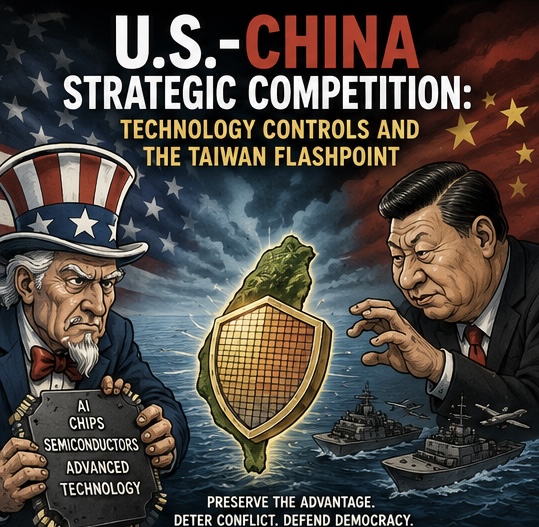
The strategic competition between the United States and the People’s Republic of China has increasingly centered on two interconnected issues: technological dominance and the future security of Taiwan. American policymakers view advanced semiconductors, artificial intelligence, and other dual use technologies as essential to maintaining military superiority, economic competitiveness, and geopolitical influence in the twenty first century. Export controls have therefore become a primary instrument for slowing China’s technological advancement and limiting the military applications of foreign innovation. Taiwan occupies a uniquely important position in this rivalry because it produces a majority of the world’s most advanced semiconductors. Its semiconductor industry creates strong incentives for all major powers to avoid military conflict due to the catastrophic economic consequences that would follow disruption. At the same time, Taiwan’s industrial importance also increases its strategic value to Beijing and intensifies cross-strait tensions.
American strategy must therefore integrate economic statecraft with military deterrence in a far more coordinated manner than in previous decades. Policymakers can no longer treat export controls, semiconductor resilience, and Taiwan security as separate policy domains because developments in one area directly affect the others. Restrictions on semiconductor manufacturing equipment and AI related technologies influence China’s military modernization efforts, while Taiwan’s security directly affects global technology supply chains. Recent bipartisan initiatives in Washington, including the proposed MATCH Act, demonstrate growing concern over enforcement gaps and diversion risks that allow restricted technologies to continue reaching Chinese firms through intermediary states. Simultaneously, the People’s Liberation Army has expanded military exercises around Taiwan and intensified pressure campaigns designed to weaken Taipei without triggering outright war. These parallel developments have elevated the Taiwan Strait into one of the most dangerous geopolitical flashpoints in the world.
A coherent long term strategy will require sustained allied coordination, credible deterrence, and resilient industrial planning. The United States retains substantial advantages in advanced semiconductor design, elite research institutions, and strategic alliances with major technology producing nations such as Japan and the Netherlands. However, these advantages could erode if enforcement remains inconsistent or if short term commercial interests override long term national security objectives. Washington must also continue strengthening Taiwan’s asymmetric defenses while improving contingency planning for semiconductor supply disruptions in the event of crisis. Effective policy will depend on balancing deterrence with restraint in order to reduce the risk of escalation while preserving regional stability. The outcome of this strategic competition will shape the future distribution of power in Asia and influence the structure of the global economy for decades to come.
Introduction and Strategic Context
The strategic rivalry between the United States and China increasingly revolves around technological leadership and military influence in the Indo-Pacific region. Semiconductors, artificial intelligence, quantum computing, and cyber capabilities are now viewed not only as commercial innovations but also as critical foundations of national power. Governments recognize that dominance in advanced computing will shape future military capabilities, economic productivity, and intelligence gathering. Taiwan stands at the center of this competition because it combines strategic geography with unparalleled semiconductor manufacturing capacity. The island serves as both a potential military flashpoint and a central node in global technology supply chains. As a result, any instability in the Taiwan Strait would have immediate geopolitical and economic consequences far beyond East Asia.
Over the past decade, a bipartisan consensus has emerged in Washington identifying the People’s Republic of China as America’s primary systemic rival. This consensus has produced a more confrontational approach toward trade policy, technology restrictions, military posture, and industrial planning. Despite broad agreement on the strategic challenge posed by Beijing, significant debate remains over how aggressively the United States should employ export controls and whether current deterrence policies toward Taiwan remain sufficient. Some policymakers argue that stronger restrictions are necessary to preserve American technological leadership and slow China’s military modernization. Others warn that overly broad controls could damage U.S. companies, encourage Chinese self sufficiency, and fragment the global economy. These debates have become increasingly urgent as China accelerates investments in advanced computing and artificial intelligence.
The relationship between technological competition and Taiwan security is deeply interconnected. Advanced semiconductors power emerging military applications such as autonomous systems, targeting platforms, intelligence analysis, and cyber warfare capabilities. At the same time, Taiwan’s dominance in chip production gives it immense strategic importance in global markets and military supply chains. A conflict in the Taiwan Strait would disrupt global manufacturing, damage financial markets, and create severe shortages across multiple industries ranging from defense production to consumer electronics. Policymakers must therefore approach technology competition and regional deterrence as components of a single strategic challenge rather than isolated issues. Failure to integrate these areas into a coherent policy framework could weaken deterrence and increase the risk of crisis escalation. The stakes involved extend far beyond bilateral tensions between Washington and Beijing and could reshape the international order itself.
Historical Background: Taiwan’s Separation from China and Japan
Taiwan’s modern political status emerged through centuries of imperial competition, colonial administration, and civil war. During the late seventeenth century, the Qing Dynasty established sustained control over Taiwan and gradually expanded imperial administration across the island. In 1885, Taiwan was formally designated as a province of the Qing Empire, reflecting its growing strategic importance. However, China’s defeat in the First Sino-Japanese War dramatically altered Taiwan’s trajectory. Under the 1895 Treaty of Shimonoseki, the Qing government ceded Taiwan and the Penghu Islands to Japan in perpetuity. This marked the beginning of fifty years of Japanese colonial rule that profoundly shaped Taiwan’s infrastructure, industrial development, and political evolution.
Japanese administration transformed Taiwan into one of the empire’s most economically developed colonies. Tokyo invested heavily in transportation networks, public health systems, agriculture, and industrial modernization. At the same time, colonial authorities pursued assimilation policies designed to integrate Taiwanese society into the broader Japanese imperial framework. While modernization improved infrastructure and economic productivity, colonial governance also imposed strict political controls and suppressed dissent. The legacy of Japanese rule left a lasting imprint on Taiwan’s institutional development and cultural identity. These historical experiences contributed to the emergence of a distinct political consciousness that differed significantly from mainland China. The island’s colonial history continues to influence debates surrounding identity and sovereignty in contemporary Taiwan.
Following Japan’s surrender in World War II, Taiwan was transferred to the administration of the Republic of China in 1945 under the broader Allied wartime framework established through the Cairo Declaration and Potsdam Proclamation. Only a few years later, the Chinese Civil War fundamentally altered the political landscape of East Asia. After Communist forces achieved victory on the mainland in 1949, the Republic of China government under Chiang Kai-shek retreated to Taiwan alongside millions of soldiers, officials, and civilians. The People’s Republic of China subsequently established control over mainland China while the Republic of China continued governing Taiwan and several nearby islands. Over the following decades, Taiwan evolved into a prosperous liberal democracy with a vibrant economy and increasingly distinct national identity. Beijing continues to regard Taiwan as a breakaway province destined for eventual reunification, while the United States maintains unofficial relations and defensive commitments under the Taiwan Relations Act. These layered historical developments remain central to understanding the persistence of cross-strait tensions and the broader geopolitical dispute surrounding Taiwan’s future.
Technology Competition and Export Controls
Background and Evolution
Since 2018, the United States has steadily expanded export controls targeting advanced semiconductors and related technologies in an effort to constrain China’s access to cutting edge computing capabilities. Policymakers argue that these measures are necessary to preserve American technological leadership and prevent foreign innovation from strengthening China’s military modernization programs. The controls have focused particularly on advanced AI chips, semiconductor manufacturing equipment, and electronic design automation software that remain critical to producing next generation processors. Washington has also expanded Entity List restrictions and implemented outbound investment screening mechanisms aimed at reducing the transfer of sensitive expertise. These measures reflect growing concern over intellectual property theft, military civil fusion policies, and China’s long term ambitions for technological self sufficiency. Export controls have therefore become a central pillar of America’s broader strategic competition with Beijing.
The Biden and Trump administrations both contributed to the expansion of technology restrictions, creating a rare area of bipartisan continuity in American foreign policy. Policymakers increasingly viewed semiconductors as strategic assets comparable to energy resources or critical infrastructure. Concerns intensified as artificial intelligence became more integrated into military planning, surveillance systems, cyber operations, and autonomous weapons development. Restrictions on advanced lithography equipment and high performance AI chips were specifically designed to slow China’s ability to produce cutting edge semiconductors domestically. American officials also pressured allied nations such as Japan and the Netherlands to align their export control regimes with Washington’s objectives. This multilateral approach reflected recognition that unilateral restrictions would prove ineffective if foreign suppliers continued filling gaps in the market. As a result, technology policy became deeply intertwined with alliance management and geopolitical strategy.
China responded by accelerating state backed investments in domestic semiconductor development and indigenous innovation programs. Beijing directed massive subsidies toward chip manufacturing, AI research, and advanced industrial initiatives under broader national development strategies. Chinese firms also sought to bypass restrictions through intermediary states, gray market procurement channels, and overseas partnerships that complicated enforcement efforts. Companies such as Huawei demonstrated that Chinese industry retained the capacity to innovate despite mounting restrictions, though major dependencies on foreign manufacturing equipment remained. These developments highlighted both the strengths and limitations of export controls as a strategic tool. While restrictions increased costs and slowed progress in some sectors, they did not eliminate China’s determination to achieve technological independence. The resulting dynamic has produced an escalating cycle of restrictions, adaptation, and countermeasures between the world’s two largest economies.
Current Dynamics
By 2026, enforcement challenges had become one of the central weaknesses of the American export control regime. Diversion through intermediary countries continued to create loopholes that enabled restricted technologies to reach Chinese firms despite official prohibitions. Limited end use verification mechanisms further complicated efforts to ensure compliance across fragmented global supply chains. Policymakers increasingly worried that inconsistent allied implementation undermined the overall effectiveness of the restrictions. These concerns contributed to bipartisan support for legislative initiatives such as the MATCH Act, which aimed to tighten controls on semiconductor manufacturing equipment and improve coordination with international partners. Supporters argued that stronger enforcement was necessary to preserve America’s compute advantage in artificial intelligence and advanced military applications. The debate surrounding these measures reflected growing anxiety about the pace of China’s technological advancement.
At the same time, American industry groups expressed concerns about the economic consequences of prolonged restrictions. Semiconductor companies depend heavily on access to international markets, including China, which remains one of the largest consumers of advanced technology products. Industry leaders warned that excessive controls could reduce revenues needed for research and development while encouraging foreign competitors to replace American suppliers. Some analysts also argued that broad restrictions risked accelerating China’s efforts to build entirely independent supply chains. This tension between national security priorities and commercial interests became a defining feature of the policy debate in Washington. Policymakers struggled to balance immediate security concerns with the long term health of the domestic technology sector. The resulting disagreements highlighted the complexity of sustaining a durable strategic approach toward China.
Technological competition also expanded beyond semiconductors into artificial intelligence, cybersecurity, quantum computing, and critical minerals essential for advanced manufacturing. Governments increasingly viewed control over emerging technologies as a decisive factor in future geopolitical influence. China’s progress in AI applications and military modernization intensified fears that the balance of power could shift if current trends continued unchecked. Meanwhile, allied nations faced pressure to align with American restrictions even when doing so risked economic retaliation from Beijing. This broader competition contributed to the fragmentation of global supply chains and the emergence of competing technological ecosystems. As economic interdependence weakened, geopolitical rivalry became more pronounced across multiple sectors. The technology struggle between Washington and Beijing therefore evolved into a defining feature of twenty first century international politics.
Analysis
The United States and its allies continue to possess significant structural advantages across critical technological chokepoints. American firms dominate advanced semiconductor design software, while allied nations maintain leadership in lithography equipment and specialized manufacturing tools. Elite research universities, venture capital ecosystems, and longstanding industrial partnerships also provide enduring advantages that China cannot easily replicate. These strengths give Washington substantial leverage in shaping the pace and direction of global technological development. However, preserving these advantages will require sustained investment, coordinated industrial policy, and long term political consistency. Technological leadership cannot be maintained through restrictions alone without parallel investments in domestic innovation and workforce development. The effectiveness of export controls therefore depends on both defensive and offensive strategic measures.
Despite their advantages, export controls face important structural limitations that complicate enforcement and long term effectiveness. Global semiconductor demand creates strong incentives for companies and intermediary actors to evade restrictions in pursuit of profit. Fragmented international supply chains make monitoring end users and enforcing compliance extremely difficult across multiple jurisdictions. Moreover, restrictions that are perceived as inconsistent or politically motivated can weaken allied cooperation and reduce policy credibility. China’s determination to achieve technological self sufficiency also means that export controls may ultimately accelerate indigenous innovation in some sectors. Policymakers must therefore recognize that restrictions are primarily tools for slowing technological advancement rather than permanently preventing it. Strategic patience and realistic expectations will be essential for evaluating policy outcomes.
The long term success of export controls should be measured through broader strategic indicators rather than short term economic disruption alone. Policymakers should assess whether restrictions meaningfully slow China’s progress in advanced semiconductor manufacturing, AI enabled military applications, and next generation computing capabilities. Evaluations should also consider whether the United States and its allies maintain a sustainable technological lead over time. Effective strategy requires balancing deterrence, innovation, industrial resilience, and alliance management simultaneously. Policies driven solely by commercial bargaining or political symbolism risk undermining long term coherence and credibility. A durable framework must integrate economic statecraft with national security planning in a coordinated and disciplined manner. The future balance of technological power will likely shape military and geopolitical competition for decades to come.
Taiwan Strait Tensions
Background
American policy toward Taiwan has historically rested on a delicate framework combining strategic ambiguity, arms sales, and the Taiwan Relations Act. This approach was designed to deter both Chinese aggression and unilateral Taiwanese declarations of formal independence. By leaving uncertain whether the United States would intervene militarily in a cross-strait conflict, policymakers hoped to preserve stability and discourage reckless behavior from all parties involved. For decades, this strategy contributed to a relatively stable balance despite periodic crises and military tensions. However, changing military realities and intensifying geopolitical rivalry have placed increasing strain on this longstanding framework. The rapid growth of Chinese military capabilities has altered strategic calculations throughout the Indo-Pacific region.
China has pursued an extensive military modernization campaign aimed at improving its ability to project power and challenge American influence in East Asia. The People’s Liberation Army invested heavily in naval expansion, missile systems, cyber warfare capabilities, and advanced air power designed to complicate U.S. intervention during a regional conflict. Beijing also intensified gray zone tactics including cyberattacks, maritime coercion, disinformation campaigns, and near daily military incursions around Taiwan. These activities sought to weaken Taiwan psychologically and strategically without crossing thresholds likely to trigger open war. Chinese leaders consistently framed reunification as a historic mission tied to national rejuvenation and sovereignty. This rhetoric increased concerns among regional actors that Beijing might eventually resort to force if peaceful unification remained unattainable.
Taiwan responded by strengthening democratic institutions, expanding defense reforms, and deepening unofficial ties with the United States and other regional partners. Public opinion on the island increasingly reflected a distinct Taiwanese identity separate from mainland China. At the same time, debates intensified within Taiwan over military readiness, defense spending, and the most effective strategies for deterrence. Many analysts advocated prioritizing asymmetric defense systems such as drones, sea mines, mobile missile launchers, and distributed command infrastructure. These systems were viewed as more practical for resisting a larger military power than expensive conventional platforms vulnerable to early destruction. Taiwan’s evolving defense posture therefore became closely linked to broader American and allied security planning in the Indo-Pacific. The island’s future emerged as a central test of regional deterrence credibility.
Current Dynamics
By 2026, military activity around Taiwan had reached some of the highest levels observed in decades. The People’s Liberation Army conducted large scale exercises simulating blockade operations, amphibious assaults, and joint force encirclement campaigns. Chinese aircraft and naval vessels regularly crossed previously observed operational boundaries near the island, increasing the risk of accidents and miscalculation. These exercises were widely interpreted as both preparation for potential conflict and coercive signaling aimed at intimidating Taiwan and its partners. At the same time, Beijing continued employing economic pressure and diplomatic isolation campaigns designed to weaken Taipei internationally. The cumulative effect of these actions intensified concerns about long term regional stability. Many analysts warned that repeated crises could eventually produce escalation through miscalculation rather than deliberate planning.
The United States responded by expanding military coordination with regional allies and approving additional arms packages for Taiwan. Security cooperation initiatives with Japan, Australia, and the Philippines became increasingly integrated into broader Indo-Pacific deterrence planning. Washington also encouraged Taiwan to accelerate defense reforms focused on asymmetric capabilities and rapid mobilization strategies. However, disagreements persisted regarding the pace of arms deliveries and Taiwan’s overall defense preparedness. Critics argued that bureaucratic delays and institutional resistance continued undermining effective implementation of defense reforms. Supporters of stronger deterrence measures warned that time increasingly favored Beijing as Chinese military capabilities expanded. These debates highlighted growing urgency within American strategic circles.
Strategic ambiguity also became a subject of intense debate within Washington policy circles. Some analysts argued that ambiguity no longer deterred Beijing effectively and instead encouraged increasingly aggressive coercive behavior. Advocates of greater strategic clarity believed explicit commitments could strengthen deterrence and reassure allies throughout the region. Others warned that abandoning ambiguity could provoke escalation, reduce diplomatic flexibility, and embolden pro independence forces within Taiwan. Policymakers therefore faced a difficult balancing act between deterrence credibility and escalation management. The challenge became even more complicated as technological competition and military rivalry continued to converge. Decisions surrounding Taiwan increasingly carried implications for the broader international order and the credibility of American alliances worldwide.
Analysis
The People’s Liberation Army’s modernization significantly altered the military balance in East Asia and increased the risks associated with crisis management. China’s growing missile capabilities, naval expansion, and anti access systems complicated traditional assumptions about American military superiority in the region. Even limited coercive scenarios such as blockades or precision strikes could impose severe economic and political costs without escalating immediately into full scale war. This ambiguity creates difficult decision making environments for both Washington and Taipei during periods of heightened tension. Miscalculation, accidental escalation, or political overreaction could rapidly transform a localized crisis into a broader regional conflict. Policymakers must therefore focus not only on deterrence but also on mechanisms for crisis communication and de escalation. The margin for strategic error has narrowed considerably.
Taiwan’s central role in global semiconductor production dramatically amplifies the stakes of any potential conflict. A disruption to Taiwanese manufacturing would affect industries ranging from defense production and telecommunications to consumer electronics and automotive manufacturing. The economic consequences would likely trigger worldwide market instability and accelerate broader geopolitical fragmentation. This reality contributes to the concept of Taiwan’s “silicon shield,” in which mutual economic dependence discourages military escalation. However, reliance on a single geographic concentration of advanced semiconductor production also creates significant vulnerabilities for the global economy. Governments increasingly recognize the need to diversify supply chains while preserving Taiwan’s deterrent value. Balancing these objectives remains one of the most difficult strategic challenges facing policymakers today.
Strategic ambiguity may no longer provide the same stabilizing benefits it once offered during earlier decades of relative military balance. China’s expanding capabilities and willingness to employ coercive tactics have changed the regional security environment substantially. Nevertheless, a sudden transition toward explicit security guarantees could also produce unintended consequences and heighten escalation risks. Policymakers must therefore calibrate deterrence measures carefully while maintaining diplomatic flexibility and alliance cohesion. Long term stability will depend on integrating military preparedness with economic resilience and technological coordination. The Taiwan issue can no longer be understood solely as a territorial dispute because it now sits at the center of global technological and geopolitical competition. How the United States and its allies manage this challenge will influence the future credibility of deterrence across the Indo-Pacific region.
Interconnections and Broader Implications
Taiwan’s semiconductor dominance, particularly through the role of Taiwan Semiconductor Manufacturing Company, creates a powerful form of strategic interdependence often described as the “silicon shield.” The island’s production of advanced chips is essential to the global economy and supports industries ranging from artificial intelligence to defense manufacturing. This interdependence increases the economic costs associated with any military conflict involving Taiwan. China itself depends heavily on semiconductor imports, meaning a major disruption would damage Beijing’s own economy alongside those of its rivals. As a result, Taiwan’s technological importance contributes to deterrence by raising the stakes for all major actors involved. However, this same importance also increases Taiwan’s value as a strategic target within the broader U.S.-China rivalry.
Efforts by the United States and allied nations to diversify semiconductor production create additional strategic complexity. Policies promoting domestic manufacturing and friend shoring seek to reduce dependence on Taiwan and improve long term supply chain resilience. While these initiatives strengthen economic security, they may also weaken some aspects of Taiwan’s deterrent value if the island becomes less central to global production networks over time. Policymakers must therefore balance resilience objectives with the need to preserve stability in the Taiwan Strait. Excessively rapid decoupling could unintentionally reduce incentives for restraint among competing powers. Conversely, insufficient diversification would leave the global economy dangerously vulnerable to disruption during crisis or conflict. These competing pressures illustrate the interconnected nature of economic and security strategy.
Technological competition also directly shapes future military balances in the Indo-Pacific region. Advances in artificial intelligence, autonomous systems, cyber operations, and advanced computing could dramatically improve operational planning, surveillance, and targeting capabilities. Chinese progress in these fields may strengthen coercive options against Taiwan and complicate American military intervention. At the same time, sustained U.S. and allied advantages in advanced technologies reinforce deterrence and military effectiveness. Allied coordination therefore remains essential not only for export controls but also for broader security cooperation frameworks such as AUKUS and the Quad. The strategic competition between Washington and Beijing increasingly involves both industrial policy and military positioning simultaneously. The outcome of this rivalry will influence global supply chains, alliance structures, and geopolitical alignments for years to come.
Policy Recommendations
1. Fortify Export Controls
The United States should continue strengthening export control mechanisms while prioritizing coordination with major allied technology producers. Measures such as the proposed MATCH Act should focus on closing diversion loopholes, improving end use verification, and tightening restrictions on critical semiconductor manufacturing equipment. Effective enforcement requires sustained cooperation with countries such as Japan and the Netherlands that control key industrial chokepoints. Policymakers should also ensure that restrictions remain targeted and strategically coherent rather than reactive or symbolic. Broad measures lacking clear objectives could damage allied cohesion and undermine long term effectiveness. Export controls must therefore be integrated into a broader industrial and geopolitical strategy.
Washington should simultaneously expand support for domestic semiconductor manufacturing and research initiatives. Investments in workforce development, advanced fabrication facilities, and scientific innovation are essential for maintaining long term competitiveness. The CHIPS and Science Act represented an important step toward strengthening domestic production capacity, but additional investment may still be necessary to preserve technological leadership. Policymakers should also encourage diversified supply chains among trusted partners in order to reduce dependence on concentrated production hubs. These efforts would strengthen resilience against future disruptions while supporting allied economic cooperation. Long term technological leadership depends on both restriction and innovation working together.
Policymakers must also establish clearer metrics for evaluating the effectiveness of export controls over time. Assessments should focus on whether restrictions meaningfully slow China’s progress in advanced semiconductor production and AI enabled military applications. Evaluations should also measure the durability of U.S. and allied technological advantages relative to Chinese capabilities. Transparent oversight mechanisms would help improve accountability and strategic consistency across administrations. Export controls should remain flexible enough to adapt to rapidly changing technological conditions while preserving long term strategic goals. Effective implementation will require balancing economic competitiveness with national security priorities in a disciplined and sustainable manner.
2. Strengthen Taiwan’s Deterrent Posture
The United States should accelerate the delivery of asymmetric defense systems designed to complicate potential Chinese military operations. Mobile missile systems, drones, sea mines, and distributed command infrastructure offer more survivable and cost effective deterrence options than many conventional platforms. Taiwan should also continue reforming reserve forces, civil defense programs, and military mobilization structures in order to improve resilience during crisis scenarios. Joint training initiatives between American and Taiwanese forces could strengthen operational coordination and preparedness. Policymakers increasingly argue that deterrence depends not only on military hardware but also on institutional readiness and societal resilience. These reforms would improve Taiwan’s ability to withstand coercive pressure and increase the potential costs of aggression.
Washington should also enhance contingency planning for semiconductor continuity during a potential cross-strait crisis. Governments and private industry stakeholders must coordinate emergency response frameworks capable of minimizing disruptions to critical technology supply chains. Strategic stockpiles, diversified sourcing agreements, and emergency manufacturing partnerships could help reduce global economic vulnerability. Allied governments should also conduct regular simulations and planning exercises focused on supply chain resilience and crisis management. These measures would improve preparedness while signaling seriousness regarding the defense of critical economic infrastructure. Semiconductor continuity planning is increasingly inseparable from broader national security strategy. The economic dimensions of deterrence now carry global significance.
American messaging toward Taiwan and China should remain firm but carefully calibrated. Policymakers should clearly communicate opposition to coercive actions while avoiding unnecessarily inflammatory rhetoric that could increase escalation risks. Diplomatic channels with Beijing remain essential for crisis communication and de escalation even amid strategic rivalry. The United States must balance deterrence credibility with the need to preserve flexibility during rapidly evolving situations. Regional allies should also be integrated more closely into deterrence planning and communication strategies. A stable deterrence framework depends on coordination, consistency, and disciplined signaling from all parties involved.
3. Integrate Technology and Security Strategy
Technology competition and Taiwan security should no longer be treated as separate policy categories within American strategic planning. Export controls, AI governance, cybersecurity, supply chain resilience, and military deterrence are now deeply interconnected components of a single geopolitical challenge. Policymakers should establish institutional mechanisms that improve coordination between economic agencies, defense planners, and diplomatic officials. This integrated approach would reduce policy fragmentation and strengthen long term strategic coherence. Coordinated planning is particularly important given the speed of technological change and the complexity of global supply chains. Effective competition with China requires sustained alignment across multiple areas of governance and national power.
The United States should also deepen cooperation with democratic allies on emerging technology standards and industrial resilience initiatives. Shared cybersecurity frameworks, joint AI research standards, and coordinated semiconductor investments would strengthen collective competitiveness. Partnerships with countries such as Japan, South Korea, Australia, and European allies remain critical for preserving technological advantages. Regional security initiatives such as AUKUS and the Quad should increasingly incorporate technological coordination alongside military planning. These alliances provide opportunities to distribute costs, reduce vulnerabilities, and reinforce deterrence credibility. Long term success will depend heavily on allied unity and strategic coordination.
Policymakers should additionally prioritize critical mineral security and advanced manufacturing supply chains. Rare earth elements and specialized industrial materials remain essential for semiconductor production, defense systems, and renewable energy technologies. Dependence on adversarial suppliers creates vulnerabilities that could undermine strategic resilience during periods of tension or conflict. Diversified sourcing agreements and domestic processing investments would reduce these risks over time. Governments must therefore view industrial policy as a central component of national security planning rather than merely an economic issue. The strategic competition with China increasingly spans every layer of technological and industrial infrastructure.
4. Institutionalize Long Term Strategic Competition
Congress and the executive branch should establish durable funding mechanisms and legal authorities capable of sustaining long term strategic competition with China. Short term political cycles often undermine policy consistency and weaken allied confidence in American commitments. Stable investment frameworks would improve planning for defense modernization, technological innovation, and industrial resilience initiatives. Policymakers should avoid subordinating national security priorities to temporary trade negotiations or immediate commercial pressures. Long term competition requires strategic patience and bipartisan continuity across multiple administrations. Institutional stability will therefore be essential for maintaining credibility and deterrence.
American leaders should also strengthen public understanding of the broader stakes involved in technological and geopolitical competition. Public support for industrial investment, alliance coordination, and defense planning will influence the sustainability of long term strategy. Policymakers must communicate that technological leadership now directly affects economic prosperity, military readiness, and national security. Transparent debate and oversight can improve accountability while reducing the risk of reactive policymaking driven by short term political pressures. Democratic resilience depends partly on maintaining informed public engagement regarding major strategic challenges. The competition with China will likely remain a defining issue of international politics for decades.
Finally, institutionalizing strategic competition requires balancing firmness with restraint. Policymakers should avoid framing rivalry with China as an inevitable military confrontation or civilizational conflict. Such rhetoric could reduce diplomatic flexibility and increase the risks of escalation or miscalculation. The objective of American strategy should remain deterrence, stability, and preservation of an open international order rather than uncontrolled confrontation. Effective competition depends on disciplined statecraft, allied coordination, and careful management of escalation risks. Long term stability in the Indo-Pacific will require sustained strategic consistency from all major actors involved.
Thanks for reading The Brooks Brief Substack! This post is public so feel free to share it.
The strategic competition between the United States and China increasingly revolves around the intersection of technological leadership and Taiwan’s future security. Export controls, semiconductor supply chains, artificial intelligence, and military deterrence are no longer isolated policy concerns but interconnected elements of a broader geopolitical struggle. Taiwan occupies a uniquely important position within this competition because its semiconductor industry underpins both the global economy and advanced military technologies. Any conflict in the Taiwan Strait would therefore carry consequences extending far beyond East Asia. Policymakers must recognize that economic resilience and military stability are now deeply intertwined. A fragmented or inconsistent strategy would weaken deterrence and increase global vulnerability.
The United States and its allies retain substantial advantages in advanced computing, industrial innovation, and alliance networks. However, these advantages cannot be taken for granted amid accelerating Chinese investment and technological adaptation. Effective strategy will require sustained coordination between export controls, domestic industrial policy, alliance management, and military preparedness. Policymakers must also remain realistic about the limitations of restrictions and recognize that long term competitiveness depends heavily on continued innovation and institutional resilience. The challenge is not simply to slow China’s advancement but to preserve a durable and adaptable strategic advantage over time. Success will depend on balancing deterrence, economic security, and diplomatic flexibility simultaneously.
Ultimately, the outcome of this competition will help shape the future international order for decades to come. Decisions made regarding Taiwan, semiconductors, and emerging technologies will influence global trade, military balances, and geopolitical alignments throughout the twenty first century. The stakes involved extend beyond bilateral rivalry and affect the broader stability of the Indo-Pacific region and the global economy itself. A coherent long term strategy must therefore combine credible deterrence with resilient supply chains, allied coordination, and disciplined diplomacy. Policymakers face a narrow path between complacency and escalation that will require careful management in the years ahead. The ability to preserve stability while maintaining technological leadership may become one of the defining tests of American statecraft in the modern era.
The modern political economy is increasingly defined by a widening disconnect between the wealthy elite and the broader population, marked by unprecedented levels of wealth concentration and diverging material interests. This divide is not merely economic but also institutional, cultural, and political, shaping how power is exercised and contested. While public discourse often frames inequality as a simple binary struggle between rich and poor, the reality is far more complex. Both groups are internally fragmented, with competing interests and identities that complicate any unified narrative of class conflict. These divisions weaken collective action and obscure the structural forces that sustain inequality.
At the same time, the asymmetry between concentrated capital and dispersed labor remains profound. Wealth translates into political influence, access to information, and the ability to shape the rules of economic engagement. Meanwhile, the majority navigates a system that often limits upward mobility and reinforces dependency on wage labor. The result is a paradox in which numerical superiority does not easily convert into political or economic power. This imbalance raises fundamental questions about the durability of democratic systems under conditions of extreme inequality.
The core thesis of this analysis is that fragmentation within both the rich and the poor coexists with a structural hierarchy that overwhelmingly favors capital. The poor are divided into tiers with distinct and often conflicting priorities, while the wealthy operate through competing but interconnected networks of influence. These dynamics complicate efforts to address inequality and challenge assumptions about inevitable class-based solidarity. Ultimately, the persistence of this disconnect forces a deeper inquiry into whether existing systems can reconcile efficiency, equity, and human dignity.
II. Stratification and Control of the Poor
The non-wealthy population is not a unified bloc but a stratified landscape composed of lower, middle, and upper-middle classes, each facing different economic pressures and aspirations. The lower class often contends with immediate survival concerns such as housing insecurity and unstable employment. The middle class, while more economically secure, is frequently burdened by debt and the fear of downward mobility. The upper-middle class, though relatively privileged, remains invested in preserving its status and differentiating itself from those below. These distinctions create competing priorities that hinder collective political action.
Mechanisms of division further entrench this fragmentation. Cultural, racial, regional, and partisan conflicts are often amplified through media and social platforms, redirecting attention away from shared economic concerns. Identity-based debates can overshadow structural critiques, making it more difficult to build broad coalitions around class issues. Economic dependence also plays a critical role, as individuals reliant on wages, credit, or employer-provided benefits may be less inclined to challenge the system that sustains them. These dynamics collectively reinforce a form of social control that operates without centralized coordination.
The outcome is a majority that often lacks the resources, information, and organizational capacity to mount sustained challenges to systemic inequality. Educational disparities and information asymmetries limit awareness of structural dynamics, while time and financial constraints restrict political engagement. At the same time, the system continues to extract labor value while treating workers as replaceable inputs. Automation, offshoring, and technological disruption further exacerbate this condition by reducing the long-term security of employment. This creates a cycle in which the majority remains essential to production yet increasingly vulnerable to obsolescence.
III. Fragmentation of the Rich: Not a Monolith
Contrary to popular perception, the wealthy elite is not a cohesive or unified group. Significant divisions exist between old money and new money, reflecting differences in origin, culture, and economic strategy. Established dynasties often derive wealth from traditional industries and long-standing institutions, while newer fortunes emerge from technology, finance, and entertainment sectors. These groups may have conflicting views on regulation, innovation, and globalization. Such tensions illustrate that elite interests are not always aligned in the short term.
Institutional differences also shape elite behavior. Corporate executives, shareholders, and institutional investors operate within frameworks that prioritize growth and profitability, often under public scrutiny. In contrast, family offices and private wealth structures may pursue long-term preservation strategies with less transparency. Competing industry lobbies further complicate the landscape, as sectors like technology, energy, and finance advocate for policies that serve their specific interests. These divisions can produce policy conflicts even among the most powerful actors.
Despite these differences, a set of shared priorities often leads to de facto coordination. Protection of property rights, access to global markets, and the maintenance of favorable tax and regulatory environments remain common goals. While some wealthy individuals may support redistributive policies or social initiatives, these actions are typically selective and do not fundamentally alter the broader system. In most cases, self-preservation and the stability of capital take precedence over transformative change. This duality of competition and alignment defines the political behavior of the elite.
IV. The Pronounced Divide: Empirical and Structural Reality
Empirical data underscores the scale of the divide between the rich and the rest of society. In the United States, the top 1 percent controls a substantial share of total household wealth, rivaling the combined holdings of the bottom 90 percent. The bottom half of the population holds only a minimal fraction of national wealth, highlighting the extent of concentration. The top 10 percent commands a dominant share, reinforcing the hierarchical nature of the economic system. These patterns are not isolated but reflect broader global trends of inequality.
Several structural forces have contributed to this concentration. Technological advancements have disproportionately rewarded those who own capital and intellectual property, increasing returns at the top. Financialization has shifted economic activity toward speculative and asset-based growth, further amplifying wealth disparities. Globalization has enabled capital to move freely across borders, often outpacing the regulatory capacity of individual states. Together, these dynamics have widened the gap between capital and labor despite overall economic expansion.
The implications of this divide extend beyond economics into the realm of political power. Concentrated wealth enables significant influence over policy, media narratives, and public discourse. Philanthropy, lobbying, and campaign financing provide additional channels through which elites can shape outcomes. Meanwhile, the fragmented nature of the majority limits its ability to counterbalance this influence. This structural imbalance raises concerns about the resilience of democratic institutions in the face of concentrated power.
V. Power Dynamics: Can Trillions of Dollars “Beat” the People?
The question of whether concentrated wealth can consistently override the will of the majority is central to understanding modern power dynamics. Financial resources allow elites to shape political agendas, fund campaigns, and influence regulatory frameworks. Historical evidence suggests that those with capital often play a decisive role in determining the rules under which markets and governments operate. This influence is not absolute but is frequently decisive in shaping outcomes. As a result, majority preferences may be filtered or diluted through institutional processes.
In addition to financial influence, the expansion of surveillance and security technologies has altered the balance of power. Governments and private entities increasingly invest in tools designed to monitor, predict, and manage social unrest. The growth of private security and military contractors introduces additional layers of flexibility and deniability in the exercise of force. These developments create a more complex landscape in which control is exercised through both overt and subtle means. The integration of technology into governance raises new questions about accountability and oversight.
However, the relationship between money, technology, and popular mobilization is not static. The same tools that enable surveillance also facilitate communication and organization among the public. Social media and digital platforms can accelerate the spread of information and coordinate large-scale movements. Yet these advantages are often counterbalanced by misinformation, fragmentation, and rapid response from authorities. The outcome is an ongoing contest in which neither side holds a permanent advantage, but structural conditions often favor those with greater resources.
VI. The Majority’s Capacity to Overcome the System
The capacity of the majority to challenge entrenched systems is constrained by several structural barriers. Economic dependency limits the ability of individuals to take risks or engage in sustained political action. Educational inequalities and information gaps reduce awareness of systemic issues and potential solutions. Collective-action problems further complicate efforts to organize across diverse groups with differing priorities. These factors contribute to a landscape in which dissatisfaction does not easily translate into coordinated change.
At the same time, certain conditions can create opportunities for transformation. Economic crises, political scandals, or shifts in elite consensus can open windows for reform. Numerical strength and moral arguments for fairness can also galvanize public support under the right circumstances. Instances of elite defection or internal conflict may weaken resistance to change. However, these moments are often temporary and require sustained effort to produce lasting outcomes.
A realistic assessment suggests that while change is possible, it is rarely straightforward or comprehensive. Historical patterns indicate that elites frequently adapt to challenges by employing a combination of concessions, co-optation, and resistance. Reforms may address specific issues without fundamentally altering underlying power structures. As a result, transformative change typically requires prolonged coordination and resilience among diverse groups. Without such cohesion, the system tends to revert to established patterns.
VII. Philosophical and Human Dimensions: Life Beyond Tedious Work
Beyond material considerations, the disconnect between the rich and the poor raises fundamental questions about the nature of human life and purpose. In systems heavily oriented toward profit and productivity, individuals may be valued primarily for their economic output. This perspective can reduce human experience to repetitive and transactional forms of labor. Over time, such conditions can erode a sense of meaning and fulfillment. The result is a broader cultural and psychological impact that extends beyond economic metrics.
Feelings of disposability and alienation are increasingly common in environments where job security is uncertain and work is highly specialized. The emphasis on efficiency often leaves little room for creativity, community engagement, or personal development. This dynamic can foster resentment and a sense of disconnection from both institutions and fellow citizens. Questions about the role of work in defining identity and worth become more pronounced under these conditions. These concerns highlight the limitations of purely economic approaches to policy.
Addressing these issues requires a broader ethical and philosophical framework. Policymakers and societies must consider whether existing systems adequately reflect values such as dignity, equity, and human flourishing. Reforms in taxation, education, and labor policy may help mitigate some disparities, but deeper questions remain about the structure of economic life. Balancing growth with well-being presents an ongoing challenge that cannot be resolved through technical solutions alone. This dimension underscores the importance of integrating moral considerations into political analysis.
Thanks for reading The Brooks Brief Substack! This post is public so feel free to share it.
The persistence of the disconnect between the rich and the poor carries significant risks for political and social stability. Rising inequality can fuel cynicism, populist movements, and declining trust in institutions. If large segments of the population perceive the system as unresponsive or unjust, the legitimacy of governance structures may erode. These dynamics can lead to increased polarization and volatility. In extreme cases, they may contribute to democratic backsliding or systemic crises.
At the same time, recognizing the complexity within both the rich and the poor offers pathways for more nuanced and effective responses. Moving beyond simplistic narratives allows for targeted policies that address specific structural issues. Potential approaches include recalibrating tax systems, strengthening public education, and promoting broader access to technological resources. Cultural shifts that emphasize collective well-being alongside individual success may also play a role. These strategies require careful design to balance competing priorities and avoid unintended consequences.
Ultimately, the question of whether democratic societies can meaningfully constrain concentrated power remains open. Advances in technology and productivity have created unprecedented potential for shared prosperity. Yet the continued existence of deep disparities challenges assumptions about progress and fairness. The resolution of this tension will shape not only economic outcomes but also the perceived value of human life within these systems. The stakes are high, and the path forward will depend on the ability to navigate complexity with clarity and purpose.
Narcissistic Ambition, Celebrity Oligarchy, and the Fragile Future of American Leadership
Executive Summary
The re-election of Donald J. Trump in 2024 represents more than a political comeback. It signals the consolidation of a new paradigm in American leadership defined by spectacle, personality dominance, and a reconfiguration of traditional political qualifications. This moment is not an isolated disruption but a structural shift in how candidates emerge, campaign, and govern. The Trump model demonstrates that media fluency and personal branding can rival, and in some cases replace, institutional experience and policy expertise. As a result, the presidency is increasingly perceived as accessible to individuals outside conventional political pipelines. This recalibration has profound implications for democratic stability and governance norms.
The long-term concern is not limited to Trump himself but to the behavioral precedent his success has legitimized. The normalization of a leadership style rooted in personal narrative over institutional responsibility creates incentives for future candidates to amplify these traits. This dynamic encourages the emergence of figures who may lack even the limited constraints that shaped Trump’s decision making. Over time, the threshold for presidential credibility risks being lowered further, privileging charisma over competence. This trajectory could fundamentally alter voter expectations and candidate selection processes. The cumulative effect is a political environment more susceptible to volatility and less anchored in governance expertise.
This analysis argues that Trump may ultimately be remembered as a transitional figure rather than the endpoint of this evolution. His presidency provides a proof of concept for a model that future leaders are likely to replicate and intensify. The risk lies in successors who embrace the performative aspects of leadership without retaining any pragmatic restraint. Such individuals may exhibit stronger narcissistic tendencies and weaker connections to institutional norms. In this context, the dangers extend beyond domestic politics into global stability. The central thesis is that the Trump precedent lowers barriers in ways that could produce more destabilizing leadership in the decades ahead.
I. Introduction: Trump as Catalyst, Not Culmination
The elections of 2016 and 2024 disrupted long-standing assumptions about presidential qualifications in the United States. Historically, candidates were expected to demonstrate experience in governance, whether through legislative service, executive leadership, or military command. Trump’s victories challenged this norm by prioritizing outsider status and media visibility over institutional credentials. This shift reflects broader dissatisfaction with traditional political elites and technocratic governance. Voters increasingly value perceived authenticity and disruption over continuity and expertise. As a result, the definition of political viability has expanded significantly.
The “Trump Precedent” can be understood as a framework in which celebrity, narrative control, and anti-establishment messaging substitute for traditional pathways to power. This model relies on the ability to command attention and shape public discourse through direct communication channels. It diminishes the role of party structures and policy vetting in candidate selection. Instead, it elevates personal brand strength as the primary determinant of electoral success. This transformation has implications for both major political parties, which must adapt to candidates who operate outside conventional constraints. The precedent also reshapes voter engagement by emphasizing emotional resonance over policy detail.
Looking ahead, the critical concern is not whether this model persists but how it evolves. The electoral cycles between 2028 and 2040 are likely to feature candidates who adopt and refine the Trump approach. These individuals may lack the contextual awareness or strategic pragmatism that influenced Trump’s decisions. Without these moderating factors, the risks to democratic stability could intensify. The introduction of multiple candidates operating under this paradigm may fragment political discourse further. This environment increases the likelihood of governance driven by competition in spectacle rather than substance.
II. The Proliferation of Grandiose Delusions Among Would-Be Presidents
Trump’s political success demonstrated that a candidate can frame the presidency as an extension of personal mythology. This approach transforms political campaigns into narratives of individual destiny and national salvation. Such framing resonates with voters who feel disconnected from institutional processes and seek transformative leadership. The appeal lies in its simplicity and emotional clarity rather than its policy coherence. As this model gains traction, more candidates are likely to adopt similar rhetorical strategies. This trend contributes to a shift in how leadership is conceptualized and communicated.
Evidence from recent electoral cycles indicates a growing number of non-traditional candidates entering the political arena. These include business figures, media personalities, and digital influencers who possess substantial public followings. Their campaigns often emphasize personal narratives over detailed policy platforms. This pattern reflects a broader cultural shift toward personality-driven engagement. The accessibility of social media amplifies these dynamics by enabling direct communication with large audiences. Consequently, the barriers to entry for presidential campaigns are lower than in previous eras.
The psychological dimension of this trend is equally significant. Grandiose self-perception can be politically advantageous when it aligns with voter dissatisfaction. However, the internalization of such narratives poses risks for governance. Leaders who believe their own mythologies may resist evidence-based decision making. This creates a disconnect between policy needs and leadership behavior. Over time, the normalization of such traits could reshape expectations for presidential conduct. By 2032, it is plausible that multiple candidates in each primary will adopt variations of this approach.
III. The Celebrity Oligarchy: An Unofficial Power Elite Enters the Arena
The concept of a “celebrity oligarchy” refers to a network of individuals whose influence derives from cultural visibility rather than formal authority. This group includes entertainers, athletes, technology leaders, and social media figures. Their ability to shape public opinion rivals that of traditional political actors. Trump’s rise to the presidency validated the political potential of this influence. It demonstrated that cultural capital can be converted into electoral power. This realization has implications for how elites engage with the political system.
Trump’s career trajectory serves as a proof of concept for this transformation. His background in entertainment and real estate provided a foundation for national recognition. This visibility translated into political viability without the need for traditional credentials. For peers within the celebrity ecosystem, this pathway represents a new form of upward mobility. Political office becomes an extension of brand development rather than a distinct career path. This shift blurs the boundaries between governance and entertainment.
Structural factors reinforce this trend. Fragmented media environments prioritize attention-grabbing content over substantive analysis. Algorithms amplify personalities who generate engagement, often favoring controversy and spectacle. Declining trust in institutions further reduces resistance to unconventional candidates. Together, these dynamics create a feedback loop that encourages celebrity participation in politics. The result is a system in which governance risks becoming secondary to performance. This evolution poses challenges for accountability and policy continuity.
IV. Narcissistic Ambition Meets Empathy Deficit: Global Distress as Collateral Damage
Narcissistic traits such as grandiosity, entitlement, and limited empathy can have significant implications when combined with executive authority. These characteristics influence decision making by prioritizing personal validation over collective outcomes. In a political context, this can lead to policies driven by short-term considerations. The concentration of power in the presidency amplifies these effects. When such traits are normalized, they can reshape expectations for leadership behavior. This dynamic has both domestic and international consequences.
Historical examples illustrate how leadership psychology can impact global stability. While Trump operated within institutional constraints, future leaders may encounter fewer limitations. The erosion of norms reduces the effectiveness of checks and balances. Leaders with stronger narcissistic tendencies may be less responsive to institutional feedback. This increases the likelihood of decisions that prioritize personal narratives over strategic considerations. The risks are particularly acute in areas such as foreign policy and economic strategy.
Potential scenarios highlight the scope of these challenges. Trade policies could be shaped by personal grievances rather than national interest. Alliances may be treated as transactional relationships subject to abrupt changes. Domestic polarization could intensify as leaders leverage division for political gain. In each case, the absence of empathy influences both tone and substance. The cumulative effect is an increase in systemic instability. Over time, these patterns could undermine both national cohesion and international cooperation.
V. Thesis Core: Why Trump May Not Be the Worst Leader in America’s Future
A key aspect of this analysis is the recognition that Trump possesses certain moderating characteristics. His background in business introduces a degree of pragmatism into decision making. Electoral considerations also create incentives for responsiveness to public opinion. These factors act as informal constraints on behavior. While imperfect, they differentiate Trump from potential successors. This distinction is critical for understanding future risks.
The concept of a degradation gradient helps frame this concern. As the Trump model is replicated, its constraints may weaken. Future candidates may embrace the performative aspects of leadership without adopting pragmatic considerations. This could result in a purer form of narcissistic governance. Without feedback mechanisms, decision making becomes more volatile. The absence of restraint increases the likelihood of extreme policy shifts.
Voter demand plays a central role in this process. The appeal of authenticity and anti-elite rhetoric remains strong across the political spectrum. This creates incentives for candidates to differentiate themselves through increasingly bold claims. The supply of such candidates is likely to grow in response. Over time, this dynamic could normalize more extreme forms of leadership behavior. In this context, Trump may be viewed as an early stage in a broader transformation rather than its endpoint.
VI. Implications for Democratic Resilience
The institutional implications of these trends are significant. Political parties may continue to lose influence as gatekeepers in candidate selection. Norms that once guided behavior could erode further under sustained pressure. Expertise-based governance may be devalued in favor of personality-driven leadership. These changes challenge the ability of institutions to maintain stability. The result is a more fragmented and unpredictable political system.
Globally, the effects extend beyond the United States. Allies may adopt more cautious strategies in response to perceived unpredictability. Adversaries could exploit perceived weaknesses in leadership consistency. Multilateral institutions may struggle to function effectively in this environment. The erosion of trust complicates coordination on issues such as security and climate policy. These dynamics contribute to a more uncertain international landscape.
Domestic safeguards remain a critical area of focus. Potential reforms include adjustments to campaign finance structures and media accountability mechanisms. Civic education initiatives could strengthen public understanding of governance processes. Efforts to rebuild institutional trust are essential for long-term stability. These measures must balance inclusivity with the need for competence. The goal is to enhance resilience without suppressing democratic participation.
Thanks for reading The Brooks Brief Substack! This post is public so feel free to share it.
The central conclusion of this analysis is that Trump represents the beginning of a broader transformation in American leadership. His presidency highlights the power of spectacle and personal branding in modern politics. However, it also exposes vulnerabilities in institutional frameworks. The normalization of this model creates opportunities for more extreme iterations. Addressing these risks requires proactive engagement from multiple stakeholders.
Think tanks, policymakers, and civil society organizations play a vital role in this process. The current period should be treated as an opportunity for diagnostic analysis and reform. Identifying weaknesses in existing systems is a prerequisite for effective intervention. Collaborative approaches can strengthen resilience across institutional levels. This includes both domestic and international partnerships.
Ultimately, the future of American leadership depends on cultural as well as structural factors. A political culture that values empathy, competence, and restraint is essential for stability. Encouraging these values requires sustained effort and public engagement. The challenge is not limited to any single individual but extends to the system as a whole. The ability to navigate this transition will shape the durability of democratic governance in the decades ahead.
This analysis is based on observable trends in political behavior, voter psychology, and institutional dynamics through 2026. It adopts a forward-looking perspective, treating current developments as indicators rather than conclusions. The framework emphasizes systemic risk over partisan interpretation. It is intended to support policy discussions in governmental, academic, and international contexts.
Why the Next American Conflict May Not Be the “Easy Win” Washington Expects
I. Introduction
In quiet policy rooms across Washington, the map of the Western Hemisphere is being reconsidered with renewed urgency. Among the familiar pressure points, Cuba stands out as both a lingering challenge and a perceived opportunity. Some policymakers increasingly view Havana not as a relic of Cold War rivalry but as unfinished business in a broader campaign to reshape regional order. The logic is simple on its surface: decades of economic pressure have weakened the island, and escalating tensions across the globe create an opening to act decisively. In this framing, Cuba becomes less a sovereign state and more a strategic problem waiting for resolution. Yet beneath this apparent clarity lies a far more complex and dangerous reality.
The United States has maintained pressure on Cuba for more than sixty years, creating conditions that many analysts now describe as unsustainable. This prolonged campaign has brought the Cuban state to the edge of systemic breakdown, making it appear vulnerable to external coercion. For some in Washington, this moment represents a rare convergence of weakness and proximity, a chance to achieve regime change with limited cost. However, this perception risks repeating a familiar pattern of strategic overconfidence. Recent experiences in Iran have demonstrated that military superiority does not guarantee political success. The assumption that Cuba would be a quick and decisive victory ignores the broader geopolitical environment.
The central argument of this analysis is that while Cuba may seem like an easy target in isolation, it does not exist in isolation. Any direct confrontation would almost certainly trigger involvement from major global powers, transforming a regional conflict into a wider geopolitical crisis. The United States may win the opening stages of a war, but the aftermath could prove far more difficult to control. Victory on the battlefield is only one phase of conflict, and often the least complicated. The real challenge lies in shaping a stable and favorable peace. In the case of Cuba, that challenge could expose the limits of American power in ways that policymakers have not fully accounted for.
II. The Embargo as a Permanent Punishment
The roots of the U.S. embargo against Cuba stretch back to the early 1960s, when Cold War tensions transformed the island into a frontline state in the ideological struggle between Washington and Moscow. Initially conceived as a targeted response to nationalization policies and alignment with the Soviet Union, the embargo evolved into one of the most comprehensive sanction regimes in modern history. Over time, it became institutionalized through legislation and reinforced by successive administrations. What began as a temporary measure hardened into a permanent fixture of U.S. foreign policy. Its longevity has outlasted the very geopolitical context that gave rise to it. Today, the embargo functions less as a tool of negotiation and more as a structural constraint on Cuba’s economic survival.
The humanitarian consequences of this policy have intensified in recent years, pushing the island toward a state of chronic crisis. Fuel shortages have disrupted transportation and electricity generation, leading to frequent blackouts and economic paralysis. Access to medicine has deteriorated, undermining a healthcare system once considered a regional model. Food scarcity has become increasingly visible, with long lines and rationing becoming part of daily life. These conditions are not episodic but systemic, reflecting a broader breakdown in the island’s economic infrastructure. The cumulative effect is a society under sustained pressure, where resilience is tested against material deprivation. For external observers, this deterioration reinforces the perception of a state nearing collapse.
Within Washington, these conditions are often interpreted through a strategic lens rather than a humanitarian one. Policymakers who favor a harder line argue that increased pressure could accelerate political change or even trigger regime collapse. Options under discussion range from tightening sanctions to more aggressive measures such as a naval blockade or limited military strikes. In this view, Cuba represents a low-cost opportunity to demonstrate resolve and achieve a long-standing objective. The logic mirrors earlier phases of containment policy, where incremental pressure was seen as a pathway to eventual transformation. Yet such calculations often underestimate the unintended consequences of escalation. To the hawks in Washington, Cuba looks like unfinished business. To the island itself, it looks like a trap waiting to spring.
III. The Military Calculus: America Wins Alone, But Cuba Will Not Fight Alone
From a purely rational standpoint, the United States possesses significant advantages over Cuba. Its air and naval forces dominate the region, supported by advanced surveillance and cyber capabilities. Geographic proximity further amplifies this advantage, allowing rapid deployment and sustained operations. In a scenario where Cuba stands alone, the outcome of a conventional conflict would be highly predictable. U.S. forces could neutralize Cuban defenses within days, if not hours. Military planners often view such scenarios as low-risk engagements with high probability of success. This perception contributes to the belief that intervention would be swift and decisive.
However, this analysis rests on a critical assumption that does not align with Cuban strategic doctrine. For decades, Havana has operated under the expectation that any conflict with the United States would involve external partners. This assumption is not theoretical but embedded in military planning and political signaling. Cuban leadership has consistently emphasized that it would not confront Washington in isolation. The island’s history of alliance with major powers reinforces this posture. As a result, any U.S. intervention would likely trigger a broader response. The battlefield would expand beyond the immediate theater of operations.
The involvement of external powers would fundamentally alter the nature of the conflict. What begins as a bilateral confrontation could quickly evolve into a proxy struggle between global rivals. This escalation would introduce new domains of warfare, including cyber operations, economic retaliation, and strategic signaling. The risks of miscalculation would increase significantly, thereby raising the likelihood of unintended escalation. In such a scenario, the initial military advantage of the United States could be offset by the complexity of a multi-actor conflict. The question would no longer be whether the U.S. can defeat Cuba, but whether it can manage the consequences of a wider conflict.
IV. Russia and China Step In: The Alliance Lifeline
Recent developments suggest that Russia is already positioning itself as a critical lifeline for Cuba. Moscow has delivered oil shipments to the island, framing these actions as humanitarian assistance in response to the ongoing energy crisis. While modest in scale, these deliveries carry significant symbolic weight. They signal a willingness to challenge U.S. pressure in its own hemisphere. For Russia, the cost of such support is relatively low compared to the strategic benefits. By sustaining Cuba, Moscow can complicate U.S. decision-making and stretch its resources. This approach reflects a broader strategy of indirect competition rather than direct confrontation.
Beyond symbolism, Russia’s involvement introduces a layer of strategic ambiguity. Energy shipments can easily evolve into broader forms of support, including military cooperation or intelligence sharing. Even limited assistance can have outsized effects in a constrained environment like Cuba. The presence of Russian assets, however small, would act as a deterrent against unilateral U.S. action. It would also create the risk of direct confrontation between nuclear-armed powers. This dynamic transforms Cuba from a local issue into a global flashpoint. The island becomes a lever in a much larger geopolitical contest.
Meanwhile, China plays a quieter but potentially more consequential role. Beijing has invested in infrastructure projects across Cuba, deepening economic ties and expanding its influence. Reports of intelligence cooperation suggest that China views the island as a strategic vantage point near the United States. In a conflict scenario, these relationships could translate into logistical support, cyber capabilities, or even limited basing access. Such involvement would complicate any U.S. operation across multiple domains. Cuba alone is a speed bump. Cuba backed by Russia and China is a tripwire.
V. The Iran Hangover: Global Loss of Faith in American Leadership
Recent U.S. actions in Iran have left a lasting impression on the international community. What was intended as a demonstration of strength has instead raised questions about strategic coherence and long-term planning. Allies have expressed concern about the unpredictability of American decision-making. Adversaries have taken note of perceived inconsistencies and gaps in execution. The result is a credibility deficit that transcends any single conflict. This erosion of trust complicates future efforts to build coalitions or secure international support.
In Europe, governments have shown increasing reluctance to align with U.S. military initiatives that lack clear objectives or exit strategies. Across Latin America, skepticism runs even deeper, shaped by historical memories of intervention and regime change. Many countries in the Global South view potential action against Cuba as a continuation of past patterns rather than a response to present conditions. This perception limits Washington’s ability to frame its actions as legitimate or necessary. Without broad support, any intervention risks isolation on the world stage. The diplomatic costs could rival or exceed the military ones.
This environment emboldens rival powers to challenge U.S. initiatives more directly. If Washington appears unable to sustain long-term commitments, adversaries may calculate that they can outlast or outmaneuver it. In the context of Cuba, this dynamic increases the likelihood of external intervention. Russia and China may see an opportunity to test American resolve in a controlled setting. The stakes are not limited to the island itself but extend to the broader balance of power. A misstep in Cuba could reverberate across multiple regions. Iran’s shadow looms large over any future decision.
VI. The Regime-Change Trap: Why Cuba Is Harder Than It Looks
At first glance, Cuba appears to be a straightforward target for regime change. Its leadership is aging, its economy is struggling, and its military capabilities are limited. These factors create an impression of vulnerability that is difficult to ignore. For policymakers seeking a decisive victory, the appeal is clear. A successful intervention could be framed as a restoration of stability and democracy. It could also serve as a signal of renewed American strength. However, this surface-level assessment overlooks deeper structural realities.
Cuban society is shaped by decades of resistance and national pride, rooted in defiance of external pressure. This identity is not confined to political elites but extends across broad segments of the population. Historical experiences, including the Bay of Pigs Invasion, have reinforced the narrative of resistance against foreign intervention. The government has also invested heavily in asymmetric defense strategies, including guerrilla tactics and decentralized resistance. These preparations are designed to complicate any occupation or stabilization effort. Even if the Cuban administration were removed, the conditions for prolonged unrest would remain.
The challenge of post-conflict stabilization presents an even greater obstacle. Installing a new government in the aftermath of intervention would require significant resources and sustained commitment. Economic reconstruction would be complicated by existing shortages and damaged infrastructure. Public perception of a U.S.-backed administration could fuel resentment and undermine legitimacy. These factors create a high risk of prolonged instability. Toppling the regime may take weeks. Stabilizing the island could take decades and cost far more in blood, treasure, and prestige than any war-game scenario suggests.
VII. Strategic Implications: The Next American Conflict in Context
A conflict involving Cuba would have implications far beyond the Caribbean. It would divert attention and resources from other strategic priorities, particularly in the Indo-Pacific region. U.S. forces are already managing multiple commitments, and a wider conflict would strain readiness and logistics. The risk of simultaneous crises would increase, creating vulnerabilities in other theaters. Adversaries could exploit this distraction to advance their own interests. The results would be a more fragmented and unstable global security environment.
Domestically, the appetite for another military intervention is limited. Public opinion reflects fatigue after years of conflict in various regions. Congressional support for new conflict is uncertain, especially in the absence of a clear and compelling rationale. The experience of Iran has reinforced concerns about escalation and unintended consequences. These factors limit the political space available to policymakers. Any decision to act would face significant scrutiny and opposition. The domestic dimension cannot be separated from the strategic calculus.
In the long term, escalation over Cuba could accelerate the emergence of a multipolar world order. Efforts to assert dominance may instead highlight the limits of American influence. Rival powers would have the opportunity to expand their roles and challenge existing structures. This shift wouldn’t happen overnight; instead, it would unfold gradually through a series of interconnected developments. Cuba has the potential to catalyze significant shifts in global alignment. The implications would extend well beyond the immediate conflict. What begins as a regional issue could reshape the international system.
Thanks for reading The Brooks Brief Substack! This post is public so feel free to share it.
The suffering of the Cuban people under decades of economic pressure is undeniable. It creates a moral and strategic dilemma for policymakers in Washington. The temptation to resolve this situation through decisive action is strong. Yet the lessons of recent history caution against simplistic solutions. Military force alone cannot address the complexities of political and social dynamics. Any intervention would carry risks that extend far beyond the initial objectives. The costs of miscalculation could be profound.
An easy victory against Cuba is an illusion once the broader geopolitical context is taken into account. The involvement of external powers would transform the conflict into something far more dangerous. The challenges of post-conflict stabilization would further complicate any success on the battlefield. These realities demand a more measured and realistic approach. Policymakers must weigh not only the potential gains but also the long-term consequences. Strategic patience may prove more effective than rapid escalation.
The question that remains is whether Washington will internalize these lessons. Iran’s experience serves as a cautionary tale, highlighting the stark contrast between intentions and actual outcomes. As tensions persist, the decisions made in the coming years will significantly influence the future of American foreign policy. Will leaders choose restraint and recalibration, or will they repeat patterns of overreach? The answer will determine not only the fate of Cuba but also the trajectory of U.S. influence on the global stage.
Reassessing America’s Global Mandate in an Era of Domestic Fragility
I. Introduction: The Pendulum of American Engagement
In 2026, the United States finds itself at a strategic inflection point shaped less by external threats than by internal strain. The nation’s fiscal position, marked by nearly $39 trillion in national debt and rapidly rising borrowing costs, has shifted the policy conversation from long-term sustainability to immediate risk management. Interest payments alone are projected to consume roughly 14 percent of federal outlays, signaling a structural constraint on future governance capacity (Joint Economic Committee). At the same time, households face a persistent affordability crisis, and public systems such as healthcare remain under pressure. These converging realities suggest that the traditional model of expansive global engagement may be increasingly misaligned with domestic needs. The central thesis of this analysis is that the United States must transition from a “Global Policeman” to a “Domestic Architect” to preserve long-term stability.
This shift raises a fundamental question about the purpose of American power in the modern era. Historically, U.S. foreign policy has been justified as both a moral project and a strategic necessity, aimed at exporting democratic governance and market capitalism. However, the domestic consequences of sustained global intervention are becoming more visible and politically salient. As economic pressures intensify at home, the legitimacy of outward-facing commitments is increasingly contested. Citizens are beginning to question whether national resources are being allocated in alignment with their lived realities. This tension defines the current moment and frames the broader policy debate.
The pendulum of American engagement has always oscillated between internationalism and restraint. In previous eras, external crises often pulled the United States outward, reinforcing its role as a global leader. Today, however, the internal condition of the country is exerting a countervailing force, pulling attention inward. This recalibration does not necessarily imply isolationism but rather a reordering of priorities. The challenge lies in balancing global responsibilities with domestic renewal. Without such balance, the credibility and sustainability of American leadership may erode from within.
II. Historical Context: The Ghost of Isolationism
The period following World War I provides a useful parallel for understanding contemporary debates. After the devastation of the conflict, the American public embraced a “Return to Normalcy,” prioritizing domestic growth and stability over international commitments. This sentiment manifested in the rejection of the League of Nations and a broader skepticism toward entangling alliances. Policymakers at the time believed that geographic distance and economic strength would insulate the United States from global instability. The focus shifted toward industrial expansion, protective tariffs, and internal development. This inward turn reflected both war fatigue and a belief in self-sufficiency.
However, the 1930s exposed the limitations of this approach. The Neutrality Acts, designed to keep the United States out of foreign conflicts, proved inadequate in the face of rising authoritarian aggression. As global tensions escalated, the assumption that America could remain detached became increasingly untenable. Economic interdependence and ideological conflict eventually drew the nation back into global affairs. The failure of neutrality underscored the risks of disengagement in an interconnected world. It also laid the groundwork for a more interventionist posture in the decades that followed.
The conclusion of World War II marked a decisive shift towards sustained global leadership. The United States emerged as a hegemonic power, shaping international institutions and security architectures. This role was justified by both strategic necessity and ideological ambition during the Cold War. Over time, however, the costs of maintaining this position have grown more complex and diffuse. In the post-Cold War era, interventions have often produced mixed outcomes, raising questions about their long-term value. The historical lesson is not that engagement is inherently flawed, but that its benefits must be continuously reassessed. In 2026, the question is whether the returns on global leadership are diminishing relative to its domestic costs.
III. The Crisis at Home: Debt, Health, and Survival
The most immediate constraint on American policy is fiscal. As of early 2026, the national debt has reached approximately $38.9 trillion, with projections indicating continued rapid growth (Joint Economic Committee). Interest payments are rising alongside the debt, consuming an increasing share of federal resources and limiting discretionary spending. This dynamic creates a feedback loop in which borrowing begets more borrowing, reducing fiscal flexibility. The Congressional Budget Office projects deficits of nearly $1.9 trillion for the year, reinforcing concerns about long-term sustainability (House Budget Committee). What was once framed as a future challenge is now an immediate policy constraint. The debt burden is no longer abstract; it directly shapes the government’s ability to respond to domestic needs.
Parallel to this fiscal strain is a widening affordability gap affecting millions of Americans. Housing costs have outpaced wage growth in many regions, while energy prices remain volatile due to global supply disruptions. This divergence erodes purchasing power and contributes to economic insecurity. Middle- and working-class households are increasingly forced to allocate a larger share of income to basic necessities. The result is a gradual decline in living standards despite nominal economic growth. This disconnect between macroeconomic indicators and lived experience fuels political dissatisfaction.
The healthcare system represents another critical pressure point. Despite high levels of spending, health outcomes in the United States lag behind those of other developed nations. Federal efforts to contain costs have often resulted in reduced access for vulnerable populations. Cuts to social safety net programs exacerbate these challenges, particularly for low-income communities. The combination of rising costs and uneven access creates a system that is both expensive and inefficient. In this context, domestic policy appears reactive rather than strategic. Addressing these systemic issues requires sustained investment and policy coherence, both of which are constrained by current fiscal realities.
IV. Domestic Policy Critique: “The Big Beautiful Bill”
Recent legislative efforts, particularly the so-called “One Big Beautiful Bill Act,” illustrate the disconnect between policy design and domestic need. The bill’s tax provisions disproportionately benefit high-income households, with estimates suggesting that over 70 percent of tax cuts accrue to the top 1 percent. This distribution raises concerns about equity and fiscal responsibility. By reducing federal revenue, the policy contributes to an already significant budget deficit. The resulting gap, estimated at approximately $1 trillion, must be financed through additional borrowing. This approach amplifies existing fiscal pressures rather than alleviating them.
At the same time, the bill includes substantial reductions in social spending, particularly in programs such as Medicaid. These cuts, projected to total hundreds of billions of dollars, disproportionately affect lower-income Americans. The juxtaposition of tax relief for the wealthy and reduced support for the vulnerable creates a stark policy imbalance. This dynamic undermines social cohesion and exacerbates inequality. It also raises questions about the priorities guiding federal decision-making. In a period of domestic strain, such trade-offs are particularly consequential.
The broader implication is that internal stability is being compromised by policy choices that favor capital accumulation over public welfare. Economic inequality is not merely a social issue but a strategic one, affecting national resilience and cohesion. When large segments of the population experience declining living standards, the legitimacy of institutions is called into question. This erosion of trust can have far-reaching political consequences. A sustainable policy framework must balance growth with distribution, ensuring that economic gains are broadly shared. Without such balance, domestic fragility will continue to deepen.
V. Foreign Entanglements: The Oil Factor in Venezuela and Iran
Recent geopolitical developments highlight the risks associated with continued foreign entanglements. Escalations involving oil-producing regions, including Venezuela and Iran, have introduced new volatility into global energy markets. Actions such as the seizure of oil assets and heightened military tensions have disrupted supply chains. These disruptions have immediate economic consequences, particularly for energy-dependent economies. The interconnected nature of global markets means that foreign policy decisions can quickly translate into domestic price shocks. In this context, the costs of intervention are not confined to distant regions.
One of the most significant risks is the potential disruption of critical chokepoints such as the Strait of Hormuz. This narrow passage is a key conduit for global oil shipments, and any closure would have far-reaching implications. Even the threat of disruption can drive up prices, contributing to volatility in energy markets. In 2026, such tensions have already contributed to rising fuel costs, with gasoline prices exceeding $4.00 per gallon in many areas. This “gasoline shock” acts as a regressive tax on consumers, disproportionately affecting lower-income households. The domestic impact of foreign instability is thus both immediate and unevenly distributed.
The broader lesson is that interventionist policies often produce unintended economic consequences. Efforts to influence political outcomes in Caracas or Tehran may be motivated by strategic considerations, but they also carry tangible costs for American consumers. These costs are often diffuse and difficult to attribute, making them less visible in policy debates. However, their cumulative effect is significant, contributing to economic fragility at home. As domestic pressures mount, the tolerance for such trade-offs is likely to decline. A more restrained approach to foreign policy may therefore be both economically and politically prudent.
Thanks for reading The Brooks Brief Substack! This post is public so feel free to share it.
The United States cannot sustain its role as a global leader if its domestic foundation continues to weaken. Rising debt, increasing inequality, and strained public systems collectively undermine national resilience. These challenges are not isolated but interconnected, reinforcing one another in ways that complicate policy responses. Addressing them requires a reallocation of resources and a redefinition of priorities. The current trajectory, characterized by high spending abroad and constrained investment at home, is increasingly difficult to justify. A recalibration is necessary to restore balance.
A new realism in American policy would prioritize domestic renewal as the basis for international credibility. Investments in infrastructure, healthcare, and education would strengthen the underlying capacity of the nation. At the same time, a more selective approach to foreign engagement would reduce exposure to external shocks. This does not imply disengagement but rather strategic restraint. By aligning policy with domestic needs, the United States can enhance both its stability and its global standing. The goal is not to retreat from the world but to engage it from a position of strength.
Ultimately, true American power is derived from the well-being of its people. A prosperous, healthy, and stable population is the foundation of sustainable leadership. Military strength and diplomatic influence are important, but they cannot substitute for domestic vitality. In an era of increasing complexity and constraint, the case for prioritizing the homefront is both practical and necessary. The path forward requires difficult choices, but the alternative is a gradual erosion of capacity and credibility. The time for reassessment is not in the future; it is now.
Security Imperatives, Historical Grievances, or Domestic Diversion?
I. Introduction
The current conflict between the United States and Iran began with a dramatic escalation on February 28, 2026, when coordinated U.S. and Israeli airstrikes targeted Iranian nuclear facilities, military infrastructure, and senior leadership figures. What was initially framed as a limited operation quickly expanded into sustained military engagement, marking the most direct confrontation between the two states in decades. Now in its third week, the conflict has already reshaped regional security dynamics and heightened fears of broader escalation across the Middle East. The strikes were presented as preemptive actions designed to neutralize imminent threats, yet their scale and scope suggest a deeper strategic calculation. The rapid transition from targeted strikes to open warfare has prompted significant debate among analysts and policymakers. Understanding the true motivations behind this decision is essential for evaluating both its legitimacy and its long-term consequences.
Official U.S. justifications emphasize the urgency of halting Iran’s advancing nuclear program and responding to longstanding patterns of hostility. These explanations draw on a well-established narrative that frames Iran as a destabilizing actor whose ambitions threaten both regional allies and global security. However, a more comprehensive political analysis must move beyond surface-level justifications to examine the broader context in which the decision was made. This includes decades of unresolved tensions, shifting geopolitical alignments, and the domestic political environment within the United States. Increasingly, alternative explanations have entered public discourse, including theories that the timing of the war may have intersected with domestic political pressures. Among these is the claim that the conflict diverted attention from renewed scrutiny surrounding the release of Jeffrey Epstein-related documents. While such claims remain contested, their circulation underscores the complexity of modern foreign policy decision-making.
This article argues that the U.S. decision to enter direct conflict with Iran was likely driven by a convergence of factors rather than a single overriding motive. Genuine security concerns, particularly regarding nuclear proliferation, appear to have played a central role in shaping the administration’s rationale. At the same time, the historical trajectory of U.S.-Iran relations created a permissive environment in which military action could be justified and politically sustained. The emergence of the Epstein files distraction theory highlights how domestic considerations may intersect with foreign policy choices, whether intentionally or coincidentally. Rather than dismissing any one explanation outright, a nuanced analysis must consider how these dynamics interact. Wars are rarely the product of singular causes, and this conflict is no exception. By examining these overlapping motivations, the article seeks to provide a clearer understanding of the strategic logic behind the 2026 Iran war.
The Brooks Brief Substack is a reader-supported publication. To receive new posts and support my work, consider becoming a free or paid subscriber.
II. Historical Context: Enduring U.S.-Iran Antagonism as a Foundational Driver
The roots of U.S.-Iran hostility stretch back to the 1979 Iranian Revolution, which transformed Iran from a key American ally into an ideological adversary. The subsequent hostage crisis at the U.S. embassy in Tehran cemented a narrative of mutual distrust that has persisted for decades. In the years that followed, successive U.S. administrations imposed layers of economic sanctions aimed at constraining Iran’s regional influence and nuclear ambitions. Iran, in turn, cultivated a network of proxy militias across the Middle East, many of which have engaged in attacks against U.S. forces and allies. These dynamics created a cycle of escalation that periodically flared into crisis without ever reaching full-scale war. The 2020 assassination of Iranian General Qasem Soleimani marked one such turning point, demonstrating both the willingness and the capability of the United States to target high-level Iranian figures. Each of these events contributed to a deeply entrenched adversarial relationship.
More recent developments further intensified this longstanding tension. Iran experienced widespread internal protests during 2025 and early 2026, with reports of violent crackdowns drawing international condemnation. At the same time, diplomatic efforts to revive nuclear agreements stalled in multiple venues, including negotiations in Oman and Geneva. The failure of these talks reinforced perceptions within Washington that Iran was unwilling to compromise on its nuclear program. Political rhetoric in the United States also hardened, with leadership framing Iran as an existential threat to regional stability and global security. This narrative resonated with key allies, particularly Israel, which has consistently viewed Iran’s capabilities as a direct danger. The convergence of internal instability within Iran and external diplomatic deadlock created a volatile backdrop. In such an environment, the threshold for military action became significantly lower.
Taken together, these historical and recent developments suggest that the 2026 conflict was not an abrupt departure from prior policy but rather the culmination of long-standing antagonism. Decades of sanctions, proxy conflicts, and failed negotiations built a foundation in which confrontation appeared increasingly inevitable. For policymakers, the idea of finishing the job after years of containment may have gained appeal as opportunities for diplomacy diminished. This perspective frames the war as a strategic endpoint in a prolonged struggle rather than a reactive measure to immediate threats. It also helps explain why public and political support for the strikes materialized relatively quickly. The historical narrative provided a ready-made justification that resonated across partisan lines. In this sense, the enduring U.S.-Iran rivalry served as both context and catalyst for the decision to go to war.
3D VFX rendering of satellite attacking another satellite with laser weapon in space on Earth planet orbit. Escalation of political conflict and arms race in cosmos. Nuclear war and. 3D Illustration. Asset ID: 2434412411
III. Nuclear Weapons Program: The Official Security Rationale
Central to the official justification for the war is Iran’s advancing nuclear program, which has long been a focal point of international concern. Following the collapse or erosion of earlier agreements, Iran reportedly increased uranium enrichment levels to thresholds approaching weapons-grade capability. Intelligence assessments suggested that the country was nearing a breakout point, at which it could rapidly produce a nuclear weapon if it chose to do so. These developments were interpreted by U.S. and Israeli officials as a narrowing window for preventive action. The prospect of a nuclear-armed Iran raised fears of regional proliferation, as neighboring states might pursue their own nuclear capabilities in response. This scenario, in turn, could destabilize the broader global nonproliferation regime. Against this backdrop, military intervention was framed as a necessary step to avert a more catastrophic future.
U.S. leadership emphasized that the strikes were designed not only to disrupt nuclear facilities but also to degrade Iran’s ability to deliver such weapons. Targeting missile sites, air defenses, and command structures aimed to reduce the overall effectiveness of Iran’s military capabilities. Public statements characterized the operation as a preventive measure that may have averted a larger and more destructive conflict. The argument that inaction could have led to a global crisis, potentially escalating into a wider war, was a key component of the administration’s messaging. This framing aligned with longstanding U.S. policy positions that prioritize preventing nuclear proliferation, particularly among adversarial states. It also reinforced the perception that the United States was acting in defense of both national and international security interests. For many observers, this rationale remains the most credible explanation for the decision to strike.
However, questions remain about whether all diplomatic avenues were fully exhausted before resorting to military action. Critics argue that the nuclear issue may have served as a convenient justification for broader strategic objectives, including weakening or destabilizing the Iranian regime. The history of negotiations suggests that while progress was limited, opportunities for continued engagement may still have existed. Additionally, the emphasis on immediate threat raises questions about the accuracy and interpretation of intelligence assessments. In previous conflicts, similar claims have been scrutinized in hindsight, leading to debates about the reliability of such justifications. This does not necessarily invalidate the security concerns but highlights the need for careful evaluation. The nuclear rationale, while grounded in real risks, may represent only one layer of a more complex decision-making process.
Warsaw, Poland – Feb 10, 2026: A smartphone screen displays a tweet featuring images of Donald Trump and Jeffrey Epstein, highlighting controversy surrounding their alleged connections. Stock Photo Id: 2737213997
IV. Alternative Explanation: Distraction from the Epstein Files Scandal
The timing of the conflict has given rise to an alternative explanation centered on domestic political dynamics. In early 2026, there was a surge in public and congressional pressure to release additional documents related to the Jeffrey Epstein case, including potential client lists and high-profile associations. This issue generated significant media attention and political tension, with calls for transparency coming from multiple quarters. Shortly after the onset of military operations against Iran, coverage of the Epstein files diminished sharply as news cycles shifted to the unfolding war. This abrupt change in focus has fueled speculation that the conflict may have served, at least in part, as a distraction from domestic controversies. While such claims are difficult to substantiate definitively, their persistence reflects broader concerns about the intersection of foreign policy and domestic politics. The correlation between the two events has become a subject of ongoing debate.
Some political figures and commentators have explicitly raised this possibility, suggesting that wartime conditions can suppress or redirect public scrutiny. Statements highlighting the inability of military action to resolve domestic accountability issues have resonated with segments of the public. Additionally, media analyses have noted how large-scale conflicts often dominate attention, crowding out other significant stories. This phenomenon is not unique to the current situation and has been observed in previous periods of crisis. The amplification of the distraction narrative by various actors, including foreign information networks, further complicates the picture. Such amplification may serve strategic purposes for adversaries seeking to undermine confidence in U.S. leadership. As a result, distinguishing between genuine critique and coordinated messaging becomes increasingly challenging.
A balanced assessment must acknowledge both the limitations and the implications of the distraction hypothesis. There is no conclusive evidence that the war was initiated primarily to divert attention from the Epstein files. At the same time, the possibility that domestic considerations influenced the timing or framing of the conflict cannot be entirely dismissed. Political leaders have historically benefited from rally-around-the-flag effects during periods of external threat, which can temporarily boost public support and reduce internal dissent. Whether this dynamic was intentionally leveraged in this case remains an open question. The theory’s persistence underscores a broader skepticism toward official narratives in an era of heightened political polarization. Ultimately, it serves as a reminder that foreign policy decisions often operate within a complex domestic context.
V. Intersecting Factors and Broader Geopolitical Analysis
The role of regional allies, particularly Israel, has been central to the unfolding conflict. Joint operations underscore the alignment of strategic interests between the United States and its partners in countering Iran’s capabilities. The potential threat to critical waterways, such as the Strait of Hormuz, adds another layer of urgency, given its importance to global energy markets. Disruptions in this area could have far-reaching economic consequences, affecting oil prices and international trade. Regional actors are closely monitoring the situation, with some providing tacit support while others call for de-escalation. The involvement of multiple stakeholders increases the risk of the conflict expanding beyond its current scope. This interconnectedness highlights the complexity of managing both military and diplomatic dimensions simultaneously.
Domestic political considerations within the United States also play a significant role in shaping the trajectory of the conflict. Public opinion has shown signs of initial consolidation in support of the operation, consistent with historical patterns during the early stages of military engagement. Congressional dynamics reflect a mix of bipartisan backing and cautious skepticism regarding long-term objectives. Statements predicting a relatively short timeline for the conflict have influenced public expectations, though such projections remain uncertain. The administration must balance the need to maintain support with the realities of a potentially prolonged engagement. As the conflict continues, shifts in public sentiment could alter the political calculation. This interplay between domestic and international factors underscores the multifaceted nature of decision-making.
Comparisons to past U.S. interventions provide a useful framework for understanding the current situation. The 2003 Iraq War, for example, involved a combination of security concerns, historical grievances, and political considerations that collectively shaped policy decisions. In both cases, the presence of multiple overlapping motives complicates efforts to identify a single cause. Critics warn of similar risks, including mission creep and unintended consequences that extend beyond initial objectives. The potential for Iranian retaliation through proxy networks or asymmetric tactics adds to these concerns. Long-term consequences, both regionally and domestically, remain a significant possibility. These parallels serve as a cautionary reminder of the challenges inherent in military intervention.
Thanks for reading The Brooks Brief Substack! This post is public so feel free to share it.
The U.S. entry into the 2026 Iran conflict appears to be the result of multiple converging factors rather than a single decisive cause. Historical hostility provided a durable foundation that made confrontation more conceivable, while nuclear proliferation concerns offered a compelling and widely accepted justification. At the same time, the emergence of the Epstein files distraction theory highlights how domestic political dynamics may intersect with foreign policy decisions. Even if not a primary driver, such considerations can influence timing, messaging, and public perception. This layered understanding reflects the reality that major geopolitical actions are rarely driven by isolated motives. Instead, they emerge from a complex interplay of strategic, historical, and political forces. Recognizing this complexity is essential for informed analysis.
Looking ahead, several policy implications warrant careful consideration. Transparency regarding both the objectives of the war and unresolved domestic issues remains critical for maintaining public trust. Congressional oversight will play a key role in ensuring accountability and clarifying long-term strategy. At the same time, efforts to identify diplomatic off-ramps should be prioritized to prevent further escalation. The costs of prolonged conflict, both human and economic, could prove substantial if left unchecked. Engaging with allies and international institutions may help facilitate pathways toward de-escalation. These steps are necessary to balance immediate security concerns with broader strategic stability.
In an era characterized by rapid information flows and competing narratives, distinguishing between genuine national security imperatives and potential political maneuvering is increasingly challenging. The 2026 Iran war exemplifies this difficulty, as multiple explanations coexist and interact within public discourse. Analysts and policymakers must navigate this complex environment with both rigor and skepticism. Ensuring that decisions are grounded in credible evidence and transparent reasoning is vital for sustaining democratic accountability. Ultimately, the ability to critically assess such conflicts will shape not only public understanding but also future policy outcomes.
Historically Possible, Presently Unlikely but Never Impossible
Executive Summary
The historical record demonstrates that attacks on American soil are not theoretical possibilities but documented realities. Two defining moments in modern U.S. history, the attack on Pearl Harbor in 1941 and the terrorist attacks of September 11, 2001, illustrate that determined adversaries can penetrate perceived layers of security when complacency, intelligence gaps, or strategic surprise converge. Both events occurred during periods when American leaders and citizens believed the homeland was largely insulated from catastrophic attack. These episodes underscore that geography and military strength alone cannot guarantee immunity from determined adversaries.
Since the attacks of September 11, the United States has undertaken sweeping reforms in intelligence coordination, homeland security infrastructure, aviation safety, and counterterrorism operations. These investments have significantly reduced the likelihood of a large scale attack on the U.S. homeland in the near term. Intelligence agencies now share information more efficiently, aviation security has become substantially more rigorous, and global counterterror operations disrupt potential threats well before they reach American territory. The resulting architecture has created a layered defense system that makes the success of a large coordinated attack far more difficult than in the past.
Despite these improvements, the possibility of a future attack cannot be dismissed. Strategic history repeatedly shows that adversaries adapt, technology evolves, and political attention cycles fluctuate. The central conclusion of this analysis is that an attack on American soil remains possible but unlikely within the next five to ten years under current threat trajectories. Policymakers must therefore balance vigilance with restraint, prioritizing intelligence, resilience, and preparedness without over militarizing domestic space or allowing fear driven spending to distort national security priorities.
I. Introduction
For the purposes of this policy brief, the phrase attack on American soil refers to kinetic or destructive strikes carried out within the fifty states, U.S. territories, or major military installations located under American jurisdiction. This definition includes acts of terrorism, missile strikes, air attacks, or other forms of violent disruption that directly target the U.S. homeland. It excludes operations directed against American military facilities located overseas, which operate in very different strategic environments. By narrowing the scope in this way, the analysis focuses specifically on threats to the continental United States and its territories.
The analytical framework used here distinguishes between possibility and probability. Possibility refers to whether an event can occur under realistic conditions, while probability measures the relative likelihood of that event happening within a defined time horizon. National security debates often conflate these concepts, producing either alarmism or complacency. An attack on American soil is clearly possible, as historical precedent confirms. The more relevant strategic question is whether such an event is probable in the current geopolitical environment.
This framework also separates potential adversaries into three broad categories. State actors include established governments with military capabilities such as China, Russia, Iran, or North Korea. Non state actors include terrorist networks or ideological movements capable of transnational operations. Hybrid threats involve collaboration or indirect support between states and non state groups. The thesis of this analysis is that while history demonstrates the feasibility of attacks on American territory, contemporary defensive capabilities, geography, and deterrence dynamics make their recurrence unlikely in the near term. Nonetheless, geography and technology alone cannot guarantee permanent immunity from strategic surprise.
II. Historical Precedents: Proof of Concept
The attack on Pearl Harbor on December 7, 1941 remains the most dramatic example of a foreign military strike against U.S. territory. Japanese naval forces launched a surprise carrier based air assault against the American Pacific Fleet stationed in Hawaii. The operation revealed significant intelligence failures and a widespread underestimation of Japan’s ability to project power across the Pacific Ocean. In a matter of hours, the attack killed 2,403 Americans and severely damaged U.S. naval capabilities in the region. The strategic shock transformed American public opinion and propelled the United States fully into World War II.
While the United States ultimately recovered and prevailed in the war, the attack exposed the vulnerability of even a powerful nation during periods of peacetime complacency. American leaders had access to fragments of intelligence indicating rising tensions and potential hostile action. However, the signals were not fully synthesized or interpreted in time to prevent the strike. The lesson was clear that adversaries willing to undertake bold operations can exploit gaps between intelligence warning and operational readiness. Pearl Harbor therefore stands as proof that distance and military strength do not eliminate the risk of surprise.
The terrorist attacks of September 11, 2001 provided a second demonstration of this vulnerability in a very different strategic context. The perpetrators were not a conventional military force but a transnational terrorist network known as al Qaeda. Nineteen hijackers exploited the openness of the American civil aviation system and turned commercial aircraft into weapons. Their targets included symbols of American economic and political power in New York, Washington, and Pennsylvania. Nearly three thousand people were killed in the deadliest terrorist attack in modern history.
These attacks showed that asymmetric tactics can bypass traditional defenses designed to stop conventional military threats. The perpetrators required limited resources but relied heavily on planning, coordination, and psychological impact. The shock of the attacks triggered a profound transformation of American security institutions. The federal government created the Department of Homeland Security, established the Transportation Security Administration, and expanded global counterterrorism operations. September 11 therefore reinforced the central lesson first illustrated by Pearl Harbor: homeland security failures often stem from adversaries exploiting unexpected methods rather than overwhelming force.
Across both historical cases, several patterns emerge. Each attack occurred during a period when Americans believed their homeland was largely insulated from catastrophic external violence. Adversaries succeeded by carefully studying American systems and identifying points of vulnerability before defenses adapted. Neither operation required a full scale invasion or prolonged military occupation. Instead, a single dramatic strike was sufficient to produce immense strategic and psychological effects.
III. Post 9/11 Defenses: Why Recurrence Is Unlikely
In the aftermath of the September 11 attacks, the United States undertook one of the most extensive homeland security overhauls in its history. Intelligence agencies dramatically improved information sharing through institutions such as the National Counterterrorism Center and numerous state level fusion centers. These structures allow federal, state, and local authorities to pool data that might previously have remained isolated within bureaucratic silos. At the same time, U.S. counterterrorism operations abroad have disrupted extremist organizations before they could organize large scale plots targeting the homeland. This layered intelligence network has significantly reduced the probability that a major coordinated attack could proceed undetected.
Military and defensive capabilities have also evolved considerably. Aerospace defense networks coordinated through the North American Aerospace Defense Command now provide rapid detection and response to airborne threats. Missile defense systems and maritime surveillance add additional layers of protection against unconventional strikes. Rapid response air and naval assets can intercept suspicious activity near American territorial waters or airspace. These measures collectively make it far more difficult for hostile actors to mount a surprise attack similar in scale to historical precedents.
The private sector has also become an integral component of homeland defense. Critical infrastructure operators in sectors such as energy, transportation, telecommunications, and finance have adopted cybersecurity protocols and resilience planning measures. Federal agencies collaborate with corporations to protect supply chains and monitor vulnerabilities that could be exploited by hostile actors. This public private partnership reflects the reality that modern infrastructure systems are largely operated outside direct government control. As a result, security improvements now extend well beyond traditional military or intelligence institutions.
Geography continues to reinforce these institutional improvements. The United States is separated from potential adversaries by two vast oceans and is bordered by generally friendly neighbors. These natural barriers complicate the logistics of conventional military operations directed at the homeland. Even sophisticated state actors would face enormous operational challenges attempting to launch a large scale strike without triggering detection or retaliation. Geography therefore continues to provide a structural advantage in homeland defense.
Finally, the deterrence calculus faced by state adversaries further reduces the probability of an attack. Nations such as China, Russia, Iran, and North Korea understand that a direct strike on American territory would carry severe military and economic consequences. The risk of escalation into broader conflict acts as a powerful constraint on strategic decision making. As a result, these states tend to prefer gray zone tactics such as cyber operations, disinformation campaigns, or regional proxy conflicts. These methods allow them to challenge U.S. interests without crossing the threshold that could provoke a direct retaliatory response.
IV. Enduring Vulnerabilities: Why an Attack Remains Possible
Despite the improvements in homeland security since 2001, vulnerabilities remain inherent in any open society. Emerging technologies are creating new avenues through which hostile actors might attempt to circumvent traditional defenses. Small unmanned aerial systems, for example, can be purchased commercially and modified for destructive purposes. These devices are difficult to detect with conventional radar systems and can be deployed with relatively little logistical preparation. As technology continues to evolve, the accessibility of such tools may expand the range of actors capable of attempting attacks.
Critical infrastructure systems also present potential targets. Ports, electrical grids, rail networks, and other logistical nodes are essential to national economic functioning. Many of these systems rely on complex supply chains and decentralized management structures that can create vulnerabilities to sabotage or insider threats. A determined adversary might attempt to exploit such weaknesses through infiltration or cyber physical manipulation. Even limited disruptions to these systems could generate significant economic or psychological consequences.
Another category of risk involves the possibility of limited strikes sponsored or supported by hostile states. Emerging military technologies such as hypersonic missiles or electromagnetic pulse concepts have prompted discussions about their potential use in surprise attacks. While such scenarios remain unlikely due to escalation risks, they cannot be entirely dismissed. Strategic planners must therefore consider how adversaries might attempt to exploit novel technologies to achieve disproportionate effects. History shows that innovation often reshapes the strategic landscape in unexpected ways.
Intelligence gaps also remain an enduring challenge. Even the most advanced surveillance systems and analytical frameworks cannot guarantee perfect foresight. Adversaries can employ denial and deception strategies to conceal planning activities until late stages of execution. Political cycles and budgetary pressures may also erode preparedness over time if attention shifts to other priorities. Maintaining effective intelligence capabilities therefore requires sustained commitment across administrations.
Finally, the possibility of black swan scenarios must be acknowledged. Hybrid cooperation between state and non state actors could create complex threats that fall outside existing detection frameworks. Rapid advances in artificial intelligence and autonomous systems might produce new categories of weapons with unpredictable strategic implications. In addition, foreign actors may attempt to exploit domestic polarization or social divisions in the aftermath of a disruptive event. Such dynamics could amplify the impact of even a relatively small attack by generating political instability or public panic.
V. Iran and Allied Proxy Threats: Possibility Versus Probability
Iran represents a distinct category of potential adversary because it blends state capabilities with a large network of allied proxy groups. Unlike traditional nation states that rely primarily on conventional military power, Tehran has historically emphasized asymmetric warfare through organizations such as Hezbollah, various Iraqi militias, and other regional partners. This strategy allows Iran to project influence while maintaining a degree of plausible deniability. From a homeland security perspective, the key analytical question is not simply whether Iran could strike the United States directly, but whether it might employ indirect methods or proxies to attempt such an attack. The combination of state resources and non state operational networks creates a more complex threat profile than conventional interstate conflict.
Direct Iranian military strikes on the continental United States remain extremely unlikely under current strategic conditions. Iran’s missile and drone capabilities are largely designed for regional operations within the Middle East rather than long distance intercontinental attacks. Most of its weapons systems are optimized to target regional adversaries such as Israel or U.S. military installations in the Persian Gulf. Analysts note that Iranian retaliation scenarios typically focus on American forces stationed abroad rather than the U.S. homeland itself. The escalation risks associated with attacking the United States directly would almost certainly trigger overwhelming military retaliation and potentially threaten the survival of the Iranian regime. (CSIS)
Nevertheless, Iran retains alternative avenues for indirect retaliation that could theoretically extend to American territory. Tehran has long relied on covert networks, intelligence operatives, and proxy groups to conduct operations abroad. Security analysts warn that Iran or its aligned organizations could attempt symbolic attacks on U.S. cities, infrastructure hubs, or military related facilities as a form of strategic messaging. Potential targets might include transportation systems, energy infrastructure, or prominent metropolitan centers with high political visibility. While there is no evidence of imminent organized attacks on the U.S. homeland, analysts acknowledge that the evolving geopolitical climate increases the plausibility of limited or opportunistic incidents. (ECHO Intelligence)
Cyber warfare represents another domain in which Iran could attempt to strike American interests without launching a conventional attack. Iranian state sponsored hackers and affiliated cyber militias have developed capabilities targeting financial systems, energy infrastructure, and government networks. In the event of a major confrontation, cyber operations could serve as a low cost method of retaliation designed to disrupt services or generate public anxiety. Such attacks would likely aim at psychological and economic effects rather than physical destruction. Experts note that Iran has steadily expanded these capabilities over the past decade as part of its asymmetric warfare doctrine. (HugeDomains)
Recent intelligence reporting also illustrates the distinction between possibility and probability in this context. Law enforcement alerts occasionally surface regarding hypothetical scenarios such as drone launches from offshore vessels targeting the U.S. West Coast. However, federal officials have emphasized that many such warnings are precautionary and not based on credible operational intelligence. In several cases, officials concluded that no immediate or verified threat existed despite public speculation about potential attacks. (Reuters) This pattern reflects a broader reality in national security analysis where potential threat pathways must be evaluated even when their likelihood remains low.
The overall assessment is therefore consistent with the broader conclusions of this policy brief. Iran and its allied networks possess the theoretical capability to attempt attacks against American interests, including potentially within the United States itself. However, the strategic incentives for doing so remain weak due to the overwhelming retaliatory consequences such an action would provoke. As a result, the probability of a large scale Iranian attack on U.S. soil in the near term remains low. The more realistic risk lies in indirect actions such as cyber operations, isolated proxy plots, or symbolic disruptions intended to generate psychological impact rather than decisive military effect.
VI. Risk Assessment Matrix
Evaluating homeland security risks requires weighing both the likelihood of an event and the magnitude of its potential consequences. Within the next five years, the probability of a conventional military attack by a state actor against American territory remains extremely low. Such an operation would require extensive preparation and would almost certainly provoke overwhelming retaliation. The strategic costs would therefore far outweigh any plausible benefits for potential adversaries. Deterrence and geographic barriers together make this scenario improbable.
The probability of a non state or hybrid attack is somewhat higher but still relatively limited. Terrorist organizations continue to express intent to target the United States, yet their operational capabilities have been significantly degraded by global counterterrorism efforts. Intelligence cooperation among allied nations further complicates their ability to plan large scale operations. While isolated or small scale incidents cannot be ruled out, the chances of a coordinated mass casualty attack comparable to September 11 remain relatively low under current conditions.
Impact, however, remains high across nearly all potential scenarios. Even a limited attack on critical infrastructure or symbolic targets could produce widespread economic disruption and psychological shock. Modern societies depend heavily on interconnected systems that can amplify the consequences of localized disruptions. For this reason, policymakers must evaluate risk not only in terms of probability but also potential national impact. The severity of consequences justifies continued vigilance even when the likelihood of occurrence is modest.
The net judgment emerging from this analysis can therefore be summarized succinctly. The probability of a large scale attack on American soil is lower today than it was prior to 2001. Nevertheless, the possibility of such an event can never be reduced to zero. Strategic planning must therefore operate within the framework of unlikely but not impossible.
VII. Policy Recommendations
The first priority for policymakers should be sustaining intelligence capabilities and overseas disruption efforts. Effective homeland defense often begins far beyond national borders, where potential threats can be identified and neutralized before they mature. Intelligence agencies must continue refining data sharing practices while respecting legal and civil liberty constraints. At the same time, policymakers should avoid expanding security missions into routine domestic policing roles. Preserving the balance between security and civil liberties remains essential to maintaining democratic legitimacy.
A second priority involves strengthening national resilience. Infrastructure systems should be hardened against disruption through redundancy, modernization, and improved emergency response planning. Public private partnerships are critical in this effort because many essential services are operated by private companies rather than government agencies. Investment in resilient energy grids, transportation networks, and communication systems can reduce the potential impact of an attack. A society capable of rapid recovery is inherently more difficult for adversaries to intimidate.
Modernizing homeland air and missile defense systems also deserves attention. Emerging technologies may eventually allow adversaries to bypass traditional detection systems. Investing in new sensor networks and defensive capabilities can help close these potential gaps. However, policymakers should avoid adopting a fortress mentality that isolates the United States from global engagement. Effective defense must be integrated with diplomatic, economic, and alliance based strategies.
Another critical recommendation is maintaining bipartisan consensus around national security priorities. Political polarization can undermine coherent threat assessment and strategic planning. Security institutions function most effectively when their assessments are trusted across the political spectrum. Leaders from both parties should therefore resist the temptation to politicize intelligence findings or exaggerate threats for short term political gain. Stability in security policy strengthens both deterrence and public confidence.
Finally, government agencies should regularly conduct red team exercises designed to simulate surprise attacks on the scale of Pearl Harbor or September 11. These exercises challenge assumptions and expose weaknesses in planning frameworks. By deliberately imagining unlikely but plausible scenarios, security institutions can identify vulnerabilities before adversaries exploit them. Continuous testing and adaptation are essential components of long term strategic preparedness.
Thanks for reading The Brooks Brief Substack! This post is public so feel free to share it.
History provides two powerful reminders that attacks on American soil are not merely hypothetical. The destruction at Pearl Harbor in 1941 and the devastation of September 11, 2001 demonstrate that determined adversaries can overcome perceived security barriers when strategic surprise is achieved. These events shattered the illusion that the American homeland was naturally insulated from catastrophic violence. They also revealed the consequences of underestimating adversaries or overlooking emerging threats.
At the same time, the security environment today differs significantly from the conditions that allowed those attacks to occur. The United States has invested heavily in intelligence integration, homeland defense systems, and international counterterrorism cooperation. Geographic advantages and strong deterrence relationships further reduce the incentives for state adversaries to attempt direct attacks on the homeland. These factors collectively make a similar event unlikely in the foreseeable future.
Yet the concept of strategic surprise remains central to the study of national security. Technological change, adaptive adversaries, and shifting political priorities can alter threat landscapes in unpredictable ways. Policymakers must therefore avoid both complacency and alarmism when assessing homeland security risks. The prudent posture is sustained vigilance combined with measured investment in resilience and preparedness. If history ever echoes the shocks of the past, the United States must be ready to respond with resilience rather than surprise.
In August 1945, as the Second World War reached its devastating conclusion, the world witnessed a moment that revealed an enduring truth about war. After years of destruction, massive casualties, and the use of unprecedented weapons, Imperial Japan formally surrendered to the Allied powers aboard the USS Missouri. The ceremony symbolized the end of the deadliest conflict in human history, yet the moment itself was not a battlefield victory but a diplomatic act. Documents were signed, terms were agreed upon, and representatives of nations acknowledged the conditions that would define the postwar order. Even after millions had perished and entire cities had been destroyed, the conflict concluded through negotiation. This moment illustrates a recurring pattern in global affairs: wars may begin with weapons, but they end with dialogue.
The enduring power of negotiations in resolving conflicts is often overlooked in modern geopolitical discourse. Public narratives frequently glorify battlefield triumphs and decisive military campaigns while ignoring the diplomatic processes that ultimately conclude hostilities. In reality, diplomacy is not a sign of weakness but the final and unavoidable mechanism that produces peace. Military force may shape the conditions of a conflict, but it rarely provides a lasting resolution without negotiated agreements. From ancient wars to modern interventions, political leaders eventually find themselves sitting across from adversaries to define the terms of peace. The negotiation table therefore represents the true endpoint of nearly every war.
Understanding this dynamic is particularly important when examining how wars affect societies. Armed conflicts rarely impose equal costs on all participants. Civilians often experience the greatest suffering through death, displacement, economic collapse, and long term instability. Meanwhile, national leaders and political elites typically remain insulated from the immediate dangers of the battlefield. This imbalance raises important questions about how conflicts are initiated and prolonged. Examining historical examples, authoritarian regimes such as North Korea, and the decision making patterns of democratic governments including the United States reveals a troubling pattern in which ordinary people bear the burden of wars that leaders ultimately resolve through diplomacy.
II. The Inevitability of Diplomacy: All Wars End Through Negotiation
History provides overwhelming evidence that wars ultimately conclude through negotiated settlements. The Napoleonic Wars, which engulfed Europe in the early nineteenth century, ended not simply through battlefield victories but through diplomatic agreements such as the Congress of Vienna. This gathering of European powers reshaped the continent’s political order after years of conflict. Similarly, the First World War concluded with the Treaty of Versailles, which formalized the conditions under which Germany would cease hostilities. Even the Second World War, often portrayed as a war of total victory, ended through formal surrender agreements that established postwar political and economic arrangements. These examples illustrate that even the most destructive conflicts eventually require diplomatic frameworks to transition from war to peace.
More recent conflicts demonstrate the same pattern. The Vietnam War concluded with the Paris Peace Accords after years of military stalemate and mounting casualties. In Afghanistan, the United States ultimately engaged in negotiations with the Taliban, culminating in the Doha Agreement after two decades of fighting. These cases show that military superiority alone rarely produces stable outcomes. Instead, prolonged wars often drain national resources, weaken domestic political support, and produce strategic stalemates. At that stage, leaders increasingly recognize that continued fighting offers diminishing returns. Negotiations then become the practical mechanism through which adversaries define the terms of disengagement.
International relations theory helps explain why diplomacy becomes inevitable in prolonged conflicts. Realist scholars argue that states pursue power and security but must eventually adapt when the costs of war exceed potential gains. Liberal theorists emphasize the role of institutions, communication, and economic interdependence in facilitating negotiated outcomes. Both perspectives converge on a similar conclusion: war is rarely sustainable indefinitely. As military campaigns consume financial resources, political capital, and human lives, leaders face pressure to pursue diplomatic alternatives. Negotiation therefore emerges not as an idealistic aspiration but as a strategic necessity when conflicts reach their limits.
Despite this historical reality, political rhetoric often promotes the myth of total victory. Leaders sometimes portray wars as struggles that can only end with absolute defeat of the adversary. While such rhetoric may mobilize domestic support, it rarely reflects the practical realities of conflict resolution. Even unconditional surrenders involve negotiated details regarding governance, reconstruction, and security arrangements. Without these agreements, conflicts risk devolving into endless cycles of violence. Recognizing the inevitability of diplomacy can therefore help policymakers pursue negotiations earlier rather than after years of unnecessary destruction.
III. The Disproportionate Suffering: Civilians vs. Insulated Leaders
While wars are often justified in the language of national interest or ideological struggle, the human costs are rarely distributed equally. Civilians frequently experience the most severe consequences of armed conflict. Cities become battlefields, infrastructure collapses, and millions of people are displaced from their homes. Families lose livelihoods as economies deteriorate under the strain of prolonged warfare. In many cases, entire generations grow up amid instability and trauma that persists long after peace agreements are signed. These realities highlight a fundamental asymmetry between those who decide to wage wars and those who endure their consequences.
The leadership structures that guide many conflicts further deepen this disparity. Political elites and military commanders typically operate far from the front lines, making strategic decisions within secure government facilities. While soldiers confront immediate dangers on the battlefield, national leaders remain protected by layers of security and institutional authority. This separation allows policymakers to pursue military strategies without directly experiencing the risks faced by those carrying them out. The resulting distance between decision makers and ordinary citizens can prolong conflicts that might otherwise face stronger political scrutiny.
North Korea provides a striking example of this dynamic. The ruling elite surrounding the Kim regime maintains a lifestyle of relative privilege despite the country’s severe economic hardships. Reports frequently describe luxurious residences in Pyongyang, access to imported goods, and exclusive amenities reserved for the political leadership. Meanwhile, large segments of the population struggle with food shortages, restricted freedoms, and the long term consequences of international sanctions. This stark contrast illustrates how authoritarian leaders can sustain confrontational foreign policies without personally experiencing the suffering those policies create. The concentration of power allows the regime to prioritize political survival over the well being of the broader population.
Cultural narratives have long recognized this imbalance between rulers and the people they govern. In the film Troy, the character Achilles observes, “A king that fights his own battles, wouldn’t that be a sight.” The statement reflects a timeless critique of leadership that sends others into conflict while remaining removed from the danger. Historically, monarchs occasionally led armies into battle, but such examples are rare in the modern era. Contemporary political leaders typically direct wars through military chains of command while operating from secure locations. The quote therefore captures an enduring frustration with the distance between political authority and battlefield reality.
The United States also demonstrates how democratic systems can produce similar patterns of separation between decision makers and those affected by war. American presidents serve as commanders in chief and possess the authority to deploy military forces around the world. Decisions that initiated or expanded conflicts in Vietnam, Iraq, and Afghanistan were made within the secure environment of the White House and the Pentagon. While these decisions often involve complex strategic considerations, the risks faced by policymakers themselves remain limited compared with those endured by soldiers and civilians. This dynamic spans administrations from both major political parties, reflecting structural features of modern governance rather than individual political ideology. The result is a recurring pattern in which the human consequences of war fall disproportionately on those with the least influence over the decision to fight.
IV. Harnessing the Power of Negotiations: Pathways to Sustainable Peace
If diplomacy represents the inevitable conclusion of war, then investing in negotiation processes earlier can reduce human suffering and improve long term stability. Effective negotiations allow adversaries to address the underlying causes of conflict rather than merely suspending hostilities. Territorial disputes, competition for resources, political grievances, and security concerns often fuel prolonged violence. Structured dialogue provides an opportunity to identify mutually acceptable solutions to these issues. When supported by international institutions and credible mediators, diplomatic efforts can transform adversarial relationships into frameworks for cooperation.
Multilateral organizations play a critical role in facilitating these negotiations. Institutions such as the United Nations provide forums where rival states can communicate under internationally recognized procedures. Regional alliances and diplomatic coalitions can also support peace efforts by offering guarantees, monitoring ceasefires, and coordinating economic assistance. These mechanisms help build trust among parties that might otherwise refuse to engage directly. Over time, repeated diplomatic interactions can reduce misunderstandings and establish norms that discourage renewed conflict. In this sense, diplomacy serves both as a tool for ending wars and as a preventive mechanism that reduces the likelihood of future violence.
Historical case studies illustrate the potential success of sustained diplomatic engagement. The Camp David Accords between Egypt and Israel demonstrated how negotiations can transform decades of hostility into formal peace agreements. Similarly, the Good Friday Agreement in Northern Ireland ended years of sectarian violence through complex political compromises and power sharing arrangements. These agreements did not eliminate all tensions, but they created durable political frameworks that significantly reduced violence. Their success underscores the importance of patience, political courage, and sustained international support in the negotiation process.
However, diplomatic efforts do not always succeed. Negotiations regarding nuclear weapons and security issues on the Korean Peninsula have repeatedly stalled due to mistrust and competing strategic interests. These failures highlight the challenges involved in resolving deeply entrenched conflicts. Successful diplomacy often requires gradual confidence building measures, transparent communication, and incentives that encourage compromise. Without these elements, negotiations can collapse or produce temporary agreements that fail to address underlying disputes.
For policymakers and research institutions, these lessons suggest several practical recommendations. Governments should invest more heavily in diplomatic training and conflict mediation expertise. Early intervention in emerging disputes can prevent escalation into full scale wars. Economic incentives such as development assistance or sanctions relief can also encourage parties to participate in negotiations and uphold ceasefire agreements. Think tanks and academic institutions can contribute by conducting research on conflict resolution strategies and by facilitating dialogue among policymakers, scholars, and civil society leaders. These efforts can strengthen the global capacity to resolve conflicts before they reach catastrophic levels.
Thanks for reading The Brooks Brief Substack! This post is public so feel free to share it.
The historical record demonstrates a consistent and unavoidable pattern in international relations. Wars may be fought with armies, weapons, and strategic campaigns, but they ultimately conclude through negotiation. Diplomatic agreements define the political realities that emerge after the fighting stops. Recognizing this pattern challenges the perception that diplomacy represents weakness or concession. Instead, negotiation represents the mechanism through which durable peace becomes possible. Military force may influence the balance of power, but it cannot replace the need for dialogue.
Acknowledging the central role of diplomacy also requires greater attention to the human costs of war. Civilians, soldiers, and vulnerable populations bear the greatest burdens of conflicts that political leaders initiate and manage from positions of relative safety. This disparity raises moral and strategic questions about how wars are conducted and prolonged. Policymakers must recognize that delaying negotiations often magnifies human suffering without fundamentally altering the final outcome. Prioritizing dialogue earlier in conflicts can therefore reduce unnecessary destruction and accelerate pathways to peace.
Moving forward, governments, international institutions, and civil society must reaffirm the value of negotiation as a primary tool of statecraft. Investing in diplomacy, supporting multilateral frameworks, and encouraging open communication between adversaries can help prevent conflicts from escalating beyond control. At the same time, public discourse should demand greater accountability from leaders who authorize military action while remaining insulated from its consequences. Empathy for civilians and recognition of shared human vulnerability must guide future policy decisions.
Ultimately, the ideal vision of leadership may resemble the sentiment expressed in ancient stories and cultural narratives. A world in which leaders personally faced the risks of the conflicts they initiate might produce greater caution in the use of force. Yet an even better outcome would be a global political culture in which leaders avoid unnecessary wars altogether. Through proactive negotiation and sustained diplomatic engagement, societies can move closer to a future where disputes are resolved through dialogue rather than destruction. In that future, the negotiation table would remain not merely the endpoint of war but the starting point for lasting peace.