Tag: political analysis

  • COINTELPRO’s Enduring Legacy of State Repression

    COINTELPRO’s Enduring Legacy of State Repression

    From the Black Panthers to Black Lives Matter


    I. Introduction

    In the early morning hours of December 4, 1969, Chicago police raided an apartment on the city’s West Side where Black Panther Party leader Fred Hampton was sleeping beside his pregnant partner. Nearly one hundred shots were fired by police, killing Hampton and fellow Panther Mark Clark. Subsequent investigations revealed that the raid was not a spontaneous police action but a coordinated operation enabled by the Federal Bureau of Investigation. Hampton had been heavily surveilled, infiltrated, and ultimately neutralized as part of a broader counterintelligence campaign. The killing shocked civil rights advocates and exposed the violent extremes of state repression against Black political organizing. It remains one of the most consequential examples of government overreach in modern U.S. history.

    This incident was part of the FBI’s Counterintelligence Program, commonly known as COINTELPRO, which began in 1956 and formally ended in 1971. Originally justified as a national security initiative targeting communism, the program expanded to encompass civil rights organizations, antiwar movements, and Black liberation groups. Under the leadership of FBI Director J. Edgar Hoover, Black nationalist organizations were identified as uniquely dangerous to internal stability. The Black Panther Party was singled out as the most significant domestic threat, not because of criminal activity but because of its political potential. COINTELPRO sought to dismantle movements before they could achieve mass legitimacy or institutional power.

    The legacy of COINTELPRO raises enduring questions about the boundaries between democratic governance and authoritarian control. Intelligence agencies justified extraordinary measures by framing political dissent as subversive or terroristic. These tactics not only destroyed organizations but also traumatized communities and distorted public discourse. The echoes of this era are visible in contemporary surveillance practices aimed at movements such as Black Lives Matter. Understanding COINTELPRO is therefore essential to evaluating whether the United States has meaningfully constrained its repressive capacities or merely adapted them to new political contexts.

    Thanks for reading The Brooks Brief Substack! Subscribe for free to receive new posts and support my work.

    II. Historical Background of COINTELPRO

    COINTELPRO was launched in 1956 with the stated goal of disrupting the Communist Party USA during the height of Cold War paranoia. Over time, its mandate broadened to include a wide range of domestic groups perceived as politically threatening. By the 1960s, civil rights organizations, feminist groups, antiwar activists, and Black nationalist movements were frequent targets. Internal FBI documents reveal that ideological dissent, not criminal conduct, was often the primary criterion for surveillance. This expansion reflected Hoover’s belief that social movements could destabilize the existing political order. As a result, COINTELPRO blurred the line between intelligence gathering and political suppression.

    The methods employed under COINTELPRO were extensive and frequently illegal. They included warrantless wiretapping, mail interception, and the planting of false information in the press. The FBI forged letters to incite conflict between rival organizations and to discredit movement leaders in the eyes of their supporters. Agents worked closely with local police departments to coordinate arrests, raids, and prosecutions. These practices were designed not merely to monitor but to actively disrupt and destroy political organizations from within. The secrecy of the program allowed it to operate with little oversight or accountability.

    Public awareness of COINTELPRO emerged in 1971, when activists broke into an FBI office in Media, Pennsylvania, and leaked internal documents to journalists. These revelations prompted congressional investigations, most notably the Church Committee hearings in 1975. The committee concluded that COINTELPRO had systematically violated constitutional rights, particularly freedoms of speech and association. Although the program was officially terminated, no senior officials were criminally prosecuted. This lack of accountability has fueled ongoing skepticism about the federal government’s commitment to civil liberties.

    III. COINTELPRO’s Assault on the Black Panther Party

    The Black Panther Party was founded in 1966 in Oakland, California, by Huey P. Newton and Bobby Seale in response to police brutality and systemic racism. The organization combined armed self-defense with community-based social programs, including free breakfast initiatives and health clinics. Its political ideology emphasized self-determination, economic justice, and resistance to state violence. The Panthers’ visibility and grassroots appeal quickly attracted national attention. For many marginalized communities, the party filled gaps left by government neglect.

    Federal authorities viewed the Panthers’ growth as an existential threat rather than a legitimate political movement. The FBI deployed informants to infiltrate local chapters and gather intelligence on leadership and internal dynamics. These informants often escalated tensions, encouraged reckless behavior, or fabricated evidence. False letters were used to provoke violent rivalries between Black organizations, resulting in deadly consequences. The goal was not law enforcement but organizational collapse through internal fracture and public delegitimization.

    Fred Hampton’s assassination illustrates the extreme measures taken to neutralize Panther leadership. An FBI informant provided detailed floor plans of Hampton’s apartment and intelligence on his daily routines. Evidence later suggested Hampton was drugged prior to the raid, rendering him unconscious. Police gunfire overwhelmingly came from law enforcement, contradicting claims of a shootout. Hampton’s death eliminated a leader who was building multiracial coalitions and advocating systemic change. His killing sent a chilling message to activists nationwide about the risks of political mobilization.

    IV. The MOVE Bombing of 1985: Domestic Militarization and State Violence

    The 1985 bombing of the MOVE organization in Philadelphia represents a later but equally devastating manifestation of state repression against Black radical movements. MOVE was a Black liberation group that combined anti-police activism with environmental and communal living principles. After years of tension between MOVE members and city authorities, Philadelphia police escalated the conflict into a military-style operation. On May 13, 1985, police dropped an explosive device onto the group’s row house. The resulting fire was deliberately allowed to burn.

    Eleven people were killed in the bombing, including five children, and more than sixty homes in a predominantly Black neighborhood were destroyed. City officials later acknowledged that the decision to let the fire spread was a conscious tactical choice. Despite the scale of destruction, no city officials or police officers were criminally convicted. The incident marked the first time a U.S. city used an aerial bomb against its own residents. It demonstrated how counterinsurgency logic had migrated from federal intelligence agencies to local law enforcement.

    The MOVE bombing illustrates the continuity of COINTELPRO’s logic beyond its formal termination. Black political dissent continued to be framed as inherently dangerous and deserving of extraordinary force. The lack of accountability mirrored earlier failures to prosecute abuses tied to COINTELPRO. For political scientists, MOVE underscores how state repression can persist through institutional culture rather than formal programs. It also highlights how militarized policing has become a normalized response to racialized dissent.

    V. Political Science Analysis: Undermining Dissent in a Democratic State

    From a political science perspective, COINTELPRO aligns with theories of state repression and social control. Governments often justify surveillance and disruption by framing dissenting movements as security threats. In practice, these determinations are deeply influenced by race, ideology, and power relations. Black liberation movements were disproportionately targeted because they challenged both economic hierarchies and racial authority. This selective repression reveals how national security frameworks can be weaponized against marginalized groups.

    The democratic costs of such repression are substantial. COINTELPRO undermined public trust in institutions and constrained the range of acceptable political expression. Movements advocating structural change were delegitimized, while state violence was normalized. This imbalance distorted democratic participation by punishing dissent rather than engaging it. Over time, such practices weaken the foundational principle that democracy requires robust and protected political opposition.

    The targeting of figures such as Martin Luther King Jr. further demonstrates the breadth of repression. King’s opposition to the Vietnam War and his critique of economic inequality triggered intensified surveillance. Similar tactics were used against student groups and antiwar organizations. These patterns suggest that COINTELPRO was less about preventing violence and more about preserving ideological conformity. The program thus represents a cautionary case of how democratic states can erode their own legitimacy.

    VI. Modern Parallels: From the Black Panther Party to Black Lives Matter

    Contemporary surveillance of Black Lives Matter reflects striking similarities to COINTELPRO-era practices. Federal and local agencies have monitored activists, tracked social media activity, and compiled intelligence reports on protest organizers. In some cases, activists have been labeled as extremists despite a lack of evidence linking them to violence. This framing echoes earlier efforts to criminalize Black political mobilization. It also diverts attention from demonstrably violent far-right movements.

    During protests following police killings in Ferguson and later in 2020, law enforcement deployed advanced surveillance technologies. Drones, facial recognition software, and geofencing tools expanded the state’s capacity to monitor dissent. These technologies enable broader and more intrusive data collection than was possible during COINTELPRO. The result is a chilling effect on political participation, particularly in Black communities. Activists must now contend with both physical and digital forms of repression.

    While the tools have evolved, the underlying logic remains consistent. Movements demanding racial justice are framed as destabilizing forces rather than participants in democratic debate. This continuity raises questions about whether lessons from COINTELPRO have been meaningfully internalized. Without structural reforms and accountability, surveillance practices risk reproducing historical injustices. The comparison between past and present underscores the resilience of repressive state power.

    Thanks for reading The Brooks Brief Substack! This post is public so feel free to share it.

    Share

    VII. Probing the Boundaries of Political Activism and State Power

    Determining when activism becomes terrorism remains a deeply contested issue. The Black Panther Party’s armed patrols were intended as community self-defense but were portrayed as aggressive threats. Similarly, Black Lives Matter protests are frequently mischaracterized as violent despite evidence that most demonstrations are peaceful. These narratives shape public perception and justify state intervention. They also obscure the political goals and grievances driving these movements.

    Legal definitions of terrorism emphasize intent to intimidate civilians for political ends. By this standard, many state actions during COINTELPRO and the MOVE bombing warrant scrutiny. Yet state violence is often exempt from the labels applied to nonstate actors. This asymmetry reveals how power influences the construction of legitimacy. It also complicates efforts to hold governments accountable for abuses.

    Ultimately, COINTELPRO’s legacy forces a reckoning with the limits of democratic tolerance. A healthy democracy must protect dissent, especially when it challenges entrenched power structures. The suppression of Black political movements has left lasting scars on American political life. As surveillance technologies expand, the risk of repeating these patterns grows. Confronting this history is essential to preventing its recurrence.

  • Faith, Power, and Pluralism in American Politics

    Faith, Power, and Pluralism in American Politics

    How Christian Nationalism, Black Church Activism, Jewish Political Engagement, and Muslim Civic Mobilization Compete to Define Democracy


    I. Introduction: Religion as a Political Force in a Polarized Democracy

    As the United States enters 2026, the role of religion in politics has once again moved to the center of democratic debate. In the wake of the 2024 presidential election and ahead of contentious midterms, faith-based institutions continue to shape voter behavior, policy priorities, and political identity. Religious communities are not simply cultural actors; they are organizational forces with the capacity to mobilize millions of voters. Their influence extends from local school boards to national elections and foreign policy debates. In an era of polarization, faith increasingly functions as both a source of moral authority and a tool of political power. Understanding this dynamic is essential to evaluating the health of American democracy.

    Within this landscape, stark contrasts have emerged among religious actors. Some white-aligned Christian institutions have become closely associated with nationalist ideologies that frame the United States as an exclusively Christian and implicitly white nation. These movements often claim divine justification for exclusionary policies, ranging from immigration restrictions to rollbacks of civil rights protections. In contrast, Black churches have historically embraced a theology rooted in liberation, collective struggle, and civic participation. Their political engagement emphasizes inclusion and democratic expansion rather than cultural dominance. These divergent paths illustrate how the same religious tradition can be mobilized toward radically different political ends.

    Religion’s political role in the United States has never been uniform. Different faith traditions have developed distinct relationships with the state, informed by history, theology, and social position. Some religious movements emphasize pluralism, civil rights, and democratic participation. Others gravitate toward exclusionary nationalism, hierarchy, and cultural preservation. These divergent approaches are not abstract theological debates but material political forces with real consequences. The tension between inclusion and exclusion defines much of today’s religious-political landscape.

    This article examines four major religious currents shaping American politics: white Christian nationalism, Black church activism, Jewish political engagement, and the growing civic influence of Muslim Americans. Together, these communities illustrate the wide spectrum of ways faith interacts with power. Some use religion to justify dominance, while others deploy it as a framework for justice and participation. Comparing these approaches reveals not only religious differences but competing visions of democracy itself. The future of American pluralism will depend on which vision prevails.

    II. White Christian Nationalism and the Politics of Exclusion

    White Christian nationalism has emerged as one of the most consequential religious-political movements in contemporary America. At its core, this ideology asserts that the United States was founded as a Christian nation and should remain culturally and politically aligned with a narrow vision of Christianity. This vision is often inseparable from racial and ethnic identity, implicitly framing whiteness as normative. Political goals typically include restrictive immigration policies, opposition to LGBTQ+ rights, and resistance to racial justice initiatives. These positions are framed as moral imperatives rather than political preferences. As a result, political compromise is often treated as moral betrayal.

    Churches aligned with Christian nationalism frequently serve as political organizing centers. Clergy and religious media figures reinforce narratives of cultural loss and existential threat. Electoral participation is framed as a spiritual duty to “take back” the nation. This mobilization strategy has proven effective in shaping Republican primaries and policy platforms. Candidates who reject nationalist framing often face backlash from religious constituencies. In this way, theology becomes a gatekeeping mechanism within conservative politics.

    Critics argue that Christian nationalism represents a sharp departure from core Christian teachings of Jesus Christ himself. The movement prioritizes power, hierarchy, and national dominance over humility, compassion, and service to the marginalized. Biblical themes of welcoming the stranger and rejecting worldly authority are often minimized or ignored. Instead, scripture is selectively interpreted to justify exclusion and control. This instrumentalization of faith transforms religion into a political weapon rather than a moral guide. The result is a theology that reinforces polarization rather than ethical reflection.

    The democratic implications are significant. Christian nationalism undermines pluralism by defining legitimate citizenship in religious terms. It weakens norms of equal protection by privileging one faith identity over others. In extreme forms, it normalizes authoritarian impulses by framing leaders as divinely sanctioned. These dynamics pose a structural challenge to democratic governance. Rather than serving as a unifying moral force, religion becomes a mechanism of division and domination.


    III. Black Churches and the Theology of Democratic Inclusion

    Black churches occupy a fundamentally different position in American political history. Born out of slavery, segregation, and systemic exclusion, they developed as institutions of survival and resistance. From the abolitionist movement to the Civil Rights era, Black churches provided organizational infrastructure for democratic struggle. Clergy framed political participation as a moral obligation rooted in justice and collective liberation. Voting, protest, and civic engagement were understood as expressions of faith. This tradition continues to shape Black church activism today.

    In the contemporary period, Black churches remain among the most effective mobilizers of democratic participation. Voter registration drives, early voting initiatives, and civic education campaigns are common features of church life. These efforts are often coordinated with civil rights organizations and local advocacy groups. Policy priorities extend beyond elections to include housing affordability, healthcare access, labor rights, and criminal justice reform. The emphasis is consistently on expanding democracy rather than restricting it. Faith is used to motivate participation, not to police belonging.

    However, Black religious politics are not without internal tension. The rise of prosperity theology has introduced a market-oriented logic into some congregations. This theology elevates individual wealth and success as indicators of divine favor, which contradicts Jesus’ teachings that the love of money is the root of all evil. While appealing in contexts of economic deprivation, critics argue it departs from traditions of collective struggle and sacrifice. It can shift attention away from structural inequality toward personal advancement. This tension reflects broader debates about the role of religion in confronting systemic injustice.

    Despite these challenges, Black churches remain among the strongest institutional defenders of pluralistic democracy. Their political engagement is rooted in lived experience with exclusion and disenfranchisement. Rather than seeking dominance, they advocate inclusion and equal participation. This approach stands in direct contrast to nationalist religious movements. It offers a vision of faith as a force for democratic expansion rather than contraction.


    IV. Jewish Faith in America: Pluralism, Power, and Pro-Israel Advocacy

    Judaism has played a distinctive and enduring role in American political life, shaped by immigration, persecution, and a strong commitment to constitutional protections. Jewish Americans have historically viewed pluralism and the separation of church and state as essential safeguards. High levels of voter participation and civic engagement reflect this orientation. Many Jewish institutions frame political involvement as a moral responsibility rooted in ethical tradition. Concepts such as justice, communal obligation, and historical memory strongly influence political priorities. This has positioned Jewish Americans as consistent defenders of democratic norms.

    Politically, the Jewish community is diverse but has leaned toward liberal and progressive coalitions for much of the modern era. Advocacy around civil rights, immigration reform, labor protections, and religious freedom has been central. At the same time, ideological diversity within the community is significant. Orthodox, Conservative, Reform, and secular Jewish populations often emphasize different policy priorities. These internal differences complicate simplistic portrayals of Jewish political alignment. Judaism’s political influence is best understood as plural rather than monolithic.

    In recent years, pro-Israel advocacy has become the most visible dimension of Jewish political power. Organizations like the American Israel Public Affairs Committee have garnered significant public attention for their effective lobbying and electoral influence, especially after the events on October 7th, 2022. However, some individuals have accused Israel of committing genocide and other war crimes against the Palestinians. AIPAC’s bipartisan strategy and willingness to engage directly in primary elections have demonstrated its organizational strength. Supporters view this as legitimate democratic participation in foreign policy advocacy. Critics argue that such influence can narrow debate and marginalize dissenting voices, including within the Jewish community itself. This tension reflects broader questions about power, accountability, and democratic deliberation.

    The prominence of pro-Israel lobbying highlights a central tension in Jewish political life. While many Jewish Americans prioritize pluralism and minority rights domestically, foreign policy advocacy has increasingly aligned with establishment and conservative actors. This has created friction with progressive Jewish organizations that emphasize human rights and diplomatic restraint. These debates mirror national struggles over the role of money, lobbying, and influence in democracy. Judaism’s political engagement thus illustrates both the strengths and contradictions of faith-based advocacy. It underscores how minority communities can wield power while still grappling with pluralistic ideals.


    V. Muslim Americans and the Struggle for Civic Belonging

    Muslim Americans represent one of the fastest-growing and most politically dynamic religious communities in the United States. Over the past decade, Muslim civic engagement has expanded significantly at the local, state, and national levels. Record numbers of Muslim candidates have been elected to public office, reflecting sustained grassroots organizing. Voter registration and turnout efforts have intensified, particularly among younger Muslims. These developments signal a maturation of Muslim political participation. Faith has become a catalyst for civic inclusion rather than withdrawal.

    Mosques and Islamic centers increasingly function as hubs of political education and social services. Much like Black churches, they provide spaces for organizing, mutual aid, and voter engagement. Islamic teachings emphasizing justice, charity, and accountability inform this activism. Muslim communities often align with broader coalitions advocating civil rights and immigrant protections. Despite theological differences, there are shared ethical commitments across faith traditions. These commonalities create opportunities for interfaith democratic cooperation.

    At the same time, Muslim political participation continues to face intense scrutiny. Islamophobia remains deeply embedded in political rhetoric and media narratives. Muslim candidates and officials are frequently portrayed as outsiders, regardless of their civic credentials. Symbolic expressions of faith, such as swearing an oath on the Quran, provoke disproportionate backlash. These reactions expose the fragility of religious freedom in practice. They also reveal how national identity is often policed along religious lines.

    Nevertheless, Muslim Americans continue to assert their place in the democratic system. Advocacy efforts focus on combating hate, countering disinformation, and building multiracial coalitions. Rather than retreating in the face of hostility, Muslim civic engagement has intensified. This trajectory reinforces the possibility of a pluralistic democracy rooted in equal participation. It also challenges exclusionary narratives that define “Americanness” in narrow terms. Muslim political engagement represents both resistance and renewal.


    VI. Comparative Analysis: Faith as a Tool of Dominance or Inclusion

    Across these religious traditions, faith functions as a powerful organizing force, but its political expression varies dramatically. White Christian nationalism uses religion to justify hierarchy and exclusion. Black churches deploy faith to expand democratic participation and social equity. Jewish political engagement balances pluralism with assertive advocacy, particularly in foreign policy. Muslim Americans mobilize faith as a pathway to belonging and representation. These differences reflect competing moral frameworks rather than theological inevitabilities.

    The central divide is not religion versus secularism, but dominance versus inclusion. Nationalist movements frame politics as zero-sum and identity-based. Inclusive traditions emphasize shared humanity and democratic access. Prosperity theology and lobbying power complicate this divide by introducing market logics into faith-based politics. In every case, religion amplifies existing political incentives. The question is how that amplification is directed.


    VII. Implications for America’s Democratic Future

    Religious polarization increasingly maps onto partisan divisions in American politics. Conservative Christian identities align closely with Republican coalitions, while Democrats draw support from multifaith and secular constituencies. This alignment intensifies conflict over immigration, education, and civil rights. In its most extreme forms, religious nationalism threatens democratic norms and institutional trust. The risk is not religion itself, but its fusion with exclusionary power.

    Yet faith also offers pathways to democratic resilience. Black churches, Jewish pluralist traditions, and Muslim civic mobilization demonstrate how religion can strengthen participation and accountability. Interfaith coalitions and theological critiques of extremism provide counterweights to authoritarian impulses. As the United States approaches its 250th anniversary, these dynamics will shape debates over identity and democracy. The outcome will depend on which moral visions gain institutional power. Faith remains a battleground for the future of pluralism.


    Thanks for reading The Brooks Brief Substack! This post is public so feel free to share it.

    Share

    VIII. Conclusion

    Religion in American politics is neither inherently democratic nor inherently authoritarian. Its impact depends on how faith is interpreted, organized, and mobilized. White Christian nationalism illustrates how religion can be distorted to justify exclusion and hierarchy. Black church activism highlights faith’s capacity to expand democracy and demand justice. Jewish political engagement demonstrates both pluralistic commitment and the complexities of institutional power. Muslim civic participation underscores the ongoing struggle for equal belonging. Together, these traditions reveal that the future of American democracy will be shaped not by faith itself, but by how faith is wielded.

  • The Hypocrisy of Trump’s Meritocracy Claims and Broken Promises

    The Hypocrisy of Trump’s Meritocracy Claims and Broken Promises

    How Loyalty Politics, Abandoned Economic Pledges, and Selective Law and Order Undermine Democratic Trust


    Introduction

    During a 2016 campaign rally, Donald Trump famously promised that his administration would be staffed with “the best people,” presenting himself as a reformer intent on draining the swamp and restoring competence to government. That pledge became a central pillar of his political identity, reinforced by vows to prioritize merit, reward hard work, and reject entrenched elites. As his second term unfolds in early 2026, however, the gap between rhetoric and reality has become increasingly difficult to ignore. Trump continues to frame himself as a champion of fairness, economic relief, law and order, and principled leadership, even as evidence mounts that his administration routinely contradicts those claims. The result is a presidency defined less by meritocracy than by loyalty and spectacle.

    Beyond staffing decisions, Trump has repeatedly made sweeping promises to American voters that have failed to materialize. From pledges of direct financial relief to assurances of principled foreign policy leadership, his statements often generate headlines without producing results. This pattern is not merely a matter of political exaggeration but reflects a governing style that prioritizes messaging over substance. Over time, such behavior erodes public confidence and weakens institutional credibility. In a polarized environment, broken promises carry consequences far beyond any single policy failure.

    This article examines several core areas where Trump’s words and actions diverge sharply. These include his claims of merit-based governance, the abandonment of a $2,000 economic pledge, performative support for foreign protesters alongside domestic repression, law and order rhetoric undermined by felony convictions, and the quiet implementation of Project 2025 despite repeated denials. Taken together, these contradictions reveal a consistent pattern of hypocrisy. They also underscore the broader democratic costs of leadership untethered from accountability.

    Trump’s Meritocracy Rhetoric vs. Reality in Administration Appointments

    Trump has repeatedly framed meritocracy as a defining principle of his administration, particularly in his attacks on Diversity, Equity, and Inclusion initiatives. He and his allies argue that DEI undermines excellence by prioritizing identity over competence, presenting their rollback of such programs as a return to fairness. Family members and campaign surrogates have echoed this message, emphasizing success “by merit and merit alone.” In office, Trump has moved aggressively to dismantle DEI offices across federal agencies. These actions are marketed as efficiency reforms designed to elevate qualified professionals.

    Yet Trump’s second-term appointments tell a markedly different story. Rather than elevating experienced technocrats, the administration has favored ideologically aligned media figures and loyalists with limited subject-matter expertise. The selection of Pete Hegseth, a former Fox News host, as Secretary of Defense sparked widespread concern over his lack of senior military leadership experience. Senate hearings further amplified scrutiny due to allegations of personal misconduct. These choices raise questions about whether loyalty and public visibility now outweigh competence in national security decision-making.

    The pattern extends beyond defense. Robert F. Kennedy Jr.’s appointment to lead the Department of Health and Human Services has drawn sustained criticism due to his history of vaccine skepticism and absence of formal public health credentials. Under his leadership, HHS has pursued deep budget cuts and controversial policy reversals that alarm career professionals. Additional incidents, including the firing of a veteran NASA climate scientist and the mishandling of classified communications during the so-called Signalgate scandal, reinforce perceptions of institutional neglect. Far from restoring meritocracy, these decisions suggest a governance model built on allegiance rather than expertise.

    The Reneged Promise of $2,000 to American Citizens

    Economic populism has long been central to Trump’s political appeal, particularly among working- and middle-class voters. In late 2025, he reignited that appeal by promising direct financial relief in the form of $2,000 “dividend” checks. According to Trump, revenue from new tariffs on imports would generate trillions of dollars, enough to fund payments to low and middle-income Americans. He framed the proposal as a way to offset rising living costs while simultaneously reducing the national debt. The announcement gained immediate traction across conservative media and social platforms.

    Within weeks, however, the promise began to unravel. By January 2026, Trump publicly distanced himself from the pledge, claiming uncertainty about when or whether he had made such a commitment. In a New York Times interview, he dismissed questions about the payments by asking, “When did I do that?” No legislative proposal followed, and no checks were issued. Economists quickly pointed out that tariff revenues fall far short of the projected figures, making the plan financially implausible from the outset.

    The fallout has been significant. Critics argue that the proposal functioned as a campaign gimmick rather than a serious economic policy. Tariffs, they note, often increase consumer prices, meaning any hypothetical rebate would merely return money already extracted from households. The episode mirrors earlier unfulfilled stimulus promises from Trump’s first term. For many voters, the abandoned pledge reinforces skepticism toward his economic messaging and deepens frustration with a political system that routinely overpromises and underdelivers.

    Empty Promises to Iranian Protesters and Domestic Use of Force by ICE

    Trump frequently presents himself as a defender of freedom movements abroad, using dramatic language to signal moral clarity. In early 2026, amid renewed unrest in Iran, he publicly encouraged protesters to continue demonstrating and to seize control of their institutions. Through social media posts, he warned Iranian authorities of severe consequences and claimed executions had already ceased due to U.S. pressure. These statements portrayed Trump as an assertive advocate for human rights. They also generated international attention.

    Despite the rhetoric, no meaningful support followed. Analysts and human rights observers noted the absence of diplomatic, economic, or humanitarian measures to back Trump’s claims. The lack of action led many to characterize his statements as performative rather than strategic. Iranian activists themselves expressed skepticism, viewing the messages as symbolic gestures disconnected from tangible assistance. Once again, bold language failed to translate into policy.

    At home, Trump’s tolerance for aggressive enforcement stands in stark contrast. On January 7, 2026, ICE agent Jonathan Ross fatally shot Renee Nicole Good, a U.S. citizen, during an immigration operation in Minneapolis. Video footage may have contradicted initial official claims that she posed a lethal threat, sparking widespread protests and civil rights concerns. The juxtaposition is striking: vocal encouragement of protest abroad paired with lethal force against civilians domestically. This double standard undermines U.S. credibility and deepens mistrust within marginalized communities.

    Trump’s Law and Order Claims Amid 34 Felony Convictions

    “Law and order” has been one of Trump’s most enduring political slogans. He has consistently portrayed himself as a bulwark against crime, disorder, and institutional decay. His campaigns emphasize support for law enforcement, harsher penalties, and aggressive policing. These themes have justified expansive executive actions, particularly in immigration and criminal justice enforcement. They have also resonated with voters concerned about public safety.

    Yet Trump’s personal legal history complicates this narrative. In May 2024, a New York jury unanimously convicted him on 34 felony counts related to falsifying business records. The charges stemmed from hush money payments made during the 2016 campaign and efforts to conceal them. While appeals are ongoing and sentencing has been delayed due to his office, the convictions remain intact. No other U.S. president has held office under such circumstances.

    The contradiction is difficult to ignore. A convicted felon positioning himself as the nation’s chief law enforcement advocate embodies a selective approach to justice. Critics argue that this reinforces a “rules for others, exceptions for elites” dynamic. Over time, such inconsistencies risk normalizing impunity at the highest levels of power. They also weaken public faith in the principle that the law applies equally to all when one considers his presidential pardons.

    Denial of Connection to Project 2025 While Following Its Playbook

    Throughout the 2024 and 2025 campaign cycle, Trump repeatedly disavowed any connection to Project 2025. The Heritage Foundation initiative outlines an aggressive conservative blueprint for restructuring the federal government. Trump insisted he had not read the document and dismissed parts of it as unrealistic. These denials were intended to reassure moderate voters wary of radical institutional change. Publicly, he framed his agenda as pragmatic rather than ideological.

    In practice, however, his administration’s actions closely track the Project 2025 playbook. Analysts estimate that more than two-thirds of Trump’s early executive orders align with recommendations from the project’s “Mandate for Leadership.” These include mass immigration raids, efforts to dismantle the Department of Education, and deep cuts to scientific and public health agencies. Many of the architects of Project 2025 have longstanding ties to Trump’s inner circle. The overlap is too extensive to dismiss as coincidence.

    This strategy allows Trump to implement sweeping changes while avoiding electoral scrutiny. By denying formal involvement, he shields himself from accountability while advancing a radical agenda through executive action. The consequences are significant, including centralized power, weakened institutions, and reduced transparency. For voters, the disconnect between campaign assurances and governing reality further erodes trust. Democratic legitimacy suffers when major transformations occur without honest disclosure.

    Thanks for reading The Brooks Brief Substack! This post is public so feel free to share it.

    Share

    Conclusion

    Across multiple domains, Trump’s second term reveals a consistent pattern of contradiction between rhetoric and reality. Claims of meritocracy collapse under the weight of cronyism and ideological appointments. Promises of economic relief dissolve into denial once political pressure subsides. Support for protesters abroad rings hollow when paired with domestic repression and unchecked enforcement. Law and order rhetoric falters in the shadow of felony convictions, while denials of Project 2025 crumble under policy alignment.

    These hypocrisies carry lasting consequences. They weaken democratic institutions, distort public discourse, and deepen cynicism toward government. When words repeatedly fail to match actions, accountability becomes elusive and trust deteriorates. The damage extends beyond any single administration, shaping how citizens view political leadership itself.

    Ultimately, democracy depends on more than slogans and spectacle. It requires transparency, consistency, and a genuine commitment to the principles leaders claim to uphold. As voters and citizens, scrutiny of actions must outweigh allegiance to rhetoric. Only through sustained accountability can public trust and institutional integrity be restored.

  • Media Polarization and the Collapse of Shared Truth

    Media Polarization and the Collapse of Shared Truth

    How Disinformation, Algorithmic Outrage, and Political Pressure Are Redefining the American Press


    Introduction: The Disintegration of a Shared Reality

    A free and independent press has historically functioned as a core democratic institution in the United States, providing citizens with reliable information and acting as a check on political power. For much of the nation’s history, journalism helped sustain a shared factual framework within which political disagreement could occur. That shared framework made compromise, accountability, and public deliberation possible. Today, however, the American information environment is increasingly fragmented. Media polarization now reflects not simply ideological division, but the collapse of commonly accepted facts.

    This fragmentation is not the result of a single actor or moment. It emerges from intersecting pressures that include political intimidation, economic consolidation, algorithmic amplification, and concentrated ownership. These forces collectively reshape newsroom behavior and public expectations. Journalism is increasingly evaluated through partisan loyalty rather than factual accuracy. As a result, trust in the press has deteriorated across ideological and demographic lines.

    The erosion of shared truth presents a systemic risk to democratic governance. Without agreement on basic facts, institutions struggle to function effectively and public debate becomes performative rather than substantive. The press, once a mediator of reality, is now perceived as another political actor. Understanding how this shift occurred is essential to assessing the long-term health of American democracy.

    From Watchdog to Target: Political Pressure on the Press

    Political hostility toward the press has intensified over the past decade, with journalists increasingly portrayed as adversaries rather than public servants. Leaders across the political spectrum, but particularly during the Trump era, normalized rhetoric that framed the media as dishonest, partisan, or illegitimate. This narrative undermined the press’s credibility and reshaped public attitudes toward accountability reporting. Over time, repeated attacks on journalists reduced the political cost of ignoring or dismissing unfavorable coverage.

    Beyond rhetoric, political pressure has taken on institutional form. Media organizations are now routinely asked to accept restrictions on questioning, access, and real-time fact-checking in exchange for participation in official events. These conditions shift the balance of power away from journalists and toward political actors. Compliance becomes a prerequisite for relevance, rather than an exception.

    Such arrangements have long-term consequences. Once access-based limitations are normalized, they become embedded in professional practice. Journalists internalize boundaries about what questions can be asked and when scrutiny is appropriate. This gradual adjustment weakens the press’s ability to fulfill its democratic role, even in the absence of explicit censorship.

    Algorithmic Outrage and the Economics of Division

    Digital platforms have profoundly altered how information circulates in modern societies. Algorithms optimized for engagement prioritize emotionally charged content over accuracy or context. Outrage, fear, and identity-based narratives consistently outperform measured analysis in visibility and reach. As a result, misinformation and polarizing content spread faster than corrections or nuanced reporting.

    Economic pressures within the media industry reinforce these dynamics. As traditional advertising revenue declines, outlets increasingly depend on clicks, shares, and digital traffic. Editorial decisions are shaped by metrics that reward virality rather than public value. Investigative reporting, which is costly and slow, struggles to compete with content designed for rapid consumption.

    This system produces a feedback loop. Polarized audiences consume polarized content, which platforms then amplify further. Over time, exposure to alternative perspectives diminishes and trust in neutral reporting erodes. The economic logic of digital media thus aligns with political polarization, weakening the press’s capacity to serve as a stabilizing democratic institution.

    Billionaire Ownership and Structural Media Capture

    The concentration of media ownership among billionaires represents a structural shift in the American press. Wealthy individuals increasingly acquire major outlets under the premise of rescuing struggling institutions. While such acquisitions may preserve operations, they also reshape editorial incentives. Ownership alone, even without direct intervention, influences newsroom culture and decision-making.

    Billionaire-owned outlets tend to avoid sustained scrutiny of elite economic power, regulatory regimes, or political arrangements that affect owner interests. Journalists learn implicitly which topics invite support and which create friction. This form of influence operates through professional self-censorship rather than explicit directives. Over time, the range of acceptable debate narrows.

    This ownership concentration distances media institutions from the public interest. When information flows through a small and wealthy elite, journalism risks serving stability for power rather than accountability to citizens. The press becomes less a democratic commons and more an elite-managed system of information control.

    Defunding Public Interest Media and the Loss of Transparency

    Publicly funded media historically provided a counterbalance to commercial and political pressures. Institutions like PBS emphasized education, depth, and public accountability rather than profitability. Their funding structure allowed greater insulation from both market forces and partisan influence. This model contributed to higher levels of trust and credibility.

    The defunding of public-interest media under the Trump administration marked a significant shift in federal media policy. Reducing support for transparent, noncommercial journalism weakened one of the few remaining alternatives to corporate-owned outlets. The move also signaled that independence and transparency could be framed as political liabilities.

    As public-interest media declines, audiences are increasingly dependent on outlets shaped by corporate, political, or billionaire ownership. This transition reduces the diversity of institutional models within the media ecosystem. Transparency becomes secondary to survival, and journalism that challenges power without commercial backing becomes increasingly rare.

    Editorial Power, Perception, and Institutional Credibility

    Editorial decisions now occur under intense public scrutiny and suspicion. High-profile cases, such as the cancellation of investigative segments that later appear abroad, reinforce perceptions of political influence. Even when editorial leaders cite procedural justifications, audiences often interpret such decisions as evidence of censorship. Perception, in this context, carries as much weight as reality.

    This erosion of trust reflects broader institutional fragility. Legacy media organizations once benefited from assumed independence and credibility. Today, those assumptions no longer hold. Each controversial editorial choice contributes to cumulative skepticism.

    Credibility depends not only on actual independence but also on visible resistance to power. When audiences believe that stories are shaped by political or economic considerations, trust deteriorates. Rebuilding that trust requires structural change, not rhetorical reassurance.

    From Free Press to Soft Propaganda

    In democratic systems, the shift from free press to propaganda rarely involves direct state control. Instead, influence operates through access, incentives, ownership, and professional norms. Journalists adjust behavior to avoid exclusion, legal risk, or institutional retaliation. Over time, confrontation gives way to caution.

    This process produces what can be described as soft propaganda. Media outlets continue operating and publishing, but within narrowing boundaries. Coverage emphasizes official narratives, marginalizes dissent, and avoids sustained scrutiny of powerful interests. The result is alignment without coercion.

    Soft propaganda is particularly effective because it appears organic. There are no formal bans or explicit directives. Instead, the press gradually becomes an amplifier of power rather than a counterweight to it. Democratic erosion occurs quietly and incrementally.

    The Myth of Sudden Collapse

    Democratic institutions rarely fail abruptly. Historical cases demonstrate that press freedom erodes through incremental normalization of restrictions. Each compromise seems manageable in isolation, but collectively they hollow out institutional independence. The process often goes unnoticed until reversal becomes difficult.

    In the United States, warning signs include shrinking investigative capacity, newsroom consolidation, and declining public trust. Attacks on journalists are increasingly tolerated, and press freedom is often treated as a partisan issue rather than a democratic necessity. These trends reinforce one another.

    The danger lies not in a single authoritarian move, but in cumulative complacency. When the press adapts to pressure rather than resists it, democratic accountability weakens. Collapse, when it comes, feels inevitable rather than deliberate.

    Public Trust at a Breaking Point

    Public confidence in the American press has reached historic lows. Trust is now sharply polarized along ideological lines, reflecting the fragmentation of the information environment. Many citizens no longer believe that neutral reporting is possible. This skepticism undermines the press’s ability to mediate political conflict.

    Cynicism becomes self-reinforcing. When audiences assume bias everywhere, factual correction loses authority. Disinformation thrives in environments where trust is absent. The result is disengagement rather than accountability.

    Low trust ultimately benefits those in power. Confusion weakens public oversight and reduces political costs for deception. A democracy without trusted information sources struggles to function effectively.

    Thanks for reading The Brooks Brief Substack! This post is public so feel free to share it.

    Share

    Conclusion: Preserving the Space for Truth

    A free press is rarely destroyed outright. It is eroded gradually through political pressure, economic incentives, ownership concentration, and public apathy. Defending press freedom therefore requires sustained institutional resistance rather than reactive outrage. Structural reform matters more than rhetorical commitment.

    Journalists, policymakers, and citizens all play a role in preserving independent media. Supporting diverse ownership models, public-interest journalism, and transparency is essential. So too is recognizing that press freedom is a democratic infrastructure, not a partisan preference.

    The press must remain a check on power, not a partner to it. When the ability to question leaders becomes conditional, democracy itself becomes fragile, shaped not by truth but by those who control the narrative.

  • The Crumbling Promise of Affordable Healthcare

    The Crumbling Promise of Affordable Healthcare

    Stalled ACA Reforms, Soaring Premiums, and the Human Cost in America’s Election Year


    I. Introduction: The Persistent Healthcare Divide

    The Affordable Care Act (ACA) reshaped the American healthcare landscape by expanding coverage, standardizing benefits, and strengthening consumer protections. At the same time, it entrenched deep partisan divisions that have persisted for more than a decade. Supporters view the ACA as a necessary foundation for equitable access to care, while critics frame it as an example of federal overreach that distorts markets. These competing narratives have defined healthcare politics since the law’s passage. Yet beyond ideology, the ACA’s mixed legacy reveals unresolved structural weaknesses. The divide today is less about whether the law exists and more about whether it delivers affordability.

    Despite significant coverage gains, rising healthcare costs continue to undermine the ACA’s promise. Premiums, deductibles, and out-of-pocket expenses have increased faster than wages for many households. Insurance coverage no longer guarantees access to timely or affordable care. Many Americans remain functionally underinsured, exposed to financial shock in the event of illness or injury. These pressures are particularly acute in rural areas and among middle-income families who earn too much for assistance but too little to absorb high costs. The gap between coverage and care has widened.

    As enhanced ACA subsidies expire and partisan gridlock blocks legislative fixes, millions face renewed financial vulnerability. Families confronting medical emergencies increasingly turn to debt, delayed treatment, or public fundraising to survive. Against this backdrop, President Trump’s proposal to provide direct healthcare payments to individuals has gained political traction. The idea reflects frustration with insurers and intermediaries, but its practical impact remains uncertain. In an election year, healthcare policy has become both a political weapon and a human crisis. The consequences of inaction are no longer abstract.

    II. Stalled Promises: The Unfulfilled Vow to Repeal and Replace Obamacare

    Republican opposition to the Affordable Care Act has been a defining feature of national politics since 2010. During President Trump’s first term, repeal and replace efforts dominated legislative priorities. Multiple bills were introduced, debated, and ultimately failed, most notably in 2017. While regulatory changes weakened certain provisions, the law itself survived intact. The failure to replace the ACA left a policy vacuum rather than a resolved alternative. Opposition succeeded rhetorically but not structurally.

    The 2024 campaign revived promises to finally dismantle “Obamacare”. Candidates pledged a better system that would lower costs, expand choice, and preserve protections for preexisting conditions. Yet once again, no comprehensive replacement plan emerged. Public messaging emphasized flexibility and innovation without legislative specificity. Voters were offered broad assurances rather than policy detail. The pattern mirrored earlier repeal efforts that prioritized messaging over design.

    By 2026, references to “concepts of a plan” have become emblematic of healthcare paralysis. Internal party divisions and narrow congressional margins have complicated consensus building. Policymakers have struggled to reconcile ideological goals with operational realities. Healthcare reform remains trapped between ambition and execution. As a result, the existing system persists without meaningful improvement. Americans continue to navigate a flawed status quo.


    III. Expiring Subsidies: The Shockwave of Skyrocketing Premiums

    Enhanced premium tax credits introduced under the American Rescue Plan and extended through the Inflation Reduction Act played a critical stabilizing role in the ACA marketplace. These subsidies reduced premium costs and expanded eligibility to millions of middle-income households. For many families, coverage became affordable for the first time. The policy helped sustain enrollment and limit churn. Its expiration at the end of 2025 marked a significant inflection point. The safety net weakened abruptly.

    In 2026, enrollees began facing steep premium increases as enhanced subsidies disappeared. Estimates indicate that premiums for some households more than doubled. Middle-income families were particularly affected, as many lost eligibility for assistance altogether. Faced with higher monthly costs, millions risked dropping coverage. The coverage gains achieved over the past decade are now under threat. Affordability has once again become a barrier to enrollment.

    The broader economic consequences extend well beyond individual households. Rising uninsured rates increase uncompensated care costs for hospitals and clinics. Safety-net providers, already operating on thin margins, face renewed financial strain. Delayed care contributes to worse health outcomes and higher long-term costs. Public health systems absorb the downstream effects of coverage loss. The expiration of subsidies reverberates across the healthcare ecosystem.


    IV. Partisan Battles: Gridlock Over Fixes in an Election Year

    Democrats have pushed to extend or permanently codify enhanced ACA subsidies. They argue that stabilizing premiums is essential to protecting coverage and economic security. Republicans, by contrast, emphasize deregulation and market-based solutions. These positions reflect fundamentally different views of government’s role in healthcare. Neither side has secured sufficient leverage to impose its vision. Legislative stalemate has become the default outcome.

    The dynamics of an election year have further intensified gridlock. Razor-thin congressional majorities magnify procedural obstacles and partisan incentives. Healthcare has reemerged as a top voter concern amid rising costs. Both parties fear political backlash from compromise. Policy debates are shaped as much by electoral strategy as by substance. As a result, negotiations remain frozen.

    Election-year posturing has delayed concrete action. Short-term extensions are debated while long-term reforms remain elusive. Families confronting immediate premium hikes receive little certainty. Uncertainty itself has become a defining feature of healthcare policy. Households are forced to plan without reliable information. The cost of delay is borne by patients, not politicians.


    V. The Social Media Cry for Help: Crowdfunding and Insurance Battles

    As formal safety nets weaken, Americans increasingly turn to social media for financial support. Platforms such as GoFundMe and Tik Tok have become informal mechanisms for paying medical bills. Campaigns seek assistance for surgeries, cancer treatments, and transplants. Many raise only a fraction of the required funds. Their prevalence reflects desperation rather than preference. Healthcare has become a public appeal.

    Insurance denials often drive these campaigns. Families report months of appeals, documentation requests, and phone advocacy. In some cases, public attention prompts insurers to reverse decisions. The process is emotionally exhausting and unpredictable. Approval can depend on persistence rather than medical necessity. Access to care becomes contingent on visibility.

    The human toll is significant. Patients delay or abandon treatment while navigating administrative barriers. Loved ones are forced into roles as advocates and fundraisers. Social media exposes systemic failures while offering temporary relief. Community support fills gaps left by policy. The trend underscores the erosion of institutional trust.


    VI. Trump’s Direct Payment Proposal: Innovative Relief or Financial Shortfall?

    President Trump’s “Great Healthcare Plan” proposes shifting government assistance directly to individuals. Payments would be deposited into health savings style accounts rather than routed through insurers. Supporters argue this approach empowers consumers and bypasses bureaucracy. The proposal aligns with broader critiques of intermediaries. Politically, it resonates with voters frustrated by complexity. Substantively, it raises unresolved questions.

    The plan also aims to lower drug prices and increase transparency. Direct payments are framed as a mechanism to encourage competition and consumer choice. However, details regarding funding levels, eligibility, and adjustment for income or health status remain unclear. It is uncertain whether payments would keep pace with rising costs. The absence of specificity complicates evaluation. Policy design remains incomplete.

    Critics warn that fixed payments could expose patients to greater financial risk. High-need individuals may face significant out-of-pocket expenses. Low-income households could be underprotected if payments fail to scale adequately. Without regulation, disparities may widen rather than narrow. Innovation alone does not guarantee equity. The proposal’s impact depends on implementation.


    VII. Corporate Interests and the Role of Middlemen

    Pharmacy benefit managers and insurers occupy powerful positions within the healthcare system. Their pricing practices often obscure true costs from consumers. Critics argue that these intermediaries profit from complexity and opacity. Reform efforts threaten established revenue models. Industry resistance has been substantial. Structural change remains difficult.

    President Trump has targeted middlemen as drivers of inflated prices. Proposals to eliminate kickbacks and increase transparency seek to disrupt existing incentives. Such measures could realign pricing structures and reduce costs. However, entrenched interests wield significant political influence. Regulatory change faces legal and institutional barriers. Momentum has been limited.

    Consolidation across the healthcare sector exacerbates inequality. Mergers reduce competition and concentrate market power. Patients face fewer choices and higher prices. Corporate interests shape policy outcomes behind closed doors. The status quo persists at public expense. Accountability remains elusive.


    VIII. Economic and Social Implications: A Nation’s Health at Stake

    Medical debt continues to drive financial distress across the United States. Insured households remain vulnerable to catastrophic expenses. Many delay or forgo care due to cost concerns. Medical bills contribute to bankruptcy and long-term instability. Health insecurity undermines economic mobility. The consequences extend beyond healthcare.

    The burden is not evenly distributed. Low-income families face disproportionate exposure to cost shocks. Rural communities encounter limited provider options and higher premiums. Minority populations experience compounded barriers to access and quality care. Structural inequities are reinforced by policy gaps. Health outcomes reflect these disparities.

    Public trust in government solutions has eroded. Repeated promises have yielded limited relief. Cynicism grows as crises persist without resolution. Confidence in institutions declines alongside health indicators. The social contract appears increasingly fragile. Restoring trust requires action.

    Thanks for reading The Brooks Brief Substack! This post is public so feel free to share it.

    Share

    IX. Conclusion: Reimagining Healthcare Beyond Partisan Lines

    Capitalism may excel as a system for business, but it has inherent limitations in healthcare. When profit motives guide medical decisions, patients can be denied care or charged exorbitant amounts for necessary treatment. Health insurance companies, rather than doctors, often determine who receives lifesaving procedures, creating perverse incentives that prioritize revenue over patient outcomes. Consolidation and market concentration amplify these effects, leaving vulnerable populations at the mercy of corporate interests. Pricing structures obscure true costs and reduce transparency, undermining trust and access. In a sector where timely care can mean the difference between life and death, the logic of profit conflicts with the moral imperative of medicine. A sustainable system must balance financial viability with human need to prevent preventable suffering and death en masse.

    The American healthcare system stands at a critical juncture. Stabilizing coverage and controlling costs require bipartisan commitment. Incremental fixes are no longer sufficient. Policy must align with lived experience. Delay carries measurable human consequences. The stakes are high because citizens have already succumbed to this inefficient healthcare system.

    Voters, advocates, and innovators have a role in shaping outcomes. Public pressure can elevate healthcare beyond partisan theater. Evidence-based solutions must replace rhetorical cycles. Transparency and accountability are essential. Sustainable reform demands political courage.

    Without bold and equitable change, the system risks further fragmentation. Election promises may continue to echo without substance. The cost of inaction will be measured in lives and livelihoods that have changed for the worse. Healthcare cannot remain a bargaining chip. The nation’s health depends on it.

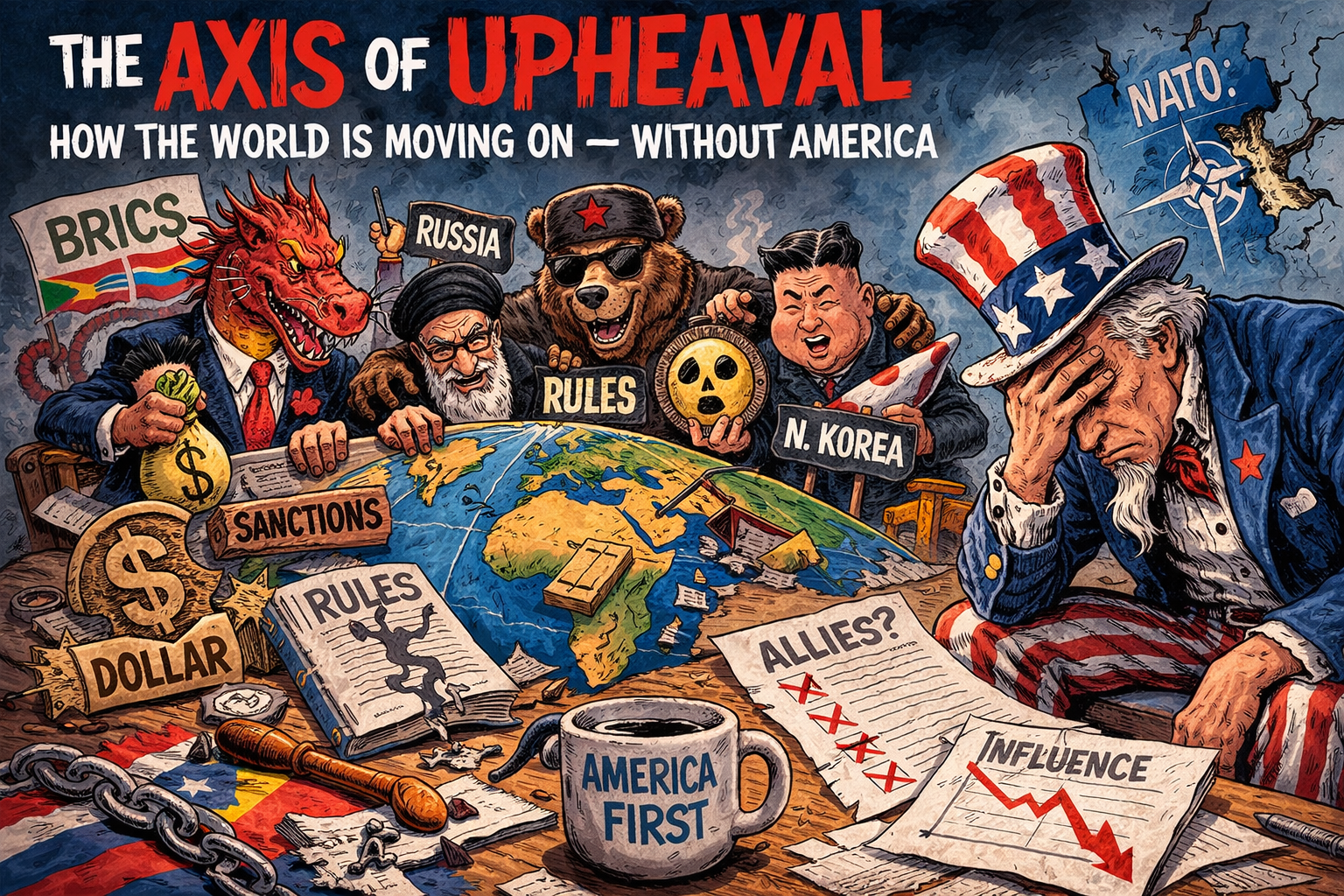
  • Navigating the New World Order

    Navigating the New World Order

    Multipolarity Amid U.S. Retreat and Rising Rivals


    Introduction

    In the crisp Arctic winds of 2026, a seemingly outlandish U.S. proposal to acquire Greenland ignited a firestorm among NATO allies, encapsulating the tectonic shifts reshaping global power dynamics. President Donald Trump’s aggressive push for control over the Danish territory, framed as essential for national security and missile defense, has not only strained transatlantic ties but also accelerated the transition from a U.S.-dominated unipolar world toward a multipolar system in which influence is dispersed among competing powers.

    This reversal in American foreign policy, marked by threats to withdraw from NATO and impose tariffs on dissenting allies, has created fertile ground for traditional adversaries such as Russia and China to expand their spheres of influence. Meanwhile, nations like Canada are pivoting toward Beijing, forging new economic partnerships that underscore the erosion of U.S. hegemony. As domestic challenges including a weakening dollar, ballooning debt, and persistent inflation undermine America’s global posture, the stage is set for a more fragmented international order. Recent global surveys reinforce this shift, revealing a growing consensus that China’s ascendancy is inevitable and that it will emerge as the preeminent power in a multipolar era.

    The U.S. Reversal in NATO: From Ally to Adversary

    Trump’s Greenland Ambitions

    At the center of the current NATO rift lies Trump’s insistence on U.S. sovereignty over Greenland, justified by its strategic value for Arctic defense and access to natural resources. The administration has escalated its rhetoric, warning of potential military action or economic sanctions against Denmark if negotiations collapse. This posture has deeply offended NATO partners, who view it as a blatant violation of sovereignty and alliance norms.

    Denmark has categorically rejected the proposal and responded by reinforcing its military presence on the island. Canada and several European nations have pledged additional forces in a coordinated show of solidarity, framing the situation as a defense against unilateral aggression. The Greenland controversy highlights a broader U.S. shift toward isolationism, in which alliances are treated as transactional arrangements rather than enduring commitments.

    Broader NATO Strain

    Beyond Greenland, the United States has imposed firm deadlines for European NATO members to assume primary responsibility for continental defense by 2027, paired with explicit threats of withdrawal if spending targets are not met. While bipartisan efforts in Congress have sought to restrain these actions through legislation designed to protect allied relationships, the damage to trust is already evident.

    This policy reversal dismantles the post-World War II framework that cast the United States as the guarantor of Western security. In its place are emerging vacuums that invite exploitation by non-Western powers. The result is a fractured alliance in which members increasingly question Washington’s reliability and explore independent security and diplomatic paths.

    Canada’s Strategic Pivot: Deals with China Amid U.S. Uncertainty

    The Landmark Trade Agreement

    In a striking departure from its historical alignment with Washington, Canada has finalized a preliminary trade agreement with China scheduled to take effect in March 2026. The pact allows the importation of up to 49,000 Chinese electric vehicles at a reduced tariff rate of 6.1 percent, in exchange for lowered Chinese barriers on Canadian exports such as canola, lobsters, and other agricultural products.

    Domestic reactions within Canada have been mixed. Prairie provinces welcome expanded access to Chinese markets, while Ontario’s auto sector and U.S.-aligned critics warn that the deal threatens domestic jobs and national security. The agreement nonetheless reflects Ottawa’s growing willingness to chart an independent economic course.

    Implications for Multipolarity

    Canada’s pivot illustrates a pragmatic response to U.S. unpredictability, including tariff threats and provocative rhetoric about annexation. By diversifying its partnerships, Ottawa embodies the logic of multipolarity, where middle powers hedge against the retreat of a dominant ally. For China, the agreement extends its economic footprint into North America, challenging U.S. influence and demonstrating how American policies can inadvertently create opportunities for rivals.

    Opportunities for Traditional U.S. Foes: Russia and China in Ascendance

    Russia’s Gains from NATO Weakness

    The visible fractures within NATO have emboldened Russia, which views U.S. retrenchment as validation of its long-standing advocacy for a multipolar world order. Moscow has leveraged forums such as BRICS to promote de-dollarization and reform of global institutions, capitalizing on Western divisions to deepen ties with the Global South.

    Russia’s expanding military and economic coordination with China further amplifies its influence. Together, the two powers present themselves as architects of an alternative system that challenges Western dominance and redefines global power centers.

    China’s Expanding Influence

    Global perceptions increasingly favor China’s rise. Polling data shows majorities in many countries, particularly across the developing world, expect Beijing to surpass Washington as the world’s leading power. Through initiatives such as the Belt and Road, China has filled gaps left by U.S. disengagement in trade and diplomacy, offering infrastructure investment and economic integration on a massive scale.

    Ironically, American tariffs and NATO disputes have accelerated this shift. By alienating allies and retreating from leadership roles, Washington has hastened the very outcome it seeks to prevent, pushing partners toward Beijing and reinforcing China’s multipolar ambitions.

    U.S. Domestic Vulnerabilities: Tariffs, Debt, and Economic Decline

    Tariff Threats and Inflation Risks

    Trump’s renewed reliance on tariffs, including proposed levies of 10 to 25 percent on European imports linked to the Greenland dispute, threatens to fuel inflation by an estimated 1 to 1.5 percent. These costs would likely offset the benefits of proposed tax cuts and raise consumer prices.

    Retaliatory measures from trading partners could further erode U.S. economic performance, potentially reducing long-term GDP by up to 0.7 percent. Such outcomes underscore the self-inflicted economic damage associated with aggressive protectionism.

    Declining Dollar, Debt, and Inflation

    Compounding these pressures, the U.S. dollar has faced renewed weakness in early 2026 amid fiscal instability, mounting debt that now exceeds $38 trillion, and political threats to Federal Reserve independence. Tariff-driven uncertainty has only intensified these trends, weakening America’s financial leverage abroad.

    As confidence in U.S. economic stewardship erodes, alternatives to dollar dominance gain traction, accelerating the global shift toward a multipolar financial system.

    Thanks for reading The Brooks Brief Substack! This post is public so feel free to share it.

    Share

    Conclusion: Prospects for a Multipolar Future

    The convergence of U.S. reversals within NATO, allied realignments such as Canada’s engagement with China, and the rising influence of Russia and China signals the irreversible emergence of a multipolar world. This new world order promises greater autonomy for middle powers but also carries heightened risks of economic volatility and geopolitical instability.

    Yet multipolarity also presents opportunities for more balanced global governance, where no single nation dictates the rules. To succeed in this multi-speed, multipolar landscape, states must prioritize adaptability and resilience over outdated notions of dominance, forging partnerships that reflect the distributed realities of power in 2026 and beyond.

  • Political Parties as Institutions of Power, Not Representation

    Political Parties as Institutions of Power, Not Representation

    Do political parties assist or hamper the democratic process?


    Political parties are foundational to modern democracies. They organize elections, form governments, and channel voter preferences into policy. Yet a growing body of evidence suggests that parties often function more as institutions of power, protecting elite interests, than as genuine vehicles of representation. The key factor determining whether parties serve voters or elites is their responsiveness to public opinion. When parties reflect broad voter preferences, they fulfill their democratic role effectively. When they resist or ignore shifts in public sentiment, they entrench elite dominance, erode trust, and fuel disillusionment.

    Historical Evolution: From Representation to Power Consolidation

    Political parties originally emerged to aggregate diverse voter interests and mobilize participation. In the early United States, factions like the Federalists and Anti-Federalists reflected ideological divides, while in Europe, parliamentary groups channeled class and regional concerns. These origins positioned parties as representatives of the people.

    Over time, industrialization, mass media, and globalization transformed parties into professionalized machines focused on electoral victory and institutional control. In two-party systems like the U.S., or dominant-party systems elsewhere, survival often outweighs responsiveness. Parties prioritize funding, media presence, and elite alliances over grassroots input, marking a clear shift from representation to power consolidation.

    Structural Mechanisms That Prioritize Power Over Representation

    Party structures often reinforce elite control. Leadership selection through closed primaries, superdelegates, or insider networks limits rank-and-file influence. Funding from wealthy donors, PACs, and dark money aligns agendas with economic elites rather than average voters.

    Ideological rigidity enforced by party whips, caucuses, and media ecosystems stifles dissent. Representatives face pressure to conform even when constituents disagree, turning parties into gatekeepers of power rather than conduits for public will.

    Evidence of Parties Protecting Elites

    Research underscores this imbalance. Martin Gilens and Benjamin Page (2014) analyzed nearly 1,800 U.S. policy issues and found that economic elites and business-oriented interest groups exert substantial independent influence, while average citizens have little or no independent effect on outcomes. Policy congruence correlates far more with donor preferences than with public opinion.

    Examples abound. During the 2008 financial crisis, both major U.S. parties supported bailouts favoring banks over widespread public demands for accountability. Tax policies often benefit the wealthy despite broad opposition to inequality. Trade deals advancing multinational interests have proceeded despite voter skepticism.

    By contrast, parties that respond to public opinion demonstrate their potential for good. Historical shifts show responsiveness: U.S. parties adjusted on civil rights in the mid-20th century amid public pressure. More recently, stances on marriage equality and marijuana legalization evolved to match changing majorities. In Europe, parties have moderated positions on immigration and climate policy when public sentiment demanded it. These examples show that parties can adapt, bridge divides, and deliver meaningful representation.

    Consequences for Democracy and Voter Engagement

    When parties prioritize power over responsiveness, trust erodes. Declining voter turnout, rising numbers of independents, and surveys showing parties as out of touch reflect this disconnect. Polarization intensifies as parties enforce conformity, leading to gridlock and weakened accountability.

    This elite focus also fuels populism and anti-establishment movements. Frustrated voters turn to outsiders, further destabilizing political systems. Without responsiveness, democracies risk cycles in which elites consolidate influence and citizens are increasingly alienated.

    Counterarguments and Potential Reforms

    Defenders argue that parties provide stability, expertise, and necessary filters in complex societies. They aggregate interests and prevent the chaos of direct democracy.

    Yet evidence favors reform. Open primaries, public campaign financing, ranked-choice voting, and term limits could realign parties with voters. Grassroots pressure through movements, independent candidates, and organized advocacy remains the most viable path, as parties rarely self-reform due to entrenched self-interest.

    Thanks for reading The Brooks Brief Substack! This post is public so feel free to share it.

    Share

    Conclusion

    Political parties are neither inherently good nor bad. Their value hinges on responsiveness to public opinion. When they adapt on key issues such as civil rights, social reforms, or economic fairness, they serve as engines of representation and foster inclusive governance. When they resist, protecting elites through rigid structures and donor-driven agendas, they become institutions of power that undermine democracy.

    The urgency is clear. Without renewed responsiveness, parties risk further alienating citizens and inviting instability. Voters must demand accountability, support reforms, and engage actively to ensure parties fulfill their original promise (representing the people, not just the powerful). Only then can democracy reclaim its representative core.

  • Corporate Influence in Democracy

    Corporate Influence in Democracy

    Lobbying, Regulatory Capture, and the Path to Balanced Power


    Introduction

    In the intricate dance of modern democracy, corporations wield an outsized influence that often tips the scales away from the public interest. This corporate sway manifests primarily through lobbying and regulatory capture, mechanisms that allow businesses to shape policies, laws, and regulations to their advantage. From the Gilded Age robber barons to today’s tech giants and pharmaceutical behemoths, the evolution of corporate power has deepened inequality and eroded trust in democratic institutions. Yet despite widespread recognition of the problem, bipartisan reform efforts consistently falter, trapped in a web of entrenched interests and political inertia.

    This article explores these dynamics, arguing that while corporate lobbying is an entrenched reality, true democratic balance requires empowering workers through mandatory union formation. If corporations are permitted to pool vast resources to influence government, workers must be enabled, and in some cases compelled, to organize collectively to counter that power. A single worker’s voice or wallet pales in comparison to a multinational corporation’s financial reach, but united workers can amass significant resources and deploy powerful tactics such as boycotts and strikes. These tools are essential to restoring a more equitable distribution of political power.

    Lobbying: Mechanisms and Impact

    Lobbying, at its core, is the legal practice of advocating for specific interests by influencing lawmakers and government officials. Governed by frameworks such as the U.S. Lobbying Disclosure Act, it encompasses direct meetings with legislators, campaign donations, and extensive information campaigns. Corporations have mastered this process through sophisticated strategies, including channeling money into political action committees and super PACs, a trend that accelerated following the 2010 Citizens United decision. They also exploit the revolving door, where public officials move seamlessly between government roles and lucrative corporate positions, and engage in astroturfing efforts that simulate grassroots public support.

    The consequences for democracy are profound. Public policy becomes distorted in favor of corporate profitability rather than societal well-being. Tax codes are reshaped to benefit the wealthiest firms, environmental protections are weakened to accommodate industry growth, and regulatory standards are diluted. This creates a pay-to-play political environment where large corporations drown out small businesses and ordinary citizens. The pharmaceutical industry provides a stark example, as aggressive lobbying during the opioid crisis delayed meaningful regulation and contributed to widespread addiction and loss of life. Similarly, major technology firms have resisted strong data privacy laws, leaving consumers exposed to misuse and surveillance.

    This imbalance, however, is not inevitable. Corporations are already allowed to exercise collective power through shareholders, executives, and trade associations. To restore democratic equilibrium, workers must be granted equivalent collective capacity. Mandating union formation would allow workers to pool resources just as corporations do. While an individual employee may only be able to donate modestly to a political cause, a union representing thousands can raise substantial funds through dues and coordinated action. Beyond financial influence, unions provide leverage through strikes, boycotts, and organized advocacy. Historical precedents, such as the United Auto Workers’ role in shaping labor law and workplace safety standards, illustrate how organized labor can check corporate excess and transform lobbying into a more balanced exchange.

    Regulatory Capture: Theory and Practice

    Regulatory capture occurs when agencies tasked with overseeing industries instead come to serve the interests of those industries. Popularized by economist George Stigler, the concept explains how oversight bodies are compromised through information asymmetry, financial incentives, and cultural alignment. Industries often supply regulators with selective data or technical expertise, fund research that supports favorable outcomes, or entice regulators with post-government employment opportunities. Over time, regulators may come to identify more closely with corporate leaders than with the public they are meant to protect.

    The real-world consequences of regulatory capture are severe. The 2008 financial crisis stands as a prominent example, driven in part by deregulated banking systems overseen by captured regulatory agencies. Public confidence erodes when citizens perceive government institutions as extensions of corporate boardrooms rather than guardians of the public interest. In the energy sector, fossil fuel companies have successfully delayed climate action by influencing environmental agencies, while in finance, key provisions of post-crisis reforms such as Dodd-Frank have been weakened through sustained corporate pressure.

    Once again, the underlying issue is power asymmetry. Corporations possess the resources and organization necessary to dominate regulatory processes, while workers, who often bear the brunt of unsafe conditions or environmental degradation, lack comparable influence. Mandating unions would help correct this imbalance by providing workers with a formal role in regulatory advocacy. Through collective bargaining and pooled resources, unions could fund expert testimony, challenge regulatory rollbacks, and apply pressure through coordinated action. Strikes and boycotts not only affect corporate behavior but also send a clear signal to regulators about the human costs of weak oversight. Scandals such as the Boeing 737 MAX crisis, where employee concerns were sidelined amid compromised FAA oversight, illustrate the dangers of excluding workers from regulatory influence.

    Why Bipartisan Reform Efforts Fail

    Despite broad public awareness of corporate overreach, bipartisan reform efforts repeatedly collapse. Structural barriers play a central role. Both major political parties rely heavily on corporate donations to sustain expensive election campaigns, creating deep financial dependencies. Legal constraints further complicate reform, particularly Supreme Court rulings that equate political spending with protected speech. Politically, reform proposals are often weaponized, with accusations of partisan advantage undermining consensus and short-term electoral calculations eclipsing long-term democratic health.

    Corporate resistance compounds these obstacles. Industries deploy aggressive counter-lobbying campaigns, media influence, litigation, and economic threats to derail reform initiatives. Past efforts reveal a consistent pattern. The Bipartisan Campaign Reform Act of 2002 attempted to curb soft money but was steadily undermined and weakened. More recently, voting and ethics reform bills stalled in Congress amid procedural roadblocks and internal party divisions, with corporate opposition playing a decisive role.

    At the heart of these failures lies the absence of countervailing power. Without strong worker organizations, reform movements lack the sustained grassroots pressure necessary to overcome institutional inertia. Mandated unionization could disrupt this dynamic by mobilizing workers across ideological lines. Historically, labor movements have bridged partisan divides, contributing to civil rights advances and economic reforms. By pooling resources and coordinating action, unions could rival corporate spending on advocacy while amplifying public pressure through strikes and boycotts. In doing so, they would transform reform from an elite policy debate into a mass democratic demand.

    Thanks for reading The Brooks Brief Substack! This post is public so feel free to share it.

    Share

    Conclusion

    Lobbying and regulatory capture have produced a democratic system tilted toward corporate elites, ensuring that bipartisan reform efforts fail under the weight of financial dependence and political gridlock. Yet this outcome is not unavoidable. By mandating worker unions as a counterbalance to corporate lobbying, power can be redistributed more equitably within the political system. While corporate financial dominance is formidable, organized workers possess tools that money alone cannot replicate, including collective action, public pressure, and moral authority.

    Practical steps forward include legislative requirements for union elections in large firms, increased transparency around corporate and labor influence, and learning from international models such as Germany’s system of worker co-determination. Ultimately, a functioning democracy depends not only on restraining concentrated corporate power but on empowering citizens to meet it with organized strength. Restoring balance in democratic governance requires ensuring that the voices of the many can once again compete with the resources of the few.

  • Inflation, Wages, and the Political Lie Everyone Accepts

    Inflation, Wages, and the Political Lie Everyone Accepts

    How Sanitized Statistics Protect Power While Families Fall Behind


    Amid polished economic briefings and optimistic announcements from Washington, a quiet but consequential deception continues to shape the lives of everyday Americans. Official data suggests inflation is under control and wages are improving within a stable economy. For countless families, however, reality tells a different story. Rising costs for rent, medical care, food, and utilities continue to outpace income growth, stretching household budgets to their limits. This widening gap between reported figures and lived experience is not accidental. It is a political narrative sustained by leaders from both parties.

    By minimizing the true extent of financial strain, policymakers avoid accountability for deeper structural failures. Instead, Americans are told to work harder, tighten their belts, and trust the numbers. This entrenched falsehood deepens inequality, as economic policies disproportionately benefit corporations and asset holders while workers struggle to stay afloat. Over time, the erosion of trust fuels cynicism, disengagement, and polarization across the country.

    The persistence of this narrative reflects a broader failure of economic governance, where short-term political convenience overrides long-term societal well-being. Families increasingly rely on multiple jobs simply to cover necessities, exposing the disconnect between statistics and reality. Reluctance to confront root causes such as corporate profiteering, weak wage protections, and regulatory capture only compounds the problem. The result is an economy that undermines the promise of upward mobility while insisting that progress is being made. Recognizing this deception is the first step toward demanding accountability.

    The Illusion of Controlled Inflation: How Metrics Hide the Pain

    The Consumer Price Index remains the central measure of inflation, yet it often presents a sanitized view of economic pressure. In late 2025, CPI data suggested inflation had cooled significantly, reinforcing claims of stabilization. Critics argue this measurement masks the true cost of living due to methodological choices that dilute the impact of rising prices.

    Adjustments that account for perceived quality improvements can lower reported inflation even when consumers pay more out of pocket. Substitution assumptions further skew results by presuming households switch to cheaper alternatives, ignoring the loss in quality of life such changes imply. Excluding food and energy from core inflation metrics minimizes the impact on lower-income households, which spend a larger share of income on these essentials. Together, these practices create an incomplete picture that understates economic stress.

    Alternative approaches that focus on essential expenses tell a more troubling story. Inflation varies widely by income level, geography, and household composition, yet aggregated metrics fail to capture these disparities. Housing costs, particularly owners’ equivalent rent, remain a major point of contention due to lagged and imprecise data. These distortions echo historical changes designed to limit government obligations tied to inflation. As Americans continue to feel squeezed despite official claims of improvement, skepticism toward economic institutions grows.

    Personal inflation rates further expose the limits of broad indices. Low-income families experience inflation more acutely because essentials dominate their budgets, and price increases in housing and healthcare remain persistent. While headline inflation eased, affordability crises worsened. Asset price inflation benefits those who own wealth, while cost-of-living pressures intensify for those who do not. This systemic underestimation not only misguides policy decisions but alienates the public from economic discourse altogether.

    Wage Stagnation: The Slow Bleed of American Prosperity

    Wage growth in the United States continues to lag behind productivity, reinforcing a long-term erosion of worker purchasing power. Real earnings saw only marginal increases through 2025, and in some periods failed to keep pace with inflation. While nominal wages rose, inflation-adjusted gains remained weak or inconsistent.

    This stagnation stands in stark contrast to productivity growth, which surged as workers produced more value per hour. The decoupling of wages from productivity, a trend decades in the making, means workers generate increasing wealth without sharing proportionally in its rewards. Over time, this imbalance drains household resilience and undermines economic security.

    The consequences extend beyond earnings charts. Many Americans have turned to multiple jobs or gig work to compensate, even as basic expenses remain elevated. Regional disparities reveal declines in real earnings in parts of the country, further complicating the narrative of recovery. Underemployment and discouraged workers inflate the appearance of labor market strength while concealing underlying fragility. As productivity gains flow upward, the slow bleed of middle- and working-class prosperity continues.

    Policy responses offer limited relief. Minimum wage increases scheduled across states and localities provide some benefit, but they fail to address the broader structural gap. Other regulatory changes risk reducing worker pay in vulnerable sectors. While wages occasionally outpace inflation in isolated months, the lack of sustained progress underscores the need for reforms that directly link compensation to productivity growth.

    The Bipartisan Benefit: Why Both Parties Cling to the Lie

    Both major parties benefit from understated inflation and wage metrics. Lower reported inflation reduces government obligations tied to cost-of-living adjustments and supports narratives of competent economic management. Bipartisan spending initiatives move forward without addressing wage stagnation, allowing lawmakers to claim success while avoiding difficult reforms.

    Political polarization further shields shared responsibility. Each party blames the other while maintaining policies that favor donors and entrenched interests. Campaign funding from industries that profit from suppressed labor costs reinforces the status quo. Economic messaging focuses on selective data points that support partisan talking points rather than confronting systemic failures.

    This pattern persists through policy implementation. Positive headlines emphasize cooling inflation while ignoring persistent affordability issues. Projections acknowledge slowing wage growth in coming years but frame it as acceptable. Voters raising concerns are dismissed as misinformed or overly pessimistic. The unified reliance on selective data protects elite interests while deflecting scrutiny.

    By sustaining opacity, both parties avoid reforms that could disrupt powerful constituencies. The advice to simply work harder rings hollow amid structural barriers that prevent economic mobility. Breaking this cycle requires confronting the shared incentives behind the deception.

    Thanks for reading The Brooks Brief Substack! This post is public so feel free to share it.

    Share

    Breaking the Cycle: Time to Demand Truth

    Ending the political lie surrounding inflation and wages requires a demand for transparency and accountability. Economic metrics should reflect essential living costs and real purchasing power, not abstract averages. Policies must be evaluated based on their impact on real wage growth rather than headline indicators.

    Public education on the limits of existing measures empowers voters to challenge official narratives. Stronger labor protections, productivity-sharing mechanisms, and broader unemployment measures would expose hidden economic stress. Collective action through unions, advocacy groups, and civic engagement can amplify pressure for reform.

    Restoring honest economic dialogue benefits society as a whole. When data reflects reality, policy can address actual needs rather than political convenience. Demanding truth is not partisan. It is essential to rebuilding trust and creating an economy that works for those who sustain it.

  • Fentanyl Production and Trafficking

    Fentanyl Production and Trafficking

    Ongoing Challenges Involving China, Mexico’s Cartels, India, and the United States


    I. Introduction

    Fentanyl, a synthetic opioid up to 100 times more potent than morphine, has entrenched itself as the dominant force in the United States’ ongoing opioid epidemic, far surpassing the threats posed by prescription painkillers or heroin in prior decades. This shift, accelerating since the mid-2010s, has transformed the crisis into a geopolitical flashpoint that intertwines public health with international relations, border security, and trade policy. Provisional data from the Centers for Disease Control and Prevention (https://www.cdc.gov/media/releases/2025/2025-cdc-reports-decline-in-us-drug-overdose-deaths.html ) indicates a sharp decline in U.S. drug overdose deaths, with approximately 87,000 fatalities recorded from October 2023 to September 2024. This represents a nearly 24 percent drop from the previous year’s roughly 114,000 deaths. Synthetic opioids such as fentanyl were implicated in about 69 percent of these deaths in 2023, with a similar share persisting into 2024 despite the broader reduction.

    Globally, the United Nations Office on Drugs and Crime World Drug Report 2025 (https://www.unodc.org/documents/data-and-analysis/WDR_2025/WDR25_B1_Key_findings.pdf ) highlights a surge in drug users to 316 million worldwide, a 28 percent increase over the past decade, underscoring how global instability exacerbates the proliferation of synthetic opioids. Despite recent declines in U.S. overdose deaths, the fentanyl supply chain remains resilient. It is allegedly fueled by precursor chemicals sourced primarily from China and increasingly India, large-scale manufacturing by Mexican cartels such as the Sinaloa Cartel and the Jalisco New Generation Cartel, and steady smuggling into the United States. This persistence continues to strain diplomatic relationships and has prompted aggressive U.S. policy responses, including the designation of major cartels as terrorist organizations in early 2025. While enforcement and controls have reduced fatalities, the adaptability of the fentanyl ecosystem demands sustained and coordinated international action to prevent future resurgence.

    II. Current State of Fentanyl Production and Supply

    The global fentanyl landscape is defined by most U.S. government agencies as illicit manufacturing concentrated in Mexico and dependent on imported precursor chemicals, with no significant production documented in regions such as South America. United Nations data from 2025 emphasizes that organized crime groups consistently exploit crises and instability to sustain production and expand markets, even amid intensified controls. In the United States, overdose deaths involving fentanyl declined by roughly 25 percent between 2023 and 2024. Nevertheless, the drug remains extraordinarily lethal and is frequently found in counterfeit pills designed to mimic legitimate pharmaceuticals such as oxycodone.

    Mexico serves as the primary synthesis hub, where the Sinaloa Cartel and the Jalisco New Generation Cartel allegedly operate clandestine laboratories that produce millions of counterfeit pills and large quantities of powder fentanyl. These products are often mixed with adulterants such as xylazine to enhance potency, reduce costs, and differentiate cartel supplies. China has historically supplied the majority of precursor chemicals and equipment, including pill presses, though regulatory crackdowns have reduced direct exports, allegedly. India has increasingly filled this gap, emerging as a key alternative supplier. U.S. intelligence agencies have identified India as the second-largest source of fentanyl precursors and manufacturing equipment, with indictments in January 2025 targeting Indian chemical firms accused of supplying materials destined for U.S.-bound fentanyl production.

    The United States remains the primary consumption market, with minimal domestic production. Nearly all fentanyl is imported, contributing to widespread polydrug contamination. Around one in four cocaine samples tested in the U.S. now contains fentanyl (https://www.sciencedirect.com/science/article/pii/S0376871623012231), greatly increasing overdose risk. The drug’s extreme potency allows traffickers to move highly profitable quantities in small volumes, while declining purity levels have pushed cartels to experiment with additives such as nitazenes. These adaptations maintain high lethality even as law enforcement seizures increase.

    III. National Roles and Control Efforts

    China has played a central role in the global precursor supply but has taken notable steps to restrict fentanyl related exports. These include class-wide scheduling of fentanyl analogs in 2019 and a November 2025 requirement for export licenses covering 13 chemicals shipped to the United States, Mexico, and Canada. These measures signal improved bilateral cooperation amid gradually thawing diplomatic tensions. However, chemical suppliers have continued to evade restrictions through the development of new “designer” compounds that fall outside existing regulations, sustaining flows to Mexican laboratories, allegedly.

    India’s expansive pharmaceutical and chemical sectors have also been implicated in precursor diversion. This has prompted tighter domestic controls and U.S. indictments in 2025 against firms accused of knowingly supplying cartels. In March 2025, the Drug Enforcement Administration targeted an India-based company for unlawful precursor shipments. The Mexican government, meanwhile, continues to confront corruption and cartel influence. The government has expanded precursor watchlists and deployed 10,000 National Guard troops to strategic border regions, contributing to record drug seizures in 2024.

    The United States has intensified enforcement efforts under the Trump administration, including the designation of the Sinaloa Cartel, the Jalisco New Generation Cartel, and associated groups as Foreign Terrorist Organizations in February 2025. This move enabled expanded sanctions and enhanced intelligence sharing, facilitating joint operations such as the January 2025 arrest of a major trafficker through U.S.-Mexico cooperation. Despite these actions, enforcement efforts continue to face the so-called balloon effect, where pressure in one region displaces activity elsewhere, as seen in India’s rising prominence and cartel franchise expansion.

    IV. Trafficking Routes and Global Flow

    Fentanyl precursors are allegedly shipped from China and India to Mexican Pacific ports such as Manzanillo. From there, it is alleged the Sinaloa Cartel and the Jalisco New Generation Cartel synthesize fentanyl and smuggle it across the U.S.-Mexico border. Trafficking methods may include private vehicles at ports of entry, tunnels, commercial freight, and increasingly drones. Cartels may also rely on social media platforms for distribution, money laundering coordination, and recruitment, operating networks that span more than 40 countries and major U.S. cities including Los Angeles and Chicago.

    While minor trafficking routes may include direct mail shipments from Asia or transit through Canada, the southwest border accounts for approximately 80 percent of U.S. fentanyl seizures. Emerging trends include widespread xylazine adulteration, now present in over 40 percent of tested samples, and the spread of nitazenes into Europe and Africa. Polydrug combinations have further heightened overdose risks. Declines in U.S. overdose deaths have been linked to tighter precursor controls and enforcement operations such as Customs and Border Protection’s Plaza Spike initiative in 2024. Nonetheless, cartel innovation and logistical flexibility continue to ensure supply continuity.

    V. Broader Challenges and Impacts

    The public health consequences of fentanyl trafficking remain severe. Synthetic opioids account for roughly 69 percent of U.S. overdose deaths, disproportionately affecting individuals aged 18 to 45. Xylazine contributes to severe tissue necrosis, while nitazenes significantly increase lethality when combined with other substances. From a security perspective, cartel violence in Mexico remains pervasive. Criminal groups are estimated to exert influence over roughly one-third of the country’s territory, fueling murder, extortion, and displacement. The fragmentation of the Sinaloa Cartel following the 2024 arrest of figures such as Ismael “El Mayo” Zambada has further intensified violence.

    Allegedly, money laundering networks linked to China and the use of cryptocurrency sustain cartel operations. These practices have prompted U.S. Financial Crimes Enforcement Network actions against Mexican financial institutions in 2025. Economically and diplomatically, the fentanyl crisis has been used to justify U.S. tariffs on China, Canada, and Mexico, even as overdose rates decline. Tensions persist over enforcement responsibilities, and trilateral cooperation has been strained by the designation of cartels as terrorist organizations. Regulatory challenges also remain, particularly concerning dual-use chemicals and entrenched corruption across supply chains.

    VI. Potential Solutions and Future Outlook

    Effective responses require enhanced monitoring of precursor chemicals, deeper intelligence sharing, and expanded harm reduction tools such as naloxone distribution and drug checking technologies. Demand side strategies, including expanded access to treatment and recovery services, remain essential. International cooperation is critical, with efforts such as expanded United Nations drug scheduling and resumed U.S.-China counternarcotics talks playing a key role. U.S.-Mexico extraditions increased in 2025, facilitating high-profile arrests and disrupting trafficking networks.

    Policy approaches should increasingly prioritize public health over militarization, while investing in economic development and alternative livelihoods in cartel-dominated regions of Mexico. Addressing poverty, inequality, and institutional corruption is essential to reducing the incentives that sustain organized crime. While recent declines in overdose deaths suggest cautious optimism, the continued adaptability of cartels and the ease of precursor diversion pose significant risks. Without sustained, coordinated action, the crisis could shift toward even deadlier synthetic substances.

    Thanks for reading The Brooks Brief Substack! This post is public so feel free to share it.

    Share

    VII. Conclusion

    The alleged fentanyl supply chain, driven by precursors from China and India, large-scale cartel production in Mexico, and trafficking into the United States, has experienced notable disruptions in recent years. Declines in overdose deaths and increased seizures in 2024 reflect meaningful progress in enforcement and regulation. However, this interconnected and adaptive system demands a comprehensive response that combines aggressive action against trafficking organizations, global regulatory coordination, and health-centered interventions. Only through sustained, multifaceted strategies can long-term progress be secured against the evolving threat of synthetic opioids.