political theory
-
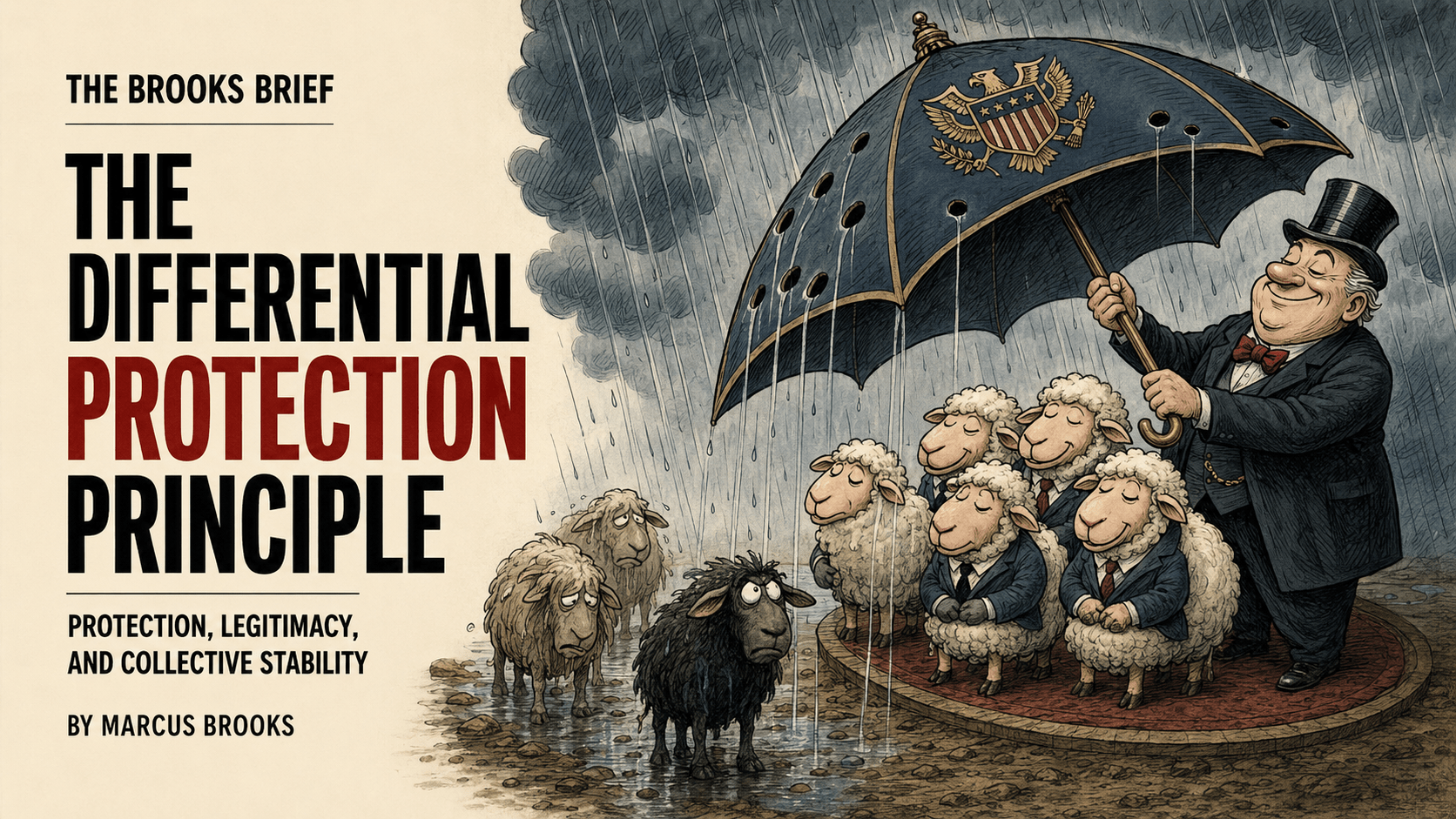
The Differential Protection Principle
How Perceived Unequal Protection Shapes Legitimacy, Loyalty, and Collective Stability Executive Summary Human beings form collectives because organized cooperation can provide more security, opportunity, and stability than isolated action. Governments, political parties, corporations, alliances, religious institutions, social movements, and families all ask their members to accept obligations in exchange for some form of protection. Yet…
-

The Differential Protection Principle
How Unequal Protection Shapes Political Loyalty, Institutional Trust, and Collective Stability Executive Summary Political scientists have long examined why individuals join collective institutions despite the limitations those institutions place on personal freedom. The Herd Cohesion Principle argued that individuals willingly sacrifice some autonomy because membership within a collective provides greater security, stability, and opportunity than…
-

The Universal Constraint Principle
Constraints, Technology, and the Limits of Civilization Executive Summary Throughout history, scholars have attempted to explain why civilizations often develop similar institutions, technologies, and social structures despite significant differences in geography, culture, and historical experience. Traditional explanations frequently focus on common ancestry, cultural diffusion, environmental influences, or the actions of individual leaders. While these factors…
Search
Categories
Tags
AI american foreign policy American Politics artificial intelligence Church and State conflict resolution Constitutional Law counterintelligence declaration of independence De Facto Authority Diplomacy divine sovereignty economic policy economy epstein files Global Governance healthcare human rights inflation international law international relations iran iran conflict Mtb Entertainment national debt National Sovereignty peacebuilding polarization political analysis political legitimacy political science political theory robot tax Security Dilemma social science social sciences Sovereign of Sovereigns the brooks brief Trump ubi united nations united states United States foreign policy united states policy universal basic income